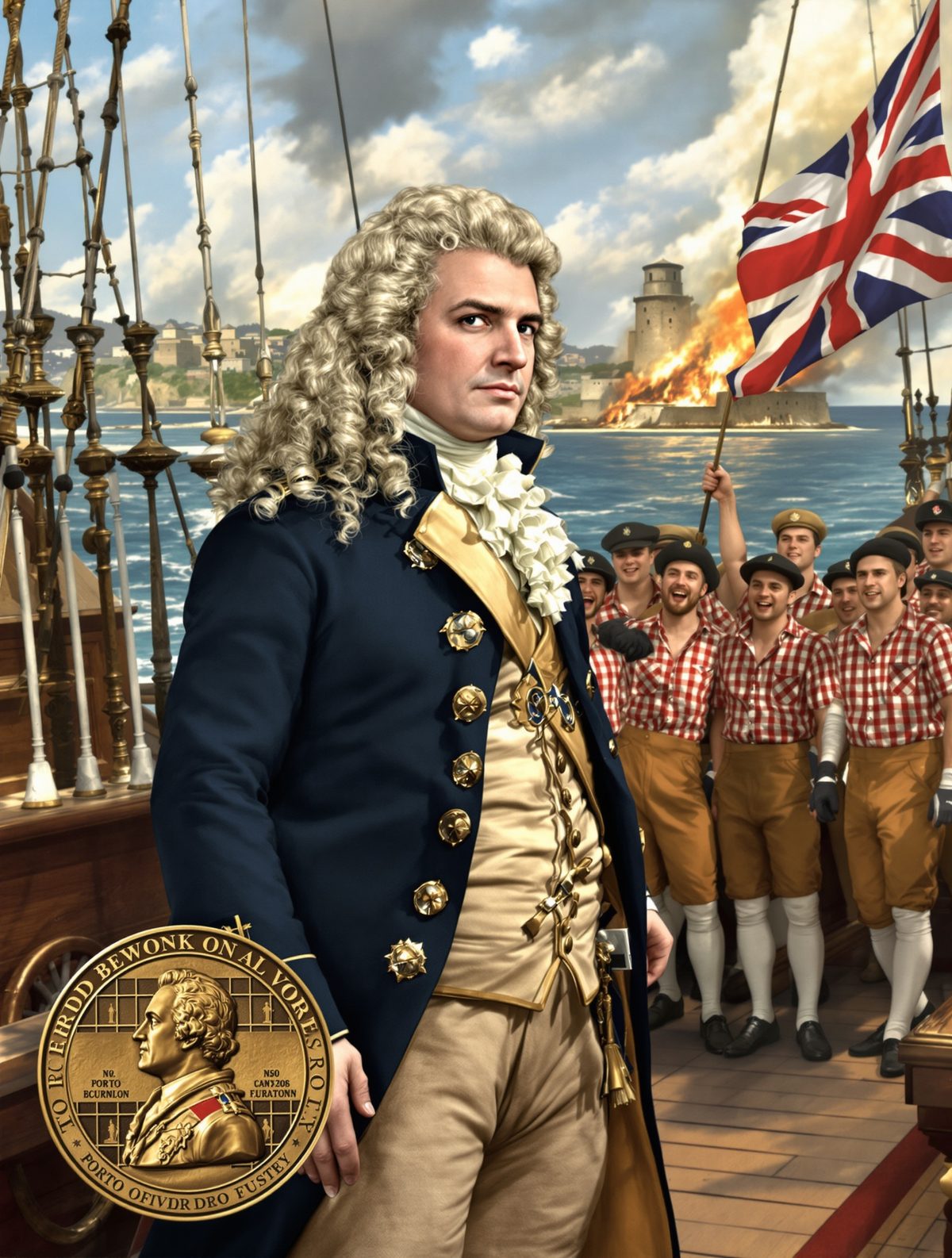
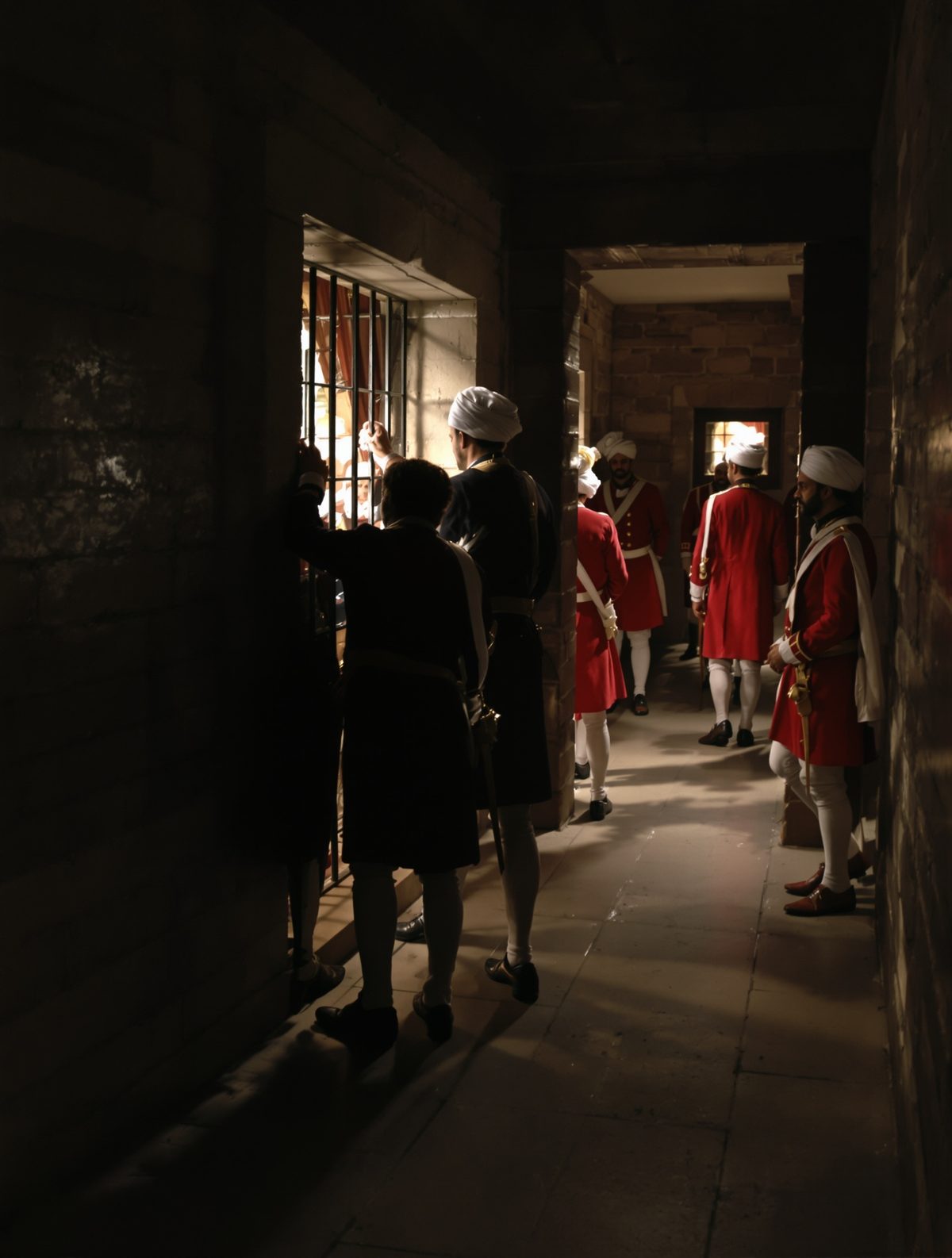
The morning mist hung thick over Delhi's ancient walls as Captain John Nicholson adjusted his grip on his sword. Behind him, 1,000 British and Sikh soldiers crouched in the pre-dawn darkness, their faces blackened with gunpowder and grime. Ahead loomed the Kashmir Gate—a massive stone barrier that had stood unconquered for centuries. In twenty minutes, this single breach would determine whether the British Empire lived or died in India.
It was September 14th, 1857. For four months, rebel sepoys had held Delhi, the symbolic heart of Mughal power. Every day the mutiny spread like wildfire across northern India, threatening to sweep the British into the sea. But now, as Lieutenant Home and his handful of engineers prepared to blow the Kashmir Gate to smithereens, the fate of an empire balanced on the edge of a sword—and the courage of one remarkable man.
The Powder Keg That Lit an Empire
The Indian Mutiny didn't begin with grand political speeches or carefully planned revolution. It started with cow fat. The new Enfield rifles issued to Indian sepoys required soldiers to bite off the end of paper cartridges—cartridges rumored to be greased with beef and pork fat, defiling both Hindu and Muslim soldiers in one stroke. What began as religious outrage in May 1857 quickly exploded into the most serious challenge to British rule in India's history.
By June, mutinous sepoys had seized Delhi and proclaimed the elderly Mughal Emperor Bahadur Shah Zafar as their leader. The symbolism was devastating. Delhi wasn't just another city—it was the traditional seat of Indian power, the place where conquerors came to legitimize their rule. As long as rebels held Delhi, every fence-sitter across India would assume the British were finished.
The British response was swift but desperate. A hastily assembled force of 8,000 men marched on Delhi, outnumbered three-to-one by the defenders. For three grueling months, they maintained a loose siege from a ridge north of the city, taking horrific casualties from constant sorties and the brutal Indian heat. Officers died so fast that lieutenants found themselves commanding battalions. Disease killed more men than bullets.
The Man Who Never Knew Fear
Into this cauldron rode Brigadier John Nicholson—though everyone simply called him "Nikkul Seyn." At thirty-four, Nicholson was already a legend on the frontier, a man whose very name made Pashtun tribesmen whisper prayers. Standing six feet two inches tall with piercing gray eyes and a black beard, he looked like an Old Testament prophet armed with a cavalry saber.
Nicholson's reputation for fearlessness bordered on the supernatural. During one frontier campaign, he'd personally led a charge against 8,000 Afridi warriors with just 100 cavalry, scattering them like leaves. His Pakistani admirers actually founded a religious sect worshipping him as a deity—much to Nicholson's embarrassment. When he heard about it, he threatened to blow the "Nikal Seyni" faithful from cannons if they didn't stop.
But Nicholson brought more than just courage to Delhi. Marching down from the Punjab with a column of reinforcements, he arrived at the ridge in late August like an answer to prayers. His presence alone seemed to electrify the exhausted British force. Here was a man who radiated absolute confidence in British victory, who spoke of taking Delhi not as a desperate gamble but as an inevitable fact.
Twenty Minutes to Save an Empire
The assault plan was elegantly simple and utterly terrifying. At dawn on September 14th, Lieutenant Philip Home and a tiny party of engineers would rush the Kashmir Gate with bags of gunpowder. They would blow the gate, then two assault columns would charge through the breach before the defenders could react. Nicholson would lead the first column—naturally, he'd insisted on the most dangerous assignment.
At 3:30 AM, the British artillery opened up with the heaviest bombardment yet seen in India. For thirty minutes, 54 heavy guns pounded the Kashmir Gate and the walls on either side, filling the air with dust and flying stone. Then, as suddenly as it began, the barrage stopped. An eerie quiet settled over the battlefield.
Lieutenant Home and his engineers sprinted forward through the smoke. What they found was a nightmare—the gate was damaged but still standing, and hundreds of sepoys were rushing to defend the breach. Under withering musket fire, Home and his men placed their charges against the massive wooden doors. The explosion, when it came, shook the ground for miles. The Kashmir Gate disintegrated in a fountain of wood, stone, and flame.
Nicholson didn't hesitate. Drawing his sword, he leaped into the smoking crater and shouted the words that would echo through military history: "Follow me!" Behind him came the 75th Foot, 1st Bengal Fusiliers, and Coke's Rifles—British and Indian soldiers fighting side by side, their bayonets gleaming in the dawn light.
What followed was twenty minutes of the most vicious urban combat imaginable. The rebels fought like tigers, contesting every street, every building, every inch of ground. Nicholson seemed everywhere at once, his sword cutting down sepoys, his voice rallying men forward when they wavered. A musket ball shattered his shoulder, but he kept fighting. Another ball struck his chest—still he pressed on, blood streaming down his uniform.
The Fall of the Red Fort
By 4:00 AM, it was over. British soldiers stood atop the walls of Delhi, their colors flying over the Red Fort for the first time in four months. The rebel army, caught completely off-guard by the speed and ferocity of the assault, melted away into the countryside. Emperor Bahadur Shah Zafar was found hiding in Humayun's tomb, his dreams of restored Mughal glory reduced to ashes.
But victory came at a terrible price. Nicholson, the man who had made it all possible, lay dying from his wounds. He lingered for ten days, long enough to see Delhi secure, before succumbing on September 23rd. His last words reportedly were: "Thank God I have seen the enemy defeated." He was buried in Delhi's British cemetery, where his grave became a pilgrimage site for soldiers who served on the frontier.
The speed of Delhi's fall shocked everyone—rebels and British alike. Military experts had predicted a siege lasting months, with horrific casualties on both sides. Instead, one perfectly executed assault lasting twenty minutes had broken the back of the rebellion. Within weeks, news of Delhi's recapture spread across India, convincing wavering princes and potential rebels that British power was far from broken.
The Price of Victory
But the British victory at Delhi came with a darkness that would stain the Empire's reputation forever. In the days following the assault, British troops went on a rampage of revenge, slaughtering thousands of civilians suspected of supporting the rebels. The official casualty reports from Delhi remain classified to this day, but estimates suggest over 10,000 Indians died in the week following the city's fall.
This wasn't the clinical warfare of European battlefields—it was something rawer, more personal. The mutiny had shocked the British to their core, shattering their comfortable assumptions about Indian loyalty and British invincibility. The revenge they took was proportional to their fear, and their fear had been absolute.
The recapture of Delhi marked the beginning of the end for the mutiny, but it also marked the end of the old East India Company rule. The brutality of the suppression convinced London that India needed direct Crown control. In 1858, the Government of India Act transferred power from the Company to the Crown, beginning the period of direct Imperial rule that would last until 1947.
Echoes of Empire
Today, as we watch modern conflicts unfold on social media, it's worth remembering that empires have always risen and fallen on moments just like this—twenty minutes of desperate fighting that changed the course of history. Nicholson's charge through the Kashmir Gate wasn't just military tactics; it was the triumph of unshakeable belief over overwhelming odds.
The lesson isn't about the righteousness of empire—the British rule that followed 1857 brought both progress and oppression in equal measure. Instead, it's about how individual courage and leadership can shape the destiny of nations. In those twenty minutes at the Kashmir Gate, John Nicholson didn't just capture a city; he preserved an empire and changed the trajectory of two civilizations. History, it turns out, often hinges not on grand strategies or inevitable forces, but on ordinary people doing extraordinary things in extraordinary moments.
The Kashmir Gate still stands in Delhi today, rebuilt and restored. Few of the millions who pass through it daily know that this quiet entrance once witnessed twenty minutes that shook the world.