The stench of death hung over Jamestown like a funeral shroud. By December 1608, the wooden palisades of England's first permanent settlement in the New World enclosed what amounted to an open-air graveyard. Skeletal colonists stumbled through the muddy streets, their fine English clothing now hanging in tatters. Of the original 214 settlers who had arrived with such high hopes, fewer than 60 remained alive. The rest lay buried in shallow graves or had simply vanished into the Virginia wilderness, their bones picked clean by scavengers.
But the most shocking sight wasn't the corpses—it was the living. While common laborers collapsed from hunger, a group of English gentlemen sat in their quarters, polishing their swords and discussing poetry, steadfastly refusing to dirty their hands with manual labor. After all, they reasoned, they were gentlemen. Work was beneath their station, even if their station was rapidly becoming a tomb.
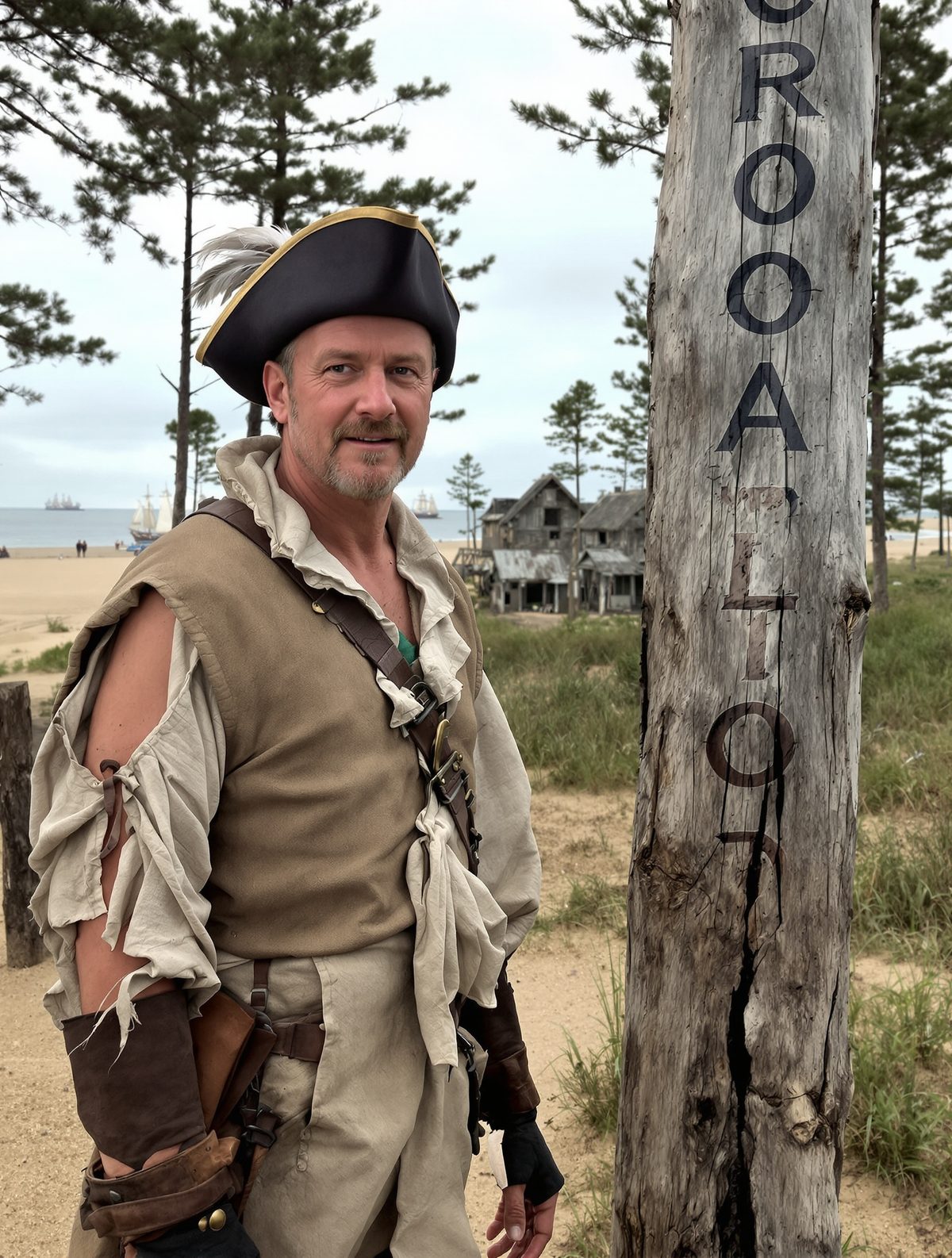
Into this nightmare stepped a short, stocky soldier with a bristling beard and eyes like flint. Captain John Smith had seen enough. What happened next would split the colony down the middle and forge one of the most controversial—and effective—social experiments in American history.
A Paradise That Became Hell
When the first ships arrived at Jamestown in May 1607, the Virginia Company's promotional pamphlets had painted pictures of a land flowing with gold and opportunity. The reality proved devastatingly different. The site chosen for the settlement—a marshy peninsula 60 miles up the James River—was a mosquito-infested swampland that bred disease like a plague factory.
The colonists themselves were spectacularly ill-suited for survival. Of the 105 original settlers, nearly half were listed as "gentlemen" in the company records—men who had never worked with their hands and considered physical labor a mark of social disgrace. The Virginia Company had recruited them believing that gentlemen would naturally assume leadership roles, but they failed to consider what would happen when leadership required chopping wood, planting crops, and building fortifications.
The results were catastrophic. Within six months, 67 of the original settlers were dead. By January 1608, only 38 colonists remained alive. Disease struck with merciless efficiency—typhoid, dysentery, and salt poisoning from the brackish water supply. But perhaps deadlier than any plague was the toxic social dynamic that emerged: a rigid class system that prioritized social status over survival.
The Gentleman's Rebellion
Captain John Smith watched this slow-motion suicide with growing fury. A veteran of European wars and Turkish campaigns, Smith was a commoner who had earned his rank through merit rather than birth. He understood something the Virginia gentlemen refused to grasp: in the wilderness, a man's pedigree couldn't build a roof or harvest corn.
The breaking point came in September 1608, when Smith was elected president of the colony's governing council. His first act was to survey the settlement's resources, and what he found was worse than he'd imagined. The common store—meant to feed the entire colony through winter—contained barely enough food for six weeks. Meanwhile, several gentlemen had been hoarding private provisions while common laborers starved.
Smith discovered that gentlemen like Gabriel Archer and John Martin had been trading the colony's precious supplies to local Powhatan Indians in exchange for personal luxuries. While carpenters and laborers collapsed from malnutrition, these men dined on imported delicacies and complained about the quality of their wine.
The situation exploded when Smith ordered all able-bodied men to help repair the fort's crumbling palisade walls before winter. A group of eight gentlemen, led by the aristocratic John Ratcliffe, flatly refused. "We did not come to this land to perform the labor of common servants," Ratcliffe declared, speaking for men who considered themselves above such menial tasks.
"He That Will Not Work Shall Not Eat"
On October 10, 1608, Captain John Smith gathered the entire surviving population of Jamestown—all 53 souls—in the settlement's makeshift chapel. What he said next would echo through American history and establish a principle that would define the colonial work ethic for generations.
"Countrymen," Smith began, his voice carrying across the silent assembly, "the greater part must be more industrious, or starve." Then came the bombshell that split the colony: "He that will not work shall not eat, except by sickness he be disabled."
The decree was revolutionary. Smith was essentially abolishing the class-based food distribution system that had allowed gentlemen to eat while laborers starved. From that day forward, every man would receive rations based on his contribution to the colony's survival, not his family name or social standing.
The reaction was explosive. John Martin, whose father was a wealthy London goldsmith, accused Smith of "reducing gentlemen to the level of common servants." Several other aristocrats threatened to return to England on the next ship. But Smith held firm, backed by the common laborers who finally saw hope for justice.
Smith implemented his new system with military precision. He divided the colony into work gangs, each assigned specific daily tasks: building repairs, crop cultivation, firewood collection, and guard duty. Every morning, each man's work assignment was posted on the chapel door. Every evening, rations were distributed based on the day's performance.
The Miracle of Winter
The transformation was nothing short of miraculous. Within two weeks of Smith's proclamation, Jamestown began to function like a military camp rather than a aristocratic debating society. Men who had never held a hammer learned to repair buildings. Gentlemen who had previously spent their days composing letters home found themselves hauling water and chopping firewood.
Smith also revolutionized the colony's relationship with the Powhatan Confederacy. Instead of the previous pattern of desperate begging followed by hostile confrontation, Smith established regular trading relationships based on mutual benefit. His famous winter expeditions up the Chickahominy River—during which he was captured by Powhatan warriors and allegedly saved by Pocahontas—were actually sophisticated diplomatic and trading missions.
The numbers tell the story. During the winter of 1608-1609, under Smith's leadership, Jamestown lost only seven colonists to disease and starvation—a mortality rate of just 13%. This was a stunning achievement compared to the previous winter's 82% death rate. More importantly, when spring arrived, the colony had actually increased its food stores and completed major improvements to its defenses.
But perhaps Smith's greatest achievement was psychological. For the first time since its founding, Jamestown felt like a real community rather than a collection of dying strangers. Men who had been enemies learned to work together. The rigid class barriers that had paralyzed the colony began to crack under the pressure of shared labor and mutual dependence.
The Price of Success
Smith's iron-fisted reforms came at a cost. His authoritarian methods created powerful enemies among the displaced gentlemen, who began plotting his removal. In a series of letters smuggled back to London, they painted Smith as a tyrant who had overthrown the natural social order and reduced gentlemen to slavery.
Their complaints found sympathetic ears in the Virginia Company's boardrooms, where investors worried about the precedent Smith was setting. If word spread that colonial life meant aristocrats working alongside commoners, it could damage recruitment efforts among the wealthy investors the company needed.
Smith's downfall came suddenly and unexpectedly. In October 1609, while exploring the James River, he suffered severe burns in a mysterious gunpowder explosion that many historians now suspect was an assassination attempt. Badly wounded and facing a coordinated campaign by his enemies, Smith was forced to return to England, never to see Jamestown again.
His departure was a catastrophe for the colony. Within months, the old class-based system reasserted itself, and Jamestown plunged into the horrors of the "Starving Time"—the winter of 1609-1610 when the population dropped from 500 to just 60 survivors, some of whom resorted to cannibalism.
The Legacy of Iron Will
Captain John Smith's brief reign in Jamestown lasted less than two years, but its impact reverberates through American culture to this day. His revolutionary principle—that social worth should be measured by contribution rather than birthright—planted the seeds of what would eventually become the American Dream.
Smith's decree that "he who does not work shall not eat" established a template that would be echoed by everyone from the Pilgrims of Plymouth to the frontier settlers of the 19th century. It became part of the foundational myth of American exceptionalism: the idea that in the New World, what mattered was what you could do, not who your father was.
But Smith's legacy is more complex than simple celebration of hard work. His methods were undeniably authoritarian, and his system worked only because he possessed the military authority to enforce it. The question he posed to Jamestown—whether survival justifies the suspension of normal social arrangements—remains relevant in our own era of economic uncertainty and social upheaval.
Today, as we grapple with questions of inequality, merit, and social justice, Smith's Jamestown experiment offers both inspiration and warning. It shows that desperate times can indeed call for desperate measures, and that effective leadership sometimes requires the courage to overturn established hierarchies. But it also demonstrates the fragility of such reforms when they depend on the will of a single strong leader rather than genuine social consensus.
In the end, Captain John Smith's greatest achievement wasn't saving Jamestown from starvation—it was proving that America could be a place where old rules didn't apply, where necessity could trump tradition, and where the content of a man's character mattered more than the circumstances of his birth. That radical idea, born in the muddy streets of a dying colonial settlement, would eventually reshape the world.