Picture this: a lone British officer on horseback, dusty and sun-beaten, approaching the towering gates of Chittorgarh—the most sacred fortress in all of Rajputana. The year is 1818, and no European has ever been permitted to sketch the layout of these legendary kingdoms. The Rajput princes guard their territorial secrets as fiercely as their honor. Yet somehow, this particular sahib has convinced warrior kings to open their palace doors and reveal the hidden geography of their realm.
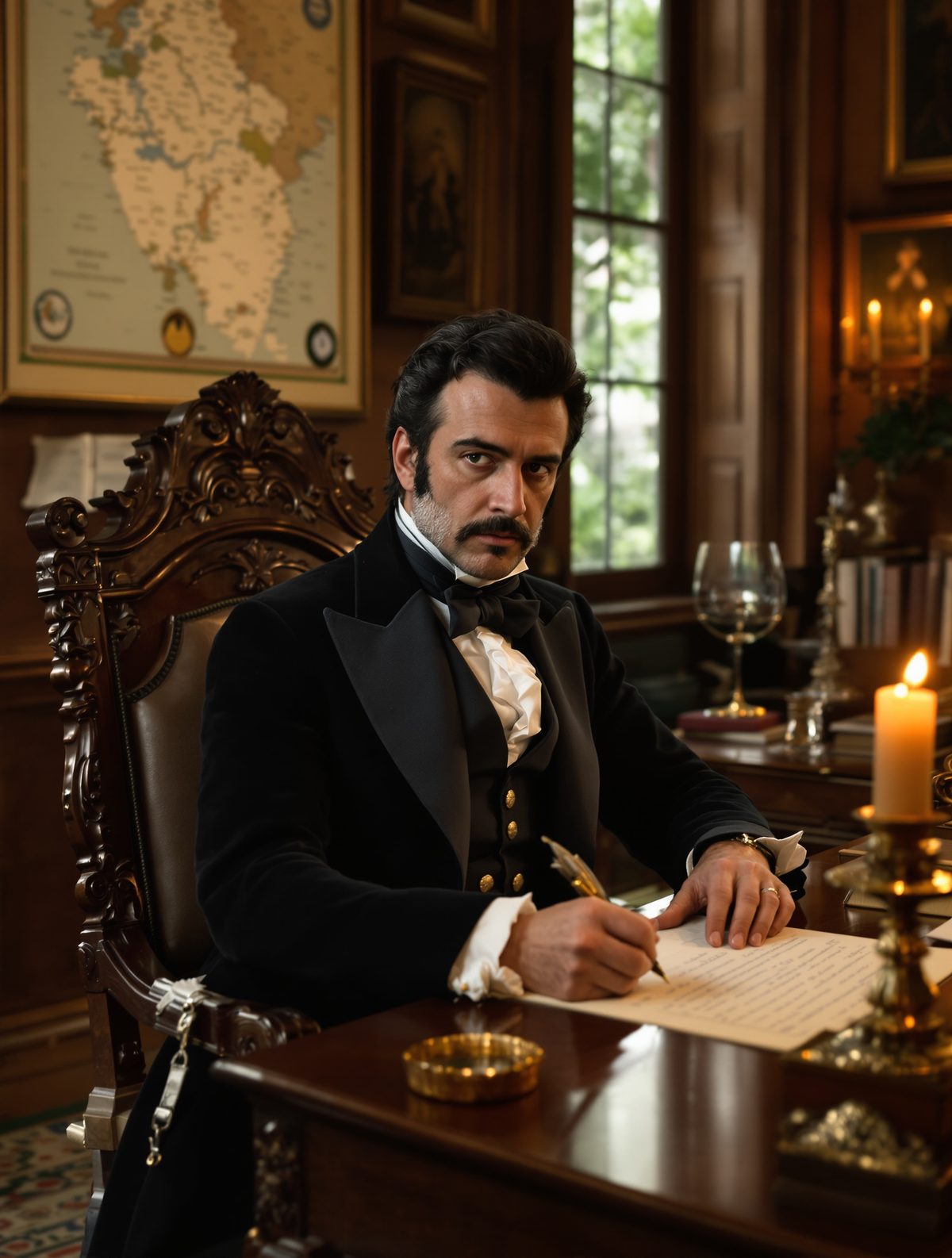
His name was Colonel James Tod, and over the next four years, he would accomplish something extraordinary: creating the first comprehensive map of the lands that would become Rajasthan. But this wasn't just a surveying mission—it was a journey into the heart of medieval India, where chivalric codes still ruled and every hilltop fortress held centuries of bloodsoaked history.
The Unlikely Cartographer
James Tod arrived in Rajputana with an unusual qualification for a colonial administrator: he actually loved the place he was supposed to govern. Born in London in 1782, Tod had joined the East India Company as a teenager and spent his early career in Gujarat, where he developed an obsession with Rajput culture that would define his life.
Unlike most British officials who viewed Indian traditions as obstacles to efficient administration, Tod saw the Rajputs as living embodiments of medieval chivalry. He spent his evenings learning Hindi and Rajasthani dialects, studying Sanskrit texts, and—most importantly—listening to the bardic tales that preserved Rajput history. This wasn't mere academic interest; Tod genuinely believed that understanding Rajput culture was essential to governing these proud warrior states effectively.
When the Third Anglo-Maratha War ended in 1818, the British found themselves in control of a patchwork of Rajput kingdoms that had recently thrown off Maratha rule. The problem? London had no idea what they'd actually acquired. The territory was a complete blank on British maps—a situation that was both strategically dangerous and administratively impossible.
Entering the Forbidden Kingdoms
Tod's first challenge wasn't geographical—it was diplomatic. The Rajput princes had just escaped decades of Maratha domination and weren't eager to submit to another foreign power. These weren't defeated enemies but potential allies who needed careful handling. The slightest misstep could trigger rebellions that would make the territory ungovernable.
Tod's breakthrough came through an unexpected avenue: his genuine respect for Rajput traditions. When he arrived at the court of Udaipur in late 1818, instead of making demands, he asked Maharana Bhim Singh to tell him the stories of his ancestors. The Maharana, descendant of the legendary Pratap Singh who had defied the Mughal Empire, was intrigued by this unusual British officer who spoke of Rajput heroes with the reverence typically reserved for European military leaders.
What happened next was unprecedented in the history of colonial India. The Maharana not only granted Tod permission to survey Mewar (the kingdom around Udaipur) but provided him with local guides, historical manuscripts, and—most crucially—introductions to other Rajput rulers. Word spread through the interconnected web of Rajput courts: this particular sahib was different.
Four Years in the Saddle
Between 1818 and 1822, Tod covered over 8,000 miles on horseback, creating detailed surveys of kingdoms that had been sealed to outsiders for centuries. His daily routine was punishing: up before dawn to take astronomical readings for precise positioning, then riding to the next fort or town, sketching layouts, measuring distances, and recording elevations until sunset.
But Tod's maps were unlike anything the Survey of India had produced before. While most colonial surveys focused purely on military and administrative needs, Tod's charts captured the cultural landscape as well as the physical one. He meticulously recorded the location of every major temple, the genealogy of ruling families, the boundaries of traditional hunting grounds, and the routes of ancient pilgrimage paths.
His notebooks reveal the extraordinary access he gained. At Chittorgarh, the Rajputs' most sacred fortress, he was allowed to survey the entire complex—including the tower from which Queen Padmini and hundreds of other women had performed jauhar (ritual suicide) rather than face capture by Muslim invaders. At Amber Palace near Jaipur, Maharaja Jagat Singh II personally guided Tod through secret passages and hidden chambers that even many court officials had never seen.
The numbers alone are staggering: Tod mapped 23 major kingdoms and principalities, surveyed 187 fortresses, documented the locations of over 600 temples and palaces, and recorded the precise boundaries of territories totaling nearly 130,000 square miles—an area larger than modern-day Germany.
The Secret of Tod's Success
How did a British colonial officer gain such unprecedented access to kingdoms that had successfully resisted outside influence for centuries? The answer lies in Tod's unique approach to his subjects. Unlike typical Company officials who viewed Indians through the lens of racial superiority, Tod saw the Rajputs as equals—warriors whose code of honor matched anything in European chivalric tradition.
Tod's fluency in local languages was just the beginning. He memorized Rajput genealogies going back twenty generations, could recite the epic poems of Chand Bardai, and understood the complex protocols of Rajput court etiquette. When Rana Jawan Singh of Mewar was dying in 1821, he reportedly asked for Tod to be present at his deathbed—an honor typically reserved for blood relatives.
Perhaps most importantly, Tod proved himself trustworthy with the secrets he uncovered. His maps never revealed the locations of hidden treasures, secret water sources, or defensive vulnerabilities that could be exploited by enemies. The Rajput princes came to understand that Tod's goal wasn't conquest but comprehension—he wanted to understand their world, not destroy it.
Beyond Lines on a Map
Tod's surveys became the foundation for all subsequent mapping of Rajasthan, but their real significance extends far beyond cartography. His detailed observations, preserved in his monumental work "Annals and Antiquities of Rajast'han" (published in 1829-1832), created the first systematic record of Rajput culture, history, and social organization.
The maps themselves were marvels of precision. Using a combination of traditional surveying techniques and astronomical observations, Tod achieved accuracy levels that wouldn't be significantly improved until satellite mapping in the late 20th century. Many of his distance measurements, when checked against modern GPS data, prove accurate to within a few hundred meters—remarkable considering he was working with 19th-century instruments while bouncing along on horseback.
But Tod's true achievement was cultural rather than technical. His work preserved detailed records of a civilization in transition—capturing traditional Rajput society at the precise moment when it was beginning its encounter with British colonial modernity. His maps show not just where things were, but what they meant to the people who lived there.
The Map That Changed History
Today, when you look at a map of Rajasthan, you're seeing the world through James Tod's eyes. The boundaries he drew, the place names he recorded, and the cultural landmarks he identified became the administrative foundation of the region under British rule and, later, the template for the modern Indian state of Rajasthan.
But Tod's legacy raises fascinating questions about the nature of colonial knowledge. Here was a British officer who succeeded precisely because he refused to behave like a typical colonial administrator. His maps were valuable not because they reduced Rajputana to strategic resources and potential revenues, but because they captured the complex reality of a living civilization.
In our age of GPS satellites and Google Earth, it's worth remembering that the most important maps aren't always the most technically sophisticated ones. Sometimes, the maps that matter most are drawn by people who take the time to understand not just the geography of a place, but the geography of its people's hearts and minds. Tod's four years in the saddle remind us that true understanding—whether of a landscape or a culture—still requires something no satellite can provide: the willingness to meet people where they are, on their own terms, with genuine respect for the wisdom they've accumulated over centuries.