On a Bitter Sea
The icy winds cut like daggers through the wooden vessel as it forged its way through the treacherous waters of what would later be called Hudson Bay. In the summer of 1610, Henry Hudson, a seasoned English navigator with his eyes set on glory, believed himself on the brink of a monumental discovery. The sun danced on the horizon, painting the sky a symphony of crimson and gold, offering him a misleading promise of warmth—yet winter’s chill was creeping ever closer, along with dire consequences.
The Quest for the Northwest Passage
The early 17th century was an era of daring exploration as European powers vied for dominance over the mysterious lands of the New World. Among the most pursued prizes was the elusive Northwest Passage, a maritime shortcut to the riches of Asia. Henry Hudson, on his fourth voyage and with the backing of the Virginia Company and the British East India Company, embarked aboard the Discovery with his crew of 23 men, including his teenage son, John. Their mission was clear: to find that legendary passage to the Pacific.
Setting sail in April 1610, Hudson navigated the capricious waters of the North Atlantic. Months later, sluggishly moving through iceberg-ridden channels, he stumbled upon a sprawling inland sea. Vast and uncharted, it mirrored his ambitions and hopes. He thought he’d found the North's oceanic gateway, unaware that this was instead a vast cul-de-sac—a bay that bore his name yet did not deliver the passage it promised.
Winter’s Grip
By November, the relentless Canadian winter had locked the Discovery in ice. The ship and her crew were marooned in the bay. As temperatures plummeted, Hudson’s determination was met with equally freezing stares from his increasingly discontent men. Starvation loomed, preserved only by a paltry supply of stale bread and salted meats. The bitter ice reflected not just the harshness of the environment but of their fading hopes.
Hudson, once relentless in his vision, was now besieged by muttering voices of dissent. Discipline fractured under pressure, fed by alimentary deprivation and distrust. The crew, suspecting hoarding and unequal ration distribution, looked upon Hudson with suspicion.
The Mutiny
When spring thawed the shorelines by June 1611, tensions reached their boiling point. Hudson’s authority, already eroded by the arduous winter, dissolved completely in the face of starvation and desperation. As his undernourished crew conspired, led by shipmate Robert Juet, their discontent transformed into rebellion.
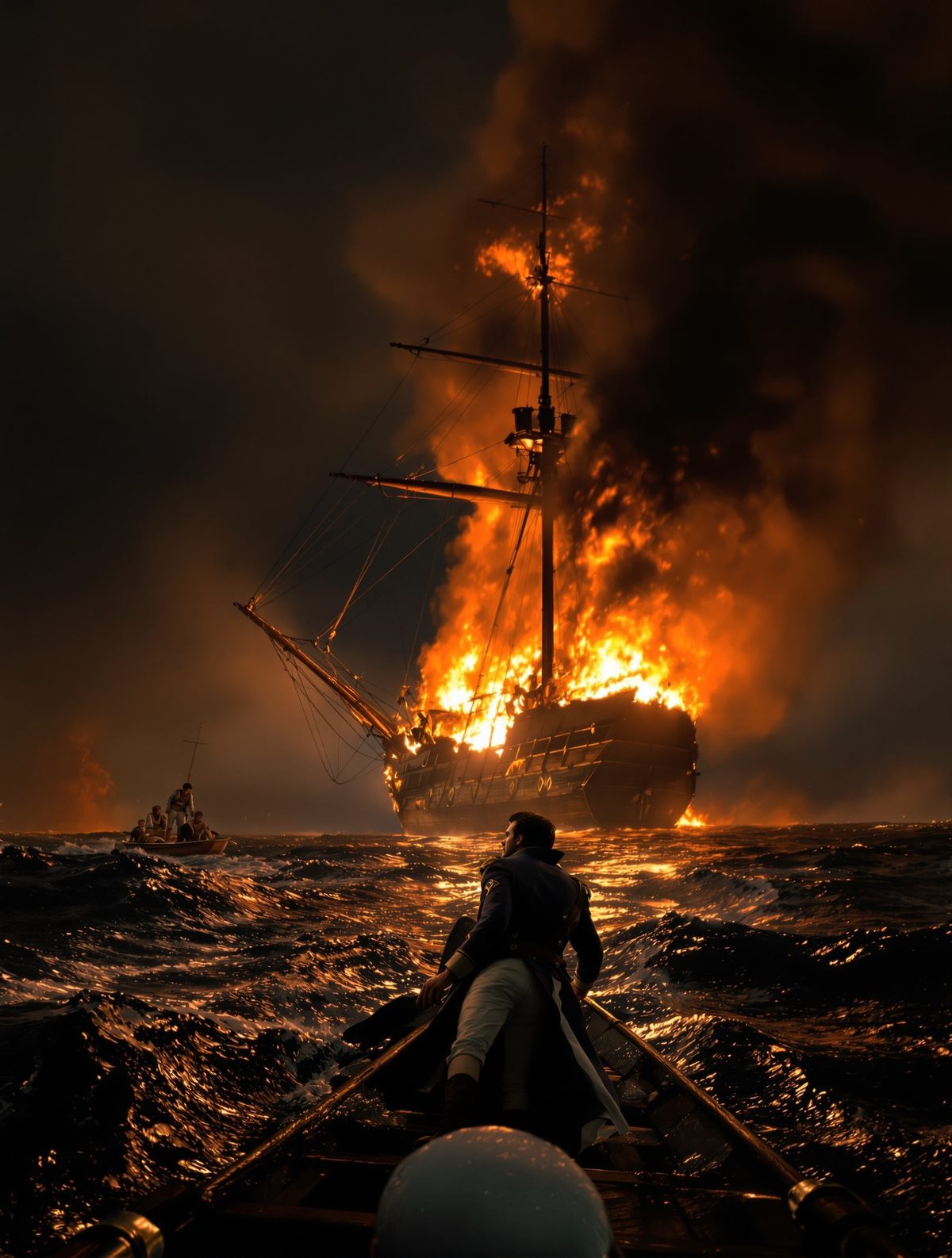
On a bleak day, just before sunrise, the mutineers acted. Hudson, along with his son and seven others branded as sick or loyalists, were forcibly cast adrift in a small open boat, devoid of navigational instruments, means of propulsion, or adequate provisions. The mutineers turned their backs, sailing the Discovery back toward the distant shores of England. Hudson’s tragic farewell was swallowed by the merciless expanse of the sea.
Into Oblivion
The fate of Hudson and his abandoned companions remains shrouded in the mists of history. Their desperate fight for survival, left with little more than hope, serves as a grim testament to the harsh, unyielding reality of the New World. No record survives of what ensued in those desolate waters. Ripped from the pages of history, their story concludes with silence.
Curiously, survivors of the mutiny made it back to England, only to face accusations, including murder. The unrest they incited aboard Discovery reverberated through English society. Yet, these same mutineers soon faded into obscure normalcy, their insubordination eclipsed by the era’s continual pursuit of exploration.
The Legacy of Henry Hudson
Hudson’s story doesn’t end with his disappearance into those icy waters. The bay he mapped and the river he named after himself in previous voyages have embedded his name within the geographical lexicon of the Northern Hemisphere. Ironically, his daring pursuit of westward passage laid the foundation for future exploration and imperial growth.
His expeditions, though not achieving the goal of a navigable Northwest Passage, highlighted the geo-political significance of newly discovered territories, driving future generations of explorers toward that same elusive dream.
Today, Hudson’s legacy resonates still. His journeys of ambition and sacrifice highlight the complex interplay of human courage and frailty, serving as lessons on leadership, human endurance, and the uncharted waters where dreams and reality collide. His tragic tale is a stark reminder of the price of exploration and the unpredictable heart of discovery.
In an age when space has become our new frontier, Hudson’s story reminds us of the timeless thirst for knowledge and ambition, and the need to chart the unknown, reiterating that exploration, even in its most perilous form, is woven into the fabric of human endeavor.