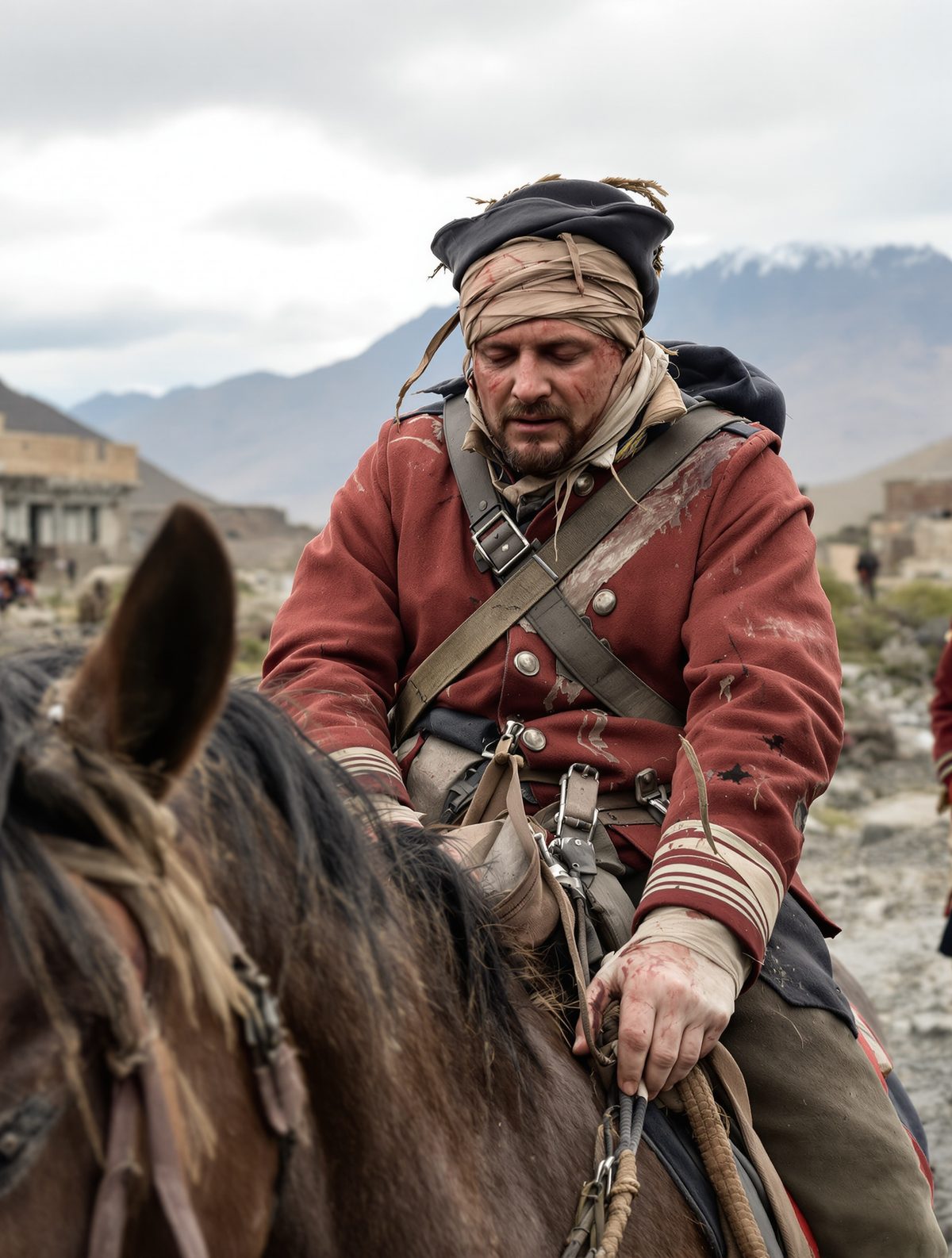
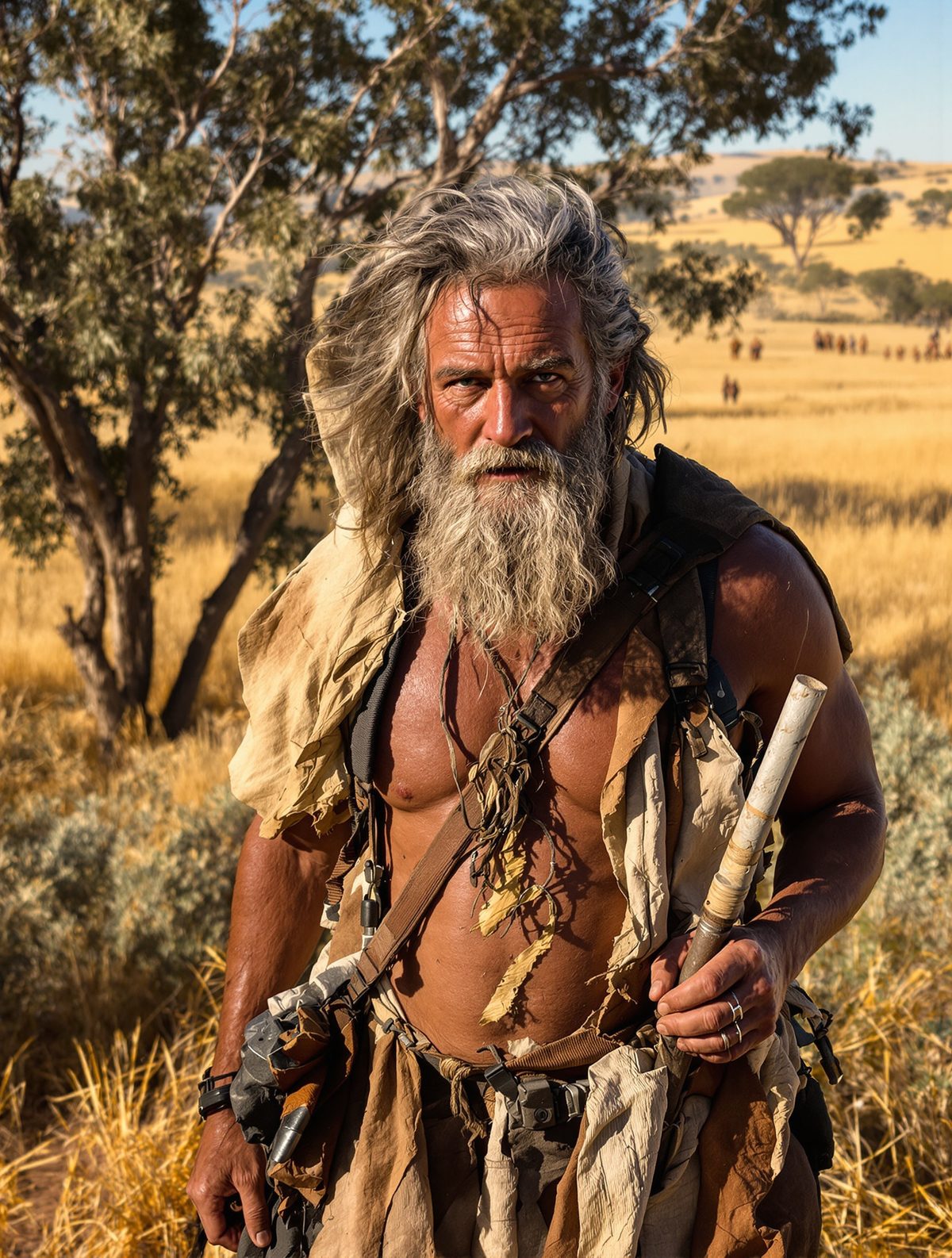
The mist clung to the heather-covered slopes of the Wicklow Mountains as Captain John Edwards squinted through his spyglass at yet another empty valley. Somewhere in these treacherous peaks, a ghost moved among the rocks and streams—a man who had turned the British Empire's most sophisticated manhunt into a humiliating game of cat and mouse. The year was 1803, and Michael Dwyer, Ireland's most wanted rebel, had already been playing this deadly game for five years. He would continue for nine more.
While Napoleon conquered Europe and the world's maps were redrawn in blood, a blacksmith's son from County Wicklow was writing his own chapter in the annals of guerrilla warfare. Armed with little more than intimate knowledge of his homeland and the unshakeable loyalty of his neighbors, Dwyer would prove that sometimes the mightiest empires can be tormented by the smallest thorns.
The Flame That Wouldn't Die
When the great Irish Rebellion of 1798 collapsed in a welter of blood and betrayal, most of its leaders met predictable fates. Wolfe Tone died by his own hand in a Dublin prison cell. Father John Murphy was tortured and executed, his body burned on a barrel of tar in Tullow. The rebellion that had promised to unite "Catholic, Protestant, and Dissenter" under the common name of Irishman seemed extinguished forever.
But Michael Dwyer refused to accept defeat. Born in 1772 in the Glen of Imaal, this twenty-six-year-old had grown up knowing every sheep track, cave, and bog in the Wicklow Mountains. When government forces scattered his rebel company at the Battle of Hacketstown in May 1798, Dwyer melted away into the landscape like morning dew. What the British assumed would be a brief mopping-up operation became an epic of endurance that would span three different Lord Lieutenants of Ireland.
Dwyer's core group never numbered more than twenty men, yet they tied down forces that could have been deployed against Napoleon. The mathematics of their situation bordered on the absurd: roughly 10,000 British troops, militia, and yeomanry were tasked with capturing a band that could have fit comfortably in a large drawing room.
The Mountains Became Their Fortress
The Wicklow Mountains were Dwyer's secret weapon—a 500-square-mile labyrinth of granite peaks, hidden valleys, and treacherous bogs that locals called "the Garden of Ireland" but soldiers knew as a green hell. Here, in landscapes that could shift from pastoral beauty to deadly wilderness within a few hundred yards, Dwyer established a network of safe houses, supply caches, and escape routes that would have impressed a modern special forces operative.
His men moved through the mountains like wraiths, appearing suddenly to attack an isolated patrol or raid a military supply convoy, then vanishing before reinforcements could arrive. They used the ancient technique of "driving" stolen cattle to cover their tracks—the hoofprints of hundreds of animals obliterated any human footprints that might have led pursuers to their hiding places.
The rebels' survival depended entirely on the support of local farmers, and here Dwyer proved himself a master of hearts and minds warfare decades before the term was coined. Unlike many guerrilla leaders who ruled through fear, Dwyer earned loyalty through respect. His men paid for what they took when possible, protected civilians from government reprisals, and never harmed those who couldn't help them.
One remarkable account tells of how Dwyer's wife, Mary, would leave food at predetermined locations marked by specific arrangements of stones. She was arrested multiple times but never broke under interrogation, even when threatened with transportation to the penal colonies of Australia.
The Most Expensive Game of Hide and Seek in History
The British response to Dwyer's campaign reveals both the empire's military might and its fundamental misunderstanding of irregular warfare. General Gerard Lake, the man who had crushed the main rebellion with brutal efficiency, found himself checkmated by a blacksmith who had never read a military manual.
The government's frustration spawned increasingly desperate measures. They offered rewards that escalated from £500 in 1799 to an astronomical £1,000 by 1803—enough to buy a substantial estate. For perspective, a laborer's annual wage was roughly £12. They built a network of fortified barracks throughout Wicklow, turning the county into what resembled an occupied territory. They even imported bloodhounds from England, though the Irish climate and terrain proved less suitable for tracking than the fox hunts of the English countryside.
Perhaps most tellingly, they enacted collective punishment policies that backfired spectacularly. When entire townlands were held responsible for rebel activities, it only drove more people into Dwyer's camp. The burning of suspected safe houses and the imprisonment of family members created martyrs faster than bullets could create corpses.
The costs mounted relentlessly. Maintaining thousands of troops in the field, building and garrisoning fortifications, and paying informers drained the Irish treasury. One contemporary estimate suggested the campaign cost the British government over £200,000—millions in today's currency—to capture a man who lived in caves and survived on potatoes and buttermilk.
The Legend of Derrynamuck
Of all the stories that swirled around Dwyer's campaign, none captures its essence better than the incident at Derrynamuck cottage in February 1799. Surrounded by overwhelming forces in a small farmhouse, Dwyer and his three companions faced certain death or capture. As soldiers closed in from all sides, one of Dwyer's men, Sam McAllister, made a decision that would echo through Irish folklore forever.
According to witness accounts, McAllister deliberately exposed himself at a window to draw enemy fire, allowing Dwyer and the others to escape through the back of the cottage. McAllister died in a hail of musket balls, but his sacrifice allowed Ireland's most wanted man to slip away once again. The cottage still stands today, its bullet-scarred walls a testament to one man's heroic last stand.
This incident perfectly encapsulates why Dwyer's campaign proved so durable. It wasn't just about military tactics or terrain advantages—it was about ordinary people making extraordinary sacrifices for a cause they believed transcended their individual lives.
The Ghost Becomes a Man
By 1803, even Michael Dwyer was growing weary of his mountain existence. The death of Robert Emmet after his failed Dublin uprising in July 1803 marked the end of any realistic hope for renewed rebellion. Moreover, Dwyer's band was slowly being whittled away by capture, death, and defection. The man who had seemed invincible was becoming increasingly isolated.
The end came not through military defeat but through negotiation. In December 1803, Dwyer finally agreed to surrender in exchange for safe passage to America for himself and his remaining followers. After fourteen years of defying the British Empire, he walked down from his mountain stronghold and gave himself up at Rathdrum, just a few miles from where his rebellion had begun.
The British, perhaps recognizing the propaganda value of treating their most persistent enemy with dignity, honored the agreement—initially. Dwyer was transported to New South Wales, where he eventually became a constable and landowner, living until 1825. His transformation from rebel to respectable colonial citizen might seem anticlimactic, but it was perhaps the most subversive act of all—proof that even the empire's most wanted enemies could be reintegrated into society given the right circumstances.
The Thorn That Drew Blood
Michael Dwyer's fourteen-year campaign in the Wicklow Mountains offers more than just a stirring tale of David versus Goliath. It provides a masterclass in how small groups can wage effective resistance against overwhelming odds, lessons that would be studied by guerrilla fighters from the Philippines to Afghanistan in the centuries that followed.
Perhaps more importantly, Dwyer's story reveals something profound about the nature of empires and the communities they seek to control. The British Empire commanded the seas, fielded the world's most professional armies, and possessed resources that dwarfed those of any single opponent. Yet for fourteen years, they could not capture one man because that man had something they couldn't buy or intimidate: the voluntary support of people who shared his vision of freedom.
In our own age of asymmetric conflicts and grassroots movements, Michael Dwyer's campaign feels remarkably contemporary. He understood that the most powerful weapon in irregular warfare isn't the gun or the bomb—it's legitimacy. By treating his supporters with respect and his enemies with honor, he created something that couldn't be destroyed by military force alone: an idea that ordinary people could resist extraordinary power and, sometimes, even win.