The delicate clink of bone china against sterling silver spoons echoed through the silk-wallpapered drawing room at 2 Gower Street, London. It was Tuesday afternoon, March 15th, 1904, and Mrs. Millicent Fawcett was serving her usual Earl Grey alongside cucumber sandwiches with the crusts meticulously removed. To any gentleman peering through the lace curtains, it appeared to be nothing more than another tedious gathering of middle-aged ladies discussing the latest fashions from Paris or perhaps the scandalous hemlines creeping ever so slightly above the ankle.
But beneath the perfectly orchestrated veneer of Edwardian respectability, something far more revolutionary was unfolding. As Mrs. Fawcett poured the tea, she wasn't asking about the weather—she was quietly asking, "How many signatures did we collect this week?" The sugar bowl wasn't just passed around; it concealed rolled-up lists of sympathetic Members of Parliament. And when these ladies discussed "the latest patterns," they were actually referring to strategic patterns for organizing rallies across Britain.
Welcome to the secret headquarters of the women's suffrage movement, disguised as the most innocuous social gathering in the Empire.
The Perfect Cover: Why Tea Parties Were Genius
Millicent Fawcett understood something that would make modern political strategists weep with envy: the best place to hide a revolution is in plain sight. In 1897, when she became president of the National Union of Women's Suffrage Societies (NUWSS), she faced a seemingly impossible challenge. How do you organize a political movement when women aren't supposed to be political? How do you mobilize half the population when they're expected to remain decorously silent in their drawing rooms?
The answer came wrapped in the most quintessentially British tradition imaginable. Tuesday afternoon tea parties were not just socially acceptable—they were practically mandatory for women of Fawcett's social standing. Better yet, they were completely invisible to men. As one contemporary observer noted, "A gentleman would no sooner intrude upon a ladies' tea than he would don a corset."
Fawcett's drawing room became command central for what she called "the constitutional approach" to suffrage. Unlike the headline-grabbing militancy of Emmeline Pankhurst's Women's Social and Political Union (WSPU), Fawcett's NUWSS believed in working within the system. But make no mistake—their methods were every bit as strategic and far more extensive than their militant counterparts.
The tea party network grew with remarkable precision. By 1906, similar gatherings were occurring in drawing rooms across London, Manchester, Birmingham, and Edinburgh every Tuesday afternoon. Each hostess received a weekly "social calendar" that was actually a coded newsletter detailing petition drives, upcoming speaking engagements, and which MPs might be wavering on the suffrage question.
The Sisterhood of Subversive Scones
The regular attendees of Fawcett's Tuesday gatherings read like a who's who of influential Edwardian women operating in the shadows of history. There was Lady Frances Balfour, sister-in-law to the future Prime Minister, who used her political connections to gather intelligence on Conservative Party positions. Mrs. Henry Fawcett—yes, Millicent kept her late husband's name for political leverage—had been the widow of a respected Liberal MP, giving her credibility in political circles.
Then there was the formidable Mrs. Eleanor Rathbone, who would later become one of the first female MPs, but in 1905 was perfecting the art of what they called "drawing room diplomacy." She specialized in cultivating relationships with the wives of influential politicians, understanding that pillow talk could be far more persuasive than Parliamentary debate.
Perhaps most remarkably, these women developed an intricate communication system that would have impressed MI5. Each lady carried what appeared to be an ordinary social diary, but the appointments were coded. "Luncheon with Lady Pemberton" actually meant "Meeting with the Liverpool organizers." "Shopping at Harrods" was code for "Collecting petition signatures at the department store."
The refreshments themselves became part of the system. Different types of cakes indicated different types of meetings. Victoria sponge meant they were planning a major rally. Seed cake indicated a recruitment drive was underway. And when Mrs. Fawcett served her famous lemon drizzle cake, everyone knew it was time to write letters to MPs—she had prepared a list of targets and talking points.
The Art of Invisible Influence
What made these tea party conspiracies so effective was their understanding of Edwardian society's pressure points. These women didn't just organize among themselves—they systematically infiltrated every social institution available to them. Church bazaars, charity committees, literary societies, and garden parties all became recruitment opportunities.
Mrs. Fawcett pioneered what she privately called "the gentle siege"—a strategy of surrounding male decision-makers with suffrage supporters in their own social circles. If an MP's wife, sister, and bridge partners were all quietly but persistently supportive of women's suffrage, it became increasingly difficult for him to dismiss the cause as the ranting of "hysterical women."
The numbers speak to their success. When Fawcett took over the NUWSS in 1897, it had roughly 17 affiliated societies and maybe 2,000 members. By 1910—after thirteen years of strategic tea parties and drawing room diplomacy—the organization boasted 480 affiliated societies and over 53,000 members across Britain. They had created the largest women's organization in British history, and most of it was coordinated over Earl Grey and petit fours.
Their influence extended far beyond membership rolls. In 1908, Fawcett's network organized what they modestly called "a small demonstration" in Hyde Park. That "small demonstration" drew an estimated 250,000 participants—making it one of the largest political rallies in British history up to that point. The logistics alone were staggering: coordinating special trains from across the country, organizing marshals, preparing banners, and arranging speakers. All of it planned in drawing rooms over afternoon tea.
Breaking Cover: When Tea Parties Made Headlines
By 1912, the secret was becoming harder to keep. Newspaper reporters began to notice that these "social gatherings" seemed remarkably well-informed about political strategy. The Daily Mail published a somewhat bewildered article titled "The Political Ladies of London," noting that "certain drawing rooms appear to be as well-informed about Parliamentary proceedings as the gentlemen's clubs of St. James's."
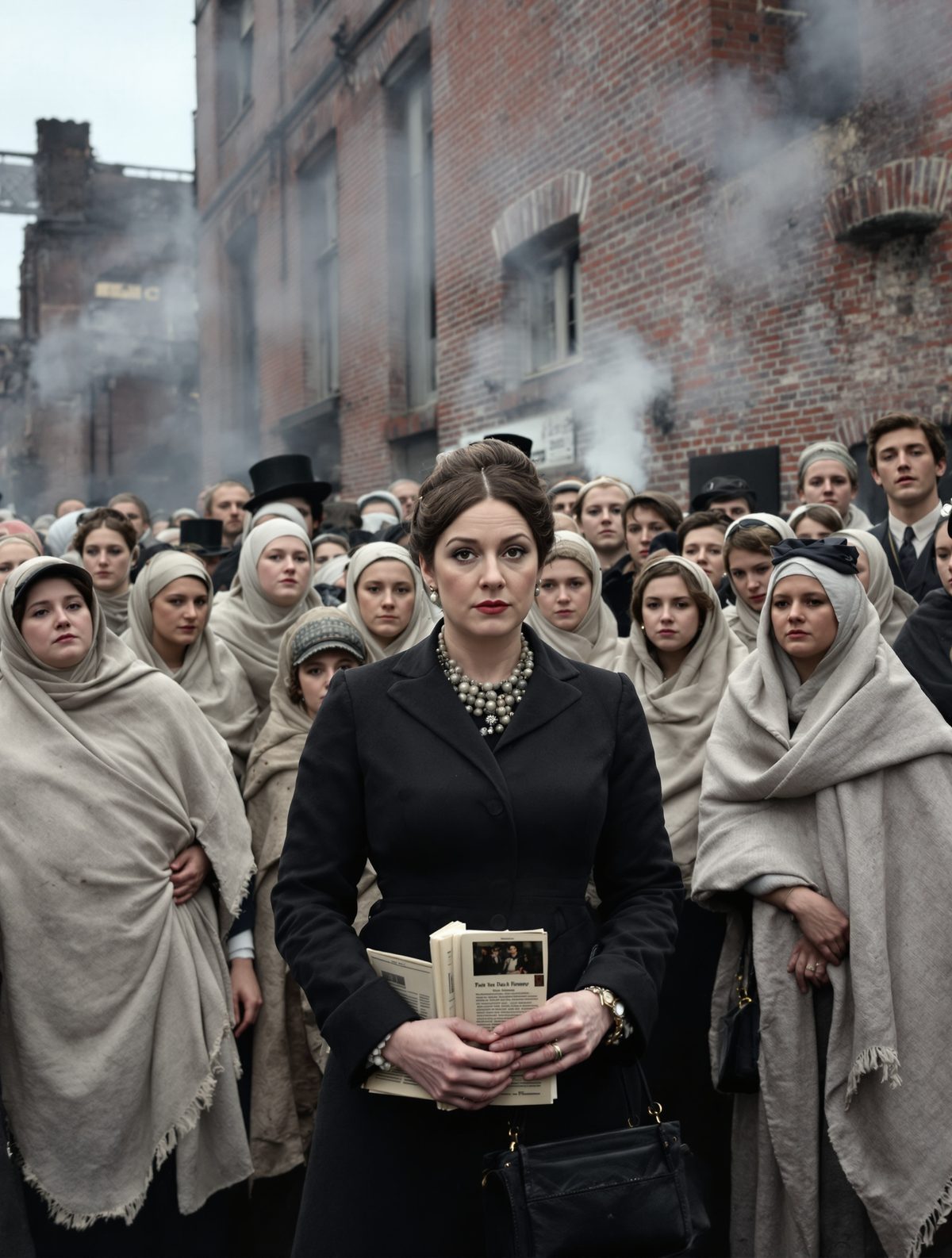
The breakthrough came during the 1913 Pilgrimage—a massive coordinated march where suffragists from across Britain converged on London. Unlike the militant suffragettes' confrontational protests, this was a carefully choreographed demonstration of respectability and resolve. Women walked hundreds of miles, carrying banners and gathering supporters along the way. The final rally in Hyde Park drew over 50,000 participants.
What most observers didn't realize was that this extraordinary logistical achievement had been planned and coordinated entirely through Fawcett's network of "social gatherings." The route planning, accommodation arrangements, media strategy, and crowd marshaling had all been discussed over tea and cakes in drawing rooms across the country.
The Pilgrimage marked a turning point. It became impossible to dismiss the suffragist movement as a small group of extremists when tens of thousands of respectable women were literally walking across the country to demand their rights. The careful cultivation of respectability that had begun in Millicent Fawcett's drawing room was paying dividends on a national scale.
Victory Served with Afternoon Tea
When war broke out in 1914, Fawcett made a strategic decision that would prove crucial to the suffrage cause. Rather than opposing the war effort, the NUWSS threw its considerable organizational machinery behind supporting the troops and the home front. The same women who had been secretly organizing suffrage campaigns seamlessly transitioned to organizing relief efforts, war bond drives, and volunteer recruitment.
This wasn't abandoning the cause—it was the ultimate demonstration of the very capabilities they had been arguing women possessed all along. By 1917, it had become impossible to argue that women weren't capable of full citizenship when they had just spent three years proving they were essential to running the country.
On February 6, 1918, the Representation of the People Act received royal assent, granting voting rights to women over 30 who met certain property qualifications. It wasn't complete equality—that wouldn't come until 1928—but it was the breakthrough they had been working toward for over two decades.
Millicent Fawcett, now 71, celebrated the victory the only way she knew how: she invited her closest collaborators for tea. But this time, there were no coded messages or hidden agendas. For the first time in over twenty years, it was just a tea party.
The Revolution in Retrospect
Today, when political movements live and die by their ability to generate viral hashtags and trending topics, there's something both quaint and profound about a revolution organized over afternoon tea. Millicent Fawcett and her network of drawing room conspirators understood something that our digital age sometimes forgets: lasting change requires more than momentary attention—it requires sustained, strategic, and deeply human connections.
Their success lay not in dramatic gestures but in the patient work of changing minds one conversation at a time, one cup of tea at a time. They proved that the most radical act might sometimes be the quietest one, and that the most British of traditions—the afternoon tea party—could become the foundation for transforming society itself.
In an era when we often assume that real political change requires dramatic confrontation, perhaps we should remember the women who won the vote not by smashing windows, but by passing the sugar bowl and asking, ever so politely, if their guests might consider signing a petition.