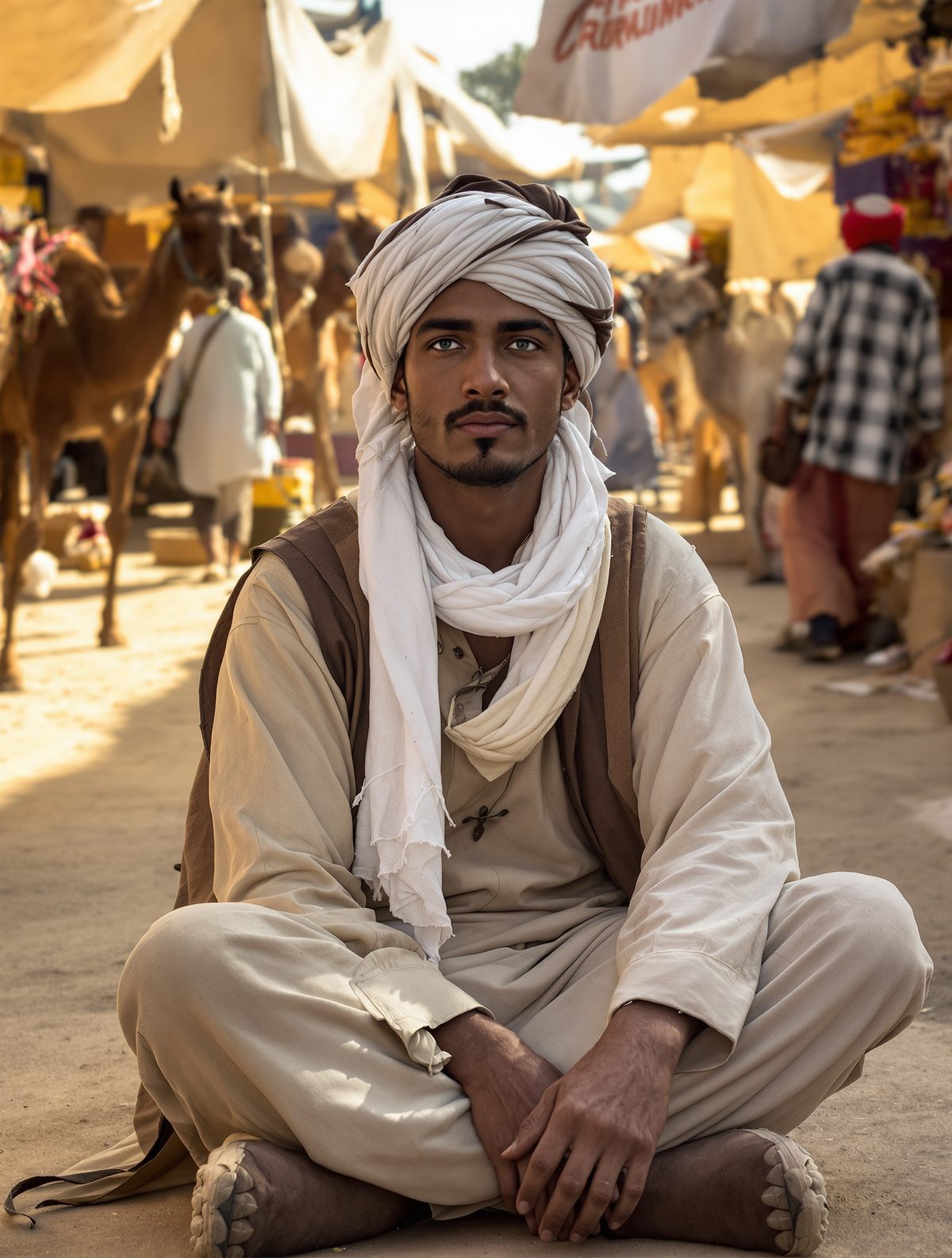
Picture this: It's July 1947, and in a sweltering Delhi office, a pale English barrister sits hunched over maps so old they still show the Mughal Empire. His name is Sir Cyril Radcliffe, he's never been to India before this month, and he has exactly 36 days to draw a line that will split 400 million people into two nations. No pressure.
The man wielding the pencil that would redraw the world had spent his career in London's genteel law courts, not carving up continents. Yet here he was, tasked with the most consequential act of mapmaking in modern history. What could possibly go wrong?
The Impossible Brief
When Lord Mountbatten, Britain's last Viceroy of India, approached Radcliffe with this assignment, the 48-year-old King's Counsel was enjoying a comfortable practice in commercial law. His expertise lay in tax disputes and corporate mergers, not ethnic demographics or religious geography. But that, paradoxically, was exactly why Mountbatten wanted him.
The logic was peculiarly British: precisely because Radcliffe knew nothing about India, he couldn't be accused of bias. He had no Indian friends to favor, no business interests to protect, no political axe to grind. He was the ultimate outsider—a blank slate who could make the tough decisions that local politicians couldn't stomach.
The brief was deceptively simple: divide the provinces of Punjab and Bengal along religious lines, with Muslim-majority areas going to the new nation of Pakistan, and Hindu-majority areas remaining in India. In practice, this meant drawing two lines—one in the west through Punjab's wheat fields and ancient cities, another in the east through Bengal's rivers and rice paddies—that would satisfy 400 million people while keeping the peace.
Oh, and by the way, independence was set for August 15, 1947. Radcliffe arrived in Delhi on July 8th. Do the math.
Armed Only with Outdated Maps and Tea
Radcliffe's tools were laughably inadequate for the task at hand. His maps were decades old, many dating back to the Victorian era. Population data was patchy and unreliable. The most recent census was from 1941, and six years of war, famine, and migration had shifted demographics significantly.
Working from a commandeered office in Delhi, Radcliffe pored over documents in the stifling heat, sustained by endless cups of tea and the grim determination that had carried Britain through the Blitz. He had two Boundary Commissions to assist him—one for Punjab, one for Bengal—but these were split equally between Indian and Pakistani representatives who agreed on virtually nothing.
The commissions were designed to deadlock, leaving every contentious decision to Radcliffe alone. When the Indian members wanted a particular district, the Pakistani members wanted it too. When both sides agreed something was worthless, Radcliffe knew there was probably oil underneath it.
The human complexity was staggering. Punjab alone contained 34 million people speaking dozens of languages and practicing multiple religions. Sikhs, Hindus, and Muslims had lived side by side for centuries, their communities intricately woven together. How do you separate threads that have been intertwined for generations without tearing the entire fabric apart?
The Weight of Impossible Decisions
Every line Radcliffe drew condemned someone to exile or minority status. Take the city of Gurdaspur in Punjab: its slight Muslim majority should have made it Pakistani territory, but Radcliffe awarded it to India because it contained the only road to Kashmir. This single decision may have determined the fate of Kashmir itself—still disputed today.
In Bengal, the situation was even more complex. Calcutta, the jewel of British India, was surrounded by Muslim-majority districts. Logic suggested the entire region should go to Pakistan, but Calcutta was too valuable to lose. So Radcliffe performed cartographic surgery, carving out Hindu-majority areas around the city while leaving millions of Hindus stranded in what would become East Pakistan (later Bangladesh).
The most heartbreaking decisions involved the railways. India's vast network had been built as a single system, with repair shops in one region servicing trains from another. Radcliffe's line severed these connections, leaving Pakistan with trains but no workshops, and India with workshops but no spare parts.
Then there were the canals. Punjab's agricultural wealth depended on an intricate irrigation system where the headwaters lay in one district and the fields in another. The Radcliffe Line cut across these lifelines like a sword through arteries, creating instant disputes over water rights that persist to this day.
The Secret Line
Perhaps the most surreal aspect of this entire episode was the secrecy surrounding Radcliffe's work. Even as independence day approached, nobody—not the politicians, not the armies, not the millions of ordinary people whose lives hung in the balance—knew exactly where the new border would run.
Radcliffe finished his maps on August 9th, just six days before independence. But Mountbatten, fearing riots, decided to keep the boundary secret until after the independence celebrations were over. For three crucial days, two new nations existed without knowing their own borders.
The delay was catastrophic. Wild rumors filled the information vacuum. People packed their belongings and fled toward imagined safety, only to discover they were running in the wrong direction. Others stayed put, confident they would end up in their preferred country, only to find themselves on the wrong side of history.
When the boundaries were finally announced on August 17th, 1947, chaos erupted. Trains packed with refugees crossed in opposite directions. Hindu and Sikh families abandoned ancestral homes in Pakistan, while Muslims fled centuries-old communities in India. The largest migration in human history had begun, and Radcliffe was already on a plane back to London.
The Mapmaker's Escape
Sir Cyril Radcliffe wanted nothing more than to forget his summer in India. He refused his fee for the work—₹40,000, a fortune at the time—and never spoke publicly about the experience. When offered a knighthood for his services, he accepted it quietly and moved on.
Back in London, Radcliffe returned to his comfortable law practice, handling corporate mergers and tax appeals. He never returned to the subcontinent, never saw the refugee camps that lined his borders, never witnessed the cities and villages his pencil had divided. Perhaps that was a mercy.
The human cost of his lines was staggering: between 200,000 and two million people died in the communal violence that followed partition. Fourteen million became refugees overnight—the largest forced migration in history until that point. Families were separated, communities destroyed, ancient bonds severed by a border that exists to this day.
Yet Radcliffe maintained until his death in 1977 that no other outcome was possible. Given the political realities of 1947, given the determination of Muslim League leader Muhammad Ali Jinnah to create Pakistan and Congress Party leader Jawaharlal Nehru's equal determination to preserve Indian unity, some form of partition was inevitable. The only question was where to draw the line.
Lines in the Sand, Scars in History
Today, the Radcliffe Line remains one of the world's most militarized borders. Indian and Pakistani soldiers face each other across fences and minefields, while nuclear weapons cast shadows over the cartographer's legacy. The Kashmir conflict, shaped by Radcliffe's decision to give Gurdaspur to India, has sparked four wars and countless smaller conflicts.
But here's the thing that should make us pause: Sir Cyril Radcliffe was probably the best person for this impossible job. Any local leader would have been accused of bias. Any expert on Indian affairs would have had conflicts of interest. Sometimes history demands that strangers make decisions locals cannot make themselves.
The real tragedy isn't that Radcliffe drew the lines badly—it's that the lines needed to be drawn at all. In five weeks, a London barrister with outdated maps accomplished what centuries of evolution might have achieved gradually and peacefully. The speed was the poison, not the medicine.
As we watch borders being redrawn and populations displaced around the world today, the summer of 1947 offers a sobering reminder: lines on maps are never just lines on maps. They are scars across the human heart, and they heal slowly, if at all.