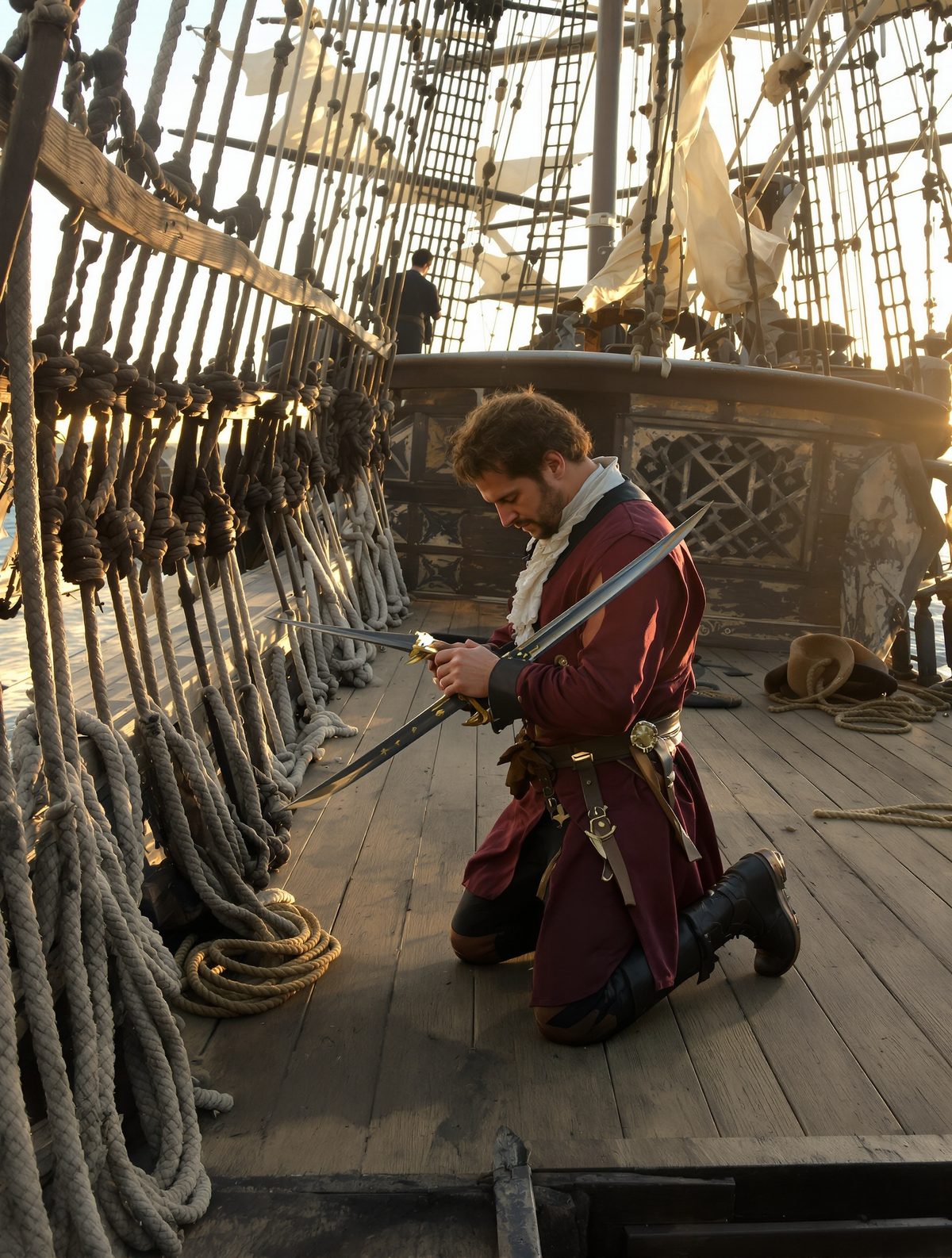
In the mist-laden jungles of the Gold Coast, under the spectral canvas of a moonlit sky, British forces navigated their way through the dense, fever-ridden labyrinths with a ferocity that could only belong to a man driven by the unyielding tick of a relentless clock. January 1874 marked a singular chapter in the storied halls of British military lore—a tale of cold calculation, unsparing efficiency, and historical dilemma in the heart of Africa's then-elusive interior. At the helm of this audacious endeavor was Sir Garnet Wolseley, a man whose reputation for methodical operations preceded him, whose campaign against the powerful Ashanti Empire changed the narrative of empire forever. Welcome, dear reader, to the untold legend of when Sir Garnet Wolseley marched through the night to smash Ashanti.
The Soul of a Strategist: Sir Garnet Wolseley's Mastery
Sir Garnet Wolseley, often celebrated as the architect behind some of the most brilliantly orchestrated military campaigns of the Victorian Empire, was a soldier who breathed life into precision. Born in Dublin in 1833, Wolseley's career was fashioned brick by strategic brick, a structure built upon the campaigns in Crimea and Canada, and honed with ruthless efficiency in Ashanti jungles. However, the march on Kumasi would define him, for he wove logistics into a majestic tapestry of warfare.
With 2,500 soldiers at his command, and against the very elements of nature conspiring to unveil their own calamities—heat, disease, and inhospitable terrain—Wolseley carved a strict timetable. He mapped a relentless push through to Kumasi, allowing barely twenty days to avoid succumbing to the marshes of malarial death. He wasn't just marching to face an adversary; he was wrestling with time itself.
The Jungle Awakens: A Foray into the Gold Coast
Far from the scenes of pomp and power in London, the forests of the Gold Coast presented an eerie spectacle of lush green that both entrapped and bewitched. In January 1873, the tension brewed as the Ashanti warriors assembled with vigor, defiantly standing against any encroachment on their sovereignty. The Ashanti—known for their valiant military prowess and gold-rich lands—understood their terrain, emboldened by heritage and a fearsome reputation.
Thus commenced Wolseley's odyssey, where the breath of the jungle formed a singular orchestra with the tramp of marching feet. The strategy was unyielding: a single road leading to the Ashanti capital, made possible by uniform discipline amidst the unpredictable conundrum of tropical adversities. The intricate labyrinth was littered with snares of nature itself, but Wolseley navigated them with the alacrity of a seasoned orienteer.
Kumasi: The Heart of the Ashanti Empire Ablaze
The final days of January 1874 would be chronicled in the annals of history as the time when the British forces reached Kumasi, bringing not only military force but the inevitable specter of change. The battle was not protracted; rather, it was an explosive clash that culminated swiftly. On the first morn of February, Wolseley watched as his troops set fire to the city—Kumasi was aflame, a vivid and visceral symbol of imperial dominance and the Ashanti's fiery resistance.
Remarkably, the capture of Kumasi was achieved in mere hours, a feat less about the storied wealth of Britain’s arsenal and more about the precision timing and logistical genius for which Wolseley was famed. His ability to orchestrate resupply chains, his medical units poised to battle not just men but malaria, was nothing short of astonishing. As plumes of smoke writhed skyward, one could see an empire's reach and an ancient kingdom's resilience colliding under the same African sun.
The Ticking Clock: Leaving the Jungle Behind
With Kumasi's ashes still cooling, Wolseley knew that victory was incomplete if it became pyrrhic, attaining success only to fall prey to the malarial reaper. The withdrawal was implemented with no less sagacity, meeting the self-imposed deadline with mere ticks left on the clock.
Remarkably, within three weeks, the British forces receded from the depths of the jungle, but not without the scars of the ordeal. By March's gentle breath, Wolseley and his men returned to the realm of civilization, taking with them the echoes of their jungle gambit. It was a bittersweet victory—asset and affliction intertwined—leaving both history and historians to muse over colonial conquests and their human toll.
The Legacy of a Midnight March: Lessons for Today
Fast forward from the victorious whispers of Victorian triumphs to the pulsing present—what does Wolseley's nighttime march through the fevered shadows of the Ashanti jungles reveal to the modern world? The campaign was celebrated, yet it prompts reflection on the interplay of power, cultural encounters, and the human cost of empire.
As the history of Africa continues to unfold, and as nations continue to reckon with imperial legacies, Wolseley’s campaign beckons us to contemplate the consequences of ambition and conquest. It is a testament to human ingenuity and folly, where precise spreadsheets of war led to the unpredictable tapestry of historical outcomes. Though textbooks may gloss over these shadows of empire, here at "Empire Untold," we remember them for the complex legends they are, forever entwined with the roots of history.