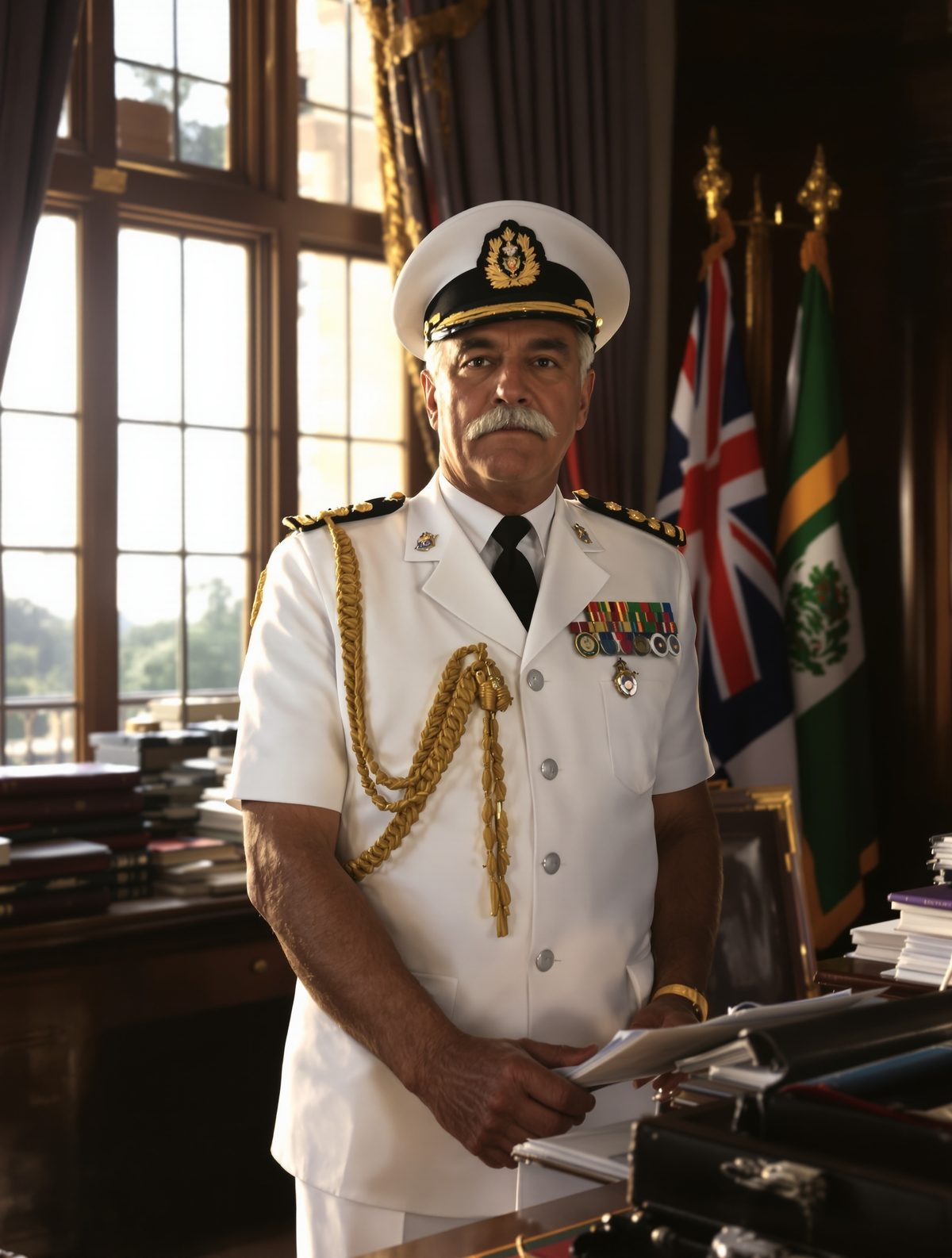
The telegraph operator's hands trembled as he tapped out what would likely be the last message from the besieged town of Ladysmith. Outside, Boer shells screamed overhead while British soldiers gnawed on strips of horse meat that had turned green in the suffocating South African heat. It was February 27, 1900, and Sir George White's garrison had been trapped for 118 hellish days. The message was brief, almost casual in its understatement: "We can hold out." What the telegram didn't mention was that they had perhaps hours left before complete collapse.
Unknown to White, General Redvers Buller's relief column was racing against time just miles away, their boots pounding the red earth as artillery thundered in the distance. The siege of Ladysmith had become a symbol of British imperial might hanging by a thread—and that thread was about to either snap or pull an empire back from the brink of humiliation.
The Trap Springs Shut
Ladysmith was never supposed to be a fortress. This dusty railway junction in Natal, named after the wife of the Cape Colony governor, had grown into a modest town of corrugated iron roofs and colonial optimism. But when the Second Boer War erupted in October 1899, Lieutenant-General Sir George White found himself commanding 13,500 British and colonial troops in what would become one of the most grueling sieges in military history.
The Boers, led by the cunning Commandant-General Piet Joubert, had studied European warfare with the dedication of scholars. They positioned their artillery on the surrounding hills—Pepworth Hill, Umbulwana, and the ominously named Gun Hill—creating a deadly circle of steel around the trapped garrison. What made this siege particularly brutal was that the Boers weren't trying to storm the town; they were content to starve it into submission while their modern German Krupp guns and French Creusot cannons rained death from above.
On November 9, 1899, the Boers demonstrated their technological sophistication when "Long Tom," a massive 155mm Creusot siege gun, began methodically destroying Ladysmith's buildings. The psychological effect was devastating. British soldiers, accustomed to fighting "primitive" colonial opponents, found themselves facing an enemy with better artillery than their own.
The Slow Death Begins
As the siege tightened its grip, White faced a logistical nightmare that would make modern military planners weep. The town's normal population of 3,500 had swollen to over 20,000 with the addition of troops and refugees. Food supplies, meant to last weeks, had to stretch for months. By December, the daily ration had been cut to a measly pound of bread and half a pound of meat per person—and even that wouldn't last.
White's quartermaster, Captain Altham, became a master of creative cuisine born from desperation. When the cavalry horses began dying from disease and malnutrition, they quickly found their way into the cooking pots. The garrison developed an entire taxonomy of horse meat: "chevril" became the polite term for what was once a proud mount. Soldiers learned to distinguish between the tough, stringy meat of artillery horses and the slightly more palatable flesh of cavalry chargers.
But it was the bread that truly tested human ingenuity and endurance. As flour ran out, the garrison's bakers began adding sawdust, ground bones, and even powdered locusts to stretch their supplies. One soldier wrote in his diary: "The bread is now more wood shaving than wheat, and tastes like what I imagine cardboard might if cardboard could be made worse."
Disease Becomes the Real Enemy
By January 1900, the siege had transformed from a military contest into a race between relief and complete biological collapse. Typhoid fever swept through the overcrowded town like wildfire through dry grass. The hospitals, originally designed for perhaps fifty patients, overflowed with nearly 2,000 sick and wounded men lying on makeshift beds of straw and rags.
Scurvy turned proud soldiers into shambling invalids with bleeding gums and loosening teeth. Fresh vegetables were a distant memory, and the garrison's attempts at growing sprouts in the besieged town met with limited success. Dr. Exham, the chief medical officer, noted that more men were dying from disease than from Boer bullets—a grim mathematics that haunted White's daily calculations.
The Boer bombardment never ceased, with "Long Tom" and its companions firing nearly 8,000 shells into the town during the siege. Civilians and soldiers alike developed a macabre skill at identifying incoming artillery by sound. The sharp crack of field guns differed from the deep, earth-shaking roar of the siege artillery, and veteran defenders claimed they could tell which street would be hit by the whistle of the approaching shell.
The Final Gamble
As February dragged on, White faced an impossible choice. His garrison was literally dying around him—disease claimed nearly 500 men during the siege—and food supplies had dwindled to perhaps a week's rations of the most basic sustenance. Yet surrendering Ladysmith would hand the Boers a propaganda victory that could encourage other colonial uprisings across the empire.
Meanwhile, General Redvers Buller's relief efforts had become a comedy of errors that wasn't funny to anyone involved. Buller had already failed twice to break through the Boer lines, suffering humiliating defeats at Colenso and Spion Kop. British newspapers dubbed him "Reverse Buller," and his reputation was in tatters. For his third attempt, Buller had devised a more methodical approach, using his artillery to systematically destroy Boer positions before advancing.
On February 27, as White composed his final telegram, neither commander knew how close they were to a breakthrough. Buller's forces had finally cracked the Boer defensive line at Pieters Hill, but the Boers were fighting a stubborn retreat. Inside Ladysmith, soldiers were too weak to cheer when they heard the distant gunfire—many wondered if it was just another false alarm in their long nightmare.
Deliverance at the Eleventh Hour
The relief of Ladysmith came not with trumpets and fanfare, but with the quiet professionalism of exhausted men doing their duty. On February 28, 1900, Major Hubert Gough's cavalry squadron rode into town to find scarecrow soldiers and emaciated civilians stumbling from their shelters. The Boers had slipped away in the night, their own forces worn down by months of siege warfare.
White's final telegram had been more than mere British understatement—it had been a calculated piece of psychological warfare. By projecting confidence even in extremity, he had maintained morale among his troops and prevented panic from completing what disease and starvation had started. When Buller's relief column arrived, they found a garrison that was medically broken but militarily intact.
The human cost had been staggering. Of the original 13,500-man garrison, nearly 500 had died from disease, hundreds more lay invalided, and the civilian population had suffered proportionally. Yet Ladysmith had held, and with it, British prestige in South Africa survived to fight another day.
Legacy of Iron and Sawdust
The siege of Ladysmith offers a masterclass in leadership under impossible circumstances and the terrible mathematics of colonial warfare. White's decision to hold the town—and his men's willingness to eat horse meat and sawdust bread rather than surrender—reflected both the best and worst of imperial military culture. Their endurance was genuinely heroic, yet the strategic value of their sacrifice remains debatable even today.
More importantly, Ladysmith demonstrated how modern technology was reshaping warfare in ways that traditional military thinking couldn't grasp. The Boers' use of magazine-fed rifles, modern artillery, and telegraph communications presaged the industrial slaughter of World War I. British commanders who had learned their trade fighting spears and ancient rifles suddenly found themselves outgunned by farmers with German cannons.
Today, as we watch modern sieges unfold in conflicts around the world, White's final telegram reminds us that leadership often comes down to projecting strength when you have none left to project. Sometimes, the most important victories are simply refusing to lose when losing seems inevitable. In our age of instant communication and social media, the image of that telegraph operator tapping out four simple words—"We can hold out"—speaks to the timeless power of determination in the face of overwhelming odds.