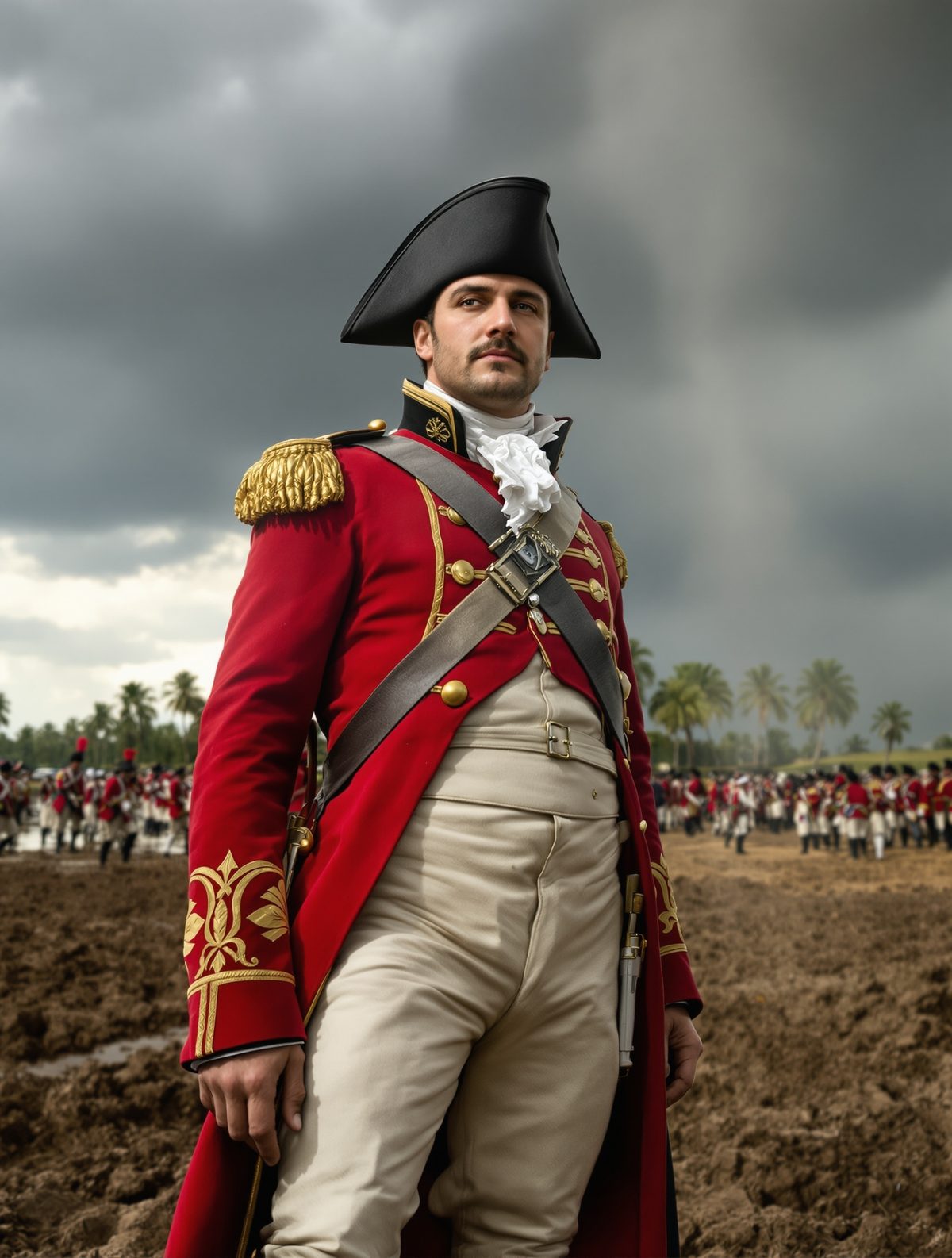
The volcanic sand beneath Captain James Cook's feet was stained with blood—his own. The greatest navigator in British history, the man who had charted more unknown waters than any explorer before him, lay dying on a remote Hawaiian beach. Around him, Hawaiian warriors brandished clubs and daggers, their war cries echoing across Kealakekua Bay. It was February 14, 1779, and the master of the Pacific was about to discover that even legends can fall.
What brought Cook to this violent end wasn't a storm at sea or scurvy on a long voyage—it was a stolen boat, wounded pride, and a catastrophic misreading of Hawaiian culture that would cost Britain its most celebrated explorer.
The Reluctant Return to Paradise
Cook never intended to return to Hawaii. When he first arrived at the Hawaiian Islands in January 1778—which he named the Sandwich Islands after his patron, the Earl of Sandwich—the timing had seemed almost divine. The Hawaiians were in the midst of Makahiki season, a period of peace and fertility when their god Lono was said to walk among mortals. Cook's ships, with their billowing white sails, bore an uncanny resemblance to the symbols of Lono.
The Hawaiians welcomed Cook as a deity made flesh. They showered his crew with gifts, offered their women, and treated the British sailors like gods. It was, by all accounts, the most hospitable reception any European explorer had ever received in the Pacific. Cook departed in February 1778, continuing his search for the Northwest Passage, the elusive Arctic route that promised to revolutionize global trade.
But the Pacific had other plans. Just a week after leaving Hawaiian waters, Cook's flagship HMS Resolution suffered a devastating blow. The ship's foremast cracked—a potentially fatal damage that would make the vessel unseaworthy in rough seas. With no other option, Cook made the fateful decision to return to Kealakekua Bay for repairs.
This time, there would be no divine welcome. The Makahiki season had ended, and the Hawaiians were now in the season of Ku, the god of war. Cook's unexpected return didn't fit their religious calendar. How could a god return when he wasn't supposed to? Whispers spread through the Hawaiian villages: perhaps these pale strangers weren't gods after all.
The Theft That Sparked a War
The trouble began with what seemed like a minor incident. On February 13, 1779, Hawaiian islanders stole the Discovery's cutter—a large rowing boat essential for ferrying supplies between ship and shore. For Cook, this wasn't just theft; it was an intolerable challenge to British authority.
Cook had built his reputation not just on navigation, but on maintaining strict discipline and respect during his Pacific voyages. He had successfully dealt with similar situations before through a combination of diplomacy and calculated intimidation. His standard procedure was elegantly simple: take a local chief hostage until the stolen goods were returned. It had worked flawlessly in Tahiti, Tonga, and other Pacific islands.
But Hawaii wasn't like the other islands Cook had conquered through psychology and superior firepower. The Hawaiian society was more complex, more militarized, and more politically sophisticated than Cook realized. The man he planned to take hostage wasn't some minor village headman—it was Kalaniʻōpuʻu, the paramount chief of the Big Island, a warrior-king who commanded thousands of fighters.
What Cook saw as routine diplomacy, the Hawaiians interpreted as an act of war.
The God Who Bled
At dawn on February 14, Cook went ashore with nine marines, planning to invite Kalaniʻōpuʻu aboard his ship as an honored guest—and then refuse to let him leave until the boat was returned. Initially, the plan seemed to work. The elderly chief agreed to accompany Cook, apparently unaware of the British captain's true intentions.
But as they walked toward the beach, Kalaniʻōpuʻu's wives and advisors surrounded the group, pleading with their chief not to board the British ship. The crowd grew larger and more agitated. Warriors began appearing with spears and clubs. The tension was electric.
Then came the news that shattered any hope of peaceful resolution: Cook's men had killed a Hawaiian chief named Kalimu while trying to prevent other boats from leaving the bay. The crowd's mood turned murderous. Cook found himself trapped on the beach with a handful of marines, facing hundreds of increasingly hostile Hawaiians.
In that moment, Cook made a decision that revealed the fatal flaw in his understanding of Hawaiian culture. He drew his sword and fired his musket into the crowd. The shot struck a Hawaiian warrior, wounding but not killing him.
The Hawaiians stared in shock—not at the violence, but at the blood. Gods don't bleed. Gods don't miss their targets. In that instant, three years of divine status evaporated. Captain James Cook had just proven he was mortal.
The Fall of a Legend
What happened next unfolded with terrifying speed. A Hawaiian warrior named Kalaimanokahoʻowaha struck Cook with a club, knocking the British captain to his knees. As Cook struggled to rise, a dagger found its mark between his shoulder blades. The man who had sailed over 200,000 miles and mapped a third of the globe fell face-first into the shallow water of Kealakekua Bay.
The Hawaiian warriors fell upon Cook's body with savage intensity, stabbing and clubbing long after he was dead. They dragged his corpse up the beach, and what followed became the stuff of British nightmares: they dismembered Cook's body according to Hawaiian ritual, treating him like a defeated chief rather than a honored guest.
Meanwhile, Cook's men watched helplessly from their boats offshore as their legendary captain was killed and mutilated. Lieutenant James King later wrote: "I saw him fall with his face in the water... he was immediately dragged on shore and surrounded by the enemy, who snatched the dagger out of each other's hands, showed a savage eagerness to have a share in his destruction."
The irony was devastating. Cook, who had survived shipwreck on the Great Barrier Reef, navigated the treacherous waters around Cape Horn, and endured three grueling voyages through uncharted Pacific waters, was killed in what should have been a routine diplomatic incident on a peaceful tropical beach.
The Aftermath: When Gods Become Men
Cook's death sent shockwaves through both Hawaiian society and the British Empire. The Hawaiians, perhaps recognizing they had killed someone of great importance, eventually returned parts of Cook's body for burial at sea—though they kept some remains according to their custom for honored enemies.
For Britain, losing Cook was like losing Nelson at Trafalgar—except Cook died not in glorious naval battle, but in what appeared to be a squalid beach skirmish over a stolen boat. The Admiralty struggled with how to frame the death of their greatest explorer. Was he a martyr to British expansion, or a victim of his own tactical miscalculation?
The truth was more complex than either narrative. Cook's death marked the end of the age of innocent exploration, when European navigators could present themselves as gods to indigenous peoples. The Hawaiians had called Cook's bluff, and in doing so, they had demonstrated that indigenous Pacific societies were far more sophisticated than European accounts suggested.
Cook's legacy shaped the Pacific for centuries to come. His detailed charts and journals opened the region to European colonization, missionary activity, and eventually, American expansion. Hawaii itself would become a crucial staging ground for American Pacific ambitions, ultimately becoming the 50th U.S. state. The beach where Cook died is now a monument—not to British imperialism, but to the complex collision between European ambition and Pacific resistance.
In the end, Captain Cook's death teaches us that even the most accomplished individuals are products of their time and culture. The man who could read ocean currents and stellar navigation with genius-level precision completely misread human nature when it mattered most. His final stand on a Hawaiian beach reminds us that true exploration isn't just about mapping new territories—it's about understanding the people who call those territories home.