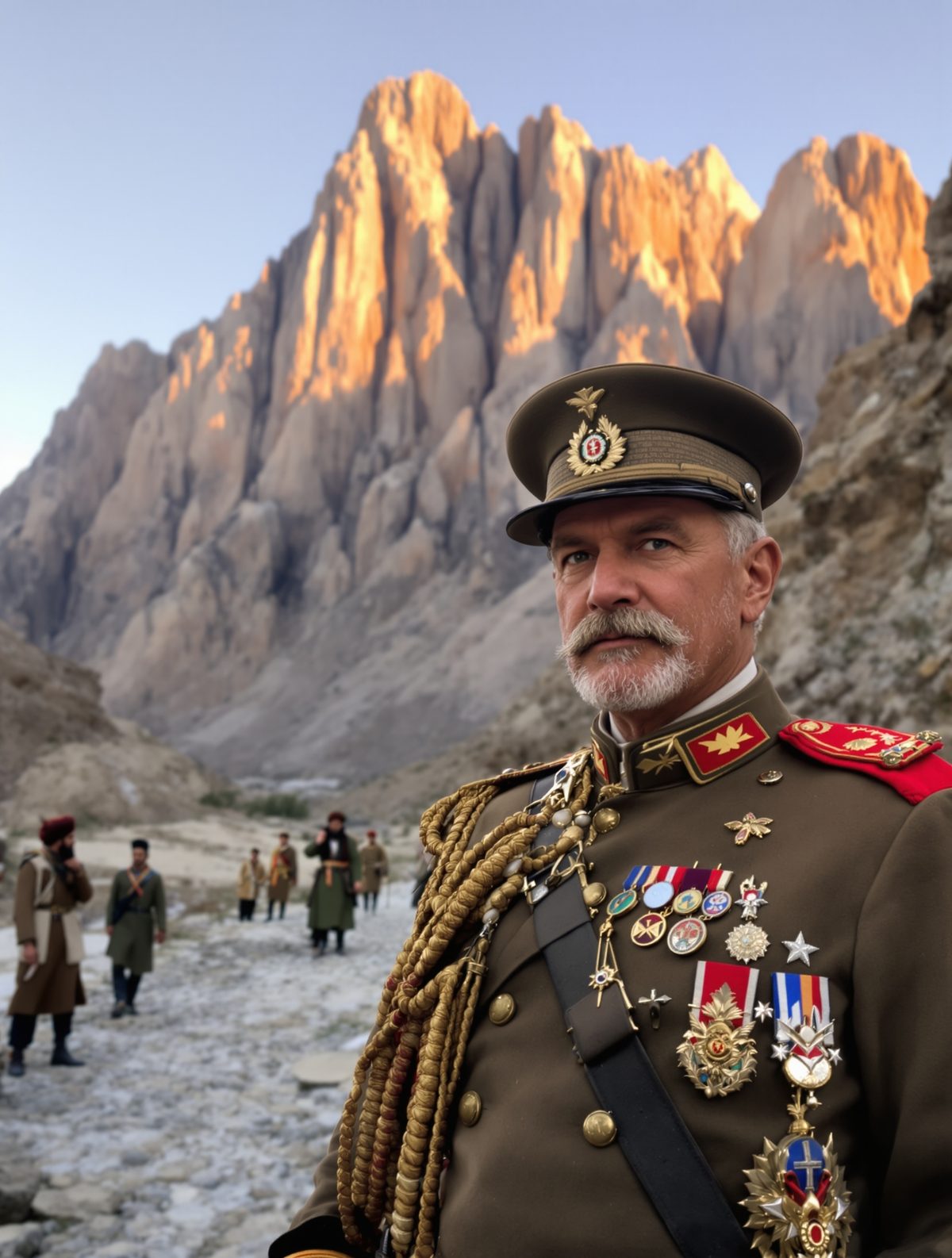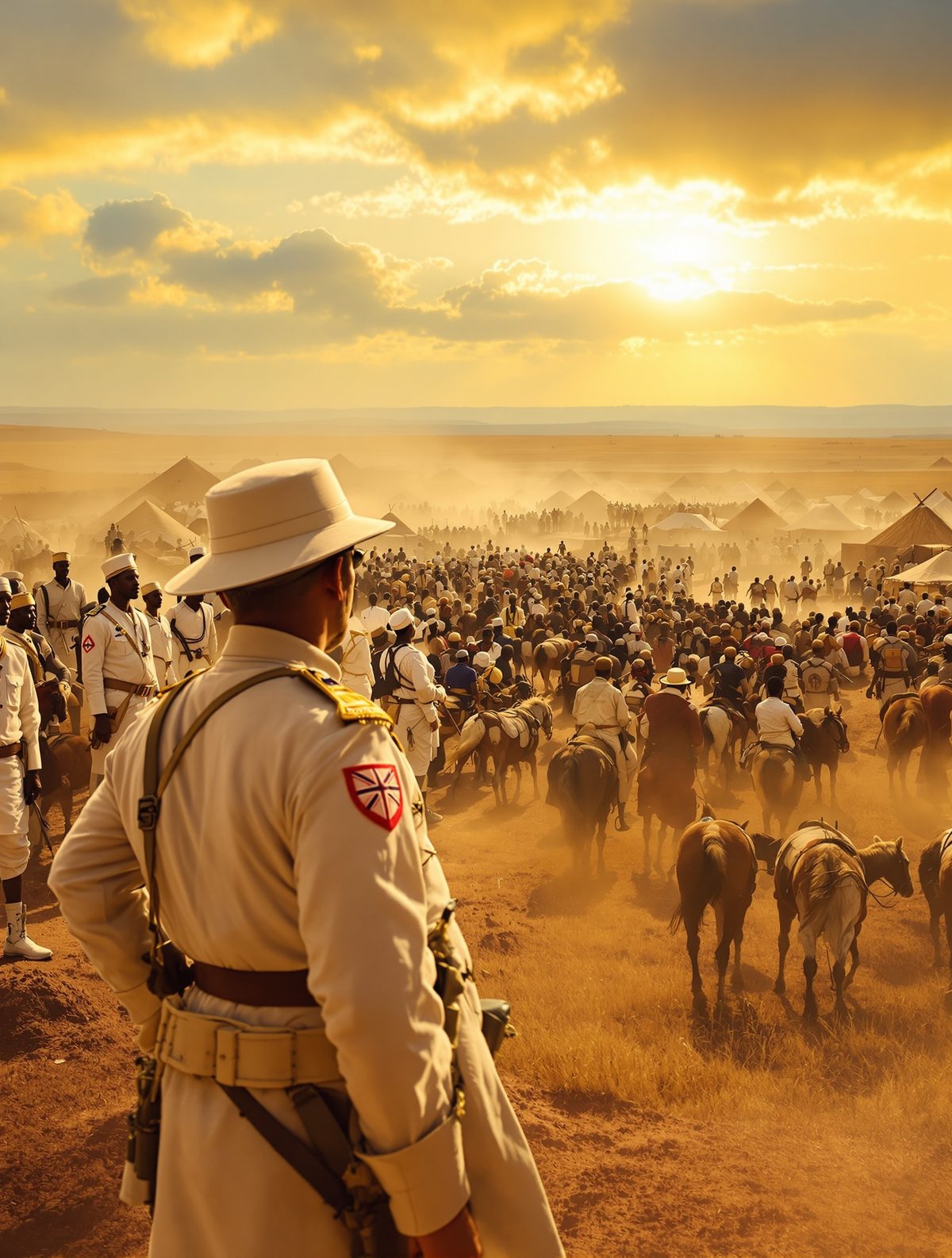
Picture this: It's March 24, 1947. A gleaming York transport aircraft touches down on the scorching tarmac of New Delhi's Palam Airport. Out steps a 46-year-old naval officer with movie-star looks and an impossible task. Lord Louis Mountbatten, great-grandson of Queen Victoria and cousin to King George VI, has just become the last man who will ever rule over 400 million Indians as their Viceroy. His briefing papers give him 15 months to dismantle the world's largest empire. His conscience gives him 73 days to prevent a bloodbath that could eclipse the horrors of two world wars.
What happened next would redraw the map of Asia forever, create two new nations in ten weeks, and set off the largest migration in human history. This is the untold story of how one man's desperate gamble with time changed the fate of a subcontinent.
The Ticking Time Bomb Viceroy
When Mountbatten arrived in Delhi, India was a powder keg with a lit fuse. Communal riots between Hindus and Muslims had already claimed thousands of lives across Bengal and Bihar. The British Raj, which had controlled India for nearly two centuries, was hemorrhaging money and men. World War II had bankrupted Britain, and keeping 400 million Indians under control was no longer feasible—or morally defensible.
But here's what the history books often skip: Mountbatten wasn't Britain's first choice for the job. The position had been offered to several other candidates, including Field Marshal Alexander, who wisely declined. Mountbatten accepted partly because his wife Edwina convinced him it was his duty, and partly because he believed his royal connections and wartime reputation as Supreme Allied Commander in Southeast Asia might carry weight with Indian leaders.
The original plan, crafted by the previous Viceroy Lord Wavell, called for a gradual transition ending in June 1948. Mountbatten took one look at the spreading violence and made a decision that shocked Whitehall: he would accelerate the timeline by ten months. Instead of 15 months, he would partition India and transfer power in just 10 weeks and 3 days. His staff thought he'd lost his mind.
The Impossible Trinity: Gandhi, Nehru, and Jinnah
To understand Mountbatten's frantic race against time, you need to grasp the personalities he was dealing with. Imagine trying to broker peace between three men who couldn't have been more different, each representing millions of followers ready to die for their cause.
There was Mahatma Gandhi, 77 years old, weighing barely 110 pounds, who still believed India could remain united. Gandhi had spent decades preaching non-violence, but even his moral authority was losing its grip as communal hatred spread like wildfire. In their private meetings, Mountbatten found Gandhi increasingly isolated from his own Congress Party leadership.
Then there was Jawaharlal Nehru, the sophisticated, Cambridge-educated leader of the Indian National Congress. Nehru wanted power—and wanted it fast. He was willing to accept partition if it meant getting the British out and becoming Prime Minister of independent India. What most people don't know is that Nehru and Mountbatten's wife Edwina had developed an intimate friendship that historians still debate, adding a layer of personal drama to these world-changing negotiations.
Finally, there was Muhammad Ali Jinnah, the chain-smoking, razor-sharp lawyer who demanded a separate Muslim homeland called Pakistan. Jinnah was dying of tuberculosis—a fact he kept secret from everyone except his doctor. He knew he had months, not years, to achieve his dream of Pakistan. This medical secret added desperate urgency to his negotiations with Mountbatten.
The Radcliffe Line: Carving Up a Continent in 36 Days
Perhaps the most astounding aspect of the entire partition was how the borders were drawn. Mountbatten assigned this mind-boggling task to Sir Cyril Radcliffe, a brilliant London barrister who had never set foot in India before August 1947. Radcliffe had exactly 36 days to divide Bengal and Punjab—two provinces with a combined population larger than the entire United States at the time.
Working with outdated maps and incomplete census data, Radcliffe essentially carved up the lives of 88 million people using a pencil and ruler. He had to decide which villages went to India and which to Pakistan, often splitting communities that had coexisted for centuries. The pressure was so intense that Radcliffe later burned all his papers and refused to ever discuss partition for the rest of his life.
Here's a detail that will shock you: the final borders weren't announced until after independence. India and Pakistan became independent nations on August 14 and 15, 1947, respectively, without even knowing exactly where their borders lay. The Radcliffe Award was published on August 17, two days after independence. Imagine founding a country without knowing where it begins and ends.
August 15, 1947: Birth and Exodus
As the clock struck midnight on August 15, 1947, Nehru delivered his famous "Tryst with Destiny" speech to the Indian Constituent Assembly. At the same moment, in Karachi, Pakistan was celebrating its own independence. Mountbatten had done the impossible—he had transferred power peacefully and on schedule.
But the celebration was short-lived. Within hours of the border announcement, the largest migration in human history began. An estimated 14 million people started moving—Hindus and Sikhs fleeing from Pakistan to India, Muslims fleeing in the opposite direction. Entire villages emptied overnight. Trains arrived at stations filled with corpses. Conservative estimates put the death toll at 200,000; some historians believe it was over a million.
What's rarely discussed is Mountbatten's reaction to the violence. In his private diary, he wrote: "The awful thing is that most of it could have been avoided if we had had more time." But his own intelligence reports suggested that delaying partition would have only made the bloodshed worse. He was trapped between two catastrophes and chose the one he thought would be shorter.
The Secret That Changed Everything
Here's the untold story that explains Mountbatten's desperate rush: British intelligence had intercepted communications suggesting that if partition dragged on, the Indian Army itself might split along religious lines. This would have meant not just communal riots, but full-scale civil war with modern weapons. The specter of Indian soldiers turning their guns on each other terrified British officials more than anything else.
Mountbatten also faced pressure from an unexpected source—his own government back in London. Prime Minister Clement Attlee was dealing with economic crisis, including bread rationing, and needed to bring British troops home immediately. Every month of delay cost Britain £40 million it didn't have.
Perhaps most crucially, Mountbatten realized that his 73-day gamble might work precisely because it was so rushed. The Indian leaders were so focused on the mechanics of independence that they had less time to obsess over the details that might have derailed negotiations. Speed became a negotiating tactic.
Legacy of the 73-Day Miracle
Today, as we watch conflicts unfold around the world with agonizing slowness, Mountbatten's 73-day partition seems almost miraculous in its decisiveness. In an age where peace talks can drag on for decades, he created two functioning nation-states in ten weeks. Both India and Pakistan, despite their many challenges, have survived as independent countries for over 75 years.
But the human cost remains staggering. Families were separated forever. Ancient communities were destroyed. The wounds of partition still influence politics in both countries, from Kashmir to nuclear weapons policy. Every time India and Pakistan face off across their borders, we see the legacy of those frantic 73 days in 1947.
Perhaps the most sobering lesson is this: when empires fall, they rarely fall gracefully. Mountbatten's race against time reminds us that even the most well-intentioned leaders face impossible choices. In just 73 days, he proved that history's greatest turning points often happen not despite desperate haste, but because of it. The question that haunts us still is whether there could ever have been a better way—or if Mountbatten's impossible deadline was the only thing that prevented an even greater catastrophe.