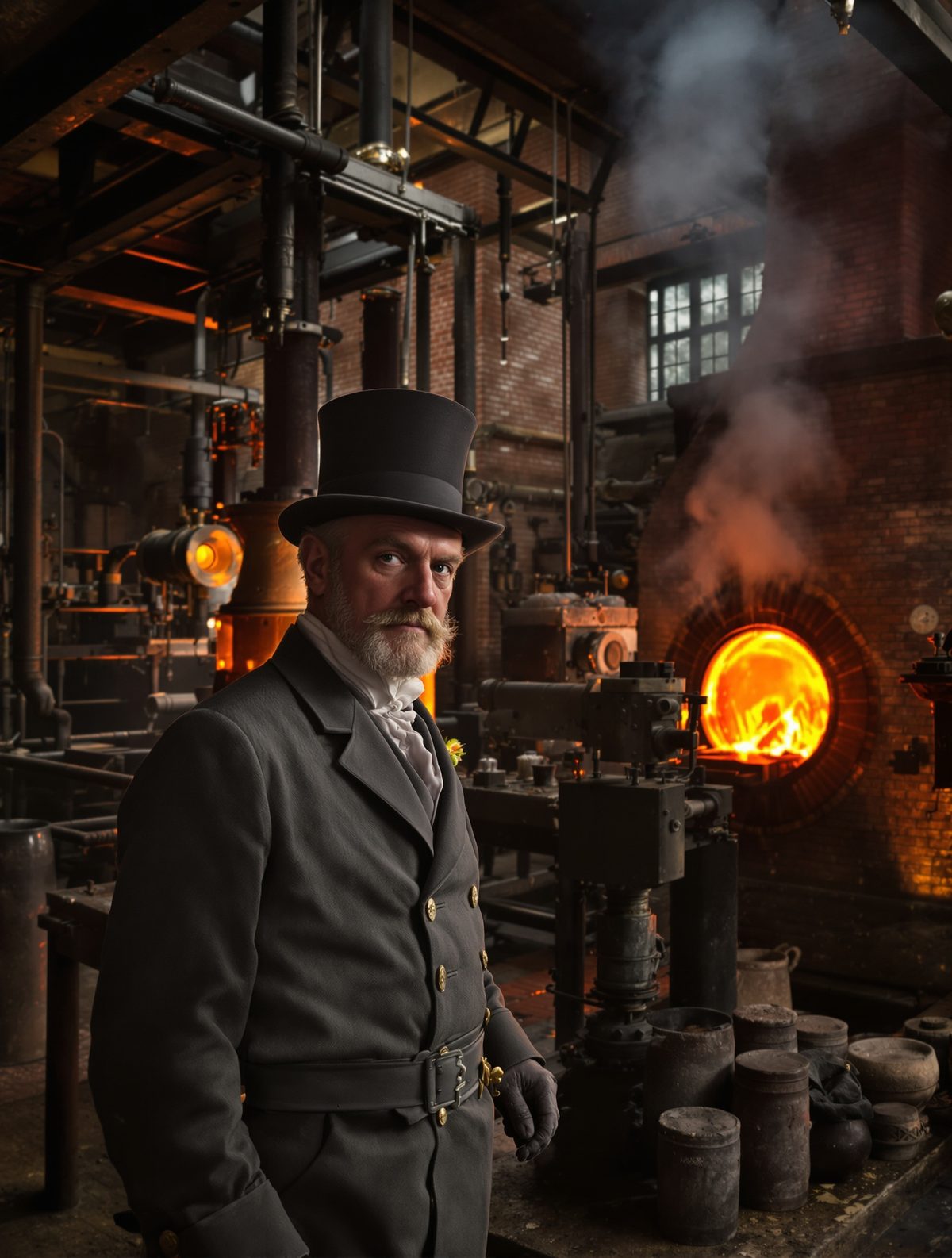
The roar was unlike anything Sheffield had ever heard. On that sweltering August morning in 1856, Henry Bessemer's peculiar pear-shaped contraption began to breathe fire like a mechanical dragon. Molten iron, glowing white-hot at 2,800 degrees Fahrenheit, cascaded into the vessel's mouth while compressed air screamed through pipes at the bottom. What emerged twenty minutes later would reshape the world: pure, strong steel that had taken craftsmen weeks to produce was now flowing like liquid gold in less time than it takes to brew a pot of tea.
In that moment, Britain didn't just witness an industrial breakthrough—it seized the keys to global dominance. The age of steel had begun, and for the next half-century, the world would be built from British foundries.
The Problem That Stumped an Empire
By the 1850s, Britain ruled the waves and powered the world's first industrial revolution, yet it faced a maddening paradox. The empire desperately needed steel—stronger than iron, more flexible than cast metal—but producing it was an agonizingly slow and expensive process. The traditional method, called cementation, involved packing wrought iron bars with charcoal and heating them in furnaces for up to a week. Even then, only the surface layers converted to steel.
The superior crucible method, developed in Sheffield around 1740, could produce higher quality steel but at astronomical cost. Master steelmaker Benjamin Huntsman's process required melting small batches of iron in clay crucibles heated to extreme temperatures. A single crucible held merely 60 pounds of metal and took days to complete. Britain's growing railway network alone demanded 300,000 tons of steel rails annually—an impossible figure given existing production methods.
Henry Bessemer understood this frustration intimately. Born in 1813 to a French immigrant father who had fled revolutionary France, Bessemer inherited both entrepreneurial spirit and engineering genius. By his forties, he had already made his fortune with innovations ranging from improved printing processes to a revolutionary method for making gold paint. But it was a conversation about artillery that would spark his greatest invention.
A Cannon's Roar Sparks Revolution
The Crimean War of 1854-1856 exposed critical weaknesses in British military technology. Cast iron cannons frequently exploded under the pressure of firing, killing their own crews. During a meeting with Napoleon III in Paris, Bessemer pitched an improved artillery shell design, only to be told that French cannons were too weak to fire it safely. The solution, everyone agreed, required stronger steel gun barrels—but no one could produce them affordably.
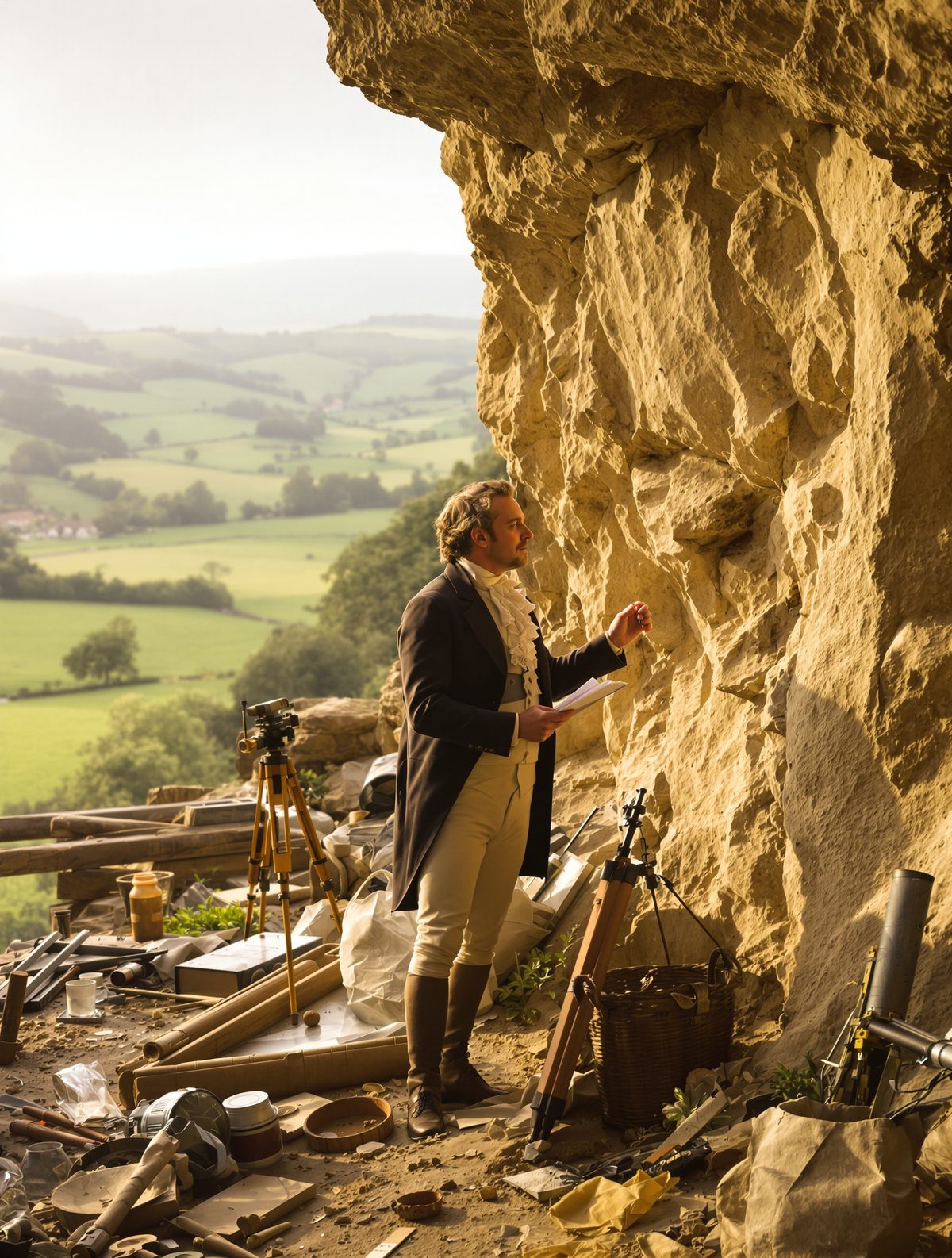
Returning to his London workshop, Bessemer attacked the problem with characteristic audacity. Instead of slowly converting iron to steel with external heat, why not use the iron's own impurities as fuel? His breakthrough insight was deceptively simple: blast compressed air through molten iron, and the oxygen would combine with carbon and other impurities, burning them away while generating enough heat to keep the metal liquid.
The first experiments were spectacular failures. His initial converter—a crude cylinder lined with firebricks—promptly exploded, nearly killing Bessemer and his assistants. Undeterred, he redesigned the vessel as a tilting, pear-shaped converter that could be loaded with molten iron from the top and emptied from the side. By 1856, he was ready for a public demonstration.
Twenty Minutes That Shook the World
On August 11, 1856, the British Association for the Advancement of Science gathered in Cheltenham to hear papers on the latest scientific discoveries. Buried in the day's proceedings was Henry Bessemer's presentation: "The Manufacture of Iron Without Fuel." The title undersold the magnitude of what followed.
Bessemer described his process with characteristic precision: molten pig iron, heated to approximately 2,800°F, was poured into his converter. Compressed air, delivered at 25 pounds per square inch, was then forced through tuyeres (pipes) at the bottom of the vessel. The reaction was immediate and dramatic. Flames shot 30 feet into the air as carbon burned away, while silicon and manganese oxidized in a shower of sparks that illuminated the foundry like daylight.
The most remarkable aspect was the process's self-sustaining nature. The burning impurities generated enough heat to keep the iron molten throughout the conversion, eliminating the need for external fuel—hence Bessemer's provocative title. What had once required days of careful heating now happened automatically in 15-20 minutes.
The audience was stunned. Here was a process that could convert five tons of pig iron into steel in the time it took for lunch. The cost implications were staggering: steel that had sold for £60 per ton could now be produced for £6-7 per ton. Britain had just acquired the industrial equivalent of a nuclear weapon.
Steel Fever Grips the Nation
The reaction was immediate and chaotic. Investors scrambled to license Bessemer's process, while established iron masters dismissed it as a dangerous novelty. The Sheffield steel community, proud guardians of centuries-old traditions, initially rejected the innovation with characteristic Yorkshire stubbornness.
Their skepticism seemed justified when early licensees reported disastrous results. The Bessemer process worked brilliantly with the low-phosphorus iron ore that Henry had used in his demonstrations, but most British ores contained high levels of phosphorus that made the resulting steel brittle and useless. For two years, "Bessemer steel" became synonymous with expensive failure.
Salvation came from an unexpected source. Robert Mushet, a Scottish metallurgist, discovered that adding spiegeleisen—a manganese-rich iron alloy—to the converter removed excess oxygen and restored carbon content to optimal levels. This crucial refinement, which Mushet generously allowed Bessemer to use without royalty payments, finally made the process commercially viable.
By 1858, Bessemer had established his own steelworks in Sheffield, producing 200 tons weekly. The city's transformation was remarkable: forests of new chimneys rose across the landscape while the night sky glowed orange with converter flames. Sheffield, already famous for cutlery and tools, became the steel capital of the world.
Building Tomorrow with British Steel
The impact was nothing short of revolutionary. Cheap, abundant steel transformed every aspect of Victorian life with breathtaking speed. Railway construction accelerated dramatically as steel rails replaced brittle iron ones—steel rails lasted twenty times longer and could support much heavier loads. By 1870, Britain was producing 240,000 tons of steel annually, compared to just 49,000 tons in 1860.
Architecture soared to new heights, literally. The age of steel-frame construction began with structures like the Forth Bridge in Scotland, completed in 1890 using 54,000 tons of steel in a design that would have been impossible with iron. Ships grew larger and stronger—the SS Great Eastern, launched in 1858, used Bessemer steel in its hull and remained the world's largest ship for four decades.
Perhaps most significantly, cheap steel enabled Britain to export its industrial revolution. British-made steel built railways across India, bridges spanning American rivers, and skyscrapers rising in New York. The empire's workshops supplied the raw material for global modernization, generating enormous wealth that flowed back to Britain.
Bessemer himself prospered magnificently. His patent royalties—initially set at £1 per ton of steel produced—generated income equivalent to millions in today's currency. He was knighted in 1879 and spent his later years as a gentleman scientist, continuing to innovate until his death in 1898.
The Foundation of Everything
Today, as we inhabit cities of steel and glass, travel in steel vehicles along steel-reinforced highways, and work in steel-framed buildings, it's worth remembering that August day in 1856 when Henry Bessemer's converter first roared to life. That twenty-minute process didn't just create steel—it forged the foundation of the modern world.
The Bessemer process remained the dominant steelmaking method until the 1960s, when it was superseded by even more efficient techniques. But its legacy endures in every bridge, building, and machine around us. In transforming Britain into the steel capital of the world, Bessemer's invention proved that sometimes the most profound revolutions happen not in palaces or parliaments, but in the workshops of determined inventors willing to turn their most audacious dreams into roaring, flame-breathing reality.