The horse's eyes widened in terror as it felt the ground beneath its hooves give way. What had appeared to be solid earth was nothing more than a thin skin of moss floating over a bottomless pit of water and decay. Within seconds, the magnificent Highland pony had vanished entirely into the black maw of Chat Moss—one of Scotland's most notorious killer bogs. Its rider barely escaped with his life, scrambling across floating islands of vegetation that trembled with every desperate step.
This was Scotland in 1803. A land where a journey of thirty miles could take three days, where horses and men regularly disappeared without trace, and where the very concept of a "road" was as foreign as electricity or steam engines. The Scottish Highlands weren't just remote—they were virtually unreachable, cut off from civilization by some of the most hostile terrain in Europe.
But everything was about to change, thanks to a shepherd's son with an impossible dream and the engineering genius to make it reality.
The Shepherd's Son Who Dared to Dream
Thomas Telford was born in 1757 in a single-room cottage in Eskdale, Dumfriesshire—so poor that the roof was made of turf and the floor was bare earth. His father, a shepherd, died when Thomas was just three months old, leaving his mother to raise him in grinding poverty. By all accounts, young Thomas should have followed his father into shepherding, living and dying in obscurity among the Border hills.
Instead, he became fascinated by stone. As a teenager, he would examine every bridge, every wall, every building he encountered, puzzling out how they were constructed. At fourteen, he was apprenticed to a stonemason, and by his twenties, he was carving decorative stonework for the wealthy estates of Edinburgh. But Telford had grander ambitions. He taught himself mathematics, engineering, and architecture, devouring every technical manual he could find.
By 1803, at age forty-six, Telford had already made his mark building the Ellesmere Canal in Wales and the bridges that spanned it—engineering marvels that defied conventional wisdom about what was possible. When the British government decided something had to be done about Scotland's transportation crisis, there was only one man they turned to: the shepherd's son who had never met an impossible project he wouldn't tackle.
A Land Where Horses Vanished and Time Stood Still
The Scotland that Telford surveyed in 1803 was a place of breathtaking beauty and deadly practicality. The aftermath of the Jacobite uprisings had left the Highlands deliberately isolated—the government had systematically destroyed roads and bridges to prevent future rebellions. What remained was a network of ancient drovers' paths and Highland tracks that were barely suitable for men on foot, let alone wheeled vehicles.
The bogs were the worst obstacle of all. These weren't simple muddy patches—they were geological death traps millions of years in the making. Formed from millennia of decomposing vegetation in oxygen-starved water, they created a landscape of false surfaces and hidden depths. The locals had learned to read the subtle signs—the particular shade of green that indicated solid ground, the slight tremor that warned of danger beneath.
Travelers who didn't possess this ancient knowledge paid a terrible price. The records from Highland parishes are filled with matter-of-fact entries: "Duncan MacLeod, lost to the bog near Invermoriston." "Two horses and a cart, disappeared without trace on the road to Fort William." The peat would preserve these victims perfectly, but finding them was nearly impossible in the vast, trackless wilderness.
Mail delivery between Edinburgh and Thurso took two weeks—when it arrived at all. Communities were so isolated that some Highland villages had developed their own dialects, distinct from those just twenty miles away. It was, as one contemporary observer noted, "as if Scotland contained a dozen different countries, each completely cut off from the others."
The Floating Road That Shouldn't Exist
Conventional engineering wisdom said you couldn't build a road across a bog—the weight would simply cause it to sink without trace. Telford looked at the problem differently. If the bog wouldn't support a road, then the road would have to support itself.
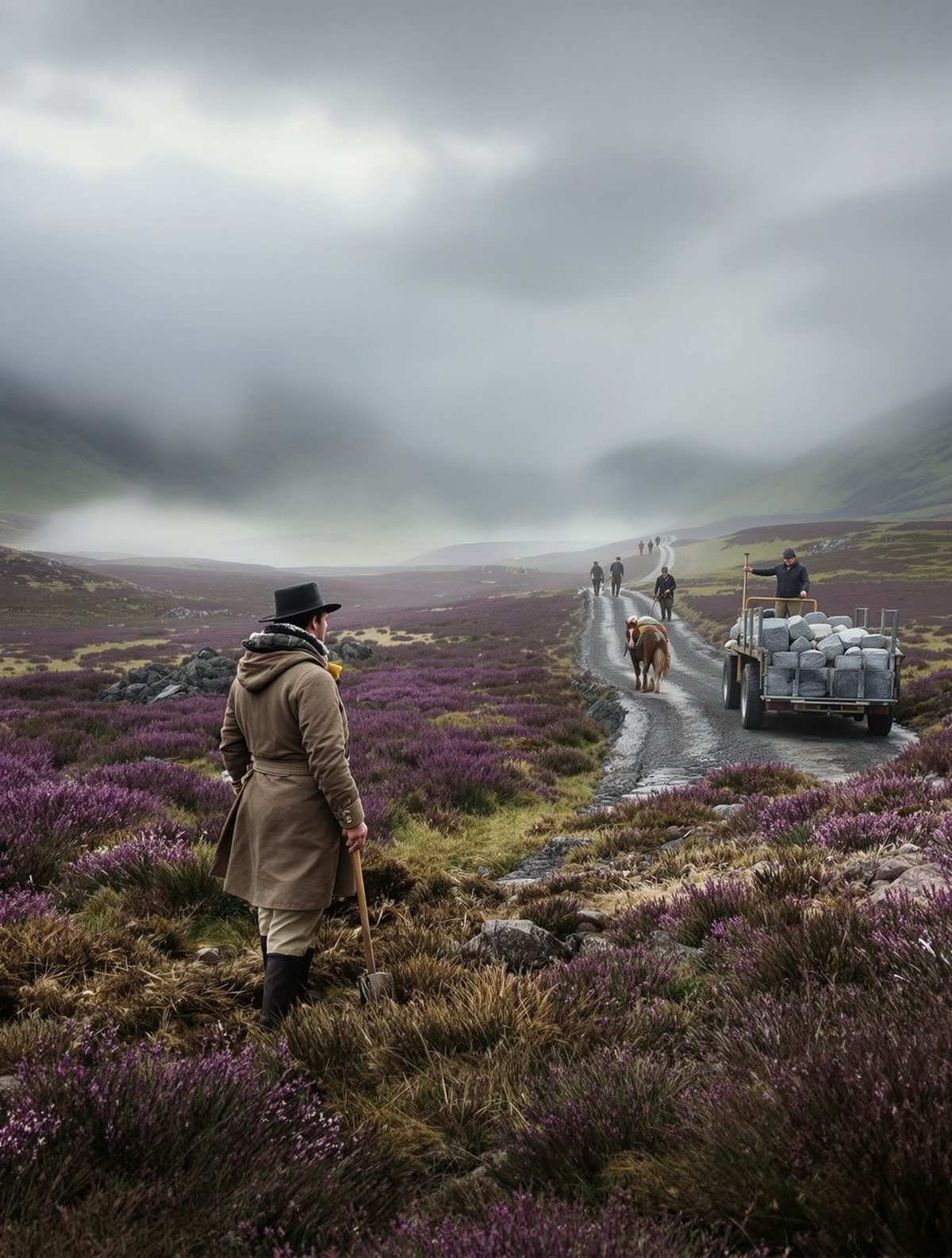
His solution was revolutionary: a floating road that distributed its weight across the unstable surface like a gigantic snowshoe. First, his teams would lay down a foundation of bundled heather and birch branches, creating a flexible mat that could bend and move with the bog beneath. On top of this, they placed a layer of large stones, then progressively smaller ones, building up a structure that was both rigid enough to carry traffic and flexible enough to adapt to the shifting ground below.
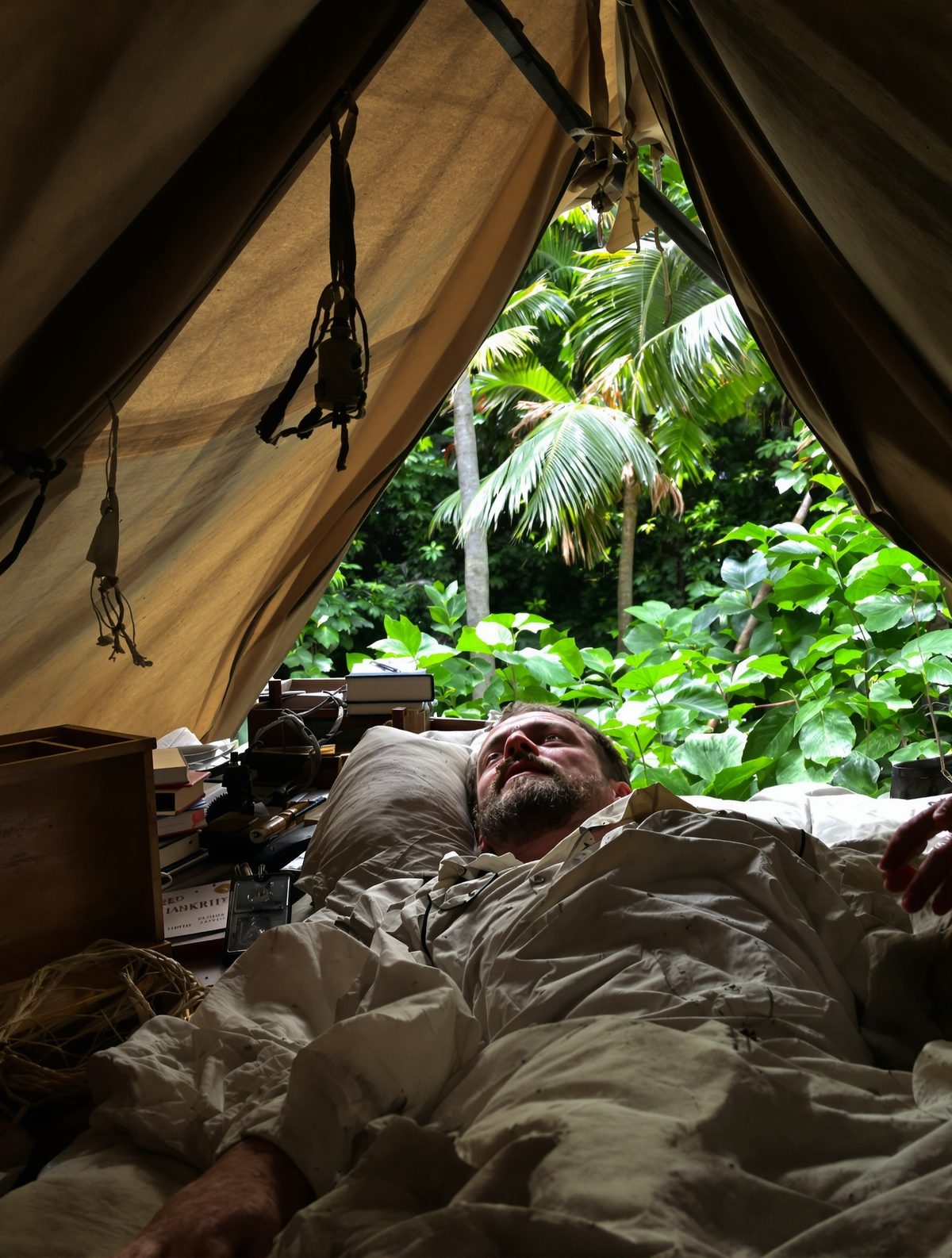
The engineering was only half the battle. Telford's work gangs faced conditions that would challenge a modern military expedition. They worked in Highland weather that could shift from blazing sun to driving sleet within minutes. Supplies had to be carried in on men's backs—there were no roads to bring in heavy equipment. Workers lived in temporary camps that were constantly threatened by the bog itself; more than once, men woke to find their sleeping quarters sinking slowly into the earth.
The most dangerous job fell to the "bog walkers"—men who ventured out onto the unstable surface to plant markers and test the ground ahead. They worked in pairs, connected by ropes, using specially designed wooden platforms strapped to their feet. Even with these precautions, several workers were lost during construction, their bodies never recovered from the depths of the bog.
920 Miles of the Impossible
What Telford accomplished over the next eighteen years defies belief even today. He didn't just build one road across one bog—he constructed 920 miles of highway through some of the most challenging terrain in the world. Each mile presented unique problems that required innovative solutions.
In Glen Coe, he carved roads into cliff faces so steep that workers had to be lowered on ropes to place the charges for blasting. Near Loch Katrine, he built a road that seemed to float across the water itself, supported by an intricate network of piers and embankments. At the Corran Narrows, he designed a ferry system so efficient that it cut travel time from hours to minutes.
But it was the bog roads that showcased his genius most clearly. The section across Rannoch Moor—a 50-square-mile expanse of treacherous peat bog—required him to essentially build a wooden railway and then convert it into a stone road section by section. His teams worked through three Highland winters, often in temperatures so cold that their tools would shatter like glass.
The human cost was enormous. Over 3,000 men worked on Telford's Highland roads at the peak of construction. They came from all over Scotland—discharged soldiers, displaced crofters, and Highland men who had never seen a wheeled vehicle in their lives. Telford insisted on paying them fair wages in cash—revolutionary at a time when many Highland workers were paid in meal and lodging. This created a pool of skilled workers who could adapt his techniques to local conditions.
The Day Scotland Changed Forever
On a crisp morning in October 1821, the first mail coach rolled across the completed A9—the road that connected Edinburgh to Thurso via Telford's bog-defying highways. The journey that had once taken two weeks was completed in just three days. More importantly, it was completed safely, with no horses lost to treacherous terrain and no passengers stranded by impassable conditions.
The transformation was immediate and dramatic. Highland communities that had been isolated for centuries were suddenly connected to markets, ideas, and opportunities. Farmers could ship their produce to Edinburgh or Glasgow. Young people could travel to universities in the Lowlands and return with new skills and knowledge. The Highland Clearances, ironically, were made easier by Telford's roads—but so was the movement of people and culture that would eventually revitalize the region.
The economic impact was staggering. By 1830, traffic on Telford's roads had increased by over 500%. New industries sprang up along the routes—coaching inns, horse-changing stations, and supply depots. The population of previously remote Highland towns doubled and tripled as they became regional centers connected to the broader Scottish economy.
The Legacy of the Impossible
Thomas Telford died in 1834, just as the railway age was beginning to transform Britain once again. But his Highland roads remained the backbone of Scottish transportation well into the 20th century. Many of the routes he pioneered still carry traffic today—the A9, A82, and A83 all follow paths that Telford carved through impossible terrain two centuries ago.
More than the physical infrastructure, Telford proved something that resonates strongly in our own age of seemingly impossible challenges: that human ingenuity and determination can overcome any obstacle. He took a landscape that had defeated armies and isolated communities for millennia, and made it passable with nothing more than stone, determination, and revolutionary thinking.
The next time you drive through the Scottish Highlands—past lochs that mirror towering peaks, through glens that stretch to the horizon—remember that you're traveling on roads that shouldn't exist, across bogs that once swallowed horses whole, following routes carved by a shepherd's son who refused to accept that anything was truly impossible.