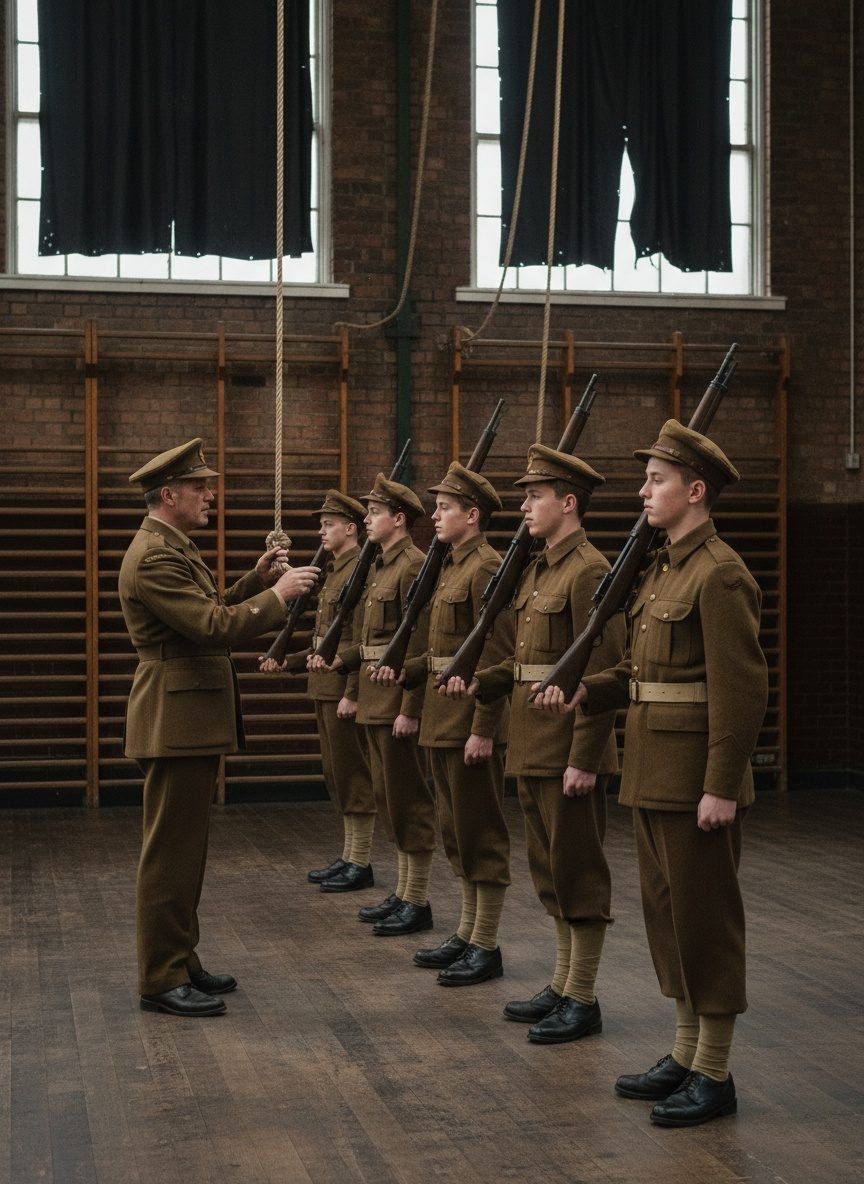
The year was 1942, and the air above London's East End was thick with more than the smoke of destruction. It was charged with a defiant resolve, a push against the dark tides of war. Amidst the shattered glass and dust of recent bombings, the narrow streets echoed with a surprising sound: the rhythmic, disciplined footfall of young boys marching in tight formation. These were no ordinary lads playing soldier; they were the Bernhard Baron Cadets, under the stern but compassionate eye of Captain Basil Henriques. Here, in the heart of Stepney's Jewish Quarter, was a story omitted from most textbooks — a cadre of boys, driven by duty and dreams of valor, preparing for a world at war.
The Beacon in the Blitz
Stepney, in the East End of London, had long been an enclave for Jewish immigrants, a vibrant community that shimmered with cultural richness and resilience. But it was not immune to the horrors of the Blitz. German bombers had carved scars across London in 1940 and 1941, and Stepney had its share of devastating hits. Yet, amidst this destruction, a beacon of hope flickered to life under the guidance of Captain Basil Henriques, a man whose dedication to youth and community knew no bounds.
Henriques was more than just a magistrate; he was a social revolutionary. As the head of the Bernhard Baron Settlement, established in 1911 for the Jewish poor, he expanded its mission. By 1942, the Settlement had become a hub of social activity and support, rife with educational programs, athletic facilities, and most notably, its own cadet battalion.
Drilled to Perfection
On the cobblestone squares and in the shadow of skeletal ruins, the Bernhard Baron Cadets mimicked the movements of seasoned soldiers. Boys between the ages of fourteen and eighteen wore the crisp uniforms of the City of London Cadets, their youthful faces set with solemn determination. Despite the war's grim specter, their spirits were unflagging, buoyed by camaraderie and the singular guidance of Captain Henriques.
Each session began with drills that honed discipline and precision. The lads practiced with Lee-Enfield rifles — real but unloaded — mastering the weight and movements of future warriors. The cadets learned the nuances of military life: forming platoons, executing salute protocols, and comprehending the essence of martial respect. These were not merely exercises in aggression but lessons in discipline and duty that shaped their character.
The Unwritten Page
The existence of such a group piques curiosity. Was this sanctioned by the British government or sparked by Henriques’s invention? The answer is a bit of both. The City of London Cadets functioned as part of the National Association of Boys’ Clubs, a network empowering youth through structured, purpose-filled activities. But in Stepney, the influence was uniquely Henriques.
Here is an intriguing facet: while official records on cadet formations abound, scant notes flag the distinctively Jewish nuance of the Bernhard Baron Company. This was an unofficial enterprise, recognized locally, grounded in tradition, yet distinctly removed from the formalities of adult military life. It was grassroots militarism forged out of familial concern.
The Ghosts of History
Even amidst the rubble, there was an insistence on caring for one's country and community. The cadets became symbols of hope, representing an intricate balance of young exuberance and old-world values. As they prepared for a potential call to arms, they were tutored in more than tactical drills; these boys embodied the fight for survival, the still-developing spirit of resistance amid adversity.
Yet, for all the military precision, Henriques ensured these young men also nurtured peace—there was as much time spent emphasizing moral fortitude and intellectual growth as physical training. The cadets participated in debates, learned about their Jewish heritage, and were encouraged to envision a world beyond conflict. It is said that Henriques was once quoted, seeing these young men as “future leaders, holding the torch of tomorrow.”
A Legacy Not Lost
So why does this fragment of history, nearly obscured, matter today? Because it exemplifies a community that empowered its youth to face the world bravely, understanding the strength found in unity and purpose. The Bernhard Baron Cadets were more than a footnote; they represent a recurring theme in human history—the undeniable spirit of youth and the power of local initiative.
In a contemporary world where youth can sometimes stand overshadowed by global narratives and digital isolation, the lessons from London's wartime cadets echo with relevance. It is a reminder that communities thrive when they prioritize nurturing and empowering the next generation, laying down frameworks of responsibility, learning, and resilience. The young cadets of 1942 remind us anew, fifty-plus years later, of the strength found in community and the indomitable courage it fosters. It is a story not for the textbooks, perhaps, but for the continued evolution of collective human courage.