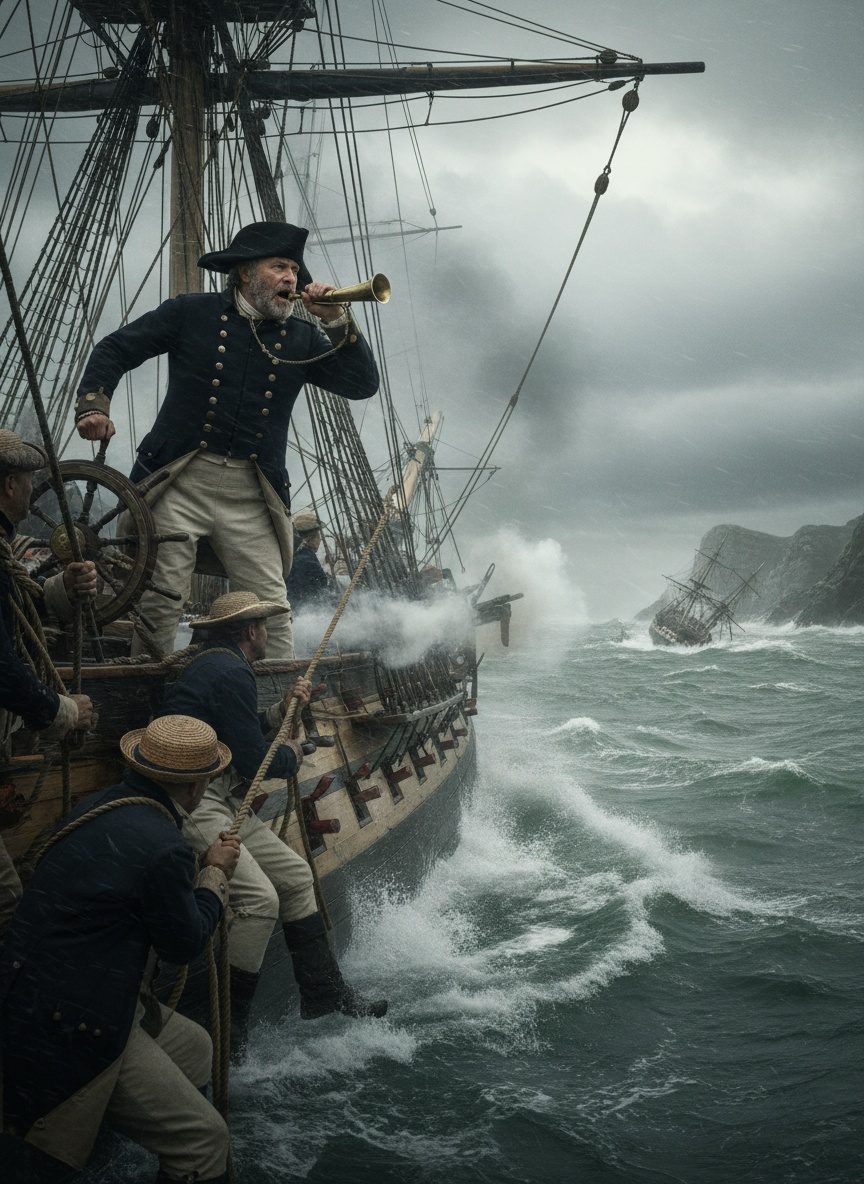
A fierce gale howled across the storm-tossed waters of the Atlantic, the bitter November wind cutting through to the bone and the jagged rocks of Quiberon Bay looming ominously beneath the roiling sea. In these furious elements, a moment that would turn the tides of history was unfolding. Through the biting squalls, the sturdy ships of the British fleet braved the chaos, led by the indomitable Admiral Edward Hawke. His quarry: a mighty French armada whose mission was nothing short of a nation’s conquest.
The Storm that Held the Fate of Britain
The year was 1759, and Europe was embroiled in the global conflict known as the Seven Years’ War—a struggle that pitted the dominant colonial powers of the day against each other in a bid for supremacy. For Britain, an island nation at the helm of an expanding empire, the ocean was both its protector and its lifeline. But on this stormy night, the seas carried a threat: the greatest French fleet assembled in a generation, poised to deliver a crushing blow.
For Britain, the specter of invasion loomed large. Louis XV's grand ambition was clear: to land an army of tens of thousands on British shores, bypassing the formidable British Navy that ruled the waves. The French plan hinged on evading British detection, but Admiral Hawke was a vigilant sentinel. Tasked with keeping Britain safe, he was not a man to back down from a challenge, however insurmountable the odds seemed.
Into the Maelstrom: The Decision that Changed Everything
On November 14, 1759, as the storm gathered strength off the French coast, Hawke faced a decision that would either seal his legacy or lead to ruin. His officers were on edge. The Atlantic was unforgiving at the best of times, and Quiberon Bay was infamous for its deceptively placid surface concealing a deadly array of reefs and shallows. Many doubted the wisdom of engaging the enemy in such treacherous waters.
But Hawke, with a relentless pursuit of duty and a seafarer’s intuition, ordered the fleet to close in on the French. In an act that defied logic and tradition, he chose to fly directly into the teeth of the storm and chase the enemy into their perceived safe haven. In his own words, "Where there is most danger, there is most honor," a credo that pushed the British fleet toward what would be one of the most audacious naval engagements in history.
The Battle of Quiberon Bay: Chaos and Courage
On the evening of November 20, 1759, as twilight gave way to darkness, the British and French fleets clashed amidst the storm’s fury. The French, led by Admiral de Conflans, were caught off guard. Their assumption that the storm would provide a natural defense proved catastrophic. The swirling night was lit by the flashes of cannon fire, the sound of which was lost within the roar of the tempest.
Hawke’s strategy was as bold as it was dangerous, pushing his ships of the line into the heart of the French fleet. It was a gamble, but the execution was masterful. The French flagship, *Soleil Royal*, and several others were battered by relentless British fire. In the ensuing melee, key French ships were driven ashore and others captured, breaking the morale and formation of the once-proud armada.
A Blow that Echoed Through Time
The morning after saw the storm abating but the consequences of battle lay scattered across the bay. The French fleet was in tatters, their invasion plans shattered. Britain, an island that had held its breath on the brink of calamity, now exhaled with a newfound sense of security. The French had neither the resources nor the resolve to mount such an audacious invasion attempt again. It was a decisive British victory that reinforced their naval supremacy.
It is said that the victory at Quiberon Bay impacted France's role in the Seven Years’ War dramatically. Stripped of a major naval capability, France shifted focus to its diminishing hold in the colonies, while Britain's path to becoming a global imperial force was solidified on these storm-lashed shores.
Echoes of the Past: Why Quiberon Still Matters
For the modern reader, the events at Quiberon Bay might seem a distant nautical tale, yet its resonances are felt even today. The courage and strategy employed by Admiral Hawke embody timeless lessons in leadership and resilience. The scene painted by brave men facing forces both natural and martial serves as a reminder of the resolve needed when faced with overwhelming adversity.
In a time when the world finds itself at the mercy of global challenges and unpredictable crises, the triumph at Quiberon Bay underscores the power of human agency and the profound impact of courageous decisions. As waves crash upon shores still, they carry tales of the bravery that once stood against them; tales like those of Hawke and his indomitable fleet, ensuring that the legend of Quiberon is never truly left out of the textbooks.