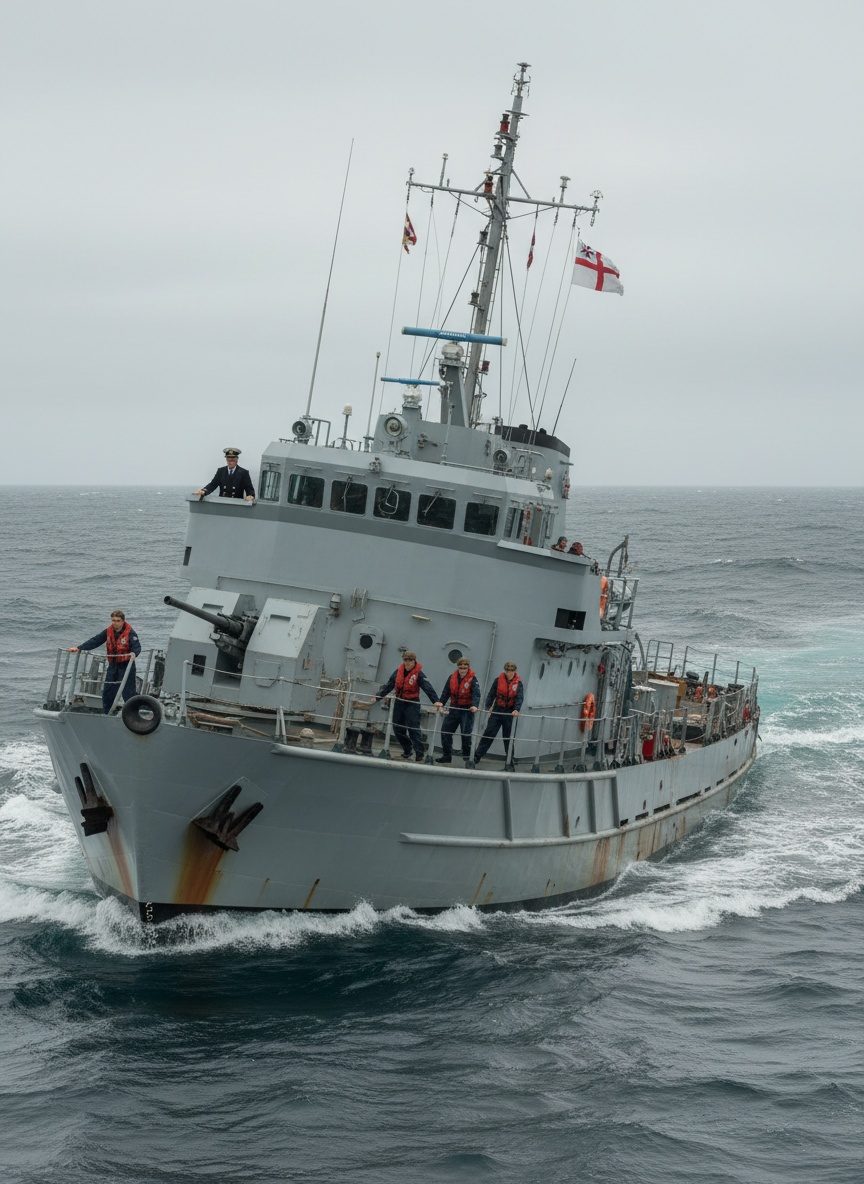
As the salty winds whipped around the decks and the waves enflamed themselves against the ship’s hull, the three newly minted warships cut unusual figures against the horizon. Their silhouettes were at once familiar and foreign to the experienced sailors who took them to the daunting expanses of the South Atlantic. These were not ordinary Royal Navy vessels. Instead, they were an improvised response to an urgent need—a creative, if imperfect, solution to a dilemma born of conflict. Thus begins the tale of the *HMS Guardian*, *Sentinel*, and *Protector*—three oil rig support ships reborn as mighty warships, thrust into service after the Falklands War left a pressing vacancy in British naval resources.
A Crisis in the Wake of Victory
The year was 1982. The United Kingdom had just emerged from a bruising but successful campaign to reclaim the Falkland Islands from Argentine occupation. While the victory was a testament to British resolve, it had highlighted significant gaps in Britain's naval preparedness. The Royal Navy found itself lacking in immediate reinforcements to sustain its formidable presence in the South Atlantic. The Falklands Conflict had consumed resources and exposed vulnerabilities that would need swift rectification.
Amidst this urgent backdrop, the British Ministry of Defence, guided by necessity and ingenuity, launched an unconventional solution. They looked towards the North Sea, previously abundant in oil rigs and support ships that had no task more martial than ferrying supplies to the floating steel structures. Among these, three stout vessels were hurriedly plucked from their commercial roles and slated for a transformed destiny in naval service. Thus, *Seawell*, *Sovereign*, and *Salutary* were respectively refashioned into *HMS Guardian*, *Sentinel*, and *Protector*.
Transformation on the High Seas
Reimagining oil support ships into naval combatants was no small feat. The process demanded rapid alterations under pressing timelines. Each ship underwent an intensive transformation at the naval yards over a few frantic months. Their civilian patinas were stripped; in their place, decks were armed with radar-guided anti-aircraft guns, cutting-edge sensors, and electronic warfare suites. Their bright colors gave way to the grim, battleship grey that symbolized Her Majesty’s naval force.
The refitting was spearheaded by some of the era’s sharpest naval architects who were challenged to think outside of traditional designs. However, the modifications remained but skin-deep. The skeletons of these vessels retained their civil engineering nature, and limitations were inevitable. The ships lacked the armor of purpose-built warships, and their helipads served rudimentary functions, barely accommodating the navy’s helicopter fleet with security. But for what they lacked in military finesse, they made up in the spirit—a reminder of British doggedness.
Setting Sail: Tales from the South Atlantic
As the newly baptized *HMS Guardian*, *Sentinel*, and *Protector* embarked on their voyages, their mettle was tested by nature where the sea unfurls its most ferocious moods. Reports from crew members paint a vivid picture of the challenges they confronted. The ships' designs, optimized for the relatively calm North Sea, were now pitted against the harsher, more unpredictable climate of the southern oceans.
Onboard, sailors found themselves battling not just potential adversaries but the relentless elements. The ships' lower drafts made them particularly prone to the violent surges and formidable swells. It was said that in these moments, the floors heaved as if alive, leaving crewmen clinging to any adjacent handrails. Despite these challenges, each vessel persevered, a testament to the resilience of both men and machine against the caprice of the high seas.
Uneasy Allies: Technology and Tradition
Operationally, these challenge ships found themselves in a peculiar position—a mismatch of advanced technological additions housed within a frame never intended for warfare. They served roles as patrol ships enforcing exclusion zones, a visual deterrent against aggression. Yet, they required significant naval assets to shoulder the tactical torpedo roles, limiting their independent operability.
The Royal Navy crews adapted to this hybrid nature with HM tradition and innovation. Stories of imprecise navigational systems diverting them miles off planned courses are tempered with tales of camaraderie and the camaraderie that bound the teams. Despite challenges, these vessels carved a unique chapter in naval history, exemplifying classic British improvisation amid post-war exigencies.
The End of an Adventure
The whirlwind decade of service for *HMS Guardian*, *Sentinel*, and *Protector* came to a close in the early 1990s, as Britain’s bolstered military budget allowed for the return to more conventional naval investments. The vessels returned to civilian life—aged, but provisioned with a unique legacy. Their names and numbers engraved onto the scrolls of naval history, marking the brief era where ingenuity was the currency that bridged crisis with capability.
The transformation of these three oil rig support ships reflects more than just a historical footnote; it illustrates the broader narrative of adaptive innovation under pressure. In the world of military exigencies and fiscal constraints, these vessels stand as reminders that solutions, even imperfect ones, are within reach when driven by necessity.
In today’s world teetering on the brink of traditional and asymmetric threats, the illustrated adaptability of the British conflict implements post-Falklands resonates louder still. The story of *Guardian*, *Sentinel*, and *Protector* underscores a timeless truth in the defense narrative: sometimes, the greatest havens for ingenuity sprout from not the battle plans detailed in textbooks, but from the fertile grounds of rapid, real-time adaptation.