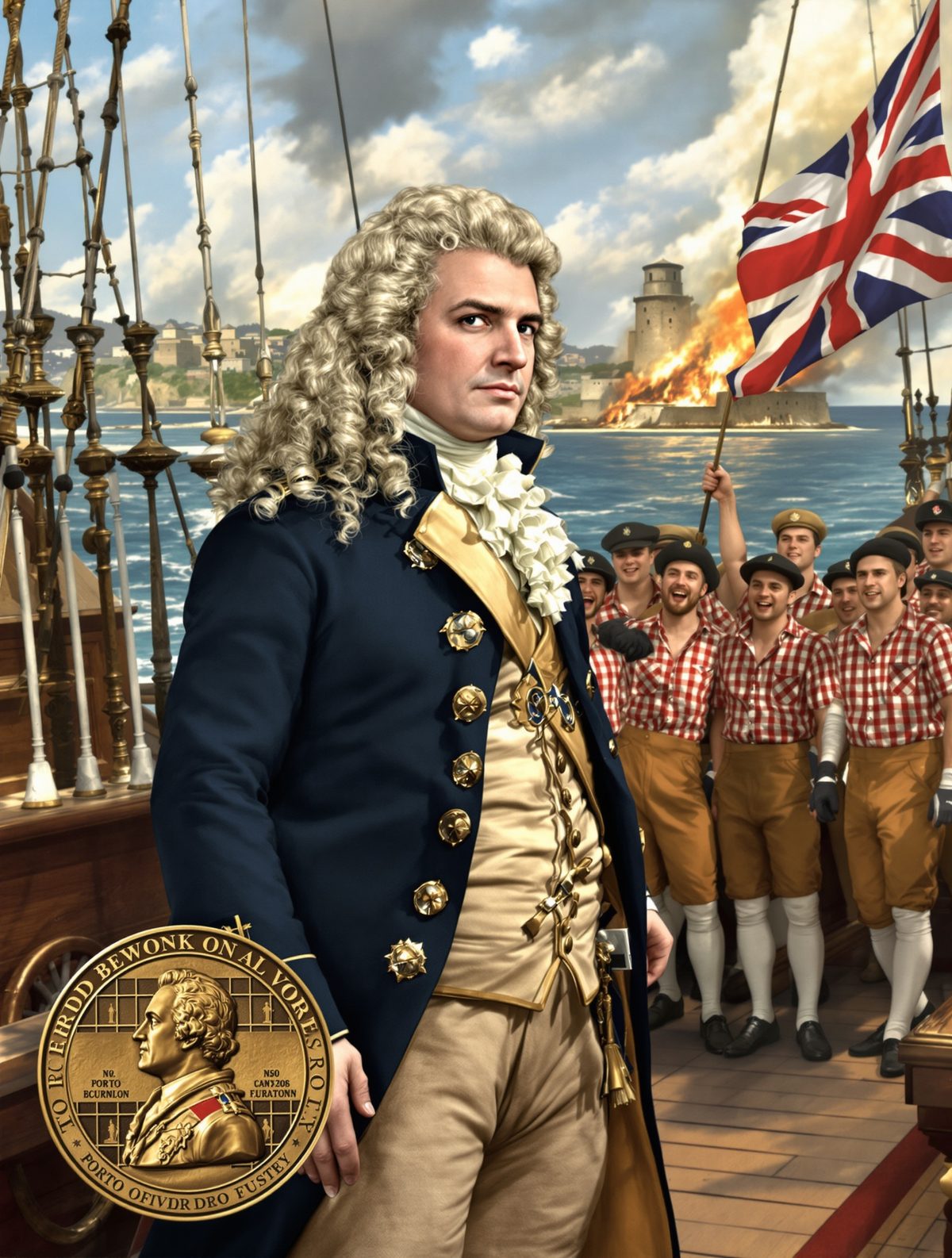
Picture this: a dusty leather trunk being loaded onto a ship in Portsmouth harbor, 1783. Inside, nestled between formal wigs and administrative papers, sits a set of four thick volumes bound in calf leather. The colonial administrator checking his inventory has no idea he's carrying what will become the most influential legal export in human history. Those books—William Blackstone's Commentaries on the Laws of England—are about to reshape justice across five continents.
Today, as you read this, those same principles are being argued in a courthouse in Toronto, deliberated in Sydney, and cited in Mumbai. Over 2.6 billion people live under legal systems that trace their DNA directly back to the words of an Oxford professor who died over two centuries ago. The British Empire may have crumbled, but its legal legacy rules more people today than it ever did at its imperial peak.
The Professor Who Codified an Empire's Soul
William Blackstone never set foot in a colony, yet he shaped more lives across the globe than perhaps any other Englishman in history. In 1758, this mild-mannered Oxford professor began delivering lectures that would revolutionize how the English-speaking world understood law. For the first time, someone was attempting to organize the chaotic, centuries-old tangle of English legal tradition into something coherent.
Before Blackstone, English law was a mess. Imagine trying to navigate a legal system based on Norman French precedents, Anglo-Saxon customs, royal proclamations, and parliamentary statutes—all layered like geological strata over nearly 700 years. Legal knowledge was passed down like guild secrets, hoarded by an elite club of barristers who guarded their expertise jealously.
Blackstone changed everything. Between 1765 and 1769, his four-volume Commentaries emerged like a legal Rosetta Stone, translating centuries of jurisprudence into clear, accessible English. The first volume sold out so quickly that booksellers couldn't keep up with demand. Here, finally, was English law explained not in archaic Norman French or Latin, but in the elegant prose of the Enlightenment.
What made Blackstone's work revolutionary wasn't just its clarity—it was his timing. As colonial administrators packed their trunks for postings in Bengal, Jamaica, or the American colonies, those four volumes became essential cargo. One contemporary observer noted that Blackstone's Commentaries were "as common in American lawyer's offices as a Bible in a parsonage."
The Books That Crossed Oceans
In the cramped quarters of an East India Company ship bound for Calcutta in 1772, a young judge named Sir William Jones clutched his personal copy of Blackstone's first volume. Like hundreds of other colonial administrators, Jones faced an impossible task: how do you impose English justice on societies with entirely different legal traditions?
The Commentaries became their roadmap. From the sweltering courtrooms of Madras to the frontier settlements of Upper Canada, colonial judges reached for Blackstone when local customs collided with imperial authority. The books were practical, portable, and—crucially—authoritative. When a dispute arose over property rights in Sydney or contract law in Cape Town, Blackstone provided answers.
But here's what the textbooks don't tell you: Blackstone's influence wasn't just imposed from above. Local lawyers, many of whom had never seen England, embraced the Commentaries as their pathway to professional legitimacy. In 1790s India, Indian legal scholars were translating Blackstone into Bengali and Sanskrit, adapting common law principles to local contexts while maintaining their essential English character.
The numbers are staggering. By 1800, the Commentaries had been reprinted in fifteen American editions alone. In British North America, Australia, and India, they were republished with local annotations and adaptations. A legal framework designed for a small island kingdom was being stretched across continents, adapting like linguistic DNA to local conditions while preserving its essential structure.
From Boston Tea Party to Bombay High Court
Ironically, Blackstone's greatest triumph came in the very place that rejected British rule most violently: America. Even as revolutionary colonists dumped tea into Boston Harbor, American lawyers were memorizing Blackstone's principles of individual rights and property protection. The man who codified English law became the intellectual godfather of American independence.
Thomas Jefferson owned multiple sets of the Commentaries. John Adams called them "the most elegant and best digested of our English law books." When the Founding Fathers sat down to craft the Constitution, Blackstone's vision of balanced government, individual rights, and the rule of law echoed through their deliberations.
But America was just the beginning. In 1858, as the British Raj formalized its control over India following the Sepoy Rebellion, the Government of India Act established a legal system based explicitly on English common law principles. The Bombay High Court, Calcutta High Court, and Madras High Court—serving populations larger than most European nations—would operate according to precedents established in medieval English villages and refined in Blackstone's elegant prose.
The same pattern repeated across the Empire. When Australia was federated in 1901, the new Constitution incorporated wholesale the common law traditions that colonial judges had been applying for over a century. Canada's legal system, formalized through Confederation in 1867, was built on Blackstonian foundations that had been laid in frontier courtrooms decades earlier.
The Invisible Empire of Modern Justice
Walk into the Supreme Court of Canada today, and you'll witness something remarkable: lawyers arguing cases using legal principles that William Blackstone would instantly recognize. The same is true in the High Court of Australia, the Supreme Court of India, and dozens of other national courts across the former Empire.
The common law system now spans 54 nations and governs over 2.6 billion people—more than a third of humanity. From tiny Caribbean islands to the economic powerhouses of India and Australia, Blackstone's legal legacy shapes daily life in ways most people never realize.
Consider this: when a software company in Bangalore signs a contract with a firm in Silicon Valley, both sides operate under legal frameworks descended from the same 18th-century English precedents. When environmental activists challenge government policy in the Federal Court of Australia, they invoke principles of judicial review that Blackstone helped establish. The legal concepts of due process, property rights, and individual liberty that underpin modern democracies all trace their lineage back to those four leather-bound volumes.
But here's the truly surprising part: this legal empire is actually expanding. As emerging economies seek stable, predictable legal frameworks for international business, many are adopting common law principles. Dubai's international financial courts operate under English common law. Qatar and Rwanda have recently embraced common law systems, drawn by their reputation for commercial reliability and judicial independence.
The Professor's Unintended Legacy
Blackstone himself would be astonished by his global influence. He wrote for English gentlemen studying at Oxford, not for Maori land rights activists in New Zealand or constitutional lawyers in Malaysia. Yet his work created something unprecedented in human history: a shared legal language that spans continents and cultures.
This isn't to say the common law's expansion was without controversy or cost. Colonial legal systems often displaced indigenous justice traditions, imposing foreign concepts of property, contract, and individual rights on societies organized around entirely different principles. The same legal framework that protected individual liberty in London could justify dispossession and cultural destruction in Australia or North America.
Yet something remarkable happened as these legal systems matured: they began to evolve beyond their imperial origins. Indian courts now cite principles of social justice that would surprise their colonial predecessors. Canadian law has incorporated indigenous rights and environmental protections. Australian courts grapple with questions of racial reconciliation using common law tools adapted for 21st-century purposes.
Blackstone's true genius wasn't in creating a rigid legal code, but in establishing a flexible framework capable of growth and adaptation. Common law systems evolve through judicial decisions rather than legislative decree, allowing them to adapt to local conditions while maintaining their essential character.
Why Four Old Books Still Matter
In our interconnected world, Blackstone's accidental empire has become more relevant than ever. When international businesses need predictable legal frameworks, they often prefer common law jurisdictions. When technology companies grapple with questions of digital privacy and artificial intelligence, they turn to courts applying principles of precedent and judicial reasoning that Blackstone helped establish.
The COVID-19 pandemic offered a perfect example of this legal legacy in action. From emergency powers in Canada to public health restrictions in Australia, courts across the common law world grappled with identical questions: How do we balance individual liberty with collective safety? What are the limits of government authority in a crisis? The answers varied, but the legal framework for asking these questions—and the principles of judicial review, constitutional limitation, and individual rights that guided the analysis—all traced back to the same intellectual tradition.
Perhaps most remarkably, this legal empire operates without any central authority. There's no common law pope, no supreme international court. Yet lawyers in Lagos and London, Mumbai and Melbourne, speak the same legal language and apply similar reasoning to similar problems. Blackstone's Commentaries created what might be humanity's most successful example of soft power: influence that operates through ideas rather than force.
So the next time you sign a contract, challenge a government decision, or simply enjoy the protection of due process rights, remember that obscure Oxford professor. William Blackstone may have died in 1780, but every day, across five continents, his intellectual descendants gather in marble halls and modest courtrooms to wrestle with the eternal questions of justice, liberty, and law. The Empire's ships have long since sailed home, but its greatest export continues to shape our world in ways its creators never imagined.