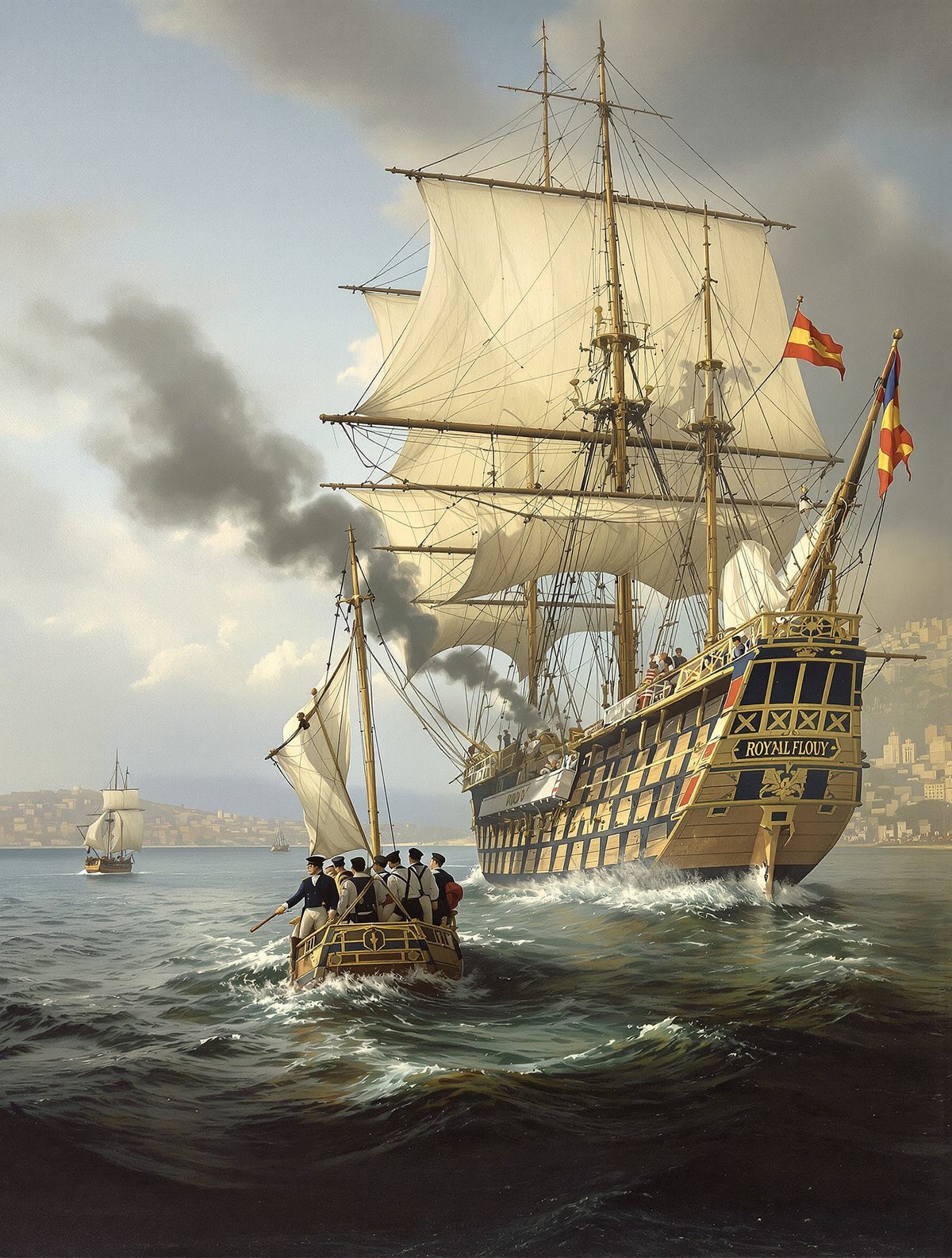
As the fiery sun dipped below the horizon, casting its golden glow over the waves of the Mediterranean Sea, a tiny sloop named HMS Speedy lurked in pursuit of an audacious prize. The toast of the Royal Navy's daring captains, Thomas Cochrane, peered across the waters at his quarry: El Gamo, a hulking Spanish frigate boasting over twice the firepower and crew capable of overthrowing kingdoms. Yet, the young Scottish maverick and his crew of fifty-four fierce souls dared to dream of victory against seemingly insurmountable odds. As evening approached on May 6, 1801, these seafarers were destined to write their names into the annals of naval history — a legend of defiance, ingenuity, and resolve.
A Captain's Genesis: The Early Days of Thomas Cochrane
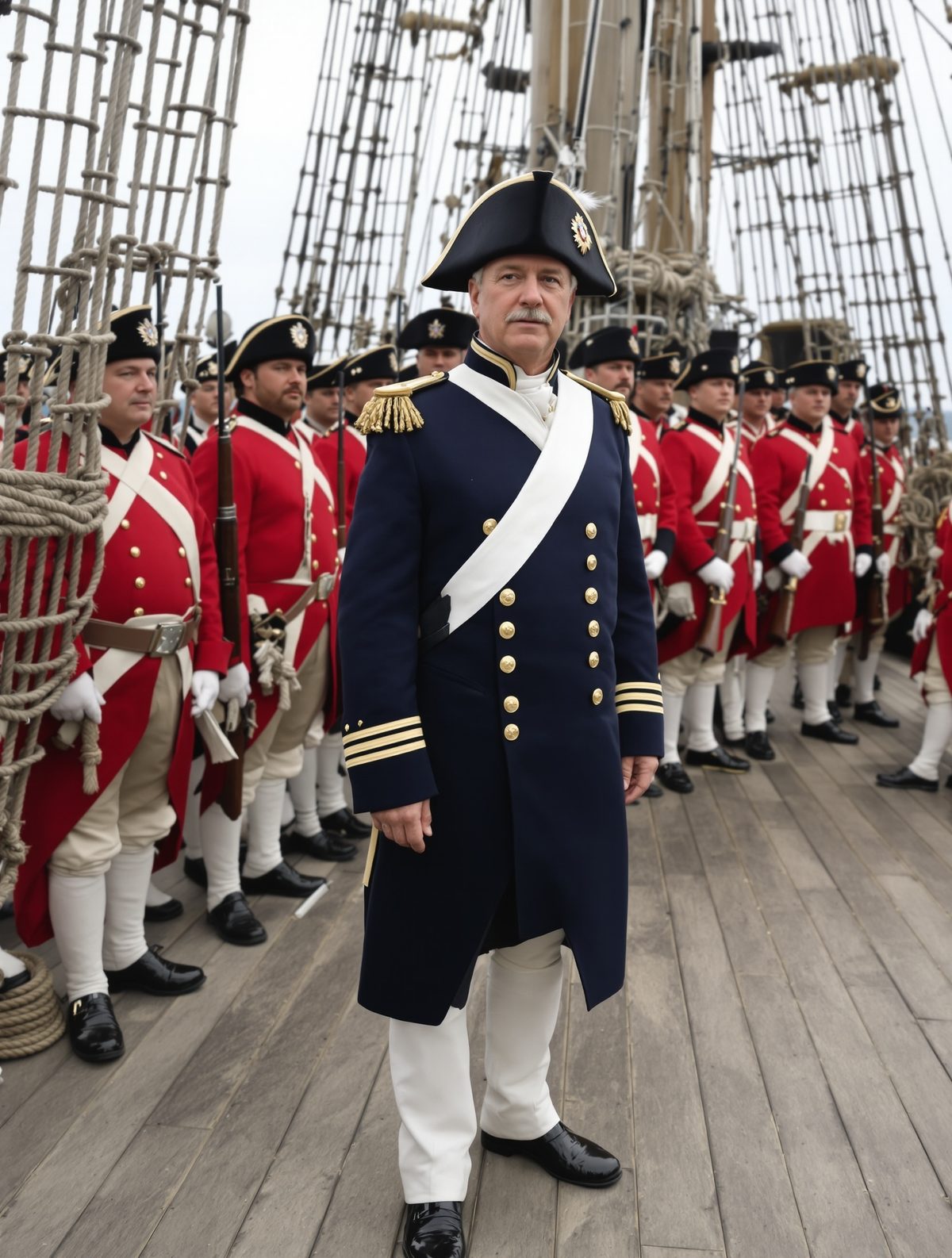
Born into the lineage of an ancient Scottish clan in 1775, Thomas Cochrane was all but predestined for a life of nautical ambition. Embracing the call of the sea at just seventeen, he quickly carved a reputation as a bold and innovative officer. Between formidable engagements in the Napoleonic Wars, Cochrane gained a reputation not just for his shrewd battle tactics but for his audacity in bending the rules to suit the covert operations he designed.
Despite facing the specter of court-martial on more than one occasion for his impetuous initiatives — including a particularly notorious stunt involving the capture of a supposed "French" cutter in neutral waters — Cochrane's unparalleled skill and charisma soon endeared him to his superiors. By the dawn of 1801, Cochrane's daring reputation spoke louder than bureaucratic censure, earning him command of HMS Speedy, a vessel whose size belied its potential under his command.
The Match of Davids and Goliath: HMS Speedy vs. El Gamo
The thought of taking on El Gamo — a 32-gun behemoth with a crew of 319 experienced sailors — with the Speedy's mere 14 guns and 54 men might have seemed foolhardy, yet Cochrane relished the challenge. El Gamo traversed the seas under Captain Don Francisco de Torres, a seasoned commander who believed his British pursuers mad with ambition.
As dawn exploded across the Mediterranean sky on May 6, 1801, Cochrane seized his opportunity. Under cover of darkness, Speedy closed the distance and prepared for the attack. The Spaniards found themselves gazing down at the diminutive sloop, incredulous at the spectacle of so minuscule a vessel daring to engage. Yet, Cochrane held a simple mantra close: "In close combat, the advantage goes to the bold."
The Battle: Remarkable Tactics and Unyielding Courage
As the two ships engaged in the waters near Barcelona, Cochrane executed his innovative gambit. Speedy, nimble and agile on the water, danced well within El Gamo's minimum range, tilting the odds ever so slightly in the British favor as the Spanish cannoneers strained to aim their broadsides downward. Cochrane, displaying uncanny prescience, ordered his crew to sail under El Gamo's stern and unleash incessant volleys.
Yet, ingrained Royal Navy doctrine favored not the broadside volley but the fighting spirit of individual sailors. Cochrane's men fired rifle after rifle at the towering masts and rigging of the Spanish titan, gradually eroding its superior firepower. In less than forty-five minutes, a Spanish victory had turned harrowingly into chaos as Cochrane ordered the boarding of El Gamo.
Scaling hastily lowered ladders, British seamen, cutlasses in hand, jumped onto the enemy decks. Despite the melee's ferocity, Captain de Torres, faced with the unfathomable — a collapsing defense, Spanish casualties mounting by the second — surrendered his sword to the audacious Scot. Much to Cochrane's delight, the entire Spanish crew followed suit, transforming an improbable gamble into triumphant victory.
A Catalyst for Legends: The Influence of HMS Speedy's Triumph
Thomas Cochrane’s extraordinary exploits against El Gamo sent ripples not only through the Royal Navy but across the expanse of literary imagination. Among those who found inspiration in Cochrane’s courage was Cecil Scott Forester, whose creation, Captain Horatio Hornblower, drew deeply from Cochrane's indomitable spirit and unconventional strategies. Readers marveled at Hornblower's daring and articulate command, recognizing the penned echoes of Cochrane's tenacity and inventiveness vivid within the pages.
Furthermore, Cochrane's audacity captivated the eyes of Latin American revolutionaries, who saw in him a hero capable of defying imperial order — a fitting patron for their cause. Cochrane would eventually carry his unconventional warfare into South America, rallying local forces against imperial powers in daring campaigns across the Caribbean and Brazil.
Conclusion: Why Captain Cochrane Matters Today
As our modern world navigates the complexities of global relationships, Thomas Cochrane's legacy remains an emblem of determination against overwhelming force. His exploits aboard HMS Speedy embody a timeless reminder that individual courage and ingenuity wield the power to reshape destiny amidst adversity.
In our interconnected landscape, Cochrane's narrative resonates profoundly. Whether in strategy rooms or in creative pursuits, his conquest of the seemingly impossible stirs those willing to dare beyond conventional boundaries. As the undulating seas remind us of history's lessons etched on their surface, the tale of HMS Speedy demands we carry courage forward — finding within ourselves the audacious spirit of Cochrane, endlessly commanding the impenetrable waves we face today.