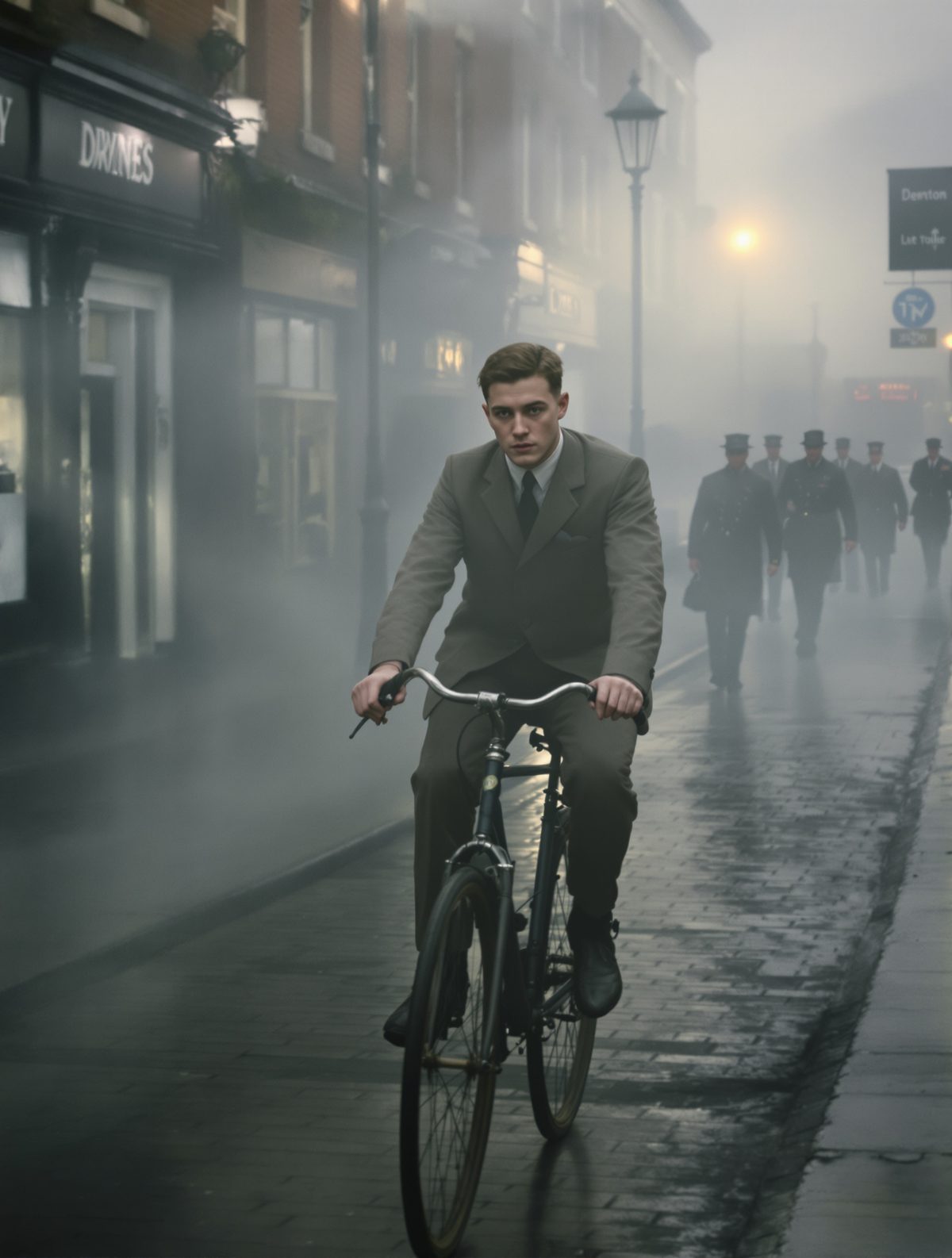
At 3:47 AM on a fog-shrouded morning in July 1943, Captain Frederick Walker stood on the bridge of HMS Starling, his weathered hands gripping binoculars as he peered into the black Atlantic void. Somewhere beneath those waves lurked U-334, a German submarine that had been stalking Allied merchant ships for weeks. Walker had been hunting this particular wolf for six days straight, surviving on coffee and determination. When his sonar operator whispered "Contact, sir—bearing two-seven-zero," Walker's tired eyes blazed with predatory focus. Within hours, U-334 would become his eleventh kill—and he was just getting started.
Frederick Walker would become the Royal Navy's deadliest submarine hunter, personally responsible for sinking more Nazi U-boats than any other Allied commander in history. But his extraordinary success came at a price that would ultimately claim his life before he could see the war's end.
The Making of a Wolf Killer
Frederick John Walker wasn't born to be a legend. The son of a naval officer, he seemed destined for a respectable but unremarkable career in the Royal Navy. By 1939, at age 43, Walker had been passed over for promotion so many times that he was considering retirement. His outspoken criticism of naval tactics and impatience with bureaucracy had earned him a reputation as a troublemaker among the Admiralty's old boys' club.
But when German U-boats began savaging Allied shipping in what would become known as the Battle of the Atlantic, the Navy desperately needed officers who could think outside the box. Walker's unconventional ideas suddenly seemed less like insubordination and more like innovation. In 1941, he was given command of the 36th Escort Group, a flotilla of corvettes and sloops tasked with protecting merchant convoys from submarine attack.
Walker studied U-boat tactics with the intensity of a chess grandmaster analyzing his opponent's every move. He realized that most escort commanders were playing defense, content to shepherd their charges safely to port. Walker decided to go on the offensive. He would hunt the hunters.
Perfecting the Art of Underwater Murder
What made Walker extraordinary wasn't just his tactical brilliance—it was his ability to think like a U-boat commander. He spent countless hours studying captured German submarine manuals, interviewing prisoners, and analyzing attack patterns. Walker discovered that U-boat captains, when attacked, followed predictable evasion patterns. They would dive deep, turn hard to port or starboard, then try to slip away while their attackers searched in the wrong direction.
Walker developed what became known as "Walker's Tactics"—a coordinated attack method where his ships would work in perfect synchronization, like a pack of wolves surrounding their prey. While one ship held sonar contact and dropped depth charges, others would race to predicted escape routes, creating an inescapable net of explosives.
His first kill came in September 1941 when his group sank U-202 west of Ireland. But Walker was just warming up. He revolutionized depth charge attacks by developing the "creeping attack"—a technique where one ship would maintain sonar contact while another crept up silently to deliver a devastating barrage of explosives. This method was so effective that it became standard practice throughout the Royal Navy.
Perhaps most remarkably, Walker insisted on personally training his crews in psychological warfare. He taught them to use their ships' loudspeakers to broadcast taunts in German to submarine crews trapped underwater, knowing that the psychological pressure would force panicked decisions and fatal mistakes.
The Deadly Game of Cat and Mouse
Walker's most famous victory came during Operation Desert in February 1944, when his 2nd Escort Group encountered a pack of six U-boats in the Western Approaches. Over the course of 38 hours, Walker orchestrated a masterpiece of naval warfare that would become legendary in Royal Navy circles.
U-264 was the first to fall, caught on the surface while recharging batteries. Walker's ships surrounded the submarine like sharks smelling blood. When the German captain attempted to crash-dive, Walker's perfectly coordinated depth charge attack crushed the submarine's hull at 200 feet. U-734 tried to escape by running deep and silent, but Walker had anticipated this move. His ships formed a search pattern that covered every possible escape route. After 18 hours of cat-and-mouse, U-734's batteries died, forcing her to surface directly into the guns of HMS Starling.
But Walker's greatest triumph was psychological. As word spread through the U-boat fleet about the deadly British captain who seemed to read their minds, German submarine morale plummeted. U-boat crews began calling him "Der Schwarze Kapitän"—the Black Captain—and some submarines actually changed course when they detected his ships' distinctive radar signatures.
By early 1944, Walker had achieved something unprecedented: German U-boat Command was actively avoiding areas where his group was known to be operating. Admiral Dönitz himself reportedly studied Walker's tactics and issued special bulletins warning submarine commanders about the British captain who had turned the tables in the Battle of the Atlantic.
The Human Cost of Perfection
Walker's success was built on an obsessive attention to detail that consumed every waking moment of his life. He personally reviewed every after-action report, analyzed every sonar contact, and studied weather patterns to predict where U-boats might surface. Sleep became a luxury he couldn't afford—not when merchant sailors were dying in the cold Atlantic waters.
His crew noticed the toll first. Walker, once known for his hearty laugh and storytelling, became gaunt and hollow-eyed. He would spend nights pacing the bridge, muttering tactical calculations under his breath. He began surviving on a diet of coffee, cigarettes, and nervous energy, pushing his body far beyond its limits.
The Admiralty recognized Walker's extraordinary value, promoting him to Captain and giving him command of increasingly important operations. But with each promotion came greater responsibility and longer hours. Walker felt personally responsible for every merchant ship sunk in his operational area, every sailor who died while he slept.
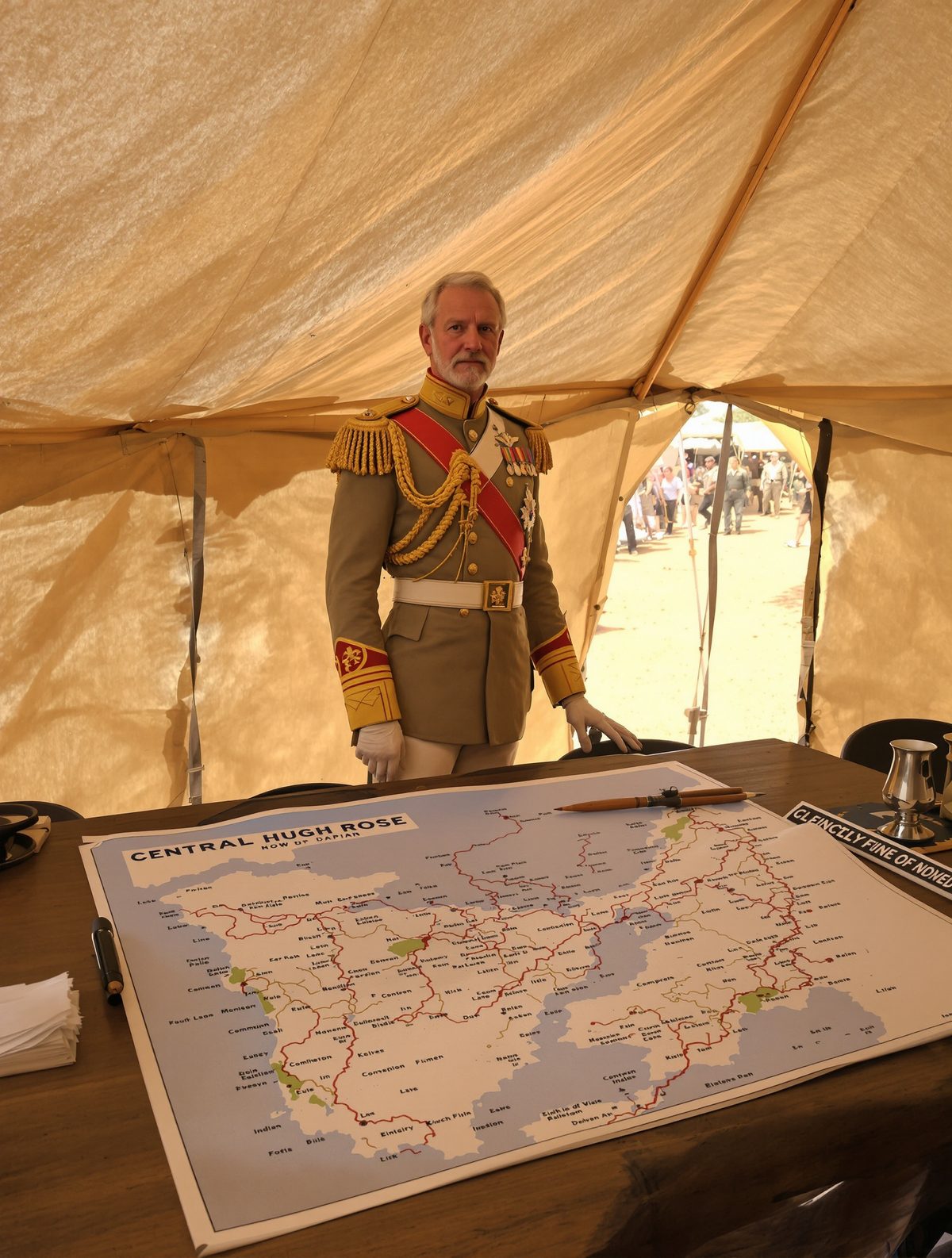
His wife Eileen later recalled that during his rare leaves home, Walker would sit for hours staring at maps of the Atlantic, penciling in U-boat positions and calculating attack vectors. He had become a man possessed, driven by a mission that was slowly killing him.
The Final Hunt
On July 6, 1944, Walker returned to Liverpool after his final patrol—a six-week operation during which his group had sunk four more U-boats and saved an estimated 200,000 tons of shipping. He had achieved something remarkable: in just three years, he had personally accounted for 20 confirmed U-boat kills and shared credit for several more. No other Allied commander came close.
But the victory was pyrrhic. Walker was exhausted beyond recovery, his body ravaged by stress, sleep deprivation, and the unrelenting pressure of command. On July 9, 1944, just three days after his return, Captain Frederick Walker collapsed and died of a cerebral thrombosis at his desk while planning his next patrol. He was 48 years old.
The man who had saved thousands of lives by hunting Nazi submarines with unmatched skill had ultimately been killed by his own dedication to duty. In the cruel mathematics of war, Walker had calculated that his life was worth less than the merchant sailors he protected—and he had paid that price willingly.
The Legend They Left Out
Frederick Walker's death barely made the newspapers. In July 1944, the world's attention was focused on the Normandy invasion and the race across France. The Royal Navy, still fighting a desperate war at sea, couldn't afford to publicize the loss of their most effective U-boat killer. Walker was buried quietly in Liverpool, mourned by his crew and forgotten by history.
Yet Walker's impact on World War II was immeasurable. His tactics saved hundreds of merchant ships and thousands of lives. More importantly, his success helped break the back of the U-boat campaign that threatened to starve Britain into submission. German submarine crews who once prowled the Atlantic with impunity now faced a new reality: they were no longer the hunters, but the hunted.
Today, in an age of precision-guided missiles and satellite surveillance, Walker's story reminds us that war's outcome often depends not on technology, but on the extraordinary dedication of ordinary people pushed to their absolute limits. Frederick Walker didn't die in a blaze of glory or a moment of heroic sacrifice. He died as he had lived in his final years—at his post, still fighting, consumed by a duty that demanded everything and offered nothing in return except the knowledge that others might live because of his sacrifice.