Picture this: a moonless night off the Yorkshire coast, September 23rd, 1779. Two warships locked together like dancing partners from hell, muzzles of cannons touching through shattered gun ports, firing point-blank into each other's bellies. One ship's deck is literally collapsing into flames below. Her captain stands on splintered planking that could give way at any moment, blood streaming down his face, when his enemy demands surrender.
His response would echo through naval history: "I have not yet begun to fight!"
But here's what the textbooks won't tell you—John Paul Jones wasn't just fighting for American independence that night. He was executing the most audacious act of maritime piracy in the 18th century, and he was doing it with a ship that was already sinking beneath his feet.
The Pirate Who Served Two Flags
John Paul Jones wasn't born to steal British warships—he was born to sail them. As plain John Paul in Kirkcudbright, Scotland, he'd grown up watching Royal Navy vessels patrol the Solway Firth. By age thirteen, he was apprenticed aboard British merchant ships, learning to navigate by stars that would later guide him to infamy.
But fate has a twisted sense of humor. After killing a mutinous sailor in self-defense in 1773, John Paul fled to Virginia, added "Jones" to his name, and reinvented himself as an American patriot. When the Revolution erupted, the Continental Congress handed this Scottish refugee a commission and a converted merchant ship called Ranger. Their logic was beautifully simple: who better to hurt the Royal Navy than someone who knew exactly how it worked?
By 1779, Jones had already pulled off the unthinkable—he'd raided the British coast itself, even attempting to kidnap a Scottish earl for ransom. The Royal Navy was hunting him like a rabid dog, and Jones loved every minute of it. But his greatest prize still awaited, and it would come at a cost that would have broken lesser men.
The Floating Coffin Sets Sail
In August 1779, Jones took command of Bonhomme Richard, a converted French merchant vessel that was already showing her age. Named after Benjamin Franklin's "Poor Richard," she was anything but poor—she was catastrophic. The ship leaked, her timbers were rotten, and her forty-two cannons were a mixed bag of French, British, and American pieces that fired different-sized shot.
Jones knew she was a floating coffin, but he also knew she was his ticket to immortality. French officials had given him not just a ship, but a small squadron and permission to hunt British commerce in their own waters. It was like handing a wolf the keys to the sheep pen.
The squadron sailed north around Scotland and down England's east coast, snapping up prizes and terrifying merchant captains. British newspapers screamed about the "Pirate Jones" operating with impunity in the North Sea. The Royal Navy scrambled warships to find him, but Jones was already closing in on his ultimate target—a massive merchant convoy returning from the Baltic, escorted by two British warships.
What happened next would prove that sometimes the difference between piracy and patriotism is simply which flag you're flying.
Death Waltz at Flamborough Head
September 23rd dawned gray and choppy off Yorkshire's Flamborough Head. Captain Richard Pearson of HMS Serapis was having a routine day escorting forty-one merchant vessels home to London when his lookouts spotted strange sails on the horizon. As they drew closer, Pearson realized his worst nightmare was approaching—it was John Paul Jones, and he was flying American colors.
Serapis was everything Bonhomme Richard was not: new, fast, and bristling with eighteen-pound cannons that could punch holes through oak at half a mile. Pearson had every advantage except one—he was facing a man who had already decided he would rather die than retreat.
The battle began at sunset with a thunderous exchange of broadsides. Within minutes, Jones learned just how rotten his ship really was. Bonhomme Richard's heavy guns exploded on their first firing, killing their crews and blowing holes in the deck above. Suddenly, Jones was fighting a superior enemy with half his armament gone and his ship already taking on water.
Any rational commander would have surrendered. Jones decided to get creative instead.
"I Have Not Yet Begun to Fight!"
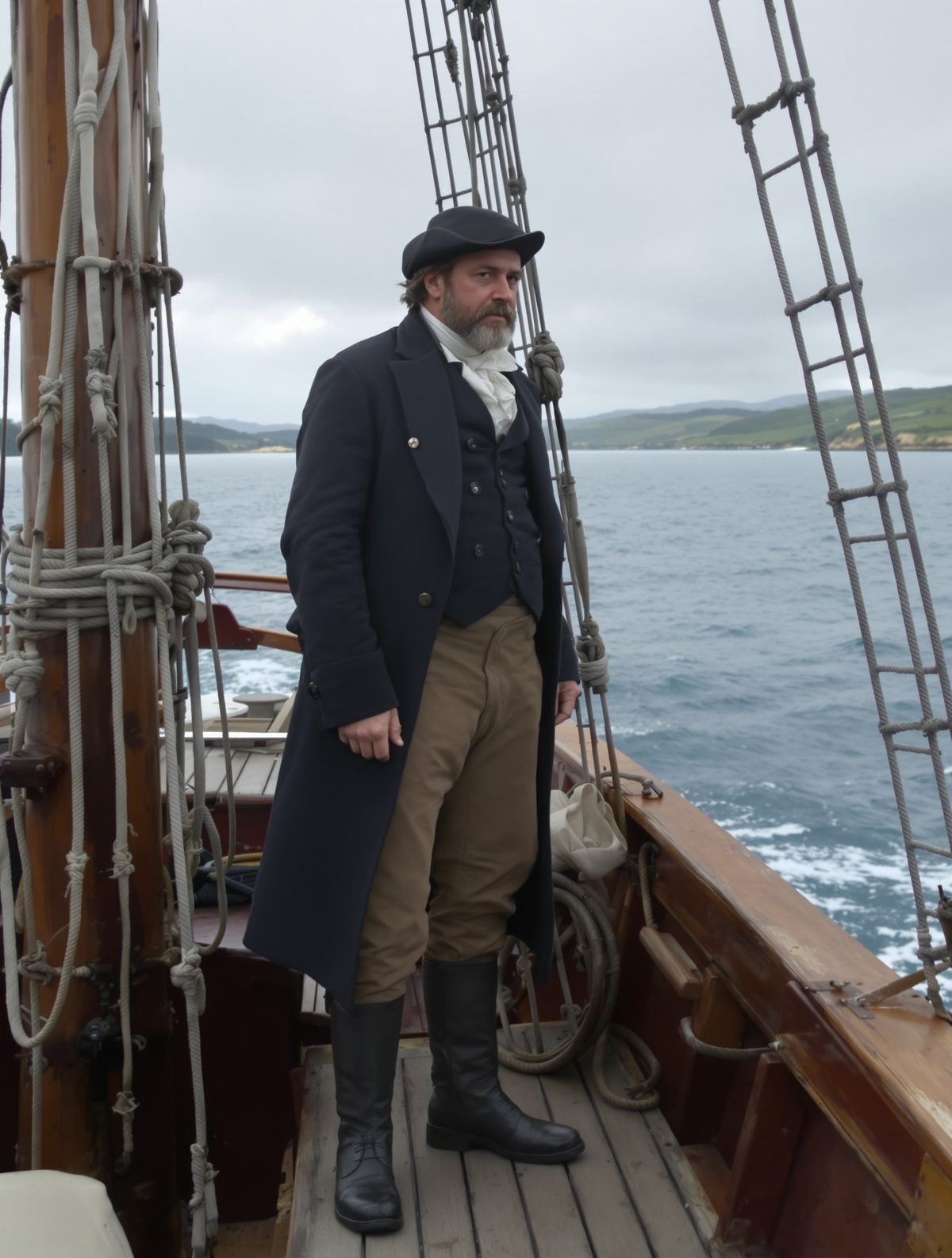
What Jones did next violated every rule of naval warfare. Unable to match Serapis gun for gun, he decided to ram her instead. In the growing darkness, he sailed his burning, sinking ship straight at the British warship and locked the two vessels together with grappling hooks.
Picture the scene: two warships bound together, their crews firing muskets and hurling grenades across a gap of mere feet. Bonhomme Richard's lower decks were flooding, her gun deck was collapsing into the compartments below, and her mainmast was shot through. British cannonballs were passing completely through Jones's ship and splashing into the sea beyond.
It was then that Captain Pearson, seeing the American colors still flying above the carnage, shouted across the water: "Have you struck? Do you call for quarter?"
Jones's reply became the stuff of legend, though witnesses disagree on his exact words. Whether it was "I have not yet begun to fight!" or "I may sink, but I'll be damned if I strike!"—the message was clear. This madman would rather take both ships to the bottom than surrender.
The death waltz continued for three more hours. British sailors tried to board Bonhomme Richard only to find her decks collapsing under their feet. American marines climbed into Serapis's rigging and rained musket fire down on her gun crews. At one point, an American sailor dropped a grenade down Serapis's hatch, igniting loose powder and killing twenty men instantly.
Victory from the Jaws of Defeat
By 10:30 PM, Bonhomme Richard was dying. Her hull was so shot through that only the grappling hooks connecting her to Serapis kept her afloat. Jones himself was wounded, his crew was decimated, and even his most loyal officers were ready to surrender.
But something extraordinary was happening aboard Serapis. Captain Pearson, watching his enemy's ship literally falling apart, couldn't understand why Jones wouldn't quit. The relentless American fire from the rigging had decimated his gun crews. His own ship was taking serious damage. Most disturbing of all, he was beginning to believe that this Scottish-American lunatic really would take both ships down rather than surrender.
At 10:30 PM, with Bonhomme Richard settling lower in the water and fires raging on both vessels, Captain Pearson made a decision that shocked both navies: he struck his colors and surrendered HMS Serapis to John Paul Jones.
The impossible had happened. A sinking American ship had captured a superior British warship through sheer bloody-minded determination. Jones immediately transferred his crew to their prize as Bonhomme Richard slipped beneath the North Sea waves. He'd lost his ship but gained something far more valuable—a legend that would outlive them all.
The Pirate's Greatest Prize
Jones limped into a Dutch port flying British colors over American ones—the traditional signal of capture. The Royal Navy was apoplectic. Not only had they lost a modern warship to a madman in a floating wreck, but Jones had done it in British waters while half the Royal Navy was hunting him.
King George III reportedly threw a tantrum upon hearing the news. The British press, which had been calling Jones a pirate, suddenly found themselves forced to admit that pirates didn't usually fight to the death against superior odds. Perhaps, grudgingly, they were dealing with something more dangerous than a simple criminal—they were facing a true believer.
But here's the detail that makes this story truly extraordinary: Jones pulled off this victory with a crew that was barely American. His men were a mix of British prisoners of war, French marines, Portuguese sailors, and American volunteers. On that September night, this motley crew of international fighters had somehow found the will to follow their captain into what should have been certain death.
The victory resonated far beyond the North Sea. France was impressed enough to loan America more ships. Britain was forced to divert precious warships from American waters to defend their own coast. And John Paul Jones became the first American naval hero, proving that the upstart Continental Navy could take on the Royal Navy and win.
Today, as we watch modern conflicts unfold across the globe, Jones's victory reminds us that superior firepower and technology mean nothing without the will to use them. Sometimes, the most powerful force in any conflict isn't the biggest gun or the newest ship—it's the determination to keep fighting when every rational voice is screaming at you to quit. On a dark night in 1779, that lesson was written in cannon smoke and blood off the Yorkshire coast, and it echoes still.