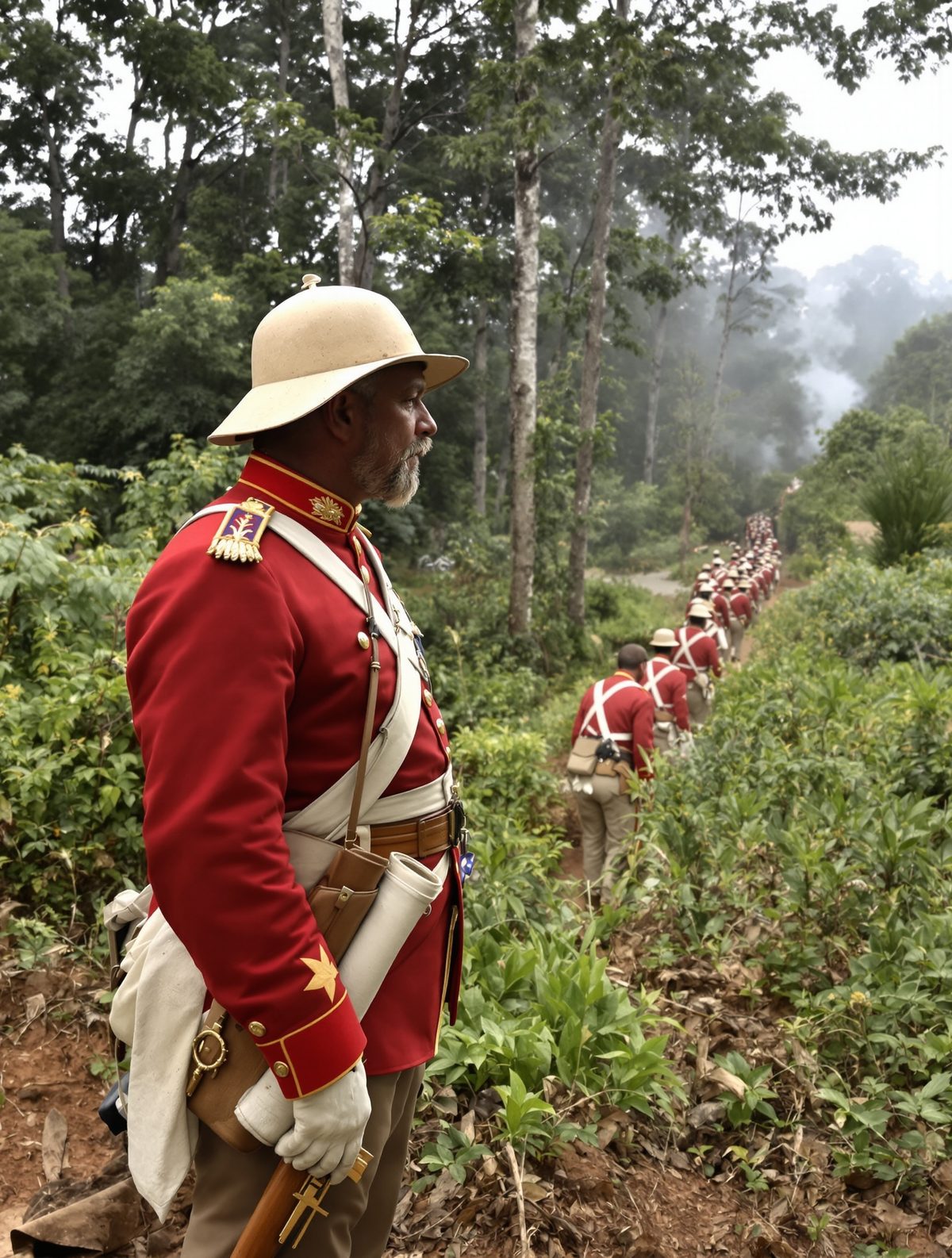
In the chaos of war, a single decision can reverberate through history, leaving behind tales of heroism and folly. On a brisk October morning in 1854, during the Crimean War, an event unfolded that would become the epitome of both - an ill-fated maneuver immortalized as the Charge of the Light Brigade. It all began with a daring captain, racing across the battlefield, who unwittingly set into motion a spectacle of valor and tragedy. This is the story of Captain Louis Nolan's fateful ride and the cataclysm it precipitated.
The Ride Begins: A Battlefield in Balaclava
The scene was the valley of Balaclava, nestled in the Crimean Peninsula, where the British, allied with French and Ottoman forces, clashed with the Russians. The morning of October 25, 1854, dawned cold and overcast, a canvas painted with the smoky hues of impending conflict. The British cavalry, including the illustrious Light Brigade, awaited orders under the command of the impetuous Lord Cardigan.
Amidst this tension, Captain Louis Nolan, a passionate and fervent cavalryman, served as the aide-de-camp to General Airey, the British Quartermaster-General. Known for his bristling enthusiasm and disdain for caution, Nolan was a man who lived for the charge, and the battlefield was his theater.
A Fatal Order: Miscommunication and Misinterpretation
The saga of the Light Brigade's doomed advance began with an order drafted by Lord Raglan, the British commander who observed the field from a vantage point overlooking the valley. His directive was intended to prevent the Russian forces from absconding with captured guns. However, the missive that Captain Nolan galloped to deliver was curt and vaguely worded, assailable to misinterpretation: "Lord Raglan wishes the cavalry to advance rapidly to the front and try to prevent the enemy carrying away the guns."
The ambiguity lay in which guns the order referred to. From his elevated position, Raglan meant those situated on the Causeway Heights. However, upon reaching Lord Cardigan, Nolan gestured aggressively toward a different target at the valley's end, where a formidable Russian artillery emplacement awaited. Historians posit that Nolan himself misunderstood the instruction, driven perhaps by his zeal for a fearless strike.
Into the Valley of Death: The Charge Commences
With a sweeping motion, Nolan's guidance set Lord Cardigan, mounted on his esteemed steed Ronald, into action. The order was given, and like an orchestrated symphony of destruction, 673 horsemen advanced, the rhythmic thunder of hooves echoing off the valley walls. The Light Brigade, in tight formation, moved with a gallant elegance that belied the chaos of war.
As the cavalry surged forward, Nolan, riding at the forefront, shouted, possibly in an eleventh-hour attempt to countermand the charge. Yet, his cries were swallowed by the cacophony of battle. Tragedy struck as Nolan was among the first to fall, struck by shrapnel, his mission completed but never truly understood.
Glory Amidst Destruction: A Moment of Undying Valor
Pressed onward by momentum and misplaced obligation, the Light Brigade continued into what poet Alfred, Lord Tennyson would immortalize as the "valley of Death," their path flanked by Russian guns on all sides. Cannon and carbine fire rained down upon them, transforming the charge into a maelstrom of flesh and steel.
The brigade, battered but unwavering, reached the Russian lines, engaging in brief and brutal combat before being repelled. Of the original 673 riders, around 110 met their end, hundreds more were wounded, and almost 500 horses were lost, leaving the annals of history stained with blood and gallantry.
Lessons from the Past: The Charge in Historical Reflection
When echoes of Nolan’s ride ricochet through the corridors of history, the tale they tell is one of miscommunication exacerbated by human folly. The Charge of the Light Brigade remains a poignant example of the valor inherent in some military débâcles; it exposed the dire need for clarity in command and communication, lessons still pertinent in contemporary military operations.
Each retelling adds layers to its legend — from Tennyson’s haunting verses to modern cinematic portrayals. Yet, it is essential to remember Captain Nolan, whose untamed spirit embodies the eternal human quest for glory, clouded by the fog of misunderstanding and miscommunication.
The Charge of the Light Brigade is more than a narrative of weaponry and warfare. It is a haunting reminder of the triumph and tragedy interwoven into the fabric of human endeavors. The blurred lines between bravery and blunder serve as a solemn testament to the history that shapes empires, and the legends they leave untold in textbooks.