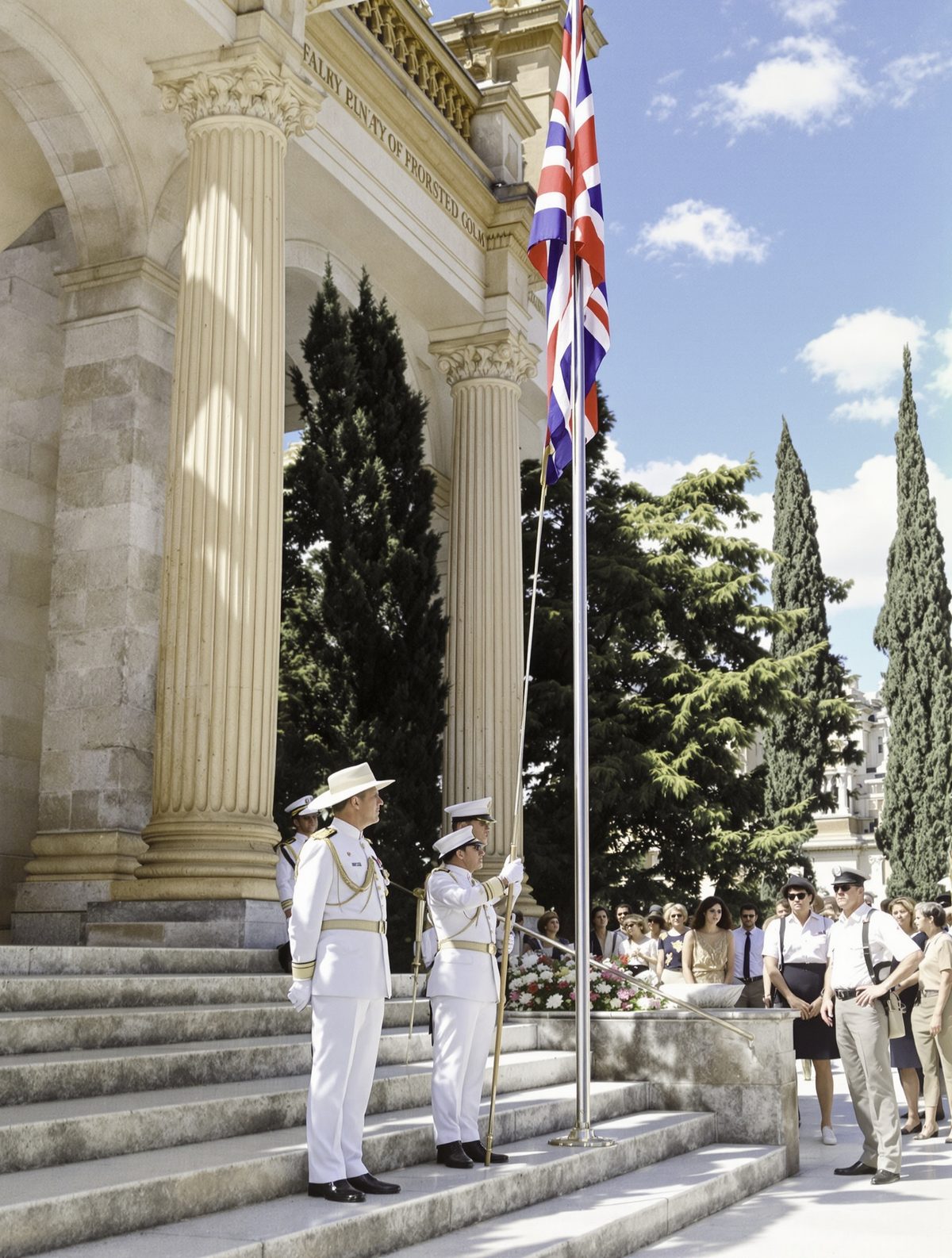
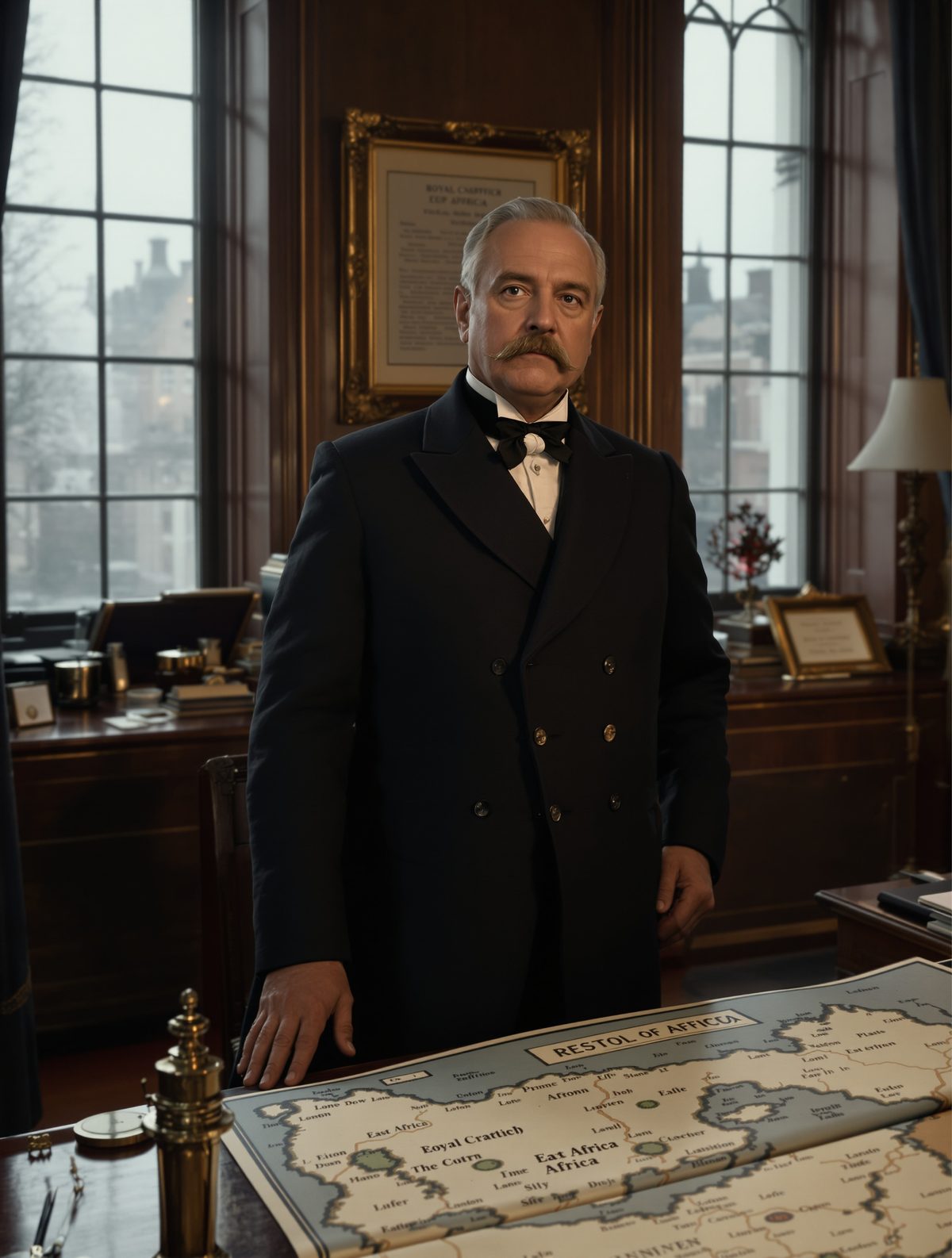
Picture this: a weathered sea captain stands before the most powerful parliament in the world, his hand trembling as he reaches into his coat pocket. What he pulls out isn't a document or a piece of evidence—it's a dried, shriveled human ear. "This is my ear," Captain Robert Jenkins declares to the stunned members of Britain's House of Commons. "The Spanish cut it off seven years ago, and told me to carry it to my king."
The room falls silent. Then erupts.
Within months, Britain would be at war with Spain in a conflict that would rage for seven years, reshape the balance of power in the Atlantic, and ultimately birth an empire. All because of one man's severed ear and the perfect storm of politics, pride, and propaganda that surrounded it.
The Merchant Captain's Bloody Encounter
The story begins not in the marble halls of Westminster, but on the sun-scorched waters of the Caribbean in April 1731. Captain Robert Jenkins commanded the Rebecca, a humble merchant brig loaded with sugar and sailing from Jamaica back to London. These were dangerous waters for English traders—Spain claimed exclusive rights to much of the Caribbean, and their coast guard ships, called guardacostas, prowled the sea lanes like hungry sharks.
Jenkins had made this journey dozens of times before. He knew the risks. What he couldn't have predicted was his encounter with Captain Julio León Fandiño, commander of the Spanish vessel La Isabela. When the Spanish ship intercepted the Rebecca near Havana, it should have been a routine boarding and search. Spanish officials had the right to inspect foreign vessels in their territorial waters, looking for contraband or evidence of illegal trade.
But something went catastrophically wrong.
According to Jenkins' later testimony, Fandiño's men ransacked his ship, finding nothing illegal. Frustrated and perhaps suspicious that Jenkins was lying about hidden contraband, Fandiño allegedly ordered his men to tie the English captain to the mast. Then, in an act of brutal intimidation that would echo through history, the Spanish captain drew his cutlass and sliced off Jenkins' left ear.
"Carry this to your king," Fandiño supposedly snarled, pressing the bloody ear into Jenkins' hand, "and tell him that if he were here, I would serve him in the same manner."
Seven Years of Silence and Simmering Tensions
Here's where the story gets murky—and fascinating. Jenkins didn't immediately rush to London demanding justice. He didn't write angry letters to newspapers or petition the Admiralty. Instead, he apparently wrapped up his severed ear, tucked it away, and continued his life as a merchant captain for seven long years.
Why the silence? The answer lies in the complex web of 18th-century international relations. Britain and Spain were technically at peace, bound by various treaties that attempted to regulate trade in the Caribbean. The 1713 Treaty of Utrecht had given Britain limited trading rights in Spanish America, but tensions constantly flared over the boundaries of these agreements. Spanish officials regularly searched British ships, and British merchants regularly smuggled goods into Spanish ports. It was a delicate dance of diplomacy, commerce, and barely contained hostility.
During those seven years, hundreds of similar incidents occurred. British merchants complained of Spanish harassment, illegal seizures, and rough treatment. Spanish authorities insisted they were simply protecting their territorial rights against British smugglers. The Spanish ambassador to London, the Duke of Montellano, kept detailed records of these complaints, noting dryly that most British merchants seemed to have very elastic definitions of "legitimate trade."
But by 1738, the political climate in London had shifted dramatically. Prime Minister Robert Walpole, a cautious man who preferred profitable peace to expensive wars, found himself under siege from opposition politicians who painted him as weak and ineffective. They had a point: British trade was suffering, British merchants were angry, and Spanish interference seemed to be increasing rather than decreasing.
The Perfect Propaganda Moment
This is when Captain Jenkins and his preserved ear became the most powerful piece of political theater in British history.
The opposition members of Parliament, led by firebrand politicians like William Pitt the Elder, needed a symbol that would crystallize public anger against Spain and force Walpole into war. Jenkins' story was perfect—a simple, honest English merchant brutally mutilated by Spanish barbarians, carrying physical proof of their cruelty.
When Jenkins appeared before the House of Commons in March 1738, he delivered his lines with the skill of a seasoned actor. Members of Parliament later described the moment he produced his ear as electrifying. Some reportedly gasped, others shouted in outrage. The opposition press seized on the story with gleeful fury, publishing lurid accounts of Spanish brutality and British humiliation.
But here's a detail your history textbook probably left out: nobody could definitively prove the ear was actually Jenkins'. Seven years is a long time to preserve a piece of human flesh, even with the best 18th-century preservation techniques. Some skeptics whispered that the whole thing was a fabrication, that Jenkins might have lost his ear in any number of ways—or that the ear wasn't even human. One wit reportedly suggested it looked suspiciously like a pig's ear.
It didn't matter. Truth is often less important than timing in politics, and Jenkins' ear arrived at precisely the right moment to ignite a war that many people already wanted.
When Ears Launch Armadas
By October 1739, Britain formally declared war on Spain. Prime Minister Walpole, who had desperately tried to avoid the conflict, allegedly said, "They now ring the bells, but they will soon wring their hands." He was right to be pessimistic.
What began as the War of Jenkins' Ear quickly spiraled into something much larger and more destructive. Within two years, it had merged with the War of Austrian Succession, drawing in France, Austria, Prussia, and most of the other major European powers. The conflict that started in a committee room in Westminster eventually stretched from the Caribbean to India, from the coast of Georgia to the battlefields of Silesia.
The war produced some genuinely epic moments. In 1741, Admiral Edward Vernon captured the Spanish fortress of Porto Bello in Panama with just six ships, a victory so celebrated that George Washington's family named their Virginia estate Mount Vernon in the admiral's honor. But it also produced catastrophic disasters, like Vernon's later attempt to capture Cartagena in 1741, where disease and Spanish resistance killed thousands of British soldiers and sailors.
The most surprising theater of the war? Georgia. Spanish forces actually invaded British North America, landing in Georgia in 1742 in an attempt to roll back British colonial expansion. General James Oglethorpe, founder of the Georgia colony, managed to repel the invasion at the Battle of Bloody Marsh on St. Simons Island—a victory that ensured the future United States would have a southern border at Florida rather than somewhere around Savannah.
The Ear That Changed Everything
The War of Jenkins' Ear officially ended in 1748 with the Treaty of Aix-la-Chapelle, though like many 18th-century conflicts, it concluded more from exhaustion than resolution. Both sides were essentially bankrupt, having spent enormous sums of money to achieve relatively modest territorial changes.
But the war's real significance lay in what it revealed about the changing nature of global politics. This was one of the first conflicts driven primarily by commercial rather than dynastic concerns. The question wasn't which prince should inherit which throne, but who would control the lucrative trade routes of the Atlantic world.
The war also marked a crucial step in Britain's evolution toward global empire. British naval power, tested and refined in Caribbean battles, would prove decisive in later conflicts with France. The administrative systems developed to manage this far-flung war provided the foundation for governing an even larger empire. And the propaganda techniques used to sell the war to the British public—turning Jenkins into a symbol of national honor—became a template for future imperial adventures.
As for Captain Jenkins himself, he largely disappeared from history after his moment of fame. Some records suggest he continued working as a merchant captain; others indicate he may have received a government pension for his services to the war effort. The truth, like so much about his story, remains frustratingly elusive.
In our age of viral videos and social media outrage, Jenkins' ear offers a sobering reminder of how quickly manufactured crises can spiral into real conflicts. A seven-year-old grievance, a perfectly timed parliamentary appearance, and a preserved piece of flesh combined to launch ships, spend fortunes, and cost thousands of lives. Sometimes the smallest provocations have the largest consequences—and the most absurd causes produce the most serious effects.