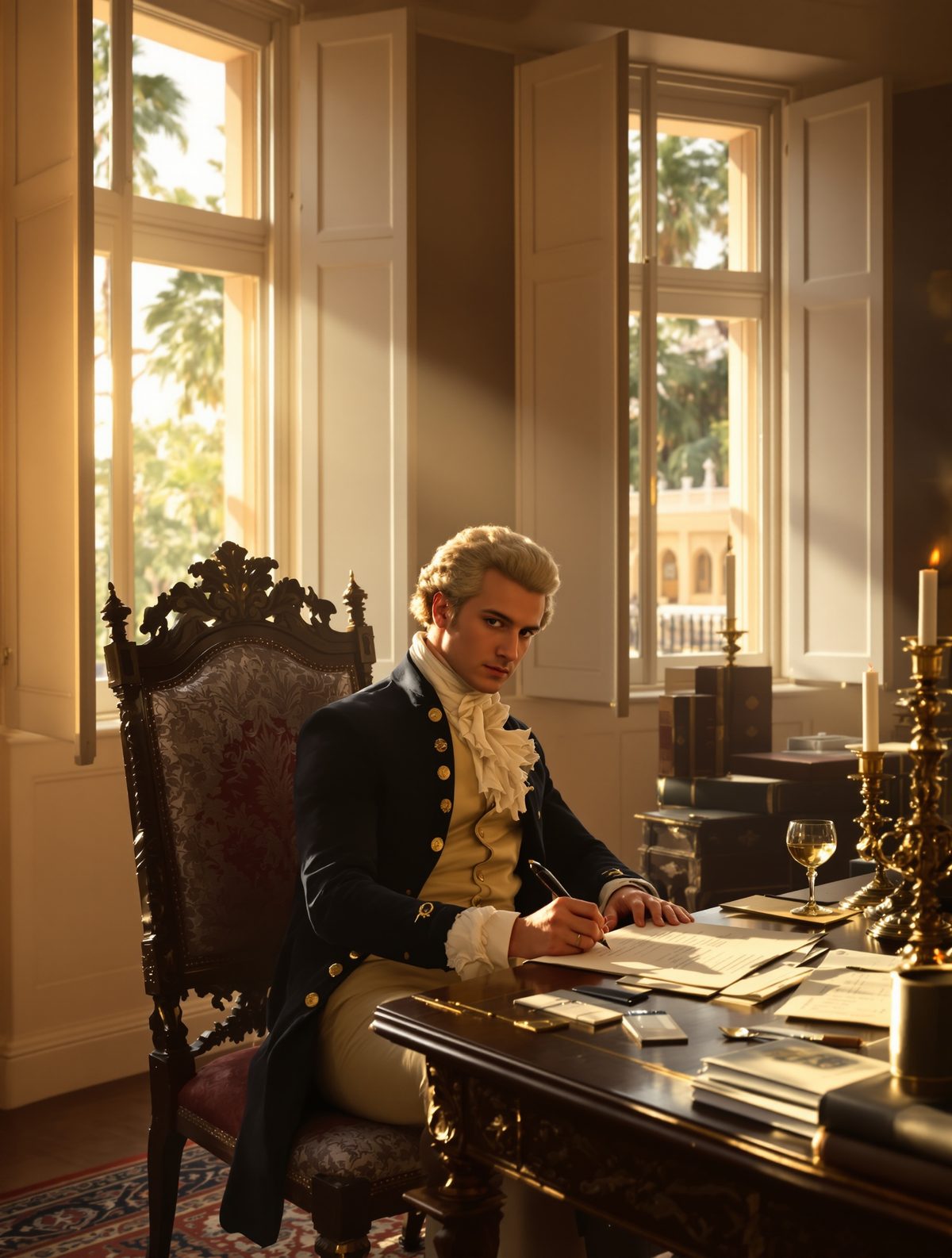
The year was 1688, and somewhere in the vast expanse of the Pacific Ocean, a weathered English pirate crouched in his cramped cabin aboard the Cygnet. While his crewmates above deck divided their latest plunder of Spanish silver, William Dampier carefully pressed a strange flower between the pages of his journal, sketching its peculiar petals by candlelight. Around him, maps covered every surface—not treasure maps marked with X's, but detailed charts noting wind patterns, ocean currents, and the precise locations where certain birds appeared. This was no ordinary buccaneer's den. This was the floating laboratory of history's most unlikely scientist.
What Dampier didn't know as he penned his observations was that his secret journals would soon become more valuable to the British Empire than all the Spanish gold his crew had stolen. He was about to become the bridge between the lawless world of Caribbean piracy and the precise science that would give Britain dominion over the world's oceans.
The Gentleman Pirate's Unusual Cargo
William Dampier wasn't born to piracy—he stumbled into it. The son of a Somerset farmer, he'd tried his hand at everything from plantation management in Jamaica to logwood cutting in the steamy forests of Central America. But by 1679, at age 28, he found himself sailing with a crew of buccaneers led by Captain Bartholomew Sharp, embarking on what would become a twelve-year odyssey of piracy and discovery.
What set Dampier apart from his cutlass-wielding companions wasn't just his education—it was his obsession with recording everything. While other pirates kept rudimentary logs noting dates and plunder, Dampier maintained detailed journals wrapped in bamboo and sealed with wax to protect them from the salt spray and tropical humidity. He wrote in a clear, methodical hand about wind directions at specific latitudes, the behavior of dolphins before storms, and the exact temperature of ocean water at different depths.
His crewmates thought him eccentric, perhaps even mad. Here was a man who would interrupt a raid to collect samples of unknown plants, who insisted on taking precise compass readings while Spanish warships pursued them, and who filled his sea chest with pressed flowers instead of stolen jewels. They had no idea they were witnessing the birth of scientific exploration as we know it.
Three Oceans, One Revolutionary Mind
Between 1679 and 1691, Dampier accomplished something no Englishman had done before: he circumnavigated the globe, crossing the Atlantic, Pacific, and Indian Oceans while meticulously documenting everything he encountered. His journey with various pirate crews took him from the Caribbean through the treacherous Strait of Magellan, up the coast of Chile and Peru, across the Pacific to the Philippines and Indonesia, around the Cape of Good Hope, and finally home to England.
But this wasn't just adventure—it was accidental empire-building. At every stop, Dampier recorded not just what he stole, but what could be useful. In the Juan Fernández Islands (later famous as Robinson Crusoe's inspiration), he noted the abundance of fresh water and goats that could provision future expeditions. Off the coast of Chile, he documented seasonal wind patterns that would later allow British naval commanders to plan attacks with devastating precision. In the Philippines, he catalogued local foods and medicines that could sustain European crews in tropical climates.
His most remarkable discovery came during a stop at what he called "New Holland"—the western coast of Australia. On January 4, 1688, Dampier became one of the first Englishmen to set foot on Australian soil, nearly 80 years before Captain Cook's famous voyage. While his pirate companions saw only a barren coastline useless for raids, Dampier filled pages with observations about unique animals, strange plants, and Aboriginal peoples he encountered. His descriptions of kangaroos—"a sort of racoon, different from those of the West Indies, chiefly as to their legs, which were very short"—were among the first scientific accounts of Australian wildlife to reach Europe.
The Journals That Changed Everything
When Dampier finally returned to England in 1691, nearly penniless and wearing clothes that had rotted in tropical humidity, he carried with him something more valuable than Spanish gold: his journals. Despite twelve years of storms, battles, and tropical diseases, he had somehow preserved thousands of pages of detailed observations about winds, currents, geography, flora, fauna, and indigenous peoples from around the world.
The timing couldn't have been better. England was entering what historians call the "Scientific Revolution," and educated society was hungry for knowledge about the wider world. When Dampier published his journals in 1697 as "A New Voyage Round the World," the book became an instant sensation. It wasn't just popular entertainment—it was a treasure trove of practical information that the Royal Navy had been desperately seeking.
The Admiralty realized they had stumbled upon something extraordinary. Here were precise sailing directions for routes the Spanish had kept secret for centuries. Dampier's wind charts revealed the seasonal patterns that could cut months off Pacific crossings. His notes on currents explained why certain approaches to enemy ports were impossible during particular seasons. Most importantly, his detailed observations of Spanish colonial defenses provided intelligence that would prove invaluable in future conflicts.
The book's success was unprecedented. It went through four editions in two years, was translated into multiple languages, and influenced everyone from merchants planning trade routes to naval officers plotting strategy. Even literary figures took notice—Daniel Defoe used Dampier's accounts of marooned sailors to inspire "Robinson Crusoe," and Jonathan Swift drew on his descriptions of strange lands for "Gulliver's Travels."
From Outlaw to Naval Captain
The Royal Navy faced an unusual dilemma: their best source of navigational intelligence was technically a criminal. Piracy was punishable by death, yet here was a pirate whose knowledge could advance British interests around the world. The solution was as pragmatic as it was unprecedented—they gave him a commission.
In 1699, the same Navy that should have hanged Dampier instead appointed him captain of HMS Roebuck and sent him back to Australia to conduct the first official British scientific expedition to the continent. It was an extraordinary transformation: the pirate had become an explorer, the outlaw had become an officer, and the buccaneer had become Britain's first scientific navigator.
The expedition was a mixed success—the Roebuck sank on the return journey due to shipworm damage, and Dampier faced a court-martial for harsh treatment of his crew. But the scientific results were remarkable. His detailed charts of Australian coastlines remained the standard references for nearly a century. His botanical collections introduced European scientists to hundreds of previously unknown species. Most importantly, his methods—combining careful observation, precise measurement, and detailed record-keeping—established the template for all future scientific expeditions.
The Legacy of a Scientific Pirate
Dampier's influence extended far beyond his own voyages. His journals became required reading at the Royal Naval Academy, where young officers learned navigation techniques developed during pirate raids. His wind charts guided British fleets during the War of Spanish Succession, helping them outmaneuver enemies who didn't understand seasonal weather patterns. His descriptions of safe harbors and fresh water sources enabled British merchants to establish trading posts in previously inaccessible regions.
Perhaps most significantly, Dampier demonstrated that exploration and science could serve imperial ambitions more effectively than simple conquest. His peaceful observations of Australian Aboriginal peoples provided intelligence that would inform British colonization strategies decades later. His notes on tropical diseases and their treatments saved countless lives during subsequent expeditions. His botanical discoveries led to the cultivation of new crops in British colonies, diversifying imperial agriculture.
The man who began his career stealing Spanish silver ended it by giving Britain something far more valuable: scientific mastery of the world's oceans. His techniques influenced later explorers like Captain Cook, who carried Dampier's journals on his own voyages to the Pacific. Charles Darwin acknowledged Dampier's influence on scientific methodology. Even today, oceanographers recognize him as a pioneer in systematic marine observation.
In our age of GPS and satellite imagery, it's hard to imagine how revolutionary Dampier's work truly was. He transformed navigation from guesswork into science, piracy from mere theft into intelligence gathering, and exploration from adventure into systematic knowledge acquisition. He proved that the pen could indeed be mightier than the sword—or in his case, mightier than the cutlass. The journals of one curious pirate became the foundation upon which Britain built the world's greatest maritime empire, reminding us that sometimes the most powerful weapons are careful observation, detailed record-keeping, and an insatiable desire to understand the world around us.