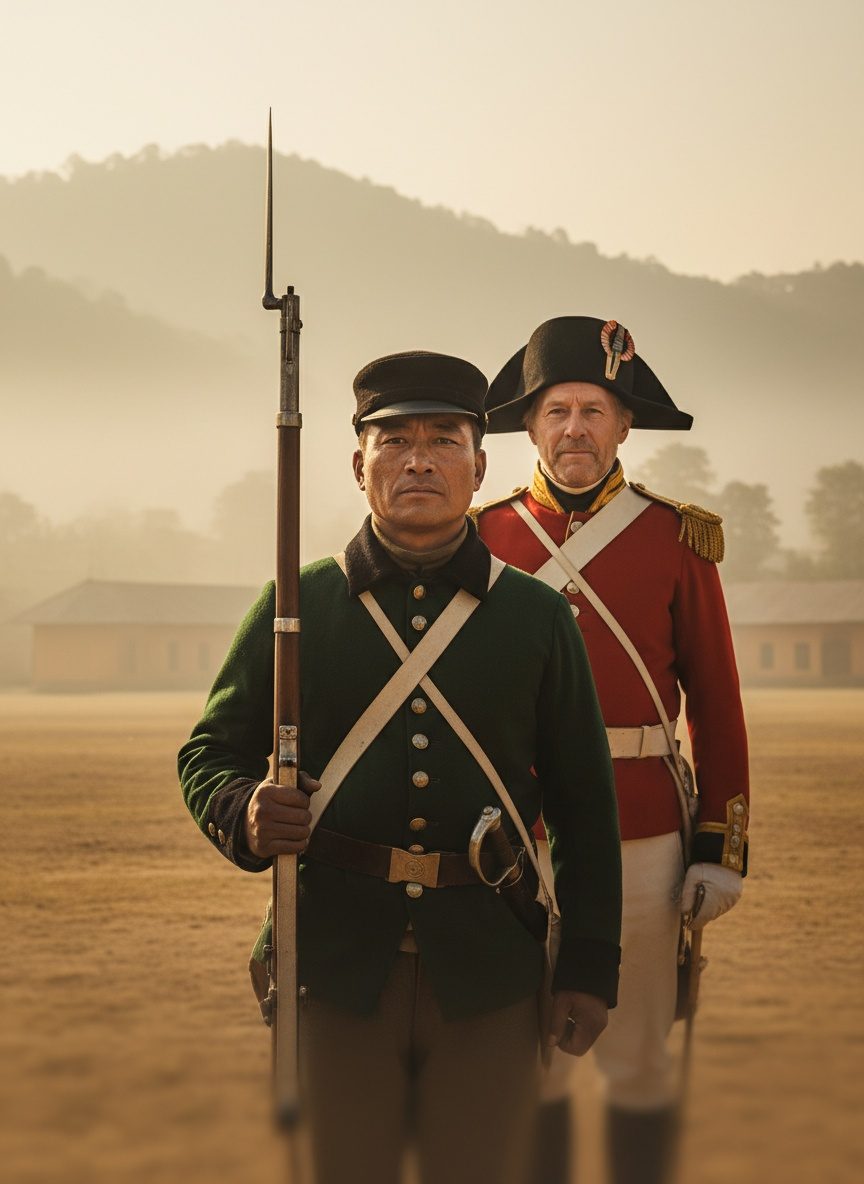

It was his way of life. He could outrun danger – whether it came from nature or man.
Through the Heart of Tiger Country
British India's vast expanse was a cacophony of cultures, languages, and landscapes. Yet, amidst this diversity, one element bound the colony together: communication. The British postal network was a formidable feat of organization, but its unsung heroes were the dak runners, who carried the empire's messages through some of the most treacherous terrains on earth. Surprisingly, these pathways often wound through tiger-infested jungles and across flood-swollen rivers, where dangers lurked in the shadows.
These intrepid messengers traversed hundreds of miles without the aid of horses or machinery. Barefoot and clad in the simplest of garments, they sprinted through the Indian wilderness, relying on their instinct and intimate knowledge of the land to stay safe. Each dak runner carried a leather pouch, which contained letters, official orders, and sometimes even delicate parcels. This pouch was sacred — its contents more precious than the runner's own well-being, for the wheels of administration relied heavily upon its uninterrupted journey.
Along the route were staging posts — rudimentary shelters strategically situated at intervals as short as two miles. These posts served as the runner's brief respite from the amalgam of intense heat, torrential rain, and biting cold that marked the Indian climate. Here, they would transfer the pouch onto another runner, thus creating an unbroken relay of human endurance. Night was no ally to these vigilant athletes; the layers of darkness were often peeled back only by the faint glow of a lantern, as they pushed through under the eerie serenade of the jungle’s nocturnal cacophony.
The Path to Peril
Life as a dak runner was fraught with peril. The jungles of India, thick with prehistoric banyans and creeping undergrowth, were alive with the whisper of threats. It was a realm ruled by the majestic yet unpredictable tiger, a king not always content with sticking to its own kind. Many a runner stepped silently across terrain that was both a familiar path and a danger-ridden labyrinth. Bright eyes in the murk, flickering movements in the bush — the signals of a silent stalker — could mean the end for those who could not outmaneuver them.
Beyond nature, human threats also loomed large. The roads were often patrolled by bandits, outlaws who thrived in the labyrinthine jungles. Desperate men driven by necessity and greed sometimes ambushed the runners, hoping for a wealth of information or valuables hidden within the postal cargos. Yet, the most valuable commodity was the news itself — a currency that could destabilize or influence authority.
In times of monsoon, great rivers erupted from their banks, carving new waterlogged paths and sweeping away anything unanchored. Runners became swimmers, often crafting makeshift rafts to ferry their essential cargo across angry torrents. Communities became lifelines, offering food, protection, and directional guidance to the runners who dashed past day and night. The indomitable spirit of human connection was as steadfast as the ceaseless flow of the postal relay.
Endurance Beyond Expectation
The job of a dak runner was not merely an occupation; it was a symbiotic existence with nature's most powerful elements. To answer the empire's call was to risk life and limb in the face of insurmountable odds, yet the runners remained steadfast, bound by duty and perhaps a deeper sense of pride. Their feats are reminiscent of ancient marathoners whose speed and resilience defied expectations.
Despite the ever-present dangers, the letters nearly always reached their destinations. The system was surprisingly resilient — especially given the lack of modern postal technology. This testament to the efficacy of human endurance speaks volumes about the determination of the dak runners, individuals who became legends in their own right. Yet their stories rarely find mention in the grand narratives of imperial achievements.
In today’s world, where communication occurs at the speed of light, it's hard to imagine a time when the human foot was the fastest messenger. The dak runners symbolize more than just endurance; they encapsulate the untold saga of those who braved the elements and adversaries so that the empire could thrive on its veins of correspondence. They remind us of the lengths to which dedicated individuals went to ensure that no message was left behind, forging a human link through the untamed wilderness of an empire. In doing so, they left an indelible mark on the history of communication — a counterpoint to our modern ease with digital connectivity.