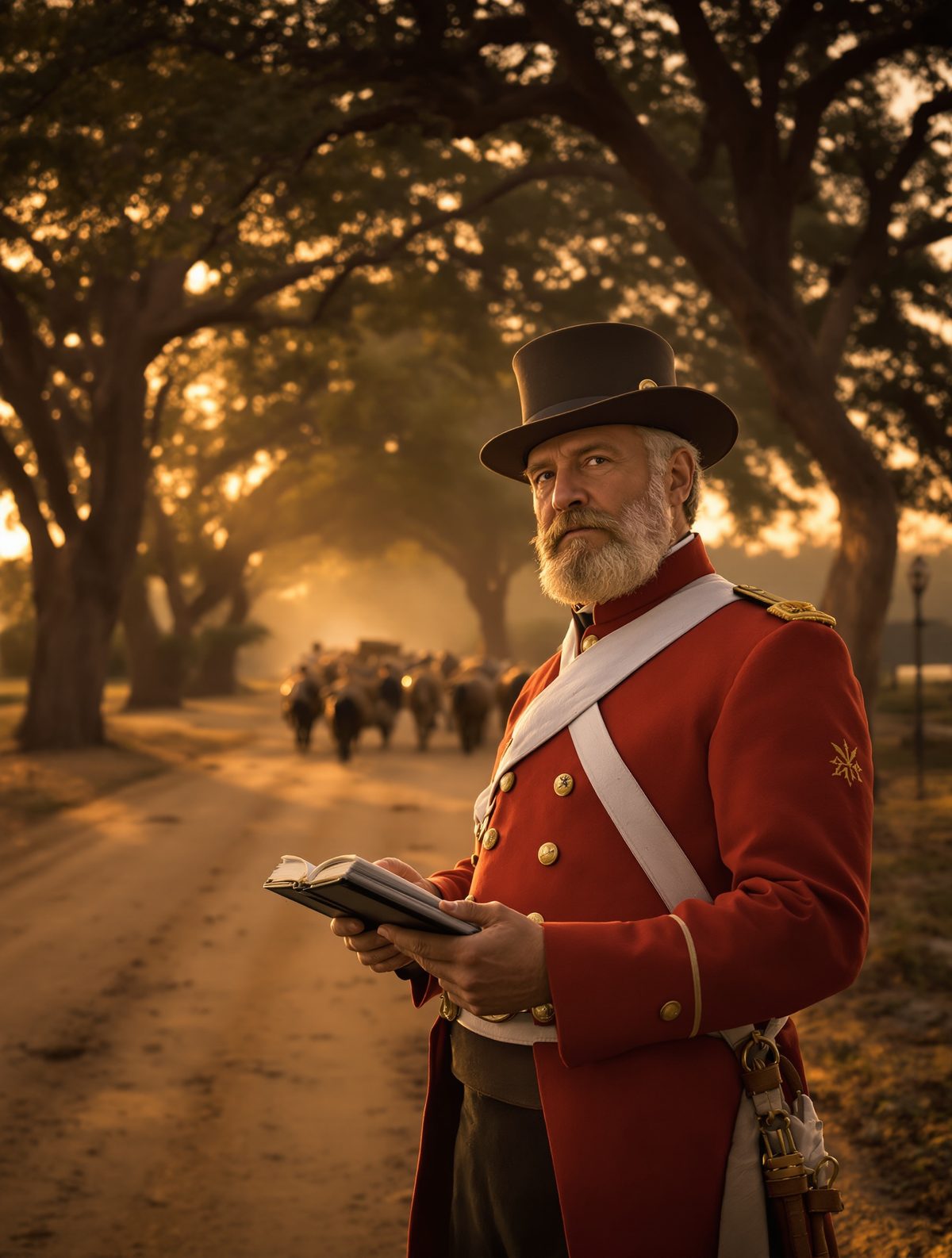
The young Irish doctor's hands trembled slightly as he raised the glass of murky green liquid to his lips. It was 1838, and Dr. William Brooke O'Shaughnessy stood alone in his laboratory in Calcutta, about to consume a preparation of ganja—the same hemp plant that British authorities had declared dangerous and barbaric. What happened next would revolutionize Western medicine and introduce Victorian Britain to one of its most potent therapeutic weapons, hidden in plain sight for centuries.
O'Shaughnessy had no idea that his forbidden self-experiments would soon make him the toast of London's medical establishment, or that his discoveries would echo through medical history for the next two centuries. All he knew was that traditional British remedies were failing his patients in India, and he was desperate enough to risk his career—and possibly his life—on an ancient local cure.
The Desperate Doctor in a Strange Land
When 28-year-old William O'Shaughnessy arrived in Calcutta in 1833 as an assistant surgeon with the East India Company, he was already something of a medical maverick. The Belfast-born physician had made a name for himself in London by pioneering intravenous fluid therapy for cholera patients—a radical treatment that saved countless lives during Britain's devastating 1831 cholera epidemic.
But India presented challenges that would have broken lesser minds. The subcontinent was a medical nightmare for British physicians: tropical diseases they'd never encountered, remedies that seemed to have no effect on local ailments, and a mortality rate among British soldiers and civilians that was nothing short of catastrophic. In some military stations, the annual death rate reached an appalling 20 percent.
O'Shaughnessy watched his patients suffer and die from conditions that local healers claimed to treat routinely with their traditional medicines. The proud British medical establishment dismissed these "native superstitions," but O'Shaughnessy was too pragmatic—and too desperate—to let prejudice override potential progress. If Indian physicians had been successfully treating patients for millennia, perhaps it was time for Western medicine to swallow its pride and listen.
It was then that he first heard whispers about ganja, charas, and bhang—different preparations of the cannabis plant that Indian physicians used to treat everything from pain and insomnia to rabies and tetanus. The British authorities had already begun restricting its use, viewing it as another dangerous native vice. But O'Shaughnessy saw opportunity where others saw threat.
Playing Russian Roulette with Botany
What O'Shaughnessy did next was either brilliant or insane—possibly both. In an era before modern clinical trials, ethical review boards, or even basic safety protocols, he decided to test cannabis preparations on himself. For weeks in 1838, he methodically documented the effects of different doses and preparations, turning his own body into a living laboratory.
His meticulous notes reveal a scientist walking a tightrope between discovery and disaster. Small doses produced "a great increase of appetite and a sensation of happiness." Larger doses caused "remarkable effects on the nervous system," including intense euphoria, altered time perception, and profound changes in consciousness that he struggled to describe in his clinical Victorian prose.
Most remarkably for a British gentleman of his era, O'Shaughnessy approached these mind-altering effects with scientific curiosity rather than moral panic. He noted that unlike alcohol or opium—the two intoxicants familiar to British medicine—cannabis produced no apparent physical dependence or serious adverse effects. "No unpleasant symptoms whatever succeeded," he wrote, "even on the employment of large doses."
But O'Shaughnessy wasn't interested in recreational effects. He was hunting for medical applications, and cannabis delivered beyond his wildest expectations. He discovered that the plant was remarkably effective for pain relief, muscle spasms, and sleep disorders. Even more exciting, it seemed to work for conditions that stumped conventional medicine entirely.
Miracle Cures and Medical Bombshells
Emboldened by his self-experiments, O'Shaughnessy began treating patients with cannabis preparations. The results were nothing short of sensational. He successfully used cannabis tincture to treat a baby suffering from convulsions, an elderly man with severe rheumatism, and—most dramatically—several patients with tetanus, a condition that was essentially a death sentence in the 1830s.
His tetanus cases became the stuff of medical legend. In 1838, he treated a 40-year-old man whose tetanus was so severe that "his body was bent like a bow, resting on his head and heels." After receiving cannabis extract, the patient's spasms subsided, and he made a full recovery. Word of such "miracles" spread quickly through British medical circles.
Perhaps most remarkably, O'Shaughnessy discovered that cannabis was extraordinarily effective for treating cholera—the same disease that had made his reputation in London. He found that cannabis not only relieved the agonizing cramps and pain but actually seemed to improve survival rates. In an era when cholera killed more British soldiers in India than combat did, this was potentially world-changing information.
By 1840, O'Shaughnessy had compiled enough evidence to make his case to the broader medical world. His patients included British officials, Indian civilians, and military personnel—a cross-section that gave his findings credibility across racial and class lines that typically divided colonial medicine.
The Cannabis Doctor Takes London by Storm
When O'Shaughnessy returned to London in 1841, he brought with him something unprecedented: a comprehensive study of cannabis as medicine, backed by years of careful observation and documentation. His 40-page report, "On the Preparations of the Indian Hemp, or Gunjah," was published in the Bengal Pharmacopoeia and later reprinted in British medical journals to widespread acclaim.
The British medical establishment, normally suspicious of colonial innovations, embraced O'Shaughnessy's findings with surprising enthusiasm. Here was a British-trained physician offering scientific validation for a powerful new therapeutic agent—one that could address conditions for which Victorian medicine had few effective treatments.
The timing was perfect. Victorian Britain was experiencing a medical renaissance, with new discoveries emerging regularly. O'Shaughnessy's cannabis research fitted neatly into this narrative of progress and scientific advancement. Moreover, his impeccable credentials—he had been elected to the Royal Society and appointed to prestigious positions in India—made him an unassailable source.
Major pharmaceutical companies quickly began producing cannabis-based medicines. Peter Squire, chemist to Queen Victoria herself, created a cannabis tincture based on O'Shaughnessy's specifications. By the 1850s, cannabis medicines were widely available in British pharmacies, prescribed by physicians, and even used by members of the royal family. Queen Victoria herself reportedly used cannabis preparations for menstrual cramps on her physician's recommendation.
The transformation was remarkable: in less than a decade, O'Shaughnessy had taken a "dangerous native intoxicant" and turned it into a respectable Victorian medicine found in the most proper British medicine cabinets.
The Rise and Fall of Medical Cannabis
For the next six decades, cannabis remained a standard treatment in British and American medicine. Medical textbooks routinely discussed its applications for pain, spasms, insomnia, and dozens of other conditions. Physicians prescribed it as casually as they might recommend aspirin today.
O'Shaughnessy continued his research throughout his career, refining extraction methods and exploring new applications. He developed standardized preparations that allowed for more predictable dosing—a crucial advancement that helped establish cannabis as a reliable medicine rather than an unpredictable folk remedy.
But the golden age of medical cannabis was not to last. The early 20th century brought new synthetic drugs like aspirin and barbiturates that were easier to standardize and dose precisely. More significantly, changing social attitudes began to view cannabis primarily as an intoxicant rather than a medicine. The same properties that made it valuable to O'Shaughnessy—its psychoactive effects—became liabilities in an era of increasing drug prohibition.
By 1937, cannabis had been effectively banned in the United States, and British medicine gradually followed suit. O'Shaughnessy's carefully documented research was forgotten, relegated to historical footnotes as a curious relic of Victorian medicine's more adventurous era.
A Victorian Vision for Modern Medicine
Today, as medical cannabis experiences a remarkable renaissance, O'Shaughnessy's pioneering work reads like a blueprint for modern research. His careful documentation of effects, his systematic approach to dosing, and his focus on specific medical applications mirror the methodology of contemporary clinical trials.
Perhaps most remarkably, modern research is validating virtually all of O'Shaughnessy's original observations. Cannabis does indeed provide effective pain relief, reduce muscle spasms, and help with sleep disorders. Current studies even suggest it may have applications for epilepsy and other neurological conditions—echoing O'Shaughnessy's successful treatment of convulsions nearly two centuries ago.
The young Irish doctor who risked everything in a Calcutta laboratory couldn't have imagined that his work would remain relevant into the 21st century. But his willingness to challenge medical orthodoxy, embrace evidence over prejudice, and put patient welfare above professional comfort created a legacy that transcends his era. In our current age of medical cannabis research, Dr. William O'Shaughnessy stands as a reminder that sometimes the most important discoveries come from the courage to question what everyone else simply accepts as truth.