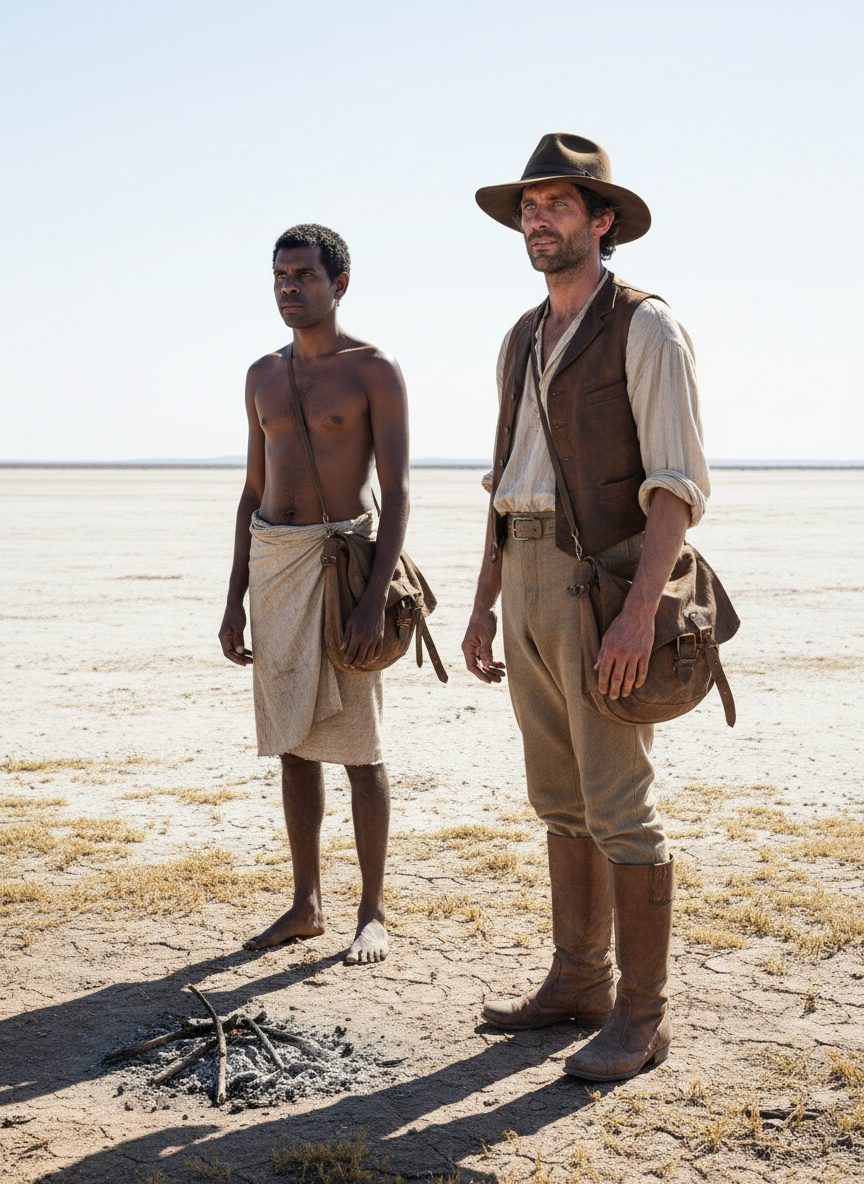
The Nullarbor Plain stretches out like an endless ocean of earth, flat and barren under the relentless Australian sun. In 1841, this landscape was a death trap, a gauntlet of searing heat and unyielding desolation. In the harsh light of high noon, the air itself seems to shimmer, distorting the horizon where the dry soil meets the sky. Startlingly absent is the sound of rustling leaves or the chatter of wildlife; any creature that dared inhabit this harsh environment is wise enough to seek shelter during the day. It's a silence that could drive a soul mad, especially if that soul found itself like Edward John Eyre—alone, desperate, teetering on the brink of survival.
Edward Eyre's journey to bridge the untouched wilderness of Australia's southern edge was not just a test of endurance; it was an expedition into the unknown. Before 1841, no European had ever trodden this path and lived to tell the tale. The young explorer, fueled by ambition and curiosity, led a small party towards a destiny that would test the limits of human determination. His group departed with dreams of fortune and fame, illusions that would soon wither under the scrutiny of the sun.
The lifeblood of any expedition is its supplies, and Eyre began with what seemed like ample provisions. But on the Nullarbor, resources dwindled with alarming rapidity. Water, the most precious commodity in a land so parched, was their Achilles' heel. Starved land offers no solace to the thirsty, and soon their canteens ran dry. One by one, Eyre's companions succumbed to the brutal embrace of the desert, their hopes buried where they fell. Those who accompanied Eyre were either felled by the environment or turned back, praying for survival but leaving behind their leader to face the indifferent wasteland.
Yet not all abandoned Eyre. By his side remained Wylie, a member of the Noongar people, a young man who had become an indispensable ally. Wylie was not just a guide; he embodied the spirit and knowledge of the land, essential wisdom for navigating the treacherous plains. Their relationship, tested by adversity, became one of trust and mutual reliance—a rare alliance in a time when such collaborations were unheard of.
The Nullarbor's expanse offered no respite; each day was a battle against the elements, an unwavering contest where Eyre and Wylie became soldiers of survival. The blistering sun was relentless, setting their skin aflame and threatening to consume them whole. As day bled into night, the temperature plummeted, delivering a numbing cold as merciless as the sweltering heat. Yet, they pressed on, driven by an ironclad will forged from necessity and fortified by Wylie's deep understanding of the land.
Every step was agony, every horizon a false promise of relief. What seems like a straightforward path would twist into challenges that would have broken lesser men. Their odyssey was marked by a struggle with dehydration—their bodies cried out for water that was nowhere to be found. Yet, Eyre and Wylie pushed forward, driven by more than mere survival. For Eyre, it was ambition; for Wylie, perhaps it was loyalty or simply the will to live, to conquer where others had fallen short.
As they neared Albany, their bodies were ravaged by the journey—gaunt and exhausted, shadows of their former selves. But even as physical strength waned, their spirits remained unyielding. The ordeal was an unparalleled test of endurance, a marathon of human spirit where every step claimed the energy they scarcely had left to give. Their arrival in Albany was not just the end of a crossing; it was a triumph over the tyranny of landscape and fate.
This journey would not have been possible without Wylie, whose intimate knowledge of the land's mysteries guided Eyre across the deadly emptiness. It is perhaps an echo of the symbiotic relationships that often lay hidden beneath the surface of colonial narratives. Upon reaching Albany, Eyre's reports brought both fame and notoriety—his feat was heralded as a monumental achievement, overshadowing the invaluable contribution of his Aboriginal companion.
The legend of Edward Eyre and Wylie serves as more than an account of survival. It is a reminder of the stark beauty and cruelty of the Australian outback, a narrative of human perseverance forged against nature's indifference. Their incredible journey exemplifies broader themes of interdependence and cultural exchange, illustrating the resilience of the human spirit when tested by the most formidable challenges. Today, it challenges us to reexamine our understanding of history, to celebrate the invisible threads that connect disparate peoples and acknowledge the enduring lessons left by those who tread untold paths before us. In understanding this, we glimpse not just the story of Eyre and Wylie but the enduring rhythm of survival and cooperation that humankind has always known.