At dawn on April 10, 1848, London awoke to the sight of barricaded bridges and armed guards patrolling the streets. The Queen had fled to the safety of the Isle of Wight. Banks shuttered their windows. Wealthy families packed their carriages and escaped to the countryside. Across the Channel, revolution was toppling governments like dominoes—Paris, Vienna, Berlin. Now it seemed Britain's turn had come.
The man who had brought the mightiest empire on earth to its knees wasn't a foreign general or anarchist bomber. He was Feargus O'Connor, a charismatic Irishman with wild hair and wilder ambitions, who had convinced six million working people to sign their names to a simple demand: the vote. Today, he planned to march 150,000 of them to the very doors of Parliament. What happened next would determine whether Britain joined the revolutionary tide sweeping Europe—or found another way forward.
The Gathering Storm
The roots of this confrontation stretched back decades, to the cramped factories and blackened cities of the Industrial Revolution. While Britain's cotton mills and coal mines made the nation rich, the men who worked them remained powerless. In 1832, Parliament had expanded voting rights—but only to the middle classes. The six million working men who built Britain's prosperity were still denied any voice in how they were governed.
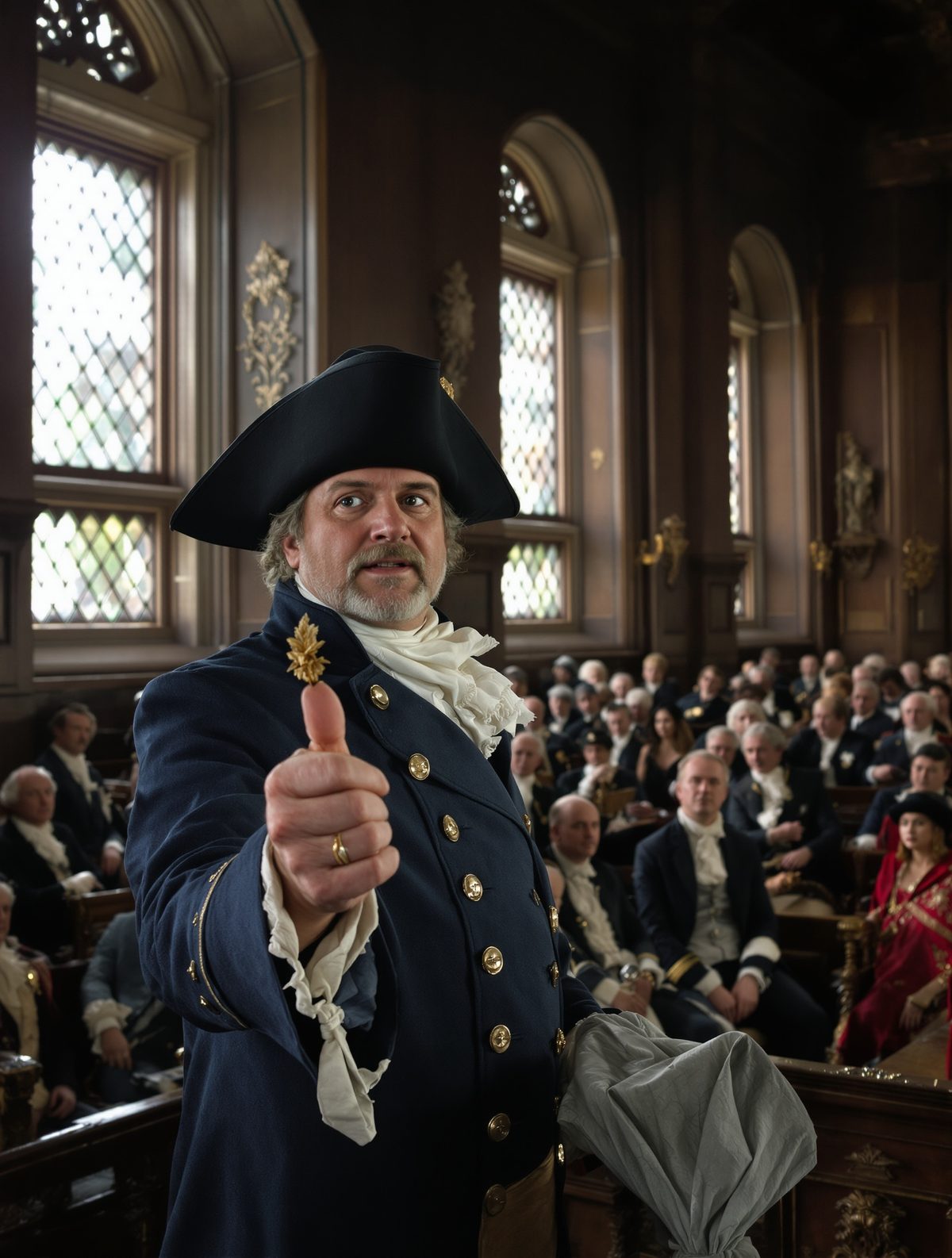
Enter Feargus O'Connor, a Protestant lawyer from County Cork who possessed what contemporaries called "the most powerful voice in Europe." Standing six feet tall with flowing auburn hair, O'Connor could hold 20,000 people spellbound in a field outside Manchester or reduce a courtroom to tears with tales of working-class suffering. His newspaper, The Northern Star, sold 50,000 copies weekly—more than The Times—carrying the Chartist message into every industrial town in Britain.
The movement took its name from the People's Charter, drafted in 1838 with six simple demands: votes for all men, secret ballots, no property requirements for MPs, payment for MPs, equal electoral districts, and annual parliaments. To modern eyes, these seem modest requests. To the ruling classes of 1848, they spelled revolution.
The Monster Petition
By early 1848, O'Connor sensed his moment had arrived. Revolutions had toppled King Louis-Philippe in France and were spreading across Europe like wildfire. Irish revolutionaries were planning their own uprising. In this electric atmosphere, O'Connor launched the most ambitious petition drive in history.
For months, Chartist organizers fanned across Britain collecting signatures. They set up tables outside factory gates, in public houses, at Sunday markets. The petition itself became a physical marvel—when finally assembled, it stretched over three miles and weighed nearly 600 pounds. Ornate calligraphy spelled out the six demands, followed by column after column of signatures: coal miners from Wales, textile workers from Lancashire, blacksmiths from Birmingham.
Not all signatures were authentic, as critics would later gleefully point out. Among the six million names were "Victoria Rex," "The Duke of Wellington," and rather cheekily, "Mr. Punch." Some enthusiastic supporters had signed multiple times. But even accounting for fraud, the petition represented an unprecedented outpouring of working-class political sentiment. Never before had so many ordinary people demanded a voice in government.
O'Connor's masterstroke was not just collecting signatures, but planning their delivery. On April 10, 1848—exactly sixty years after the fall of the Bastille—he would lead a great procession from Kennington Common in South London across Westminster Bridge to Parliament itself. There, before the assembled Lords and Commons, he would present the petition and demand an immediate response.
London Prepares for Battle
Word of O'Connor's plan sent shockwaves through the establishment. The government, led by Lord John Russell, had watched nervously as revolution consumed Europe. They had no intention of letting it cross the Channel. Home Secretary Sir George Grey began mobilizing what amounted to a small army to defend the capital.
The numbers were staggering: 4,000 regular police, 1,500 Chelsea Pensioners called from retirement, 4,000 troops stationed at key points, and most remarkably, 85,000 special constables—middle-class volunteers sworn in to defend order. Among these amateur lawmen were some surprising names: the future Emperor Napoleon III (then living in exile), novelist Anthony Trollope, and allegedly even Prince Louis Bonaparte, nephew of Napoleon.
The strategic centerpiece of the government's plan was simple but effective: prevent the marchers from crossing the Thames. All bridges were barricaded and heavily guarded. Westminster Bridge—the Chartists' planned route to Parliament—bristled with police and soldiers. If O'Connor's supporters wanted to deliver their petition, they would have to fight their way across.
Meanwhile, London's wealthy districts transformed into armed camps. Shop windows were boarded up. Banks hired private guards. Gentlemen's clubs became impromptu arsenals as members brought pistols and swords from home. The Royal Family abandoned Buckingham Palace for Osborne House on the Isle of Wight, from where they could escape to the Continent if necessary.
The Day That Shook Britain
April 10 dawned gray and drizzly—appropriate weather for what many expected to be the bloodiest day in London since the Gordon Riots of 1780. By mid-morning, crowds began gathering on Kennington Common, a sprawling open space south of the Thames that had become the traditional meeting place for radical demonstrations.
As the hours passed, the atmosphere grew electric. O'Connor, resplendent in a green coat and top hat, worked the crowd like the consummate performer he was. Speakers denounced "Old Corruption" and "the bloated aristocracy." Banners proclaimed "The Voice of the People is the Voice of God" and "No Vote, No Tax." Estimates of the crowd size varied wildly—Chartist newspapers claimed 200,000, while hostile observers suggested barely 20,000. The truth likely lay somewhere between: perhaps 50,000 to 80,000 people, still the largest political gathering in British history to that point.
But something was missing from this revolutionary tableau: the revolutionary fervor itself. Many in the crowd seemed more curious than committed. Families came with picnic baskets. Children played games between the speeches. When police commissioner Richard Mayne approached O'Connor with a government message forbidding the march to Westminster, the great leader's response shocked everyone—he agreed to comply.
In that moment, the revolution died before it began. O'Connor announced that only a small delegation would accompany the petition to Parliament by cab—no grand procession, no confrontation on Westminster Bridge, no dramatic showdown with authority. The crowd, confused and deflated, began to drift away. By afternoon, Kennington Common was empty except for discarded handbills and the lingering smell of revolution deferred.
The Petition's Inglorious End
The massive petition—that three-mile testament to working-class hopes—met an appropriately anticlimactic fate. Three hansom cabs carried it to the Houses of Parliament, where a parliamentary committee was appointed to examine it. Their verdict was devastating: far from six million signatures, they found barely two million genuine names. The forgeries and duplications that O'Connor's supporters had dismissed as harmless enthusiasm became weapons in the hands of his enemies.
Parliament rejected the petition by 222 votes to 17. Newspapers mocked O'Connor as a fraud and coward. The government, emboldened by its bloodless victory, began arresting Chartist leaders across the country. By summer's end, the movement that had seemed poised to topple the establishment was in full retreat.
O'Connor himself never recovered from April 10. His mental health deteriorated—whether from the strain of failure or underlying illness remains unclear. He spent his final years in an asylum, the voice that had once commanded millions reduced to whispers. He died in 1855, largely forgotten and certainly unforgiven by many former followers who blamed him for abandoning the cause at its crucial moment.
The Revolution That Changed Everything
Yet history's verdict on April 10, 1848, might be kinder than that of contemporaries. O'Connor's retreat from confrontation may have prevented a massacre that would have set back democratic reform for decades. The spectacle of hundreds of thousands of workers peacefully gathering to petition Parliament—even if they were ultimately denied their demands—demonstrated the depth of popular feeling in ways that could not be ignored forever.
Within twenty years, many Chartist demands had quietly become law. The secret ballot arrived in 1872. Property qualifications for MPs were abolished in 1858. Constituencies were redrawn more fairly. Universal male suffrage came in 1918, followed by women's suffrage the same year. The revolution O'Connor promised in a single day took seventy years—but it happened.
Today, as democratic institutions face new pressures and popular movements seek new ways to make their voices heard, the story of Kennington Common offers both inspiration and warning. It shows how ordinary people can shake the foundations of power simply by organizing and demanding their rights. But it also reveals how easily momentum can be lost, how quickly hope can turn to disillusion when leaders fail to match their followers' courage.
The six million signatures on O'Connor's petition—real and forged alike—represented something unprecedented: the political awakening of the working class. That awakening, once begun, could not be reversed, no matter how many special constables stood guard on Westminster Bridge. The revolution they feared in 1848 was already underway. It just took longer than anyone expected.