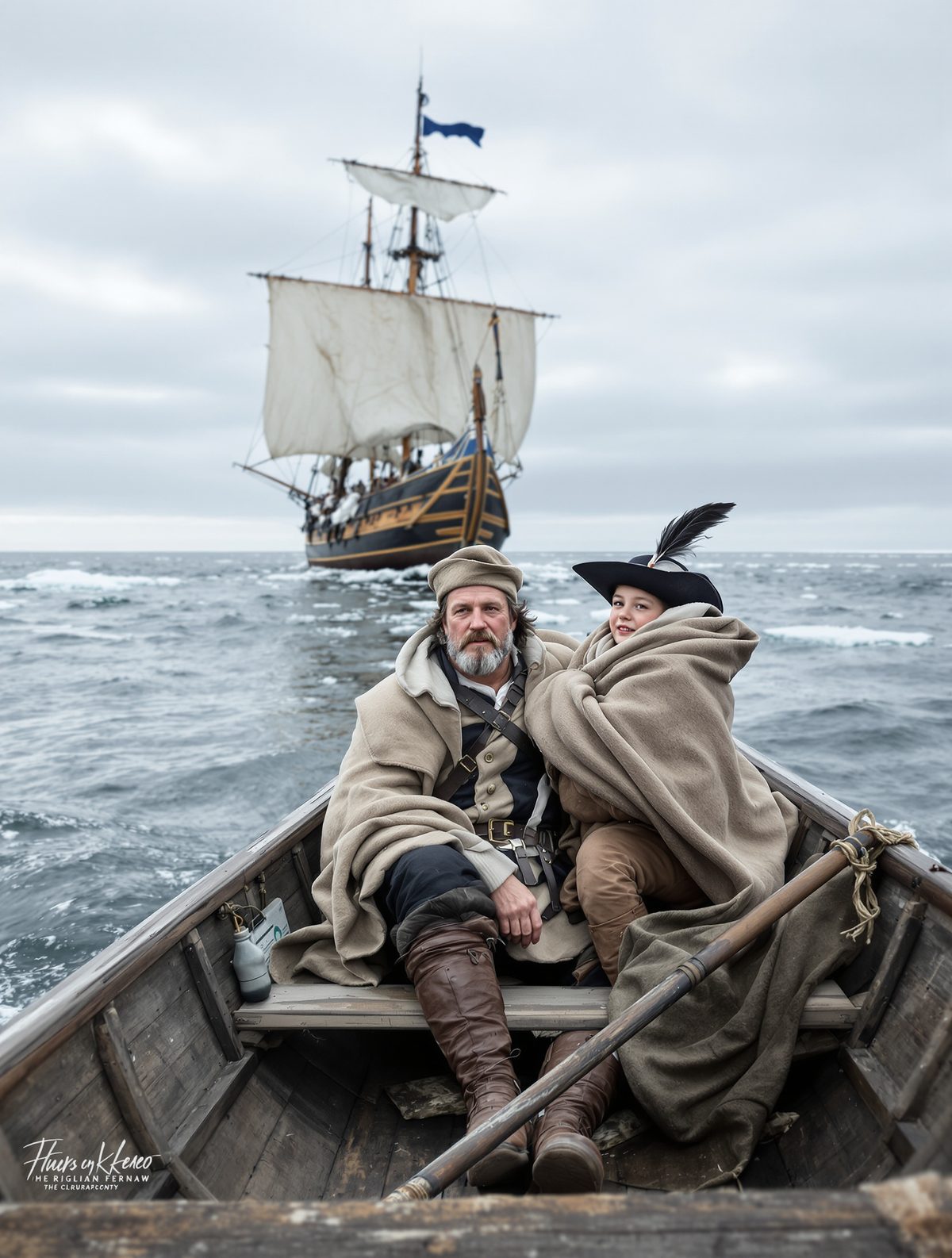
With the pale glow of dawn peeking over the rough-hewn tops of mahogany and ironwood trees, a figure stood alone on the banks of the Shangani River. His eyes, sharp as an eagle's, scanned the mist rising from the water's surface. This was no mere mortal; this was Frederick Courteney Selous, renowned as Africa's greatest hunter, now shouldering the burdens of a soldier. The year was 1893 and the sands of imperial conquests were shifting beneath the boots of adventurers and soldiers alike. Selous had known the lands of Africa more intimately than most explorers could boast in their lifetimes. Yet, standing there as part of the British South Africa Company’s efforts to control Mashonaland, he faced a challenge unlike any other he had encountered before.
The Adventurer Turned Soldier
Long before the fateful day at the Zambezi River, Selous was celebrated for his adventurous spirit. Born on 31 December 1851 in Regent’s Park, London, Selous' first love was Africa. By the age of 19, he had left the comforts of British society to traverse the uncharted territories of southern Africa. His exploits and fearless demeanor won him the esteem of none other than Cecil Rhodes, who enlisted Selous’ expertise in facilitating British ambitions across the continent.
By the early 1890s, Frederick Courteney Selous had etched his name into the annals of exploration and big-game hunting. He had mapped an enormous expanse of Southern Africa and penned riveting tales of his travels that thrilled audiences back home. His accounts of facing down wild beasts barefoot, or treading where few Europeans had dared, captivated imaginations.
Despite his love for Africa’s wilderness, Selous was not merely a man of action, but also one with a keen intellect. His diaries, filled with observations of the natural world, have informed researchers for decades. However, when the winds of war blew across Matabeleland, Selous traded his pen and rifle for a military commission. It was not just a role; it was a transformation from an explorer to a soldier defending his comrades.
Rising Tensions and the Precarious Frontline
In October 1893, tensions between the British South Africa Company and the Ndebele Kingdom escalated into full-blown conflict. The Imperial party, led by Major Patrick Forbes and urged on by business magnates like Rhodes, was on a mission to overthrow King Lobengula. It was in this tangled knot of diplomacy and ambition that Frederick Selous found himself.
The Matabele, known for their fearsome warfare and strategic prowess, would not cede their homeland without a fight. The Shangani Patrol, made up of roughly 700 soldiers under Forbes, faced stiff resistance as they pushed toward Bulawayo, the Ndebele stronghold. As the Imperial troops advanced, crucial tactical retreats had to be executed lest they face annihilation.
In late October, a column of British forces found themselves precariously positioned on the banks of the Shangani River. Outnumbered by the Ndebele warriors and with paths of retreat compromised, urgency took precedence. Frederick Selous was tasked with holding the line – allowing his comrades to recede and regroup. His stand would become the stuff of legend.
The Battle of Shangani River
As the first rays of sunlight kissed the Earth, the clash at the Shangani unfolded. Selous, standing resolute, faced a horde of Ndebele warriors bearing down upon him. Armed only with his rifle, he took cover behind a toppled tree, using every ounce of his considerable skill as a marksman to fend off the onslaught. It is said that during those two fateful hours, Selous' unerring accuracy and unwavering resolve turned the tide allowing his comrades to escape hostile encirclement.
The odds were immense. The Ndebele, with their traditional assegai spears now complemented by captured rifles, charged relentlessly. The forest echoed with the sharp retorts of rifle fire and war cries. Still, Selous stood his ground, a solitary bulwark against a sea of adversaries. His actions were the stuff of heroic ballads: a man singularly holding the line to ensure another day for his compatriots.
When reinforcements finally arrived and the dust settled, Selous was credited with saving the lives of many, though he himself dismissed his valor as the duty of any good soldier. The legend, however, was already penned by those who witnessed and lived because of his bravery.
Surprising Facets of the Human Spirit
Selous' legacy extends beyond his exploits in battle or even his contributions to the Royal Geographical Society. His journals reveal a man of complex thoughts and diverse interests, ranging from the environmental impact on native species to the ethical dimensions of colonial expansion. Selous was aware of the changes imperial rule would usher in, and his writings reveal a deep empathy for the indigenous peoples he encountered.
Perhaps one of the most surprising elements of Selous’ character was his disdain for wasteful slaughter. Even as he hunted big game for a living, he respected the creatures he pursued and lamented the overexploitation he foresaw. In these writings, we find moments of introspection that humanize the mythic figure. Selous, though a man of his times, was also a man who saw far into the future—a future he both shaped and critiqued.
Why It Matters Today
Frederick Courteney Selous’ story serves as a powerful reminder of the intricate dynamics between human ambition and nature, exploration, and exploitation. His incredible stand on the banks of the Shangani is but one chapter in the saga of European powers reshaping Africa. Selous embodies the dual legacy of this era: the celebration of individual valor and the often-troubling context of imperial expansion.
Today, as countries continue to grapple with the often painful legacies of colonialism, it becomes imperative to understand figures like Selous in their entirety—celebrating their courage but also critically examining the broader impacts of their actions and the empires they endorsed. As we seek to build a future rooted in equitable global citizenship, exploring these untold legends of history not only enriches our understanding but also informs the pathways we chart going forward.