The telegram arrived at the War Office on a sweltering October morning in 1951. High Commissioner Sir Henry Gurney was dead—ambushed by communist guerrillas on a mountain road outside Kuala Lumpur. As his Rolls-Royce lay riddled with bullets, Britain's grip on Malaya seemed to be slipping into the jungle shadows along with Gurney's blood.
For three years, the Malayan Emergency had been a disaster wrapped in euphemism. What started as scattered attacks by communist insurgents had exploded into a full-scale jungle war that was bleeding the Empire dry. By 1952, the Malayan Races Liberation Army controlled vast swaths of the peninsula, had killed over 1,000 security personnel, and turned rubber plantations into graveyards. London was spending £50 million annually—roughly £1.5 billion today—to fight an enemy that melted into the rainforest like morning mist.
Then they sent Gerald Templer.
The Iron General Arrives
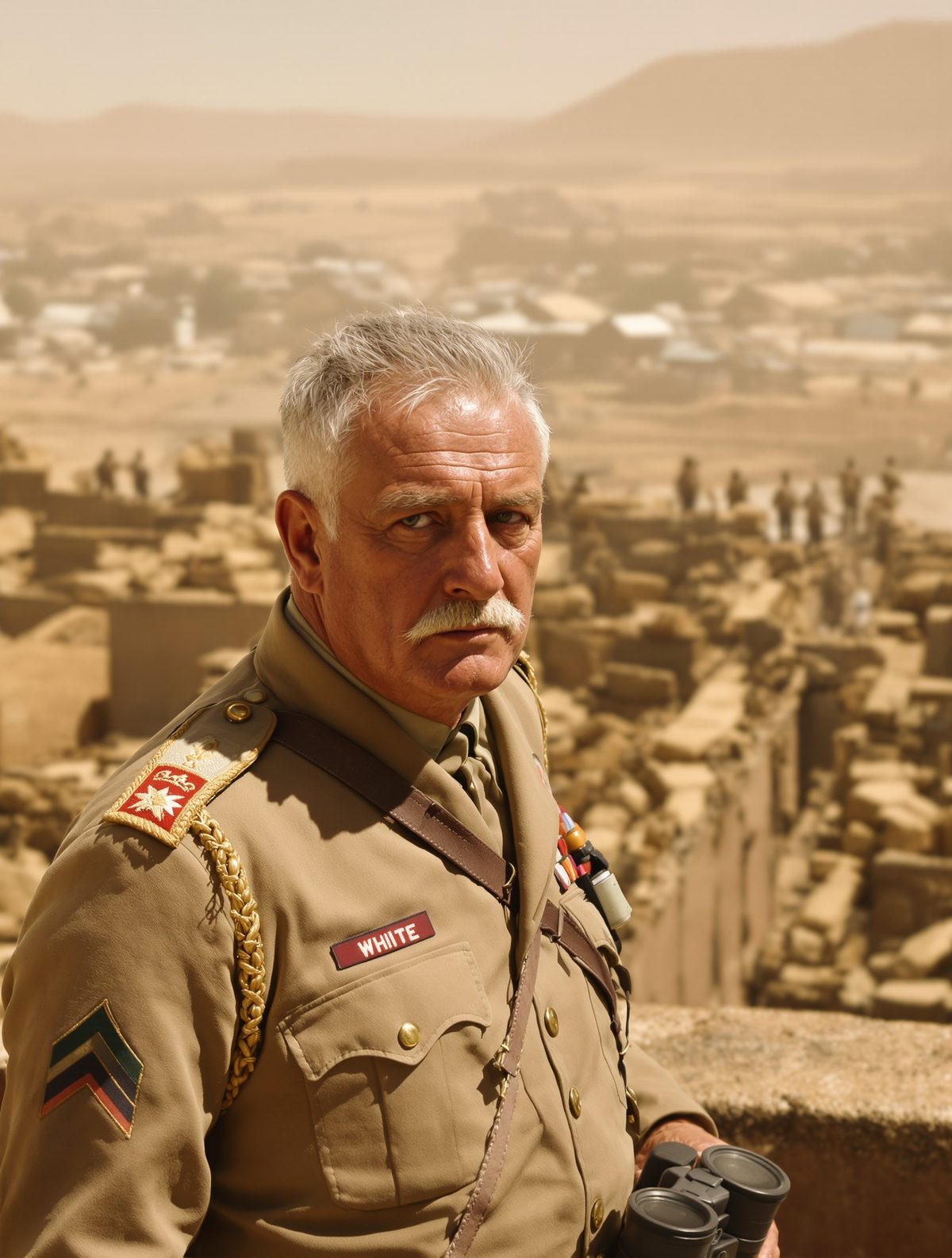
When General Sir Gerald Templer stepped off the plane at Kuala Lumpur's Subang Airport on February 7, 1952, he looked every inch the colonial stereotype—crisp uniform, steel-gray mustache, and the kind of ramrod posture that suggested he'd been carved from oak rather than born. But appearances deceived. Behind those steely eyes churned a mind that would revolutionize warfare itself.
Templer had earned his reputation in the ruins of Europe, rebuilding Germany after the Nazi collapse. Now, at 53, he faced an enemy unlike any he'd encountered: Chin Peng's communist guerrillas, who had learned their jungle craft fighting the Japanese and now used those same skills against their former British allies. These weren't uniformed soldiers meeting on battlefields—they were ghosts who struck from nowhere and vanished into green infinity.
The numbers were sobering. Communist forces, never more than 8,000 strong, had effectively neutralized a British deployment of 40,000 troops plus 60,000 police and auxiliaries. They'd done it through what the guerrillas called "fish swimming in the sea"—blending seamlessly into the civilian population of 500,000 Chinese squatters who lived in jungle-edge settlements, providing food, intelligence, and recruits.
Previous commanders had treated this as a military problem requiring a military solution. Templer saw something entirely different: a political problem that required political answers backed by precise, surgical force.
Hearts, Minds, and Helicopter Gunships
Within weeks of his arrival, Templer shocked the colonial establishment with a radical declaration: "The answer lies not in pouring more troops into the jungle, but in the hearts and minds of the people." It was the first time a British general had used that phrase—one that would echo through Vietnam, Afghanistan, and every counterinsurgency since.
But Templer's genius lay in understanding that winning hearts and minds wasn't about being nice—it was about demonstrating that cooperation brought rewards while resistance brought consequences, swiftly and inevitably. His carrot-and-stick approach would have made Machiavelli proud.
The stick came first. When the village of Tanjong Malim was caught supplying the communists, Templer didn't just punish the guilty—he locked down the entire town. Shops closed. Schools shuttered. Food rations were cut to bare subsistence. Then he stood in the town square and delivered an ultimatum that became legendary: "You know the terrorists' names. Give them to me, and your town will prosper. Continue to help them, and you will learn what collective punishment truly means."
Within weeks, intelligence flowed like a river. Suddenly, the invisible guerrillas had faces, names, and addresses.
The carrot proved equally potent. Villages that cooperated received new schools, medical clinics, and roads. Most importantly, they received something unprecedented: a path to independence. Templer promised that as soon as the Emergency ended, Malaya would govern itself. For the first time, locals had a reason to fight for the British rather than against them.
The Briggs Plan on Steroids
Templer's predecessor had begun the Briggs Plan—a massive resettlement program moving Chinese squatters into fortified "New Villages." But Lieutenant-General Sir Harold Briggs had treated this as a defensive measure, essentially creating prison camps surrounded by barbed wire and floodlights.
Templer transformed these camps into showcases of what cooperation could achieve. The best New Villages received electricity, piped water, schools, and medical facilities that surpassed anything available in the surrounding areas. Suddenly, life behind the wire was better than life outside it. Other communities began requesting their own New Villages.
By 1954, over 500,000 people—mostly ethnic Chinese—had been relocated into 480 New Villages. It remains one of history's largest population movements, accomplished with remarkably little violence. The secret was making relocation feel like elevation rather than imprisonment.
Meanwhile, Templer revolutionized jungle warfare itself. Previous operations had sent large formations crashing through the rainforest like elephants chasing mice. Templer deployed small, elite teams trained in jungle survival and guerrilla tactics. These "hunter-killer" units could live in the forest for weeks, turning the guerrillas' own methods against them.
He also pioneered the use of helicopters for counterinsurgency—the first time rotary aircraft had been used systematically in warfare. Suddenly, no jungle clearing was safe, no mountain ridge too remote. The communist "liberated zones" shrank daily as British forces appeared from the sky like avenging angels.
Breaking the Communist Supply Chain
Perhaps Templer's most innovative strategy involved economic warfare. He realized that communist forces depended entirely on civilian supporters for food, medicine, and intelligence. Cut those supply lines, and the most dedicated guerrilla would starve.
Rather than trying to control every jungle path, Templer controlled the economy itself. Rice, medicine, and other essential supplies were tracked from source to consumer through an elaborate permit system. Possession of controlled items without proper documentation meant immediate arrest. Communist supporters found themselves choosing between helping the guerrillas and feeding their families.
The results were dramatic. Communist strength, which had peaked at around 8,000 fighters in 1951, dropped to fewer than 3,000 by 1955. More tellingly, recruitment dried up entirely. Young Chinese Malayans, who had once seen the communists as liberation fighters, now saw them as obstacles to independence and prosperity.
Templer also pioneered what would later be called "information warfare." Radio stations broadcast in multiple languages, offering rewards for information and guaranteeing protection for defectors. Leaflet drops turned the jungle canopy into a newspaper delivery system. Most devastatingly, captured communist documents were quickly published and distributed, revealing the movement's internal divisions and strategic confusion.
The Tide Turns in the Green Hell
By 1955, the war's character had fundamentally changed. Where once British forces hunted shadows, they now received detailed intelligence about enemy movements, safe houses, and supply routes. Communist leaders spent more time fleeing than fighting, their communications intercepted and their movements predicted.
The psychological impact was equally important. Chin Peng's communist movement had promised inevitable victory through people's war. Instead, they found themselves increasingly isolated, their support base eroded, their recruits fleeing to government amnesty programs that offered genuine alternatives to jungle warfare.
Templer's greatest triumph came not through military victory but political transformation. In 1955, he oversaw Malaya's first federal elections—elections that were won overwhelmingly by parties committed to peaceful independence rather than communist revolution. The ballot box had succeeded where bullets had failed.
When Templer departed in May 1954, Malaya was virtually pacified. His successor would need only to maintain momentum toward the independence that came in 1957—exactly as Templer had promised. The Emergency was officially declared over in 1960, though by then it had been won for years.
The Blueprint That Changed Everything
General Gerald Templer's victory in Malaya created the modern template for counterinsurgency warfare. His integration of military force, political reform, economic development, and psychological operations became the gold standard copied by militaries worldwide. The "Malayan Model" influenced everything from America's Vietnam strategy to Britain's later operations in Northern Ireland.
Yet Templer's legacy carries uncomfortable questions that resonate today. He won by combining genuine reform with authoritarian control, offering democracy while practicing detention without trial, promising freedom while relocating half a million people. His methods worked—but at what cost to the principles supposedly being defended?
As modern militaries struggle with insurgencies from Iraq to Afghanistan, Templer's jungle war offers both inspiration and warning. He proved that insurgencies can be defeated through political solutions backed by intelligent force. But he also demonstrated that such victories require moral compromises that democratic societies find increasingly difficult to accept.
The general who defeated communism in Malaya's green hell didn't just win a war—he wrote the playbook for every shadow conflict since. Whether that makes him history's greatest counterinsurgency commander or its most troubling pioneer remains an open question, echoing through the jungles of memory long after the last shot was fired.