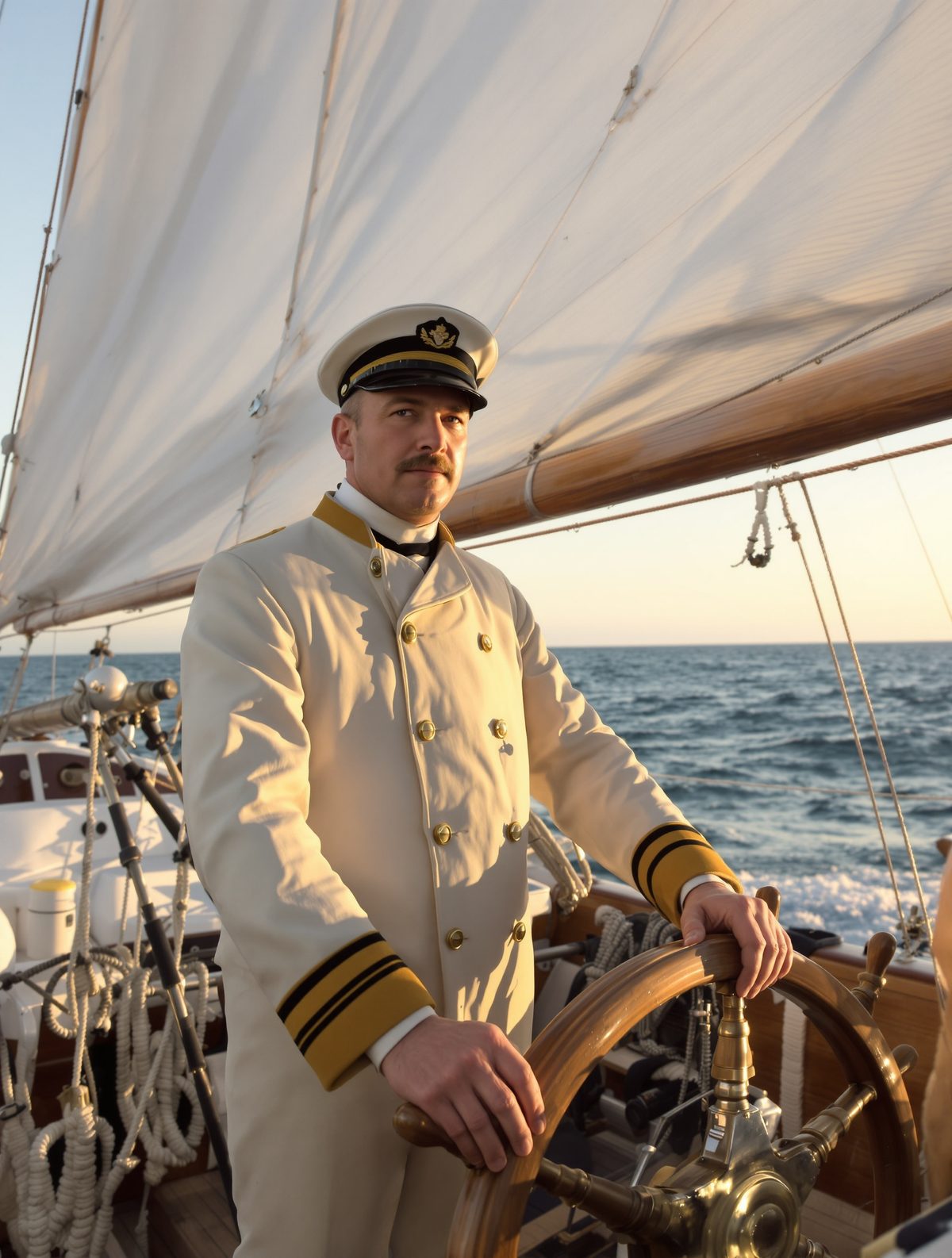
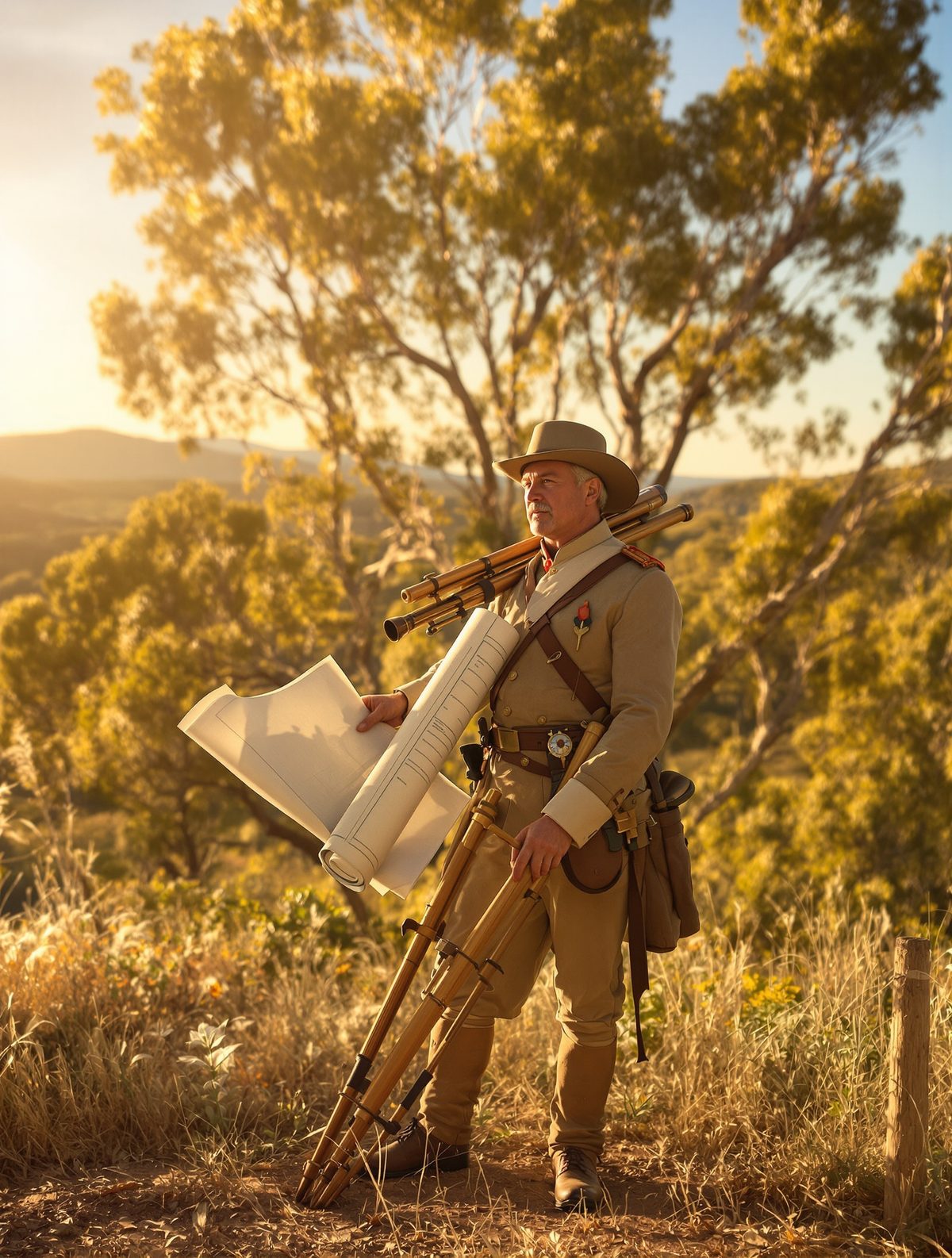
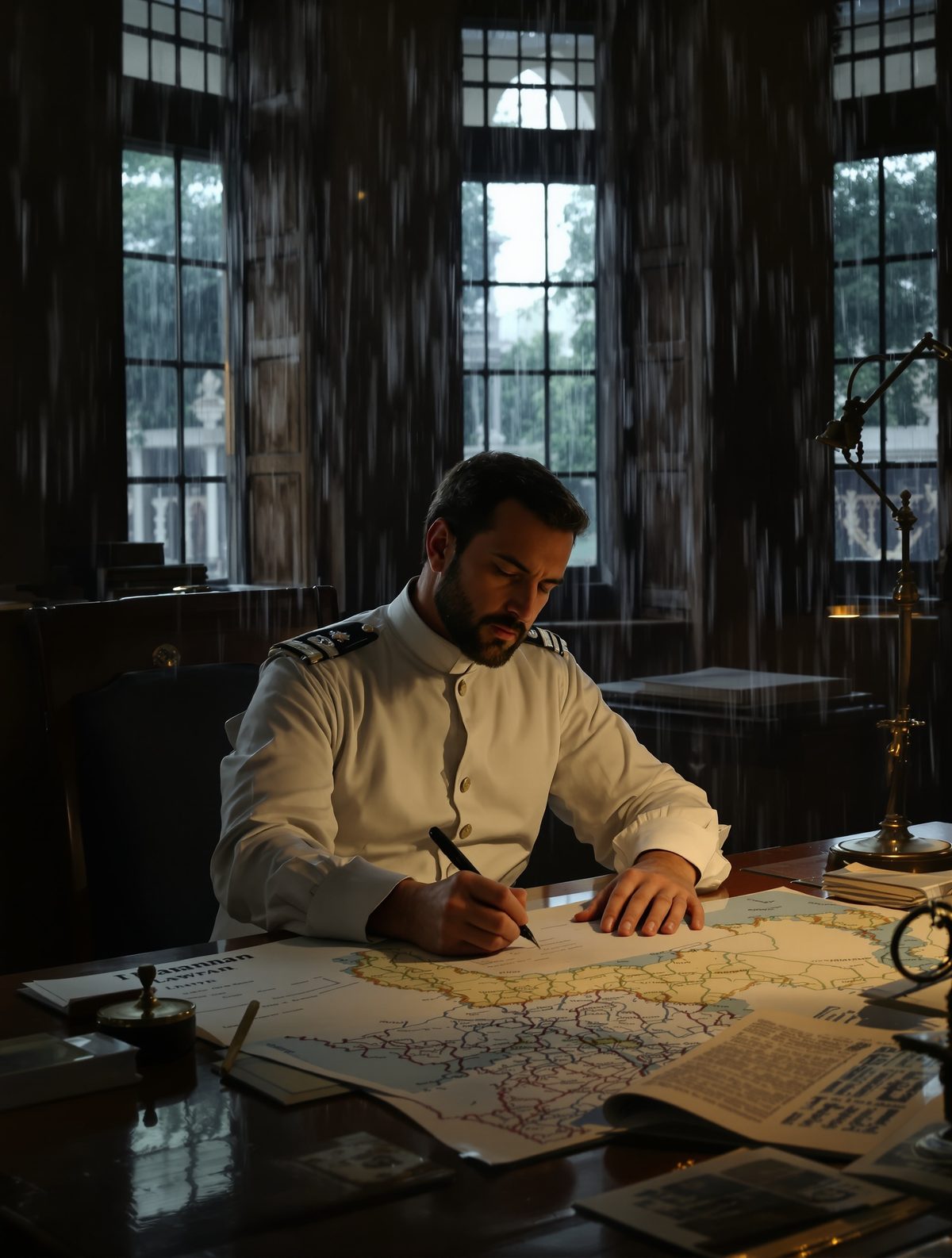
The telegram arrived at dawn on October 30, 1899, its message chillingly simple: "Ladysmith completely surrounded. All railway and telegraph communications severed. We are entirely cut off." Major General Sir George White folded the final message that would leave his garrison of 13,000 British soldiers, and crumpled it slowly. Outside his headquarters, the distant crack of Mauser rifles echoed across the red dust of Natal. The Boers had done the impossible—they had trapped the entire British garrison in what should have been an impregnable fortress town. What happened next would captivate the world and redefine what it meant to hold the line under impossible odds.
The Trap Springs Shut
Ladysmith wasn't supposed to fall under siege. This bustling railway junction in Natal, South Africa, sat like a spider at the center of the region's transportation web, protected by surrounding hills and defended by what many considered the finest military minds of the British Empire. Major General White, a Victoria Cross recipient who had earned his reputation fighting on the Northwest Frontier, commanded a force that included the elite Devonshire Regiment, the Liverpool Regiment, and the famous 5th Dragoon Guards.
But the Boers had been planning this moment for months. Led by the brilliant Piet Joubert and the young, aggressive Louis Botha, Boer commandos had used their intimate knowledge of the terrain to position themselves on every ridge surrounding the town. When war was declared on October 11, 1899, they moved with lightning speed. Within two weeks, they had not only surrounded Ladysmith but had also severed the railway line to Durban—the garrison's lifeline to the outside world.
Here's what the textbooks rarely mention: White initially had the chance to evacuate. On October 29, just hours before the final encirclement, he received orders giving him discretion to abandon Ladysmith if necessary. Instead, he made a decision that would echo through military history. "We stay," he told his staff. "If we run now, we lose Natal. If we hold here, we buy time for the Empire to respond."
The Mathematics of Starvation
Within days of the siege beginning, White's quartermaster delivered a sobering calculation. With 13,000 soldiers and roughly 5,500 civilians trapped in the town, they had enough food for perhaps six weeks—if they were lucky and careful. The nearest British relief force was 300 miles away, fighting its own desperate battles against Boer commandos who seemed to appear from nowhere and vanish just as quickly.
White's response was characteristically methodical. He immediately implemented strict rationing: soldiers received half-rations of bully beef, hardtack, and tea. Civilians got even less. Every horse in town was catalogued—not for cavalry charges, but for future meals. The town's small herd of cattle became more valuable than gold, each animal carefully guarded and slowly consumed as the weeks stretched on.
But it wasn't just hunger that White had to fight. The Boers had positioned their artillery—including massive 155mm "Long Tom" cannons—on the surrounding hills. Every day, shells rained down on the town at precisely 8 AM, 1 PM, and 5 PM, a deadly routine that the defenders grimly nicknamed "breakfast, lunch, and dinner." The psychological warfare was deliberate: the Boers wanted the garrison to know that they were trapped, watched, and slowly being ground down.
The Town That Refused to Break
What emerged in Ladysmith over the following months was nothing short of extraordinary. As supplies dwindled, the defenders began improvising with an ingenuity that would have impressed Robinson Crusoe. They manufactured ammunition in makeshift factories, turning the town's workshops into armaments plants. Soldiers melted down church bells and brass fittings to create shells for their artillery.
The civilian population, rather than becoming a burden, transformed into an integral part of the defense. Women organized hospitals in buildings that shook daily under bombardment. Children served as message runners between military positions. The town's newspaper, The Ladysmith Bombshell, continued publishing throughout the siege, maintaining morale with a mixture of news, humor, and defiant editorials.
Perhaps most remarkably, White managed to maintain military discipline and civilian order even as conditions became desperate. By December, soldiers were eating horses, dogs, and anything else that moved. Cases of scurvy appeared, then typhoid. The cemetery filled with victims of disease and starvation as well as enemy shells. Yet desertion rates remained virtually zero, and civilian cooperation never wavered.
Churchill's Failed Rescue and the World Watches
The siege of Ladysmith became an international sensation, followed breathlessly by newspapers from London to New York to Sydney. The trapped garrison represented something profound to the British public: the idea that ordinary men, when tested to their absolute limits, could hold fast against any odds.
Multiple relief attempts failed spectacularly. The most famous involved a young war correspondent named Winston Churchill, who was captured during a botched armored train rescue mission in November 1899. His dramatic escape from a Boer prison camp only added to the siege's growing legend, but it did nothing to help the starving garrison.
General Sir Redvers Buller, commanding British forces in Natal, launched three major attempts to break through to Ladysmith. Each ended in bloody failure at places with names that would become synonymous with British military disaster: Colenso, Spion Kop, Vaal Krantz. The Boers, fighting from prepared positions and knowing every inch of ground, repelled each assault with devastating effectiveness.
The Final Gambit
By February 1900, White's situation had become truly desperate. His men were eating their leather equipment boiled with salt. Hospital beds overflowed with cases of dysentery and typhoid. Some soldiers had become so weak they could barely hold their rifles. Boer shells continued their daily bombardment, and enemy snipers picked off anyone careless enough to show themselves in daylight.
But White had one advantage the Boers couldn't take away: intelligence. His network of spies and scouts, many of them local civilians who slipped through enemy lines at night, kept him informed of Boer movements and morale. By early February, these reports suggested that the Boers themselves were becoming war-weary. Many commandos had returned to their farms for harvest season, and those who remained were growing frustrated with the static nature of siege warfare.
On February 27, 1900—Day 118 of the siege—White's lookouts spotted something that seemed too good to be true: dust clouds on the southern horizon that moved in the disciplined formations of British cavalry. General Buller's fourth relief attempt, spearheaded by Lord Dundonald's mounted brigade, had finally broken through the Boer lines.
Legacy of the Longest Day
When the relief column entered Ladysmith on February 28, they found a town that had been literally eating itself to survive, but had never wavered in its determination to hold out. Of the original 13,000-man garrison, over 2,000 had died—most from disease and starvation rather than enemy fire. Yet the survivors, gaunt and hollow-eyed, still stood at attention when their relievers marched through the town gates.
White's defense of Ladysmith became a defining moment of the Second Boer War and, arguably, of the British Empire itself. At a time when the Empire faced serious military challenges for the first time in decades, the siege demonstrated that British resolve could endure even the most extreme circumstances. The defense bought crucial time for reinforcements to arrive from Britain and helped prevent a complete Boer conquest of Natal.
But perhaps the siege's most important legacy lies in what it revealed about ordinary people under extraordinary pressure. In our modern world of instant communication and rapid response, it's difficult to imagine being completely cut off from help for nearly four months. White and his garrison faced a test that required not just courage, but sustained endurance in the face of seemingly hopeless odds. Their refusal to surrender, even when surrender might have been the rational choice, speaks to something fundamental about human resilience that transcends nationality or era. In an age where we often wonder whether we have the patience and determination to see difficult challenges through to completion, the 118 days of Ladysmith remind us that sometimes, the simple act of refusing to give up can change the course of history.