Picture this: It's March 1836, and Colonel William Light stands alone on a windswept hill, staring at what his critics called "the most godforsaken patch of scrubland in South Australia." Around him, angry colonists are literally screaming for his head. The British government has given him just four months to design an entire capital city, and everyone—everyone—thinks he's chosen the worst possible location. The land looks barren, there's no harbor in sight, and rumors are swirling that Light has lost his mind.
What happened next would become one of the most audacious acts of urban planning in history. In just sixteen weeks, this stubborn, dying surveyor would create what modern city planners call a masterpiece—a design so brilliant that 200 years later, Adelaide consistently ranks among the world's most livable cities. But in 1836, it looked like career suicide.
The Impossible Brief: Build Paradise in Four Months
When the South Australia Company appointed William Light as Surveyor-General in 1835, they handed him what seemed like an impossible task. He had to scout an entirely unknown territory, select the perfect site for a capital city, survey the land, and deliver a complete urban plan—all before the first wave of free settlers arrived in late 1836.
Light wasn't your typical government surveyor. Born in Kuala Kedah (in present-day Malaysia) to a British naval officer and a local Malay princess, he was a man caught between worlds. He'd served with distinction in the Peninsular Wars, exploring the Mediterranean as a naval officer, and had even published books on his travels. By 1836, at age 50, he was also secretly dying of tuberculosis—a fact he kept hidden from the colonial authorities.
The pressure was immense. Back in London, investors had poured £35,000 into the South Australia venture (equivalent to about $4 million today), and they expected results. The first shiploads of settlers were already preparing to leave Britain, trusting that Light would have their new home ready and waiting.
Mutiny on the Buffalo: When Colonists Revolt
When Light arrived in South Australia aboard HMS Buffalo in December 1836, he brought with him a small team of surveyors and a growing sense of dread. The other passengers—government officials, investors, and early settlers—had very clear ideas about where their new capital should be built. They wanted it on the coast, preferably near the natural harbor of Port Adelaide.
It made perfect sense to them. Coastal cities meant easy shipping, trade, and connection to the outside world. Look at Sydney! Look at Melbourne! Why would anyone build a city inland?
Light had other ideas. After just six weeks of exploration, he climbed a hill about six miles inland from the coast and found his spot. The location offered something the coastal sites lacked: elevated land with reliable freshwater from the River Torrens, protection from coastal winds, and room to grow. To Light's trained military eye, it was perfect. To everyone else, it was insanity.
The reaction was swift and brutal. Governor John Hindmarsh accused Light of incompetence. Settlers threatened to abandon the colony entirely. One particularly angry investor wrote that Light had chosen "a barren, waterless waste that will doom us all to failure." The South Australia Company's board, watching their investment seemingly evaporate, began discussing Light's immediate dismissal.
Drawing Lines in the Sand: The Great Design
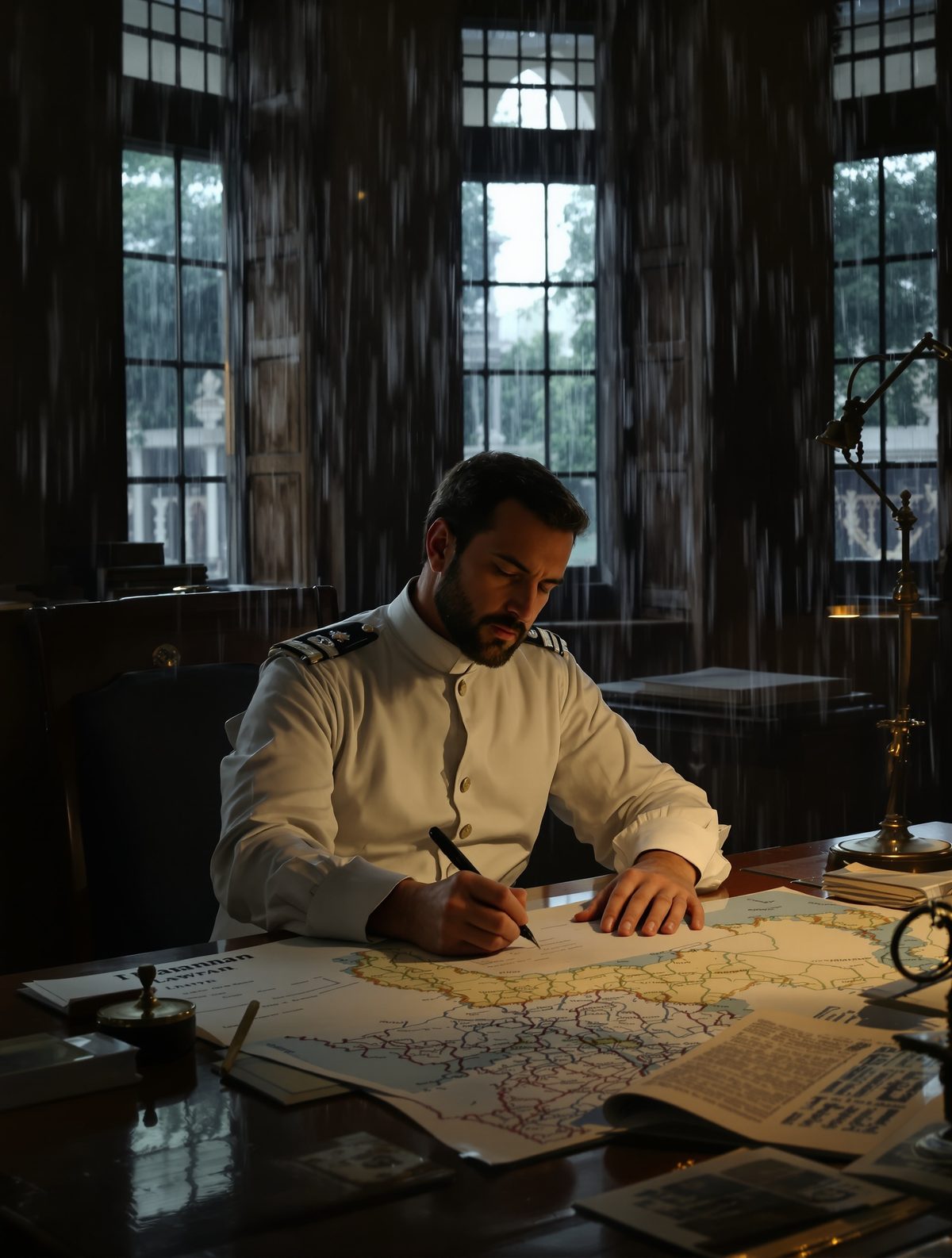
With his job hanging by a thread and his health failing fast, Light did something remarkable: he ignored everyone and got to work. Between January and April 1836, working in the punishing South Australian summer, he and his small team of surveyors began laying out what would become one of the world's most innovative city designs.
Light's plan was revolutionary. Instead of the cramped, organic growth patterns of most colonial cities, he designed Adelaide as a perfect square mile grid—666 acres of city blocks surrounded by 2,300 acres of parkland. The streets were unusually wide for the era: the main thoroughfares stretched 99 feet across (compared to London's typical 30-foot streets), and even the side streets were a generous 66 feet wide.
The parkland belt was Light's masterstroke. While critics saw it as wasted valuable real estate, Light envisioned something unprecedented: an entire city wrapped in green space, providing recreation, fresh air, and room for expansion. He divided the parklands into sections, each with its own character and purpose.
Perhaps most remarkably, Light accomplished all of this with just five assistants and the most basic surveying equipment. They worked in temperatures that regularly exceeded 100°F, battling flies, snakes, and the constant complaints of increasingly hostile colonists.
The Ultimatum: Choose the Coast or Lose Your Job
By April 1836, the pressure had reached a breaking point. Governor Hindmarsh delivered an ultimatum: move the city to the coast or be dismissed immediately. The other colonial officials backed Hindmarsh unanimously. Even Light's own surveying team began to waver.
Light's response has become the stuff of legend. In a letter to the colonial secretary, he wrote: "The reasons that led me to fix Adelaide where it is I do not expect to be generally understood or calmly judged of at present. My enemies, however, by disputing their validity in every particular, have done me the good service of fixing my attention constantly upon the matter."
In private, he was more direct. His diary entry from April 15th, 1836, reads: "They may dismiss me if they wish, but I will not be the author of Adelaide's ruin by placing it in the wrong spot to appease their impatience."
It was a stunning act of professional defiance. Light was essentially betting his entire career—and the future of thousands of settlers—on his vision of what a city should be.
Victory from the Grave: When the Vision Proved Right
Light never lived to see his vindication. The tuberculosis finally claimed him in October 1839, just three years after Adelaide's founding. He died still defending his choices, still arguing with critics who called his design impractical and wasteful.
But within a decade, everything changed. Adelaide's inland location proved perfect for accessing the fertile agricultural lands of the Adelaide Plains. The wide streets easily accommodated growing cart traffic, while coastal cities struggled with congestion. The parklands provided crucial space for markets, recreation, and public gatherings that other colonial cities lacked entirely.
By 1850, property values in Adelaide had surpassed those in the coastal areas that critics had preferred. The city's grid design made it easy to navigate and expand, while the parkland belt prevented the industrial sprawl that choked other growing cities. Visitors began commenting on Adelaide's unusual beauty and livability.
The numbers tell the story: Adelaide's population grew from zero in 1836 to over 14,000 by 1851, making it one of Australia's fastest-growing cities. More importantly, it achieved this growth while maintaining the green, spacious character that Light had envisioned.
The Legacy: Why Light's Gamble Still Matters
Today, urban planners travel from around the world to study Adelaide's design. Light's innovations—wide streets, abundant green space, and planned expansion zones—have become standard features of modern city planning. The parkland belt that critics called "wasted space" now provides Adelaide residents with more green space per capita than almost any other major city on Earth.
But perhaps Light's most important legacy isn't architectural—it's the courage to stick with a long-term vision when everyone around you is demanding short-term solutions. In an age of instant gratification and quarterly profit reports, Light's story reminds us that the best solutions often require the patience to look beyond immediate concerns.
Standing today in Adelaide's Victoria Square, surrounded by the wide boulevards and green spaces that Light designed in just four months, it's hard to imagine the city any other way. The "barren wasteland" that colonists rejected in 1836 has become one of the world's most livable cities, consistently ranking in the top ten for quality of life, sustainability, and urban planning.
William Light died believing he had failed, dismissed by critics and forgotten by history. Instead, he had created something that would outlast empires: a city designed not for the convenience of its first residents, but for the happiness of generations yet unborn. In our age of rapid urban growth and environmental crisis, that might be the most revolutionary idea of all.