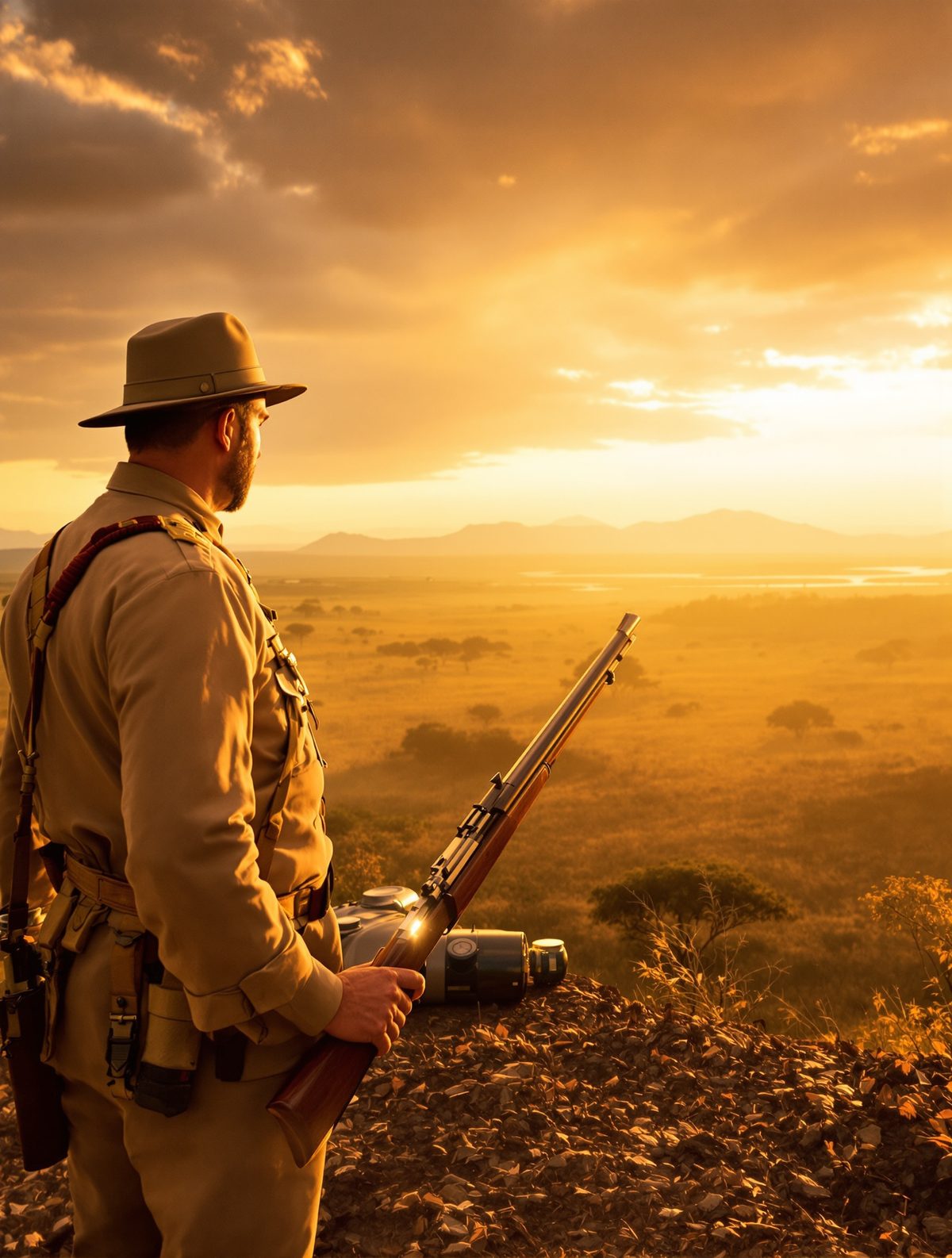
The silence of the African wilderness had swallowed David Livingstone whole. For three years, the world's most famous explorer had vanished into the dark heart of the continent, leaving behind only whispers and rumors. Some said he was dead. Others claimed he'd been captured by Arab slave traders. The Royal Geographical Society wrung their hands in London drawing rooms, but it was an ambitious Welsh-American journalist named Henry Morton Stanley who would write his name into history with just four polite words.
Picture this: after eight grueling months of hacking through jungle, dodging spears, and battling malaria, Stanley finally reaches a small village on the shores of Lake Tanganyika. There, sitting on a veranda like he's taking afternoon tea in Surrey, is a white man with a weathered face and graying beard. Stanley removes his pith helmet, straightens his dust-covered jacket, and delivers what would become the most famous greeting in exploration history: "Dr. Livingstone, I presume?"
But the real story—the one they don't teach in school—is far more extraordinary than those four legendary words.
The Assignment That Changed Everything
In October 1869, James Gordon Bennett Jr., the flamboyant owner of the New York Herald, summoned Stanley to a meeting that would reshape both their lives. Bennett was the kind of newspaper magnate who believed journalism should be equal parts news and spectacle—he'd previously sent Stanley to cover the opening of the Suez Canal and report on a British military expedition in Ethiopia.
But this assignment was different. Bennett handed Stanley a blank check—literally—and issued an audacious challenge: "Find Livingstone." The Scottish missionary-explorer had been missing for three years, and Bennett saw the rescue mission as the story of the century. What he didn't anticipate was turning his star correspondent into one of the most controversial figures of the Victorian era.
Stanley wasn't the obvious choice for such a mission. Born John Rowlands in Wales, he'd been abandoned at a workhouse, emigrated to America as a teenager, and reinvented himself with a new name and identity. He'd fought on both sides of the American Civil War, worked as a frontier correspondent, and developed a reputation for getting stories others couldn't—or wouldn't—touch. But leading an expedition into uncharted Africa? That was a leap even for Stanley.
The mission came with a staggering budget of $8,000—equivalent to roughly $180,000 today. Bennett's instructions were characteristically dramatic: "Take what time you need. It may cost you your life, but you can afford to live a couple of years if you come back with that story."
Into the Heart of Darkness
On March 21, 1871, Stanley's expedition departed from Bagamoyo on the East African coast. The sight would have been impressive to any observer: nearly 200 porters carrying supplies, guards armed with rifles, and enough provisions for what everyone hoped would be a months-long journey. Stanley had organized the expedition with military precision, dividing his men into companies and establishing strict discipline that would prove crucial in the trials ahead.
What followed was eight months of hell that nearly broke Stanley's resolve a dozen times over. The expedition faced everything Africa could throw at them: tsetse flies that drove men mad with sleeping sickness, malaria that reduced strong porters to delirious shadows, and hostile tribes who viewed the caravan with deep suspicion. Stanley's journal entries from this period read like dispatches from a war zone.
The worst came in June 1871, when the expedition was attacked near Tabora by forces loyal to Mirambo, a powerful local chief. Stanley found himself in the middle of a regional war he barely understood, with bullets whizzing past his head and half his men either dead, wounded, or having deserted. This is madness, he wrote in his journal. I have led these men into a slaughter for the sake of a newspaper story.
But Stanley possessed something that separated him from other explorers of his era: an almost pathological determination to complete whatever mission he'd accepted. When local Arabs advised him to turn back, he pressed forward. When his own men begged to retreat to the coast, he found new routes. By October 1871, his original force of 200 had dwindled to just 54 men, but they were getting close.
The Most Famous Four Words Never Actually Spoken
On November 10, 1871, Stanley's battered expedition crested a hill overlooking Ujiji, a small trading settlement on the eastern shore of Lake Tanganyika. Stanley's heart was pounding—not from exertion, but from the wild hope that his impossible quest might actually be nearing its end. Local guides had been telling him for days about a white man in the village, a muzungu who had been living there for months.
As Stanley's caravan descended toward the village, drums began beating and crowds gathered. Word spread quickly: another white man had arrived. And that's when Stanley saw him—a figure emerging from a simple house near the lake shore. Thin, bearded, wearing a faded cap and simple clothes, the man looked exactly like the descriptions Stanley had memorized from Livingstone's previous expeditions.
This is where history gets complicated. According to Stanley's later account, he approached the man, removed his hat, and delivered the immortal line: "Dr. Livingstone, I presume?" Livingstone supposedly replied with equal British reserve: "Yes, and I feel thankful that I am here to welcome you."
But here's the secret historians don't like to admit: Stanley probably made the whole thing up.
Years later, Stanley confessed in his diary that he couldn't actually remember his first words to Livingstone. The famous exchange appeared in his published account, but Stanley admitted he'd torn out the pages from his original journal describing the meeting. Why? Because, he claimed, his actual reaction had been far too emotional and undignified for Victorian sensibilities.
The truth is likely that Stanley—exhausted, overwhelmed, and probably fighting back tears—stumbled through some much more human greeting. Maybe he simply said "Thank God" or "Are you Dr. Livingstone?" The polite, measured exchange that made headlines around the world was almost certainly Stanley's invention, crafted to satisfy readers who expected their heroes to maintain British composure even in the most extraordinary circumstances.
Two Explorers, Two Very Different Missions
The man Stanley found bore little resemblance to the legendary explorer the world imagined. Livingstone was ill, nearly broke, and had been dependent on the kindness of Arab traders for survival. His famous exploration of the African interior had devolved into an obsessive quest to find the source of the Nile—a mission that had already consumed six years of his life and would ultimately kill him.
But Livingstone wasn't lost in the way the world assumed. He knew exactly where he was and could have returned to the coast at any time. He simply refused to leave Africa without completing his self-imposed mission. In letters he'd sent but that never reached the outside world, Livingstone had specifically requested that no rescue expeditions be sent. He was staying by choice.
This created an awkward situation that Stanley's published accounts glossed over. Livingstone politely thanked Stanley for the supplies and medicine but made it clear he had no intention of returning to civilization. The two men spent several months together, with Stanley desperately trying to convince his quarry to return with him, and Livingstone politely but firmly refusing.
Their time together revealed two radically different approaches to exploration. Stanley was driven by ambition, deadlines, and the promise of fame. Livingstone was motivated by a complex mixture of scientific curiosity, religious calling, and personal obsession that made him willing to sacrifice everything—including his life—for what he saw as a higher purpose.
The Journey That Changed Africa Forever
Stanley's successful location of Livingstone made him an instant international celebrity, but it also marked a turning point in the European relationship with Africa. Stanley's vivid dispatches to the Herald, filled with descriptions of potential wealth and strategic opportunities, helped fuel what historians now call the "Scramble for Africa."
The irony is profound: Livingstone, who genuinely loved Africa and its people, inadvertently provided the intelligence that European powers would use to carve up the continent. Stanley's detailed maps, his accounts of navigable rivers and potential trade routes, his descriptions of political divisions among local tribes—all of this information would prove invaluable to the colonial administrators who followed.
Stanley himself would return to Africa multiple times, eventually working for King Leopold II of Belgium in establishing what would become the Congo Free State—one of the most brutal colonial regimes in African history. The journalist who had won fame through a daring rescue mission became an architect of the very system that Livingstone had spent his final years trying to combat.
Meanwhile, Livingstone remained in Africa and died there in 1873, still searching for the Nile's source. His African companions preserved his body and carried it 1,000 miles to the coast—a journey that took them nine months and demonstrated a loyalty that Stanley's published accounts barely acknowledged.
Why Four Words Still Echo Today
The story of Stanley finding Livingstone endures not because of what actually happened, but because of what it represents about our desire for heroic narratives in an increasingly complex world. Those four words—"Dr. Livingstone, I presume?"—capture something essential about the Victorian imagination: the belief that even in the most extraordinary circumstances, proper etiquette must be maintained.
But the real lesson lies in what the story reveals about the power of media to shape history. Stanley wasn't just a journalist reporting events; he was actively creating the story that the world wanted to hear. His dramatic accounts helped launch the age of celebrity journalism, where the reporter becomes as famous as the story itself.
Today, as we navigate our own era of media manipulation and carefully crafted narratives, Stanley's admission that he invented the famous greeting feels remarkably contemporary. How many of our most cherished historical moments are similarly constructed? How often do the stories we tell about the past say more about our present needs than actual historical truth?
Perhaps most importantly, the Stanley-Livingstone meeting reminds us that the most significant historical moments often happen not when heroes meet, but in the quiet aftermath—when supplies run out, when the cameras stop rolling, when real people must figure out how to live with the consequences of their choices. Stanley got his story and his fame. Livingstone got his martyrdom. But the people of Africa got colonization, and we're still reckoning with that legacy today.