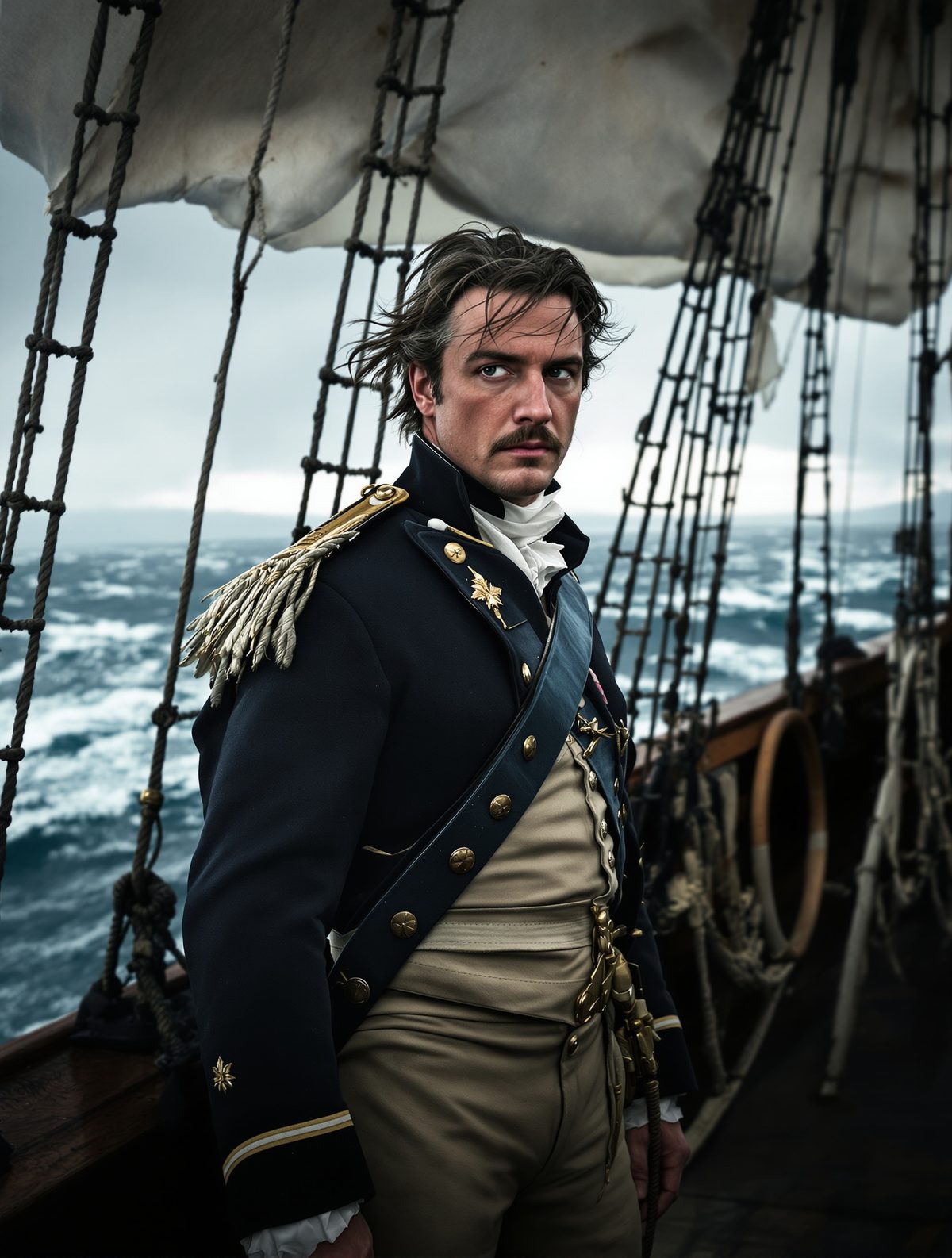
The morning mist clung to the Pacific waters off the coast of Peru as two ships approached each other on March 1, 1579. One was a weathered English galleon, her crew of sea-hardened pirates scanning the horizon with predatory eyes. The other was a Spanish treasure ship so heavy with silver and gold that she wallowed through the swells like a pregnant whale, her captain blissfully unaware that he was about to lose the richest cargo in maritime history.
What happened next would reshape the balance of power between two empires, fill Queen Elizabeth's treasury beyond her wildest dreams, and turn a Devon farmer's son named Francis Drake into the most feared pirate on the Spanish Main. The capture of the Nuestra Señora de la Concepción wasn't just a raid—it was the single most audacious theft in the age of sail, and it changed everything.
The Hunter Becomes the Hunted
By early 1579, Sir Francis Drake had already been terrorizing Spanish settlements along the Pacific coast for months. His ship, the Golden Hind, had somehow made it through the treacherous Strait of Magellan—only the second expedition ever to do so—and emerged into what the Spanish considered their private lake. For decades, Spanish treasure ships had sailed these waters unmolested, carrying unimaginable wealth from the silver mines of Potosí back to Spain.
Drake's presence here was nothing short of revolutionary. The Spanish had grown complacent, their treasure galleons sailing with minimal protection because no enemy had ever penetrated their Pacific stronghold. They called the Pacific the "Spanish Lake," and for good reason—until now, it had been theirs alone.
But Drake wasn't just any pirate. This was a man who had personally witnessed Spanish brutality in the Caribbean, who had seen his own sailors slaughtered under a flag of truce at San Juan de Ulúa eleven years earlier. His mission carried Queen Elizabeth's secret blessing and her hunger for Spanish gold. More than that, it carried his own burning desire for revenge.
The Golden Hind had been hunting for weeks, following intelligence gathered from captured Spanish sailors about a massive treasure shipment heading north from Lima. The prize they sought had a nickname among Spanish sailors: Cacafuego—"Spitfire"—though her real name was Nuestra Señora de la Concepción. She was the crown jewel of Spain's Pacific fleet, and she was somewhere ahead of them on the sea lanes to Panama.
The Slowest Chase in Pirate History
When Drake's lookouts finally spotted their quarry on that March morning, what followed was perhaps the most anticlimactic pursuit in naval history. The Cacafuego was so heavily laden with treasure that she could barely make headway against the wind. Her captain, San Juan de Antón, had grown so confident in Spanish dominance of these waters that he didn't even recognize the danger approaching from behind.
Drake, ever the showman, had prepared an elaborate ruse. He ordered his crew to drag empty wine jars behind the Golden Hind, slowing their approach to avoid spooking their prey. To the Spanish lookouts, it appeared as though the pursuing ship was struggling to keep up—just another merchant vessel trying to catch up for companionship on the lonely Pacific crossing.
For hours, this surreal chase continued. The Cacafuego wallowed through the swells, her holds groaning under twenty-six tons of silver, gold, and precious stones. Behind her, the Golden Hind played the part of a struggling merchant, her gun ports cleverly concealed and her crew hidden below decks. It wasn't until the English ship closed to hailing distance that Captain Antón realized his mistake.
Drake's voice carried across the water with chilling politeness: "Strike your sails, Señor Capitán! I am Francis Drake, and you are my prize!" The response from the Spanish captain was predictably defiant. Antón shouted back that he would strike no sails to any English dog, and ordered his crew to prepare for battle.
Twenty-Six Tons of Spanish Dreams
What followed could barely be called a battle. The Golden Hind unleashed a devastating broadside that brought down the Cacafuego's mizzen mast in a crash of timber and canvas. Spanish sailors scrambled across the deck as English musket balls whistled overhead. Within minutes, Captain Antón realized the futility of resistance and struck his colors.
But it was only when Drake's men boarded the Spanish galleon that the true magnitude of their prize became clear. Below decks lay a treasure that defied comprehension: thirteen chests of pieces of eight, eighty pounds of pure gold, and twenty-six tons of silver bars stacked like cordwood in the hold. There were also chests of precious stones, Chinese silk, and valuable charts of Spanish Pacific routes that were worth their weight in gold to English navigators.
The Spanish crew watched in stunned silence as English sailors hauled chest after chest of silver across to the Golden Hind. Some of the silver bars were so heavy it took two men to lift them. Drake's ship sat noticeably lower in the water by the time the transfer was complete, her holds now groaning under the weight of Spanish treasure.
Here's what the history books often miss: Drake treated his captives with surprising courtesy. He dined Captain Antón in his cabin, served him on silver plate, and even returned some personal items to the Spanish crew. This wasn't mere politeness—it was calculated psychological warfare. Drake knew that Antón would eventually reach Spanish authorities and report not just the loss of the treasure, but the civilized behavior of the English "pirate." It was a message to Spanish nobles that Drake was no common criminal, but a gentleman acting under royal authority.
The Treasure That Built an Empire
The numbers from Drake's haul are staggering even by today's standards. Conservative estimates place the value of the Cacafuego's cargo at approximately £126,000 in 1579 currency—roughly £40 million in today's money, though its actual economic impact was far greater. To put this in perspective, Queen Elizabeth's entire annual royal revenue was only about £300,000. Drake had just captured nearly half of England's national budget in a single morning.
But the true significance went far beyond mere numbers. This treasure represented years of Spanish colonial labor, thousands of indigenous workers toiling in the silver mines of Potosí, and the entire economic foundation of Spanish power in the New World. In one audacious act, Drake had intercepted a crucial artery of Spanish wealth and redirected it into English coffers.
Elizabeth used Drake's treasure strategically. Part of it went to pay off England's foreign debts, stabilizing the realm's finances at a crucial moment. Another portion funded shipbuilding programs that would eventually create the fleet that defeated the Spanish Armada in 1588. The Queen also wisely invested in trading companies and privateering ventures that would multiply England's wealth for generations to come.
Perhaps most importantly, Drake's success proved that Spanish dominance of the seas was not inevitable. English sailors now knew that Spanish treasure ships could be taken, Spanish ports could be raided, and Spanish charts could be stolen. The psychological impact on both sides was immense—Spain's aura of invincibility had been shattered by a single English captain and his crew of determined pirates.
The Ripple Effects of Audacity
When news of the capture reached Spain, King Philip II's fury was volcanic. He immediately placed a bounty of 20,000 ducats on Drake's head—equivalent to millions today—and began planning what would eventually become the Spanish Armada. The theft of the Cacafuego didn't just anger Philip; it humiliated him before the courts of Europe and demonstrated English naval capabilities that no one had suspected.
Back in England, Elizabeth faced a diplomatic crisis. Spain demanded the return of the treasure and punishment for Drake. Instead, the Queen did something that shocked Europe: she knighted Drake on the deck of the Golden Hind at Deptford, transforming him from pirate to national hero in a single ceremony. It was a calculated insult to Spanish pride and a clear declaration that England would no longer defer to Spanish maritime supremacy.
The capture also had profound effects on global trade routes. Spanish authorities were forced to redesign their treasure fleet system, adding warship escorts and changing sailing schedules. The cost of protecting their treasure ships ultimately consumed much of the wealth they were trying to transport, bleeding Spanish resources for decades to come.
Today, as we watch modern nations compete for economic dominance and control of trade routes, Drake's capture of the Cacafuego seems remarkably contemporary. It demonstrates how a single audacious act can shift the balance of global power, how economic warfare can be more effective than traditional battles, and how the courage to challenge established systems can reshape the world.
The morning Francis Drake spotted that overloaded Spanish galleon in the Pacific mist, he wasn't just hunting treasure—he was hunting the future. The gold and silver he captured that day didn't just fill English coffers; it funded the rise of a maritime empire that would dominate the seas for centuries. Sometimes, history's greatest turning points come not from massive armies or grand strategies, but from one man with enough audacity to take what everyone else assumed was untouchable.