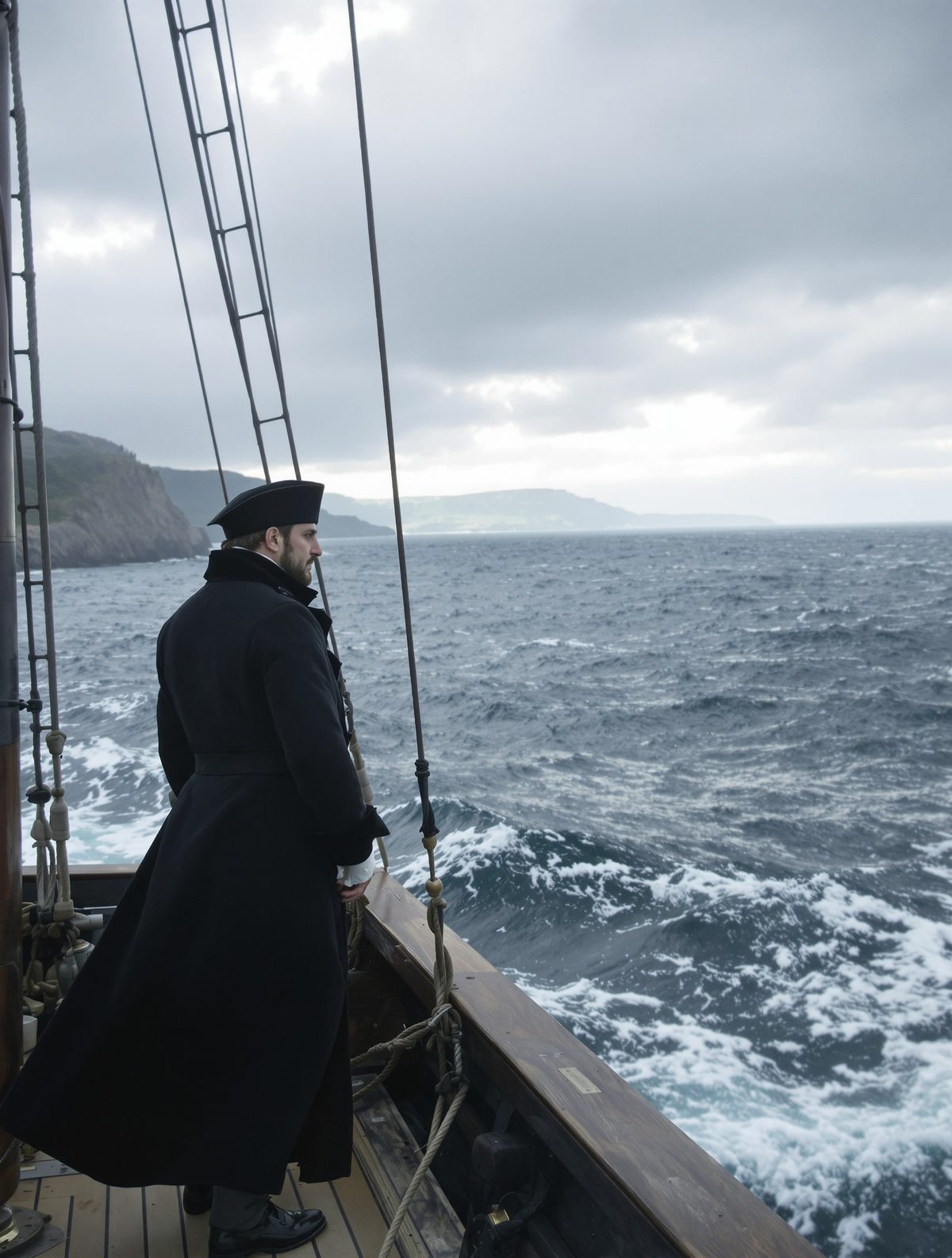
Dawn was breaking over the English Channel on June 6, 1944, when HMS Warspite limped toward the French coast like an aging prizefighter refusing to leave the ring. Her steering gear was shattered, forcing her crew to navigate using her twin propellers in a delicate dance of port and starboard engines. Steam leaked from her ancient boilers, and her hull bore the scars of thirty years of naval warfare. By all rights, the grand old battleship should have been in a scrapyard. Instead, she was sailing into the most important naval bombardment in history.
At 0537 hours, as the first Allied landing craft approached Sword Beach, Warspite opened fire with her massive 15-inch guns. The sound was apocalyptic—a thunderclap that rolled across the water and announced to the sleeping towns of Normandy that liberation had arrived. What followed was one of the most extraordinary final acts in naval history: a dying ship's last dance with destiny.
The Grand Old Lady's War-Torn Past
HMS Warspite was no ordinary battleship. Launched in 1913 during the twilight of the Edwardian era, she had earned more battle honors than any other ship in Royal Navy history. At the Battle of Jutland in 1916, she had charged headlong into the German High Seas Fleet, taking 13 direct hits and nearly capsizing before limping home with 14 dead and 16 wounded. The young Winston Churchill, then First Lord of the Admiralty, called her "the finest ship in the finest navy in the world."
But that was another war, another century. By 1944, Warspite was a relic—a coal-fired dinosaur in an age of oil and radar. She had already been scheduled for decommissioning twice, only to be pressed back into service as Britain's naval strength was stretched thin across the globe. Her crew had taken to calling her "the Grand Old Lady," a term of endearment tinged with melancholy.
The breaking point had come six months earlier during the Allied landings at Salerno, Italy. A German radio-guided bomb—one of Hitler's new "smart weapons"—had punched through her deck and exploded in her boiler rooms. The blast killed nine men instantly and damaged her steering gear so severely that she could barely make headway. As she crawled back to Malta for repairs, her captain signaled to the Admiralty: "Ship requires extensive reconstruction. Recommend paying off."
Too Stubborn to Die
The Admiralty faced a dilemma. Warspite was falling apart, but Operation Overlord—the D-Day landings—demanded every available heavy gun. The German Atlantic Wall bristled with concrete bunkers and artillery positions that could only be cracked by the massive shells of a battleship. Britain's newer ships were desperately needed in the Pacific, where the war against Japan was reaching its climax.
The decision was made in a cramped Admiralty office in London: Warspite would have one last mission. Her steering could not be fully repaired—there simply wasn't time or resources. Instead, her crew would have to learn an entirely new way to handle their ship, using only her engines to maneuver. It was like asking a paralyzed marathon runner to compete in the Olympics.
Captain Michael Kelsey, Warspite's commanding officer, later recalled the months of training that followed: "We practiced for hours in Scapa Flow, learning to steer with the screws. The ship would shudder and groan as we tried to bring her around. Some of the younger officers wondered if we were asking too much of her. But she always responded, somehow."
The Longest Night
On the evening of June 5, 1944, Warspite joined the greatest armada in human history as it departed the harbors of southern England. Nearly 7,000 vessels stretched across the horizon—landing craft, destroyers, cruisers, minesweepers, and supply ships. At the heart of this floating city were five battleships, and among them, limping along at reduced speed, was the oldest warrior of them all.
The crossing was agony. Warspite's engines, never reliable, began to overheat in the rough seas. Her engineering officer, Commander James Wright, spent the night crawling through steam-filled compartments, jury-rigging repairs with whatever materials he could find. "We were held together by naval tradition and marine glue," he would later joke, though at the time, no one was laughing.
Meanwhile, on the bridge, Captain Kelsey wrestled with his crippled ship. Every course correction required precise coordination between the engine room and the bridge telegraph. Too much power to starboard, and Warspite would swing wildly off course. Too little, and she would fall behind the convoy, leaving the landing beaches without her crucial fire support.
Thunder Over Normandy
As dawn broke over the Norman coast, Warspite took her position just four miles offshore—closer than any other battleship dared approach. Her target was a series of German artillery positions near the village of Villerville, guns that could devastate the landing craft approaching Sword Beach. At precisely 0537 hours, she fired her first salvo.
The effect was immediate and devastating. Each 15-inch shell weighed as much as a small car and could penetrate six feet of reinforced concrete. German defenders, many of whom had been convinced that the Atlantic Wall was impregnable, watched in horror as their carefully constructed bunkers simply disappeared in eruptions of smoke and debris.
For the next ten hours, Warspite maintained a steady bombardment, firing 300 rounds and consuming nearly half her ammunition stores. Her guns grew so hot that paint peeled from the turrets, and the concussion from each salvo shattered light bulbs throughout the ship. But she kept firing.
Lieutenant Peter Scott, serving as a forward observer on one of the landing craft, radioed back to the ship: "Magnificent shooting. You are knocking the stuffing out of them." It was the kind of understated British praise that meant everything to Warspite's weary crew.
A Warrior's Final Salute
By evening on June 6, the immediate crisis had passed. Allied forces had established their foothold on Hitler's Fortress Europe, and the great gamble of D-Day had succeeded. Warspite had played her part magnificently, but the effort had cost her dearly. Her engines were failing, her ammunition was nearly exhausted, and her ancient hull was taking on water faster than her pumps could handle.
As she began her slow journey back to Portsmouth, Warspite passed columns of fresh reinforcements heading toward Normandy—young destroyers and cruisers that would carry the war to Hitler's doorstep. Some of their crews lined the rails to cheer the old battleship as she passed, recognizing that they were witnessing the end of an era.
Three months later, HMS Warspite was finally decommissioned, her fighting days over at last. She had served in both world wars, survived more enemy hits than any other British warship, and sailed more miles than most merchant vessels. Her final tally was extraordinary: 300 shells fired at Normandy, helping to secure the liberation of Western Europe.
The Measure of Devotion
In our age of precision-guided missiles and drone warfare, it's easy to forget what naval combat once demanded. HMS Warspite succeeded at D-Day not because of superior technology, but because of something far more difficult to quantify—the determination of ordinary people to see their mission through, regardless of the odds.
Her crew could have recommended against the mission. Her captain could have cited mechanical failures. The Admiralty could have played it safe. Instead, they chose to trust in something that can't be measured in blueprints or specifications: the fighting spirit of a ship that simply refused to quit.
Today, when we face challenges that seem insurmountable, when our institutions feel old and creaky, when the easy path beckons, perhaps we should remember the Warspite—limping toward Normandy with broken steering and failing engines, but with her guns ready and her colors flying. Some fights are worth having, even when you're falling apart. Especially then.