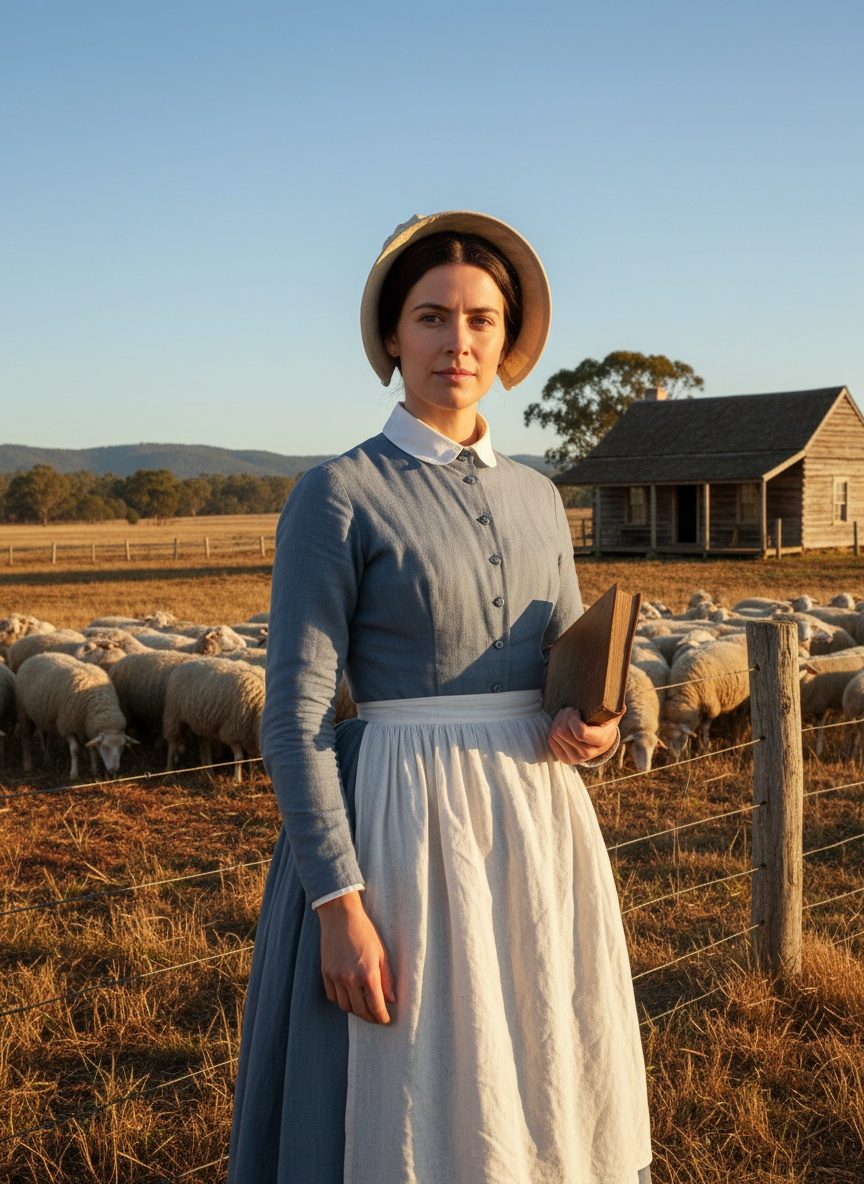
The early morning fog curled around the rolling hills of New South Wales, muffling the sounds of the countryside and casting a ghostly pallor over Elizabeth Farm. The air was crisp and carried the earthy scent of damp soil, as the sun slowly pierced through the mist, revealing a patchwork of pastures and grazing sheep. What appeared as a tranquil setting was, in fact, the epicenter of a burgeoning wool empire, yet the true architect of this enterprise was obscured by time.
The Absence That Set the Stage
In 1801, John Macarthur, a figure of both entrepreneurial vision and notorious temper, found himself navigating the wooden courtrooms of English justice rather than the bucolic landscapes of his Australian property. Sent back to England under arrest, his fate was uncertain, leaving behind not only his business but also his family on the fringes of a still-uncultivated continent. The settlers of New South Wales were scattered and struggling, yet this apparent weakness masked an opportunity for those daring enough to seize it. The task fell to Elizabeth Macarthur, wife, mother, and now, de facto head of one of the colony’s most promising ventures. What she accomplished in the years of her husband’s exile defied not only societal expectations but the very odds themselves.
Embarking on the Unlikely Enterprise
Left with six children to raise and a flock of experimental merino sheep that represented budding economic potential, Elizabeth's hands were full. Despite having limited formal education, Elizabeth possessed an acute understanding of both the land and livestock management, honed by years of observing her husband's dealings. Her role was far from a passive placeholder; she assumed the mantle of leadership with an authority that was both self-taught and hard-earned. The merino sheep, famed for their fine wool, were rare and precious; within the frameworks of colonial agribusiness, they were nothing short of a gamble. Elizabeth knew this and embraced the challenge with discerning pragmatism and steely resolve.
The Evolution of an Industry
At a time when women were rarely acknowledged for contributions beyond the domestic sphere, Elizabeth systematically grew the flock, focusing on breeding practices that would ensure their superiority. She developed an eye for the traits that bespoke both quality and resilience, traits necessary for survival in the sometimes harsh Australian climate. Through meticulous record-keeping and strategic alliances, she cemented the foundation that would allow for the later success of the Macarthur wool industry. Her corresponding duties extended beyond the pastures and fields; Elizabeth also maintained the business’s financial health, negotiating sales, maintaining correspondence with distant markets, and managing estate finances with dexterous acumen.
The Quiet Architect of Expansion
Without the fanfare or recognition afforded to her male counterparts, Elizabeth Macarthur commenced an era of agricultural experimentation that few could even imagine. Her breadth of influence reached into aspects of wool classification and exportation that were masterstrokes in the establishment of Australia’s future on the world stage. The product of her labors did not completely remain within the quiet confines of Elizabeth Farm; it wove its way into the fabric of international commerce as well. The unseen impact of her innovation soon became the lifeline for the colony's economic stability, and more than a few imitators began replicating her methods under the guise of industrial progression.
The Legacy of Perseverance
Elizabeth’s story is not just one of steadfast duty in the face of personal adversity; it is an embodiment of quiet perseverance altering the contours of history. She used the resources at her disposal to not only sustain but actively innovate, in an era where those like her were discounted before they even began. As the years passed, and John Macarthur finally returned, his name would often eclipse the full scope of the achievement he inherited, but without Elizabeth’s pivotal nine years, New South Wales might have remained simply a distant colonial outpost. Her works resonate beyond the pastures, continuing to shape perceptions of both gender roles and the potential impact of unsung pioneers. In Elizabeth Macarthur's shadowed elegance lies a reminder that sometimes the strongest foundations are laid by those who work silently, yet indelibly.