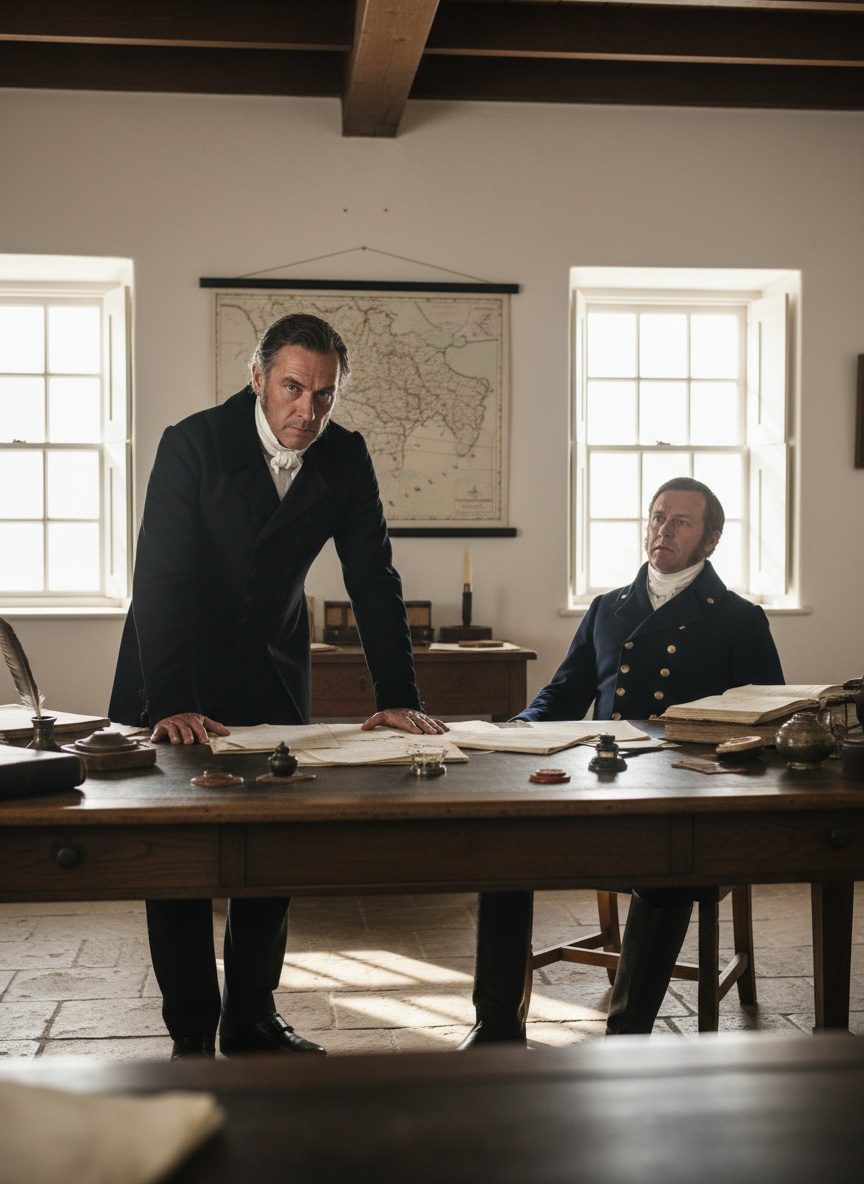
The room was musty and dark, lit only by the dim morning light filtering through dusty windows. John Philip stood there, his hand firmly pressing the document against the desk, a beacon of defiance amidst the oppressive timber-panelled walls of the Governor's office in Cape Colony. Those who assembled in the room looked at him like he was mad. The air hung thick with a charged tension as he faced Governor Richard Bourke, surrounded by colonial officials skeptical of his audacity.
The Reluctant Advocate
John Philip was not always a man destined to challenge an imperial establishment. Born in Aberdeen, his journey to the southernmost tip of Africa seemed as improbable as it was inevitable. Sent by the London Missionary Society, Philip arrived in the Cape Colony to minister the Christian faith and oversee the missions operated by his compatriots. However, what awaited him was far beyond the concerns of a modest Victorian cleric.
The land he encountered upon his arrival was split between the expansive farms of Dutch Boer settlers and dwindling communities of the Indigenous Khoikhoi people. The Khoikhoi had been systematically disenfranchised, subjected to a life of servitude and dispossession, their voices muffled beneath the weighty rule of colonial law. Witnessing this stark injustice, Philip shed the archetype of the benign missionary, transforming instead into a relentless advocate for human rights.
Assembling the Arsenal of Change
Unlike the more traditional routes of rebellion or armed resistance, John Philip’s revolution was one of words, evidence, and dialog. He spent years travelling across the rough and arid terrains of the Cape, speaking to the Khoikhoi, documenting their stories, and understanding their grievances. These were stories of stolen lands, personal degradation, and unseen tears; tales that echoed the universal cry for dignity and fairness.
The South African landscape of the late 1820s was a frontier fraught with division. Yet, among the throngs of dismissive colonial disdain and derisive skepticism, Philip found allies: other missionaries, sympathetic settlers, and, critically, key figures back in Britain who were increasingly troubled by reports of colonial misconduct. He compiled reports, dispatches, and first-hand accounts into a formidable document, a testament that, he hoped, would pierce the impenetrable armor of colonial indifference.
In the Eye of the Maelstrom
The room fell silent as Philip spoke, every word chosen with the precision of a craftsman assembling a masterpiece. He knew this was a pivotal moment, not just for him personally, but for the Khoikhoi whom he had grown to represent. What he laid before Governor Bourke was not only a petition for reform but a mandate for justice—the Ordinance 50, which sought to award the Khoikhoi legal equality, the right to own property, and freedom from maltreatment and forced labor.
Bourke, a pragmatic statesman, was caught between the rigid expectations of colonial administration and the winds of reform that had begun to sweep through the British Empire. Philip's document was not just a plea; it was steeped in undeniable moral righteousness and presented with tenacity so fervent it seemed to ignite the very air of the room.
The Reluctant Signature and Resounding Victory
John Philip’s persistence outlasted initial hesitation. Governor Bourke, though bound by the intricacies of colonial governance, understood the implications of refusing the ordinance. The Empire could ill afford to engender dissent across its territories, and the burgeoning social consciousness in Britain meant that the plight of the colonized peoples could no longer be dismissed in the shadows.
The Governor, albeit cautiously, took up the quill. As ink flowed onto the parchment, so did a new legal promise for the Khoikhoi—a historic change that acknowledged their rights and humanity. It was a concession hard-earned and won through peaceful insistence and irrefutable evidence, unmarked by the bloodstains of conflict that characterized so many other struggles for justice.
Lessons Written in Courage
The echoes of Philip’s effective defiance reached far beyond the rocks and savannas of the Cape. His actions heralded a gradual shift in policies towards natives within the British Empire, influencing reforms and legislative milestones that affirmed the rights of indigenous peoples. Although the shadow of colonialism would linger and Khoikhoi struggles yet remained, the Ordinance 50 stood as a foundational stone for future activists.
In an age where power often spoke with violence, John Philip’s campaign was a testament to the power of human spirit—the ability to effectuate seismic change through perseverance, moral conviction, and an unwavering commitment to justice. As we ponder this remarkable episode, we are reminded of the myriad ways in which history’s most profound transformations can occur, not with fanfare or conflagration, but one person’s indomitable will to confront inequity.