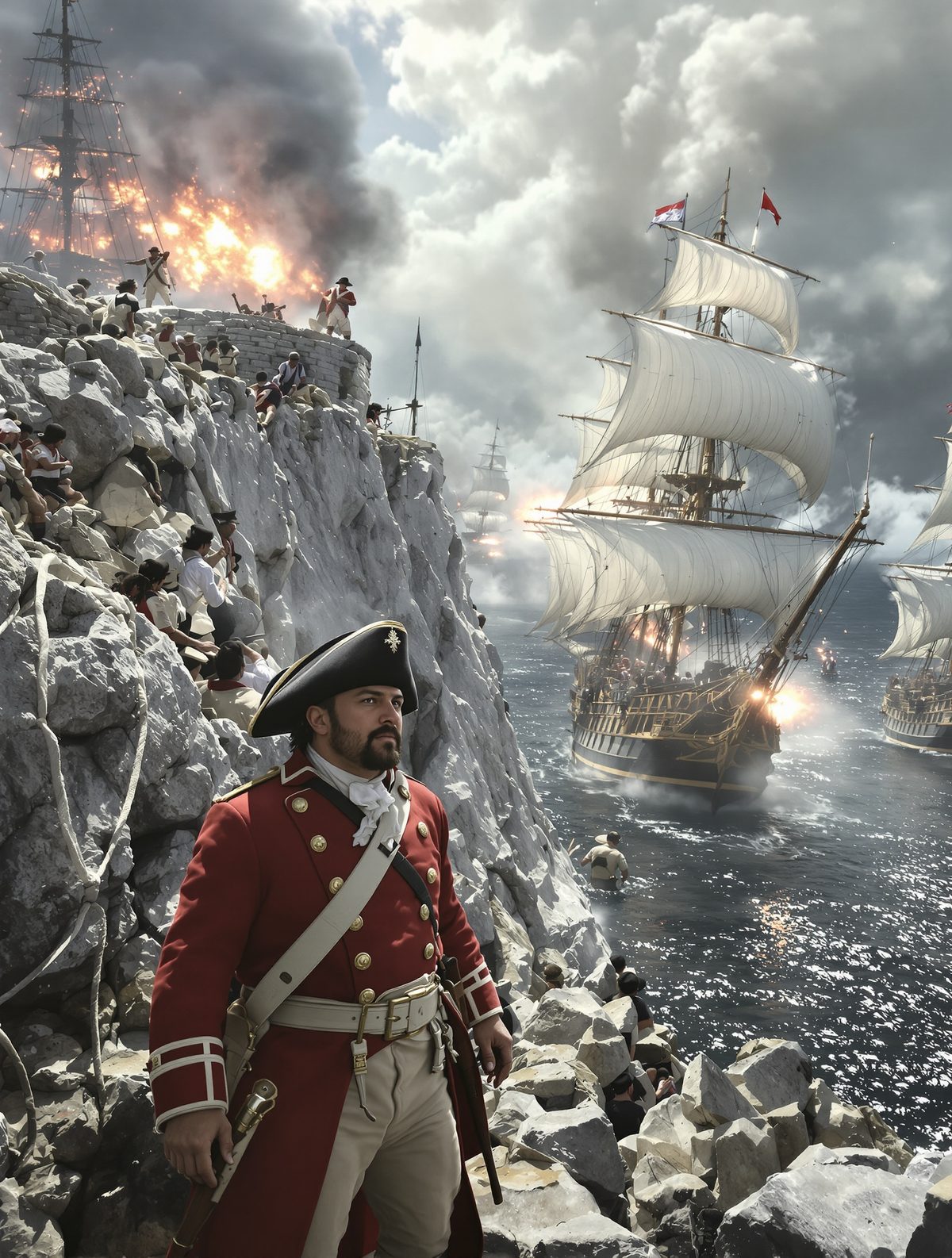
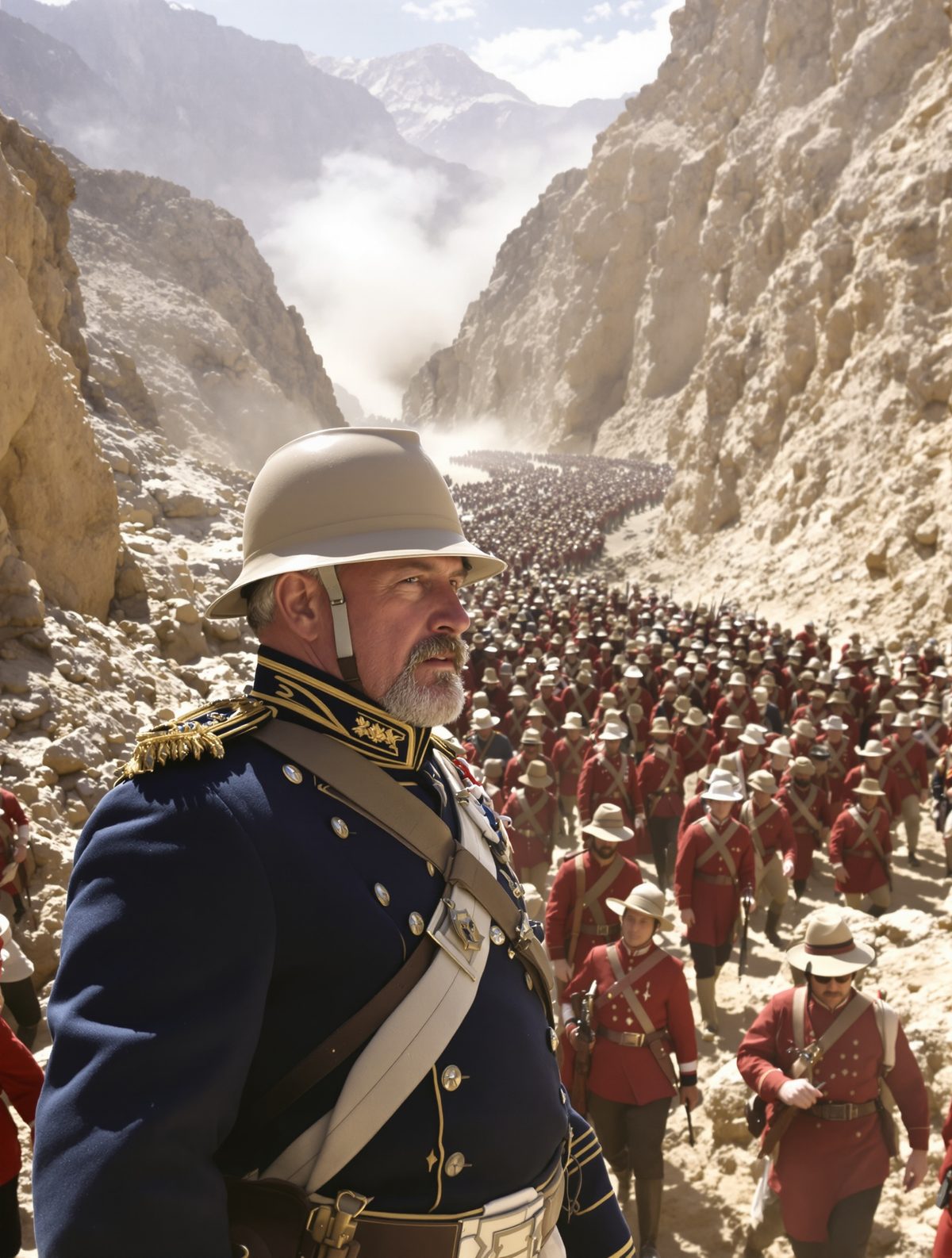
Picture this: In the sweltering heat of a Bombay morning in September 1686, a middle-aged English merchant named Josiah Child sits in his mahogany-paneled office, quill in hand, about to write what may be history's most audacious declaration of war. His target? The mighty Mughal Empire—home to 100 million souls, ruled by Emperor Aurangzeb, and quite possibly the wealthiest nation on Earth. His army? Six creaking warships and 600 sweating soldiers who'd signed up to guard trading posts, not conquer subcontinents.
What Child was about to unleash would become known as Child's War—a spectacular miscalculation that nearly destroyed the East India Company and proved that sometimes, the biggest risks come from men who mistake a corporate boardroom for a war room.
The Merchant Who Thought He Was Napoleon
Josiah Child wasn't your typical 17th-century businessman. As Governor of the East India Company from his London headquarters, he wielded power that would make modern CEOs weep with envy. The Company wasn't just a business—it was a state within a state, complete with its own army, navy, and the legal right to wage war. Child had transformed what began as a modest trading venture into something resembling a corporate empire, and he ruled it with the iron fist of a man who believed his own press releases.
But here's what the history books often miss: Child had never actually been to India. His knowledge of the subcontinent came from reports, ledgers, and the occasionally self-serving letters from Company officials who had every reason to downplay local resistance and overstate English strength. To Child, sitting in his comfortable London office, the Mughal Empire was just another obstacle to quarterly profits—a collection of "native princes" who surely couldn't stand against English determination and superior firepower.
This breathtaking ignorance would prove costly. By 1686, the Mughal Empire under Aurangzeb controlled territory stretching from Kashmir to the Deccan plateau. The imperial treasury was so vast that when Aurangzeb's armies captured enemy cities, they sometimes found it easier to weigh gold and silver by the ton rather than count individual coins. This was the power Child was about to challenge with the corporate equivalent of a strongly worded letter backed by muskets.
The Spark That Lit the Powder Keg
The immediate cause of Child's declaration of war sounds almost mundane: customs duties and seized ships. Mughal officials in Bengal had been cracking down on English traders who they suspected of evading taxes—a suspicion that was, by most accounts, entirely accurate. When Mughal customs officers seized several Company vessels loaded with goods, Child saw red.
But this wasn't really about customs duties. Child had been nursing a much grander vision: transforming the East India Company from a collection of coastal trading posts into the dominant power in Indian Ocean commerce. He'd watched with growing frustration as Mughal officials treated his representatives as mere merchants rather than the representatives of a sovereign power. The seized ships were just the final straw.
On September 1686, Child issued his declaration of war with characteristic bombast. Company ships were ordered to seize all Mughal vessels they encountered. Company armies were to capture Mughal ports. Most audaciously, Child demanded that the Mughal Empire grant the Company complete sovereignty over its existing territories and pay compensation for the seized ships. It was rather like a corner grocery store declaring war on Walmart and demanding they hand over their supply chain.
The plan, such as it was, relied on a catastrophic misreading of Mughal politics. Child believed that the Empire was weak, divided, and ripe for conquest by a small but disciplined European force. He'd apparently missed the memo that Aurangzeb's armies had just finished conquering most of southern India and were feeling rather confident about their military capabilities.
David Meets Goliath (Spoiler: Goliath Wins)
What followed was less a war than a master class in imperial overreach. Company forces under Captain Richard Keigwin managed to capture the island of Bombay—which they already controlled—and declared it a sovereign English territory. Meanwhile, other Company commanders began their campaign of seizing Mughal ships with initial success, capturing several merchant vessels and convincing themselves that victory was inevitable.
The Mughal response was swift and overwhelming. Emperor Aurangzeb, who had spent decades conquering rebellious provinces, was not particularly impressed by Child's corporate army. Imperial forces began systematically dismantling Company positions across Bengal and the western coast. The numbers tell the story: while Child had mobilized perhaps 3,000 men across all Company territories, the Mughal Empire could field armies of 100,000 without breaking a sweat.
But it wasn't just the military mismatch that doomed Child's adventure. The Company's Indian trade network depended entirely on Mughal goodwill. When that goodwill evaporated, so did the Company's profits. Indian merchants stopped trading with English factors. Mughal officials seized Company warehouses. Most devastating of all, the Empire simply waited—cutting off English access to the interior trade that was the source of the Company's wealth.
By 1688, Company revenues had collapsed. Shareholders in London, who had initially supported Child's aggressive stance, began demanding answers as their dividends disappeared. The man who had promised to humble the Mughal Empire was instead humbling the East India Company's balance sheet.
The Most Expensive Apology in History
What happened next was a scene that would have been comic if it weren't so costly. In 1690, facing bankruptcy and shareholder revolt, Child was forced to send envoys to grovel before Mughal officials. But even groveling required negotiation, and the Mughal terms were deliberately humiliating.
The Company was required to pay a massive fine of 150,000 rupees—equivalent to roughly £15,000 at contemporary exchange rates, or several million dollars today. More importantly, Company representatives were required to perform the kornish, a ritual gesture of submission that involved kneeling and touching one's forehead to the ground before Mughal officials.
For 17th-century Englishmen, who viewed such gestures as fundamentally degrading to Christian dignity, this was perhaps more painful than the financial penalty. Yet they had no choice. Captain William Heath, the Company's representative, literally got on his knees and begged forgiveness from officials of an empire Child had tried to conquer.
But here's the detail that really drives home the absurdity of Child's war: even after this humiliating surrender, the East India Company was essentially back where it started, paying customs duties and operating at the pleasure of Mughal authorities. The only difference was that they were now several hundred thousand rupees poorer and had thoroughly demonstrated their military irrelevance.
The Aftermath of Arrogance
Child's War ended not with a bang but with a whimper and a very large invoice. The immediate consequences were severe enough: Company stock prices plummeted, several directors were forced to resign, and Child himself faced a parliamentary investigation that nearly resulted in the revocation of the Company's charter.
More importantly, the war revealed the fundamental weakness of European power in 17th-century Asia. Despite their technological advantages in naval warfare and firearms, the English simply lacked the manpower, resources, and local knowledge to challenge established Asian empires on their home territory. Child's defeat helped establish a pattern that would persist for decades: European traders succeeding as merchants and diplomats, but failing catastrophically whenever they tried to play conqueror.
Yet there's a deeper irony here. Child's spectacular failure actually laid the groundwork for the Company's later success. The humiliation of 1690 taught Company officials crucial lessons about working within existing political structures rather than trying to overthrow them. When the East India Company eventually did become a territorial power in the mid-18th century, it was through patient alliance-building and exploitation of internal conflicts—not the kind of frontal assault Child had attempted.
Why Child's Folly Still Matters
In our age of multinational corporations wielding influence that rivals nation-states, Child's War feels strangely contemporary. Here was a man who controlled a company with global reach, private armies, and quasi-governmental powers, yet who fundamentally misunderstood the limits of corporate power when confronted with actual sovereignty.
Child's mistake wasn't just military—it was psychological. He had become so accustomed to wielding power within the Company's corporate structure that he forgot he was still operating as a guest in someone else's empire. His declaration of war was less a calculated strategic gamble than a corporate temper tantrum with geopolitical consequences.
Perhaps that's the real lesson of Josiah Child's spectacular failure: that there's a vast difference between market dominance and political power, between controlling shareholders and controlling territories, between running a business and running a war. Child learned this lesson the hard way, on his knees in a Mughal court, writing checks his company could barely afford to cover the cost of his imperial ambitions.