Imagine the sound of a porcelain teacup shattering against a cobblestone street, an everyday occurrence that announces the fragility of England’s finest goods. The 18th-century roads that linked Staffordshire’s textile and pottery industries to the rest of the country might as well have been lined with landmines for all the havoc they wreaked on delicate wares. Yet there was a man, not a politician or a wealthy noble, but a humble potter, who dreamed of a new path—a waterway smooth as glass—upon which these treasures could glide, rather than break. His name was Josiah Wedgwood, and his vision ushered in a commercial revolution that forever reshaped British trade.
The Pottery King's Gamble
The year was 1766, and the Industrial Revolution was beginning to quiver to life with the rhythm of machines and clatter of commerce. But in the region known as "The Potteries"—encompassing towns like Stoke-on-Trent—roads more fit for carts of coal than crates of china remained a cruel limitation. For Josiah Wedgwood, whose delicate pieces of stoneware already adorned the tables of Europe's elite, the problem was stark. Every jolt of a cart threatened his business, yet it was the frequent breakages during transit that kept him awake at night.
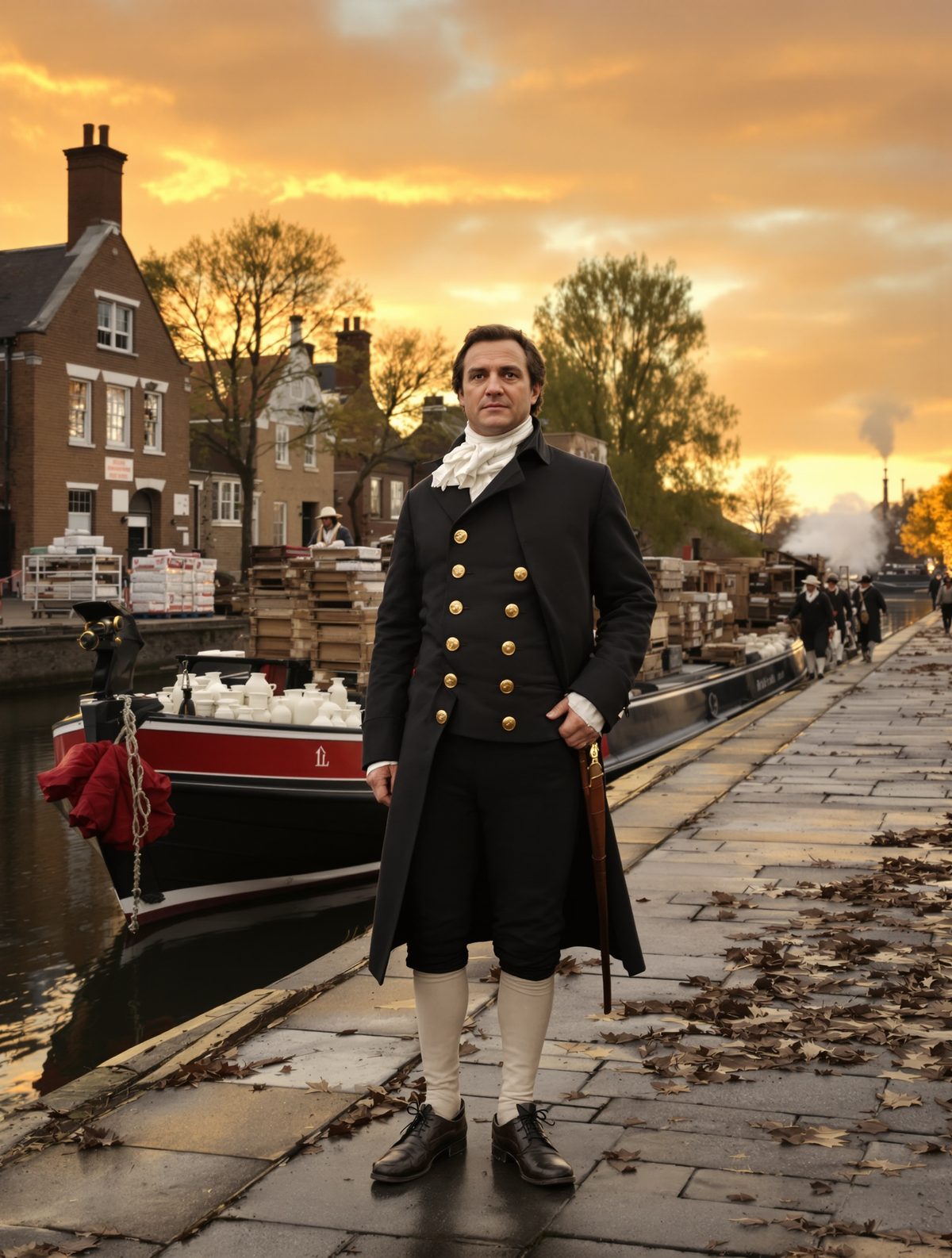
Enter the Trent and Mersey Canal. Spearheading its construction, Wedgwood partnered with the ingenious engineer James Brindley, alongside the Duke of Bridgewater, who had previously demonstrated how transformative canals could be. This new canal would stretch a whopping 93 miles from the River Trent at Wilden Ferry to the River Mersey at Runcorn, connecting the heart of porcelain production to the port cities that opened onto international waters. It was a risky financial endeavor and a logistical challenge that spanned five years of arduous construction.
A Marvel of Engineering
The construction of the Trent and Mersey Canal was a feat bordered on the fantastical. Here was a route that required the building of aqueducts and tunnels through earth and rock, innovations scarcely seen on this scale in Britain before. The three-mile-long Harecastle Tunnel became a monument to engineering brilliance, with Brindley overcoming the problem of draining groundwater by pioneering drainage siphons, a testament to ingenuity born out of necessity.
But the canal’s completion in 1777 was far from a simple ribbon-cutting affair. It opened a lifespan of possibilities: a new speed in transporting goods and people, and a newfound reliability that roads could not match. Suddenly, the precious cargo from The Potteries reached Liverpool's docks intact, enriching the coffers of local craftsmen and spreading Staffordshire stones like Wedgwood’s Jasperware across every capital in Europe.
Unseen Hands, Unspoken Change
What few anticipated was how the Trent and Mersey Canal would inspire an entire network of waterways across the nation. The economic success of Wedgwood’s venture spurred on the construction of over 4,000 miles of canals by the turn of the 19th century, forming the arteries through which the lifeblood of the burgeoning Industrial Revolution would flow.
One notable story is that of a potter previously unknown to history: Enoch Wood. A contemporary of Wedgwood, Wood leveraged the canal to ship inexpensive earthenware globally, effectively giving birth to what we know as mass production. With such access, even small potteries found their works reaching distant shores, areas where Wedgwood's artistry had ignited demand.
An Untold Economic Ripple
If the Trent and Mersey Canal was a gamble, then the dividends paid out in ways no one could fully account for. The canal didn’t just preserve porcelain; it constructed a backbone for British industry, shifting the center of commerce northward and laying the groundwork for Manchester’s rise as a world textile capital.
More surprising still was its impact on the labor landscape. As canals invited factories to spring up along their banks, they drew workers from rural countryside into urban centers, forming the spine of the explosive population growth that accompanied industrialization. This migration forever altered the demography of Britain, creating bustling hubs that paved the way for modern cities.
Echoes in Today’s World
In today’s world, as we gaze upon the sleek crafts zooming along the Thames or the containers moving across diesel rails, it is easy to forget the ripples started by one potter's gamble in 1766. Yet, the echoes of his vision reverberate still, evident in the transport networks and trade corridors that bind the world together.
Josiah Wedgwood's canal did more than provide a safer voyage for his precious chinaware - it opened horizons. It laid bricks upon which steam engines would later run and foundations for economic models that would govern centuries. It is a testament to the power of infrastructure to open frontiers in commerce and human endeavor. In pondering Wedgwood’s story, we are reminded of the untold heroes who mold history not just with their talents, but with their dreams—dreams durable enough to change the very course of nations.