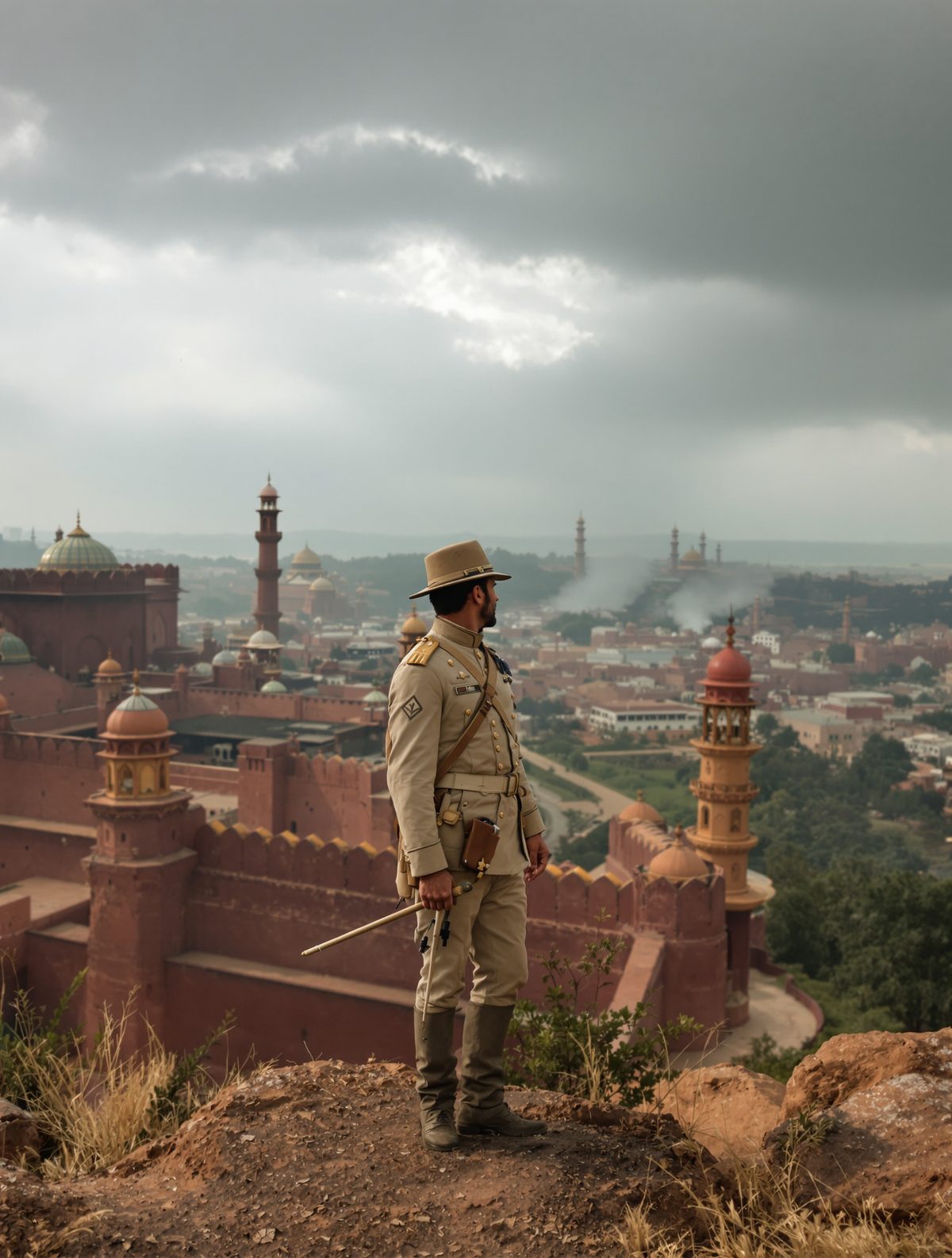
The ink was precious—more valuable than jewels in the frozen wasteland of the Afghan mountains. Lady Florentia Sale carefully rationed each drop, scratching her observations onto whatever scraps of paper she could find. Outside her makeshift prison, the wind howled through the Hindu Kush peaks, carrying with it the bitter reality that she was likely the only witness left alive to tell the story of Britain's most catastrophic military disaster. Her husband, General Sir Robert Sale, was fighting desperately in Jalalabad, convinced his beloved wife was dead. But Florentia had something that would prove more powerful than any sword or cannon—her pen, her courage, and an unshakeable determination to survive.
The Retreat That Became a Massacre
January 6, 1842, began with what British commanders optimistically called an "orderly withdrawal" from Kabul. It would end as one of the most devastating military defeats in British imperial history. The First Anglo-Afghan War had turned into a nightmare, and now 16,500 British and Indian troops, along with their families and camp followers, were attempting to reach the safety of Jalalabad—90 treacherous miles through winter mountain passes controlled by hostile Afghan tribes.
Among the wives and children in that doomed column was 50-year-old Lady Florentia Sale, wife of Brigadier Robert Sale. Florentia—what a name for a woman about to endure nine months of hell. She had married into the military life and followed her husband across the Empire, but nothing had prepared her for what was about to unfold in the Afghan wilderness.
The retreat quickly devolved into slaughter. Afghan fighters picked off the column from the rocky heights, turning the mountain passes into killing fields. Men, women, and children froze to death in temperatures that plunged below zero. By January 13, just one week later, only one man—Dr. William Brydon—would reach Jalalabad alive to tell the tale. But Florentia Sale was not among the dead, though the world would believe she was for the next nine months.
Captured in the Chaos
On January 9, as the column disintegrated around them, Lady Sale found herself among a group of British hostages seized by Afghan chief Akbar Khan. The capture wasn't random—these weren't just prisoners, they were bargaining chips. Along with Lady Sale were other military wives, including Lady Macnaghten (widow of the recently murdered British envoy) and Mrs. Trevor, plus several British officers and their children. In total, 95 British prisoners found themselves at the mercy of men they had been fighting just days before.
What makes Lady Sale's story extraordinary isn't just that she survived—it's that she had the presence of mind to document everything. Hidden away in her meager possessions, she kept a diary that would become one of the most riveting firsthand accounts of captivity ever written. While other prisoners descended into despair, Sale transformed herself into a war correspondent, ethnographer, and survivor all rolled into one remarkable Victorian woman.
The conditions were brutal beyond imagination. The prisoners were marched from fort to fort across the unforgiving Afghan landscape, often sleeping in caves or crumbling buildings with no heat, inadequate food, and the constant threat of execution hanging over their heads. Lady Sale noted that they were given "a little rice and ghee" and occasionally some tough mutton, barely enough to sustain life.
The Secret Chronicler of Afghan Captivity
What Lady Sale recorded in her clandestine diary reads like a thriller novel, except every word was painfully real. She documented the psychological warfare their captors employed—how they were told alternately that they would be released, executed, or sold to other tribes. She wrote about the bitter cold that left her fingers too numb to hold her pen, about watching fellow prisoners fall ill and die, about the complex tribal politics that determined whether they lived or died on any given day.
But perhaps most remarkably, Lady Sale maintained an almost anthropological curiosity about her captors. She described Afghan customs, tribal hierarchies, and the intricate web of alliances and betrayals that characterized the region's politics. This wasn't Stockholm syndrome—this was a brilliant mind refusing to be broken by circumstances that would have destroyed lesser spirits.
Her descriptions of daily life reveal a woman of extraordinary resilience. When her dress fell apart, she sewed it back together with thread pulled from other garments. When dysentery ravaged the prisoners, she nursed the sick with whatever remedies she could improvise. When despair threatened to overwhelm the group, she organized activities and maintained morale through sheer force of personality.
Meanwhile, 90 miles away in Jalalabad, her husband Robert was enduring his own hell. Convinced his wife was dead, he threw himself into defending the garrison with the fury of a man who had lost everything. The siege of Jalalabad would last 143 days, and through every one of them, General Sale believed he was fighting not to save his wife, but to avenge her.
The Great Game's Forgotten Pawns
What Lady Sale witnessed—and recorded—was more than personal survival. She was documenting the human cost of what historians call "The Great Game," the strategic rivalry between Britain and Russia for control of Central Asia. The British had invaded Afghanistan to prevent Russian influence, but they understood neither the terrain nor the people they sought to control.
Her diary entries reveal the complex motivations of their Afghan captors. These weren't mindless barbarians, as British propaganda often portrayed them, but shrewd political operators caught between competing tribal loyalties, religious obligations, and the practical realities of dealing with a failing British invasion. Akbar Khan, their primary captor, emerges in Sale's account as a complicated figure—sometimes cruel, sometimes protective, always calculating the political value of his British prisoners.
The prisoners became unwitting participants in negotiations that stretched from the mountains of Afghanistan to the corridors of power in London and Calcutta. Every day they remained alive was another day of diplomatic complexity for the British Empire. Should they pay ransom? Launch rescue missions? Declare the prisoners dead and move on? Lady Sale and her fellow captives hung in limbo while empires played chess with their lives.
Liberation and Literary Sensation
September 1842 brought rumors that would prove almost too good to believe. General Pollock's "Army of Retribution" was fighting its way back toward Kabul, and suddenly the value proposition for holding British prisoners had changed dramatically. On September 17, 1842, after nine months of captivity that felt like nine years, Lady Sale heard British bugles in the distance.
The reunion between Lady Sale and her husband became the stuff of legend. General Sale, seeing the wife he had mourned for dead walking toward him across the Afghan plain, reportedly wept openly—a remarkable display of emotion for a Victorian military officer. But Florentia had one more surprise: clutched in her weathered hands was the diary that would make her famous across the Empire.
"A Journal of the Disasters in Afghanistan" was published in 1843 and became an immediate bestseller. Victorian Britain, hungry for firsthand accounts of imperial adventure, devoured Sale's unflinching narrative. Here was a lady of proper breeding who had survived hell itself and lived to tell the tale with remarkable composure and insight.
The book revealed details the military commanders preferred to keep quiet—the incompetence of British leadership, the impossible logistics of the invasion, and the fierce intelligence of their Afghan opponents. Lady Sale had accidentally written one of the first great pieces of embedded war journalism, decades before the profession even existed.
The Pen That Proved Mightier Than the Sword
Lady Florentia Sale's nine months in the Afghan mountains matter today because they illuminate timeless truths about courage, survival, and the power of bearing witness. In an age before cameras or recording devices, she used nothing but pen and paper to create one of the most vivid accounts of military disaster and human endurance ever written.
Her story also foreshadowed struggles that continue to this day. Afghanistan would defeat the British Empire not once but three times, just as it would later confound the Soviet Union and challenge NATO forces. Lady Sale's diary entries about the impossibility of conquering people fighting on their own terrain for their own homes read like prophecy when viewed through the lens of history.
But perhaps most importantly, Lady Sale proved that the most powerful weapon against despair is the simple act of paying attention—of refusing to let horror pass unrecorded, of maintaining humanity in inhuman circumstances. In our modern age of 24-hour news cycles and instant communication, her patient, careful documentation of each day's trials reminds us that sometimes the most profound acts of resistance happen one word at a time, one day at a time, one page at a time.
The mountains of Afghanistan kept many secrets in 1842. Thanks to one extraordinary woman and her determination to survive and tell the truth, this was not one of them.