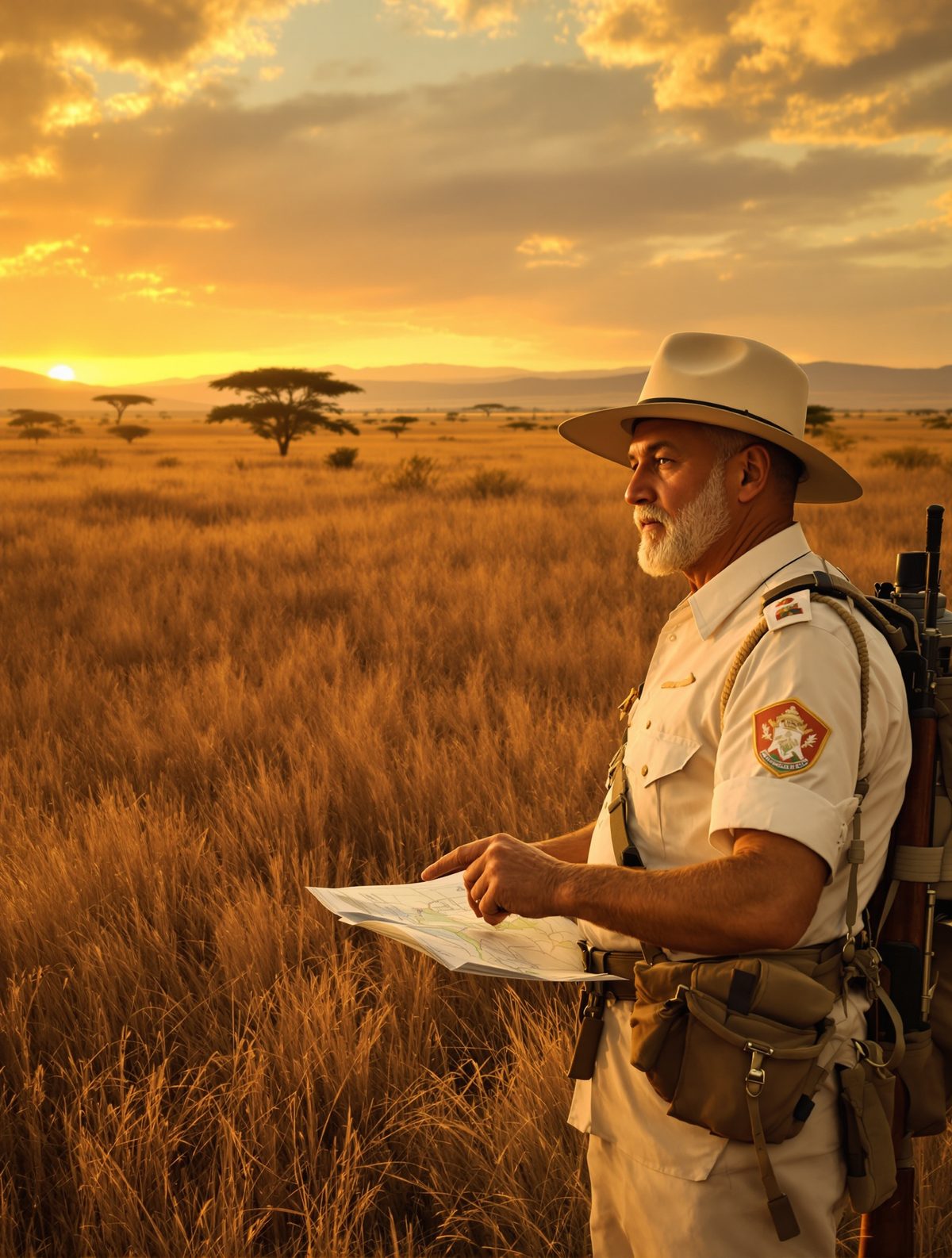
The morning of January 26, 1788, was suffocatingly hot. Captain Arthur Phillip wiped the sweat from his brow as he gazed across the pristine waters of what he would name Sydney Cove. Behind him, eleven ships creaked at anchor—a floating city of criminals, guards, and the desperate. Ahead lay an empty continent and the most audacious gamble in colonial history: build a functioning society from nothing, with no backup plan, no supply chain, and no way home for years.
What Phillip couldn't know as he prepared to step ashore was that he was about to attempt something unprecedented in human history. Not just founding a colony—the Spanish, Portuguese, and his own countrymen had done that before. But never had anyone tried to establish a permanent settlement using primarily convict labor, 17,000 kilometers from the nearest friendly port, with supplies that were already running dangerously low.
The Floating Prison That Became a Nation
The First Fleet wasn't built for comfort—it was built for survival. Eleven ships ranging from the 540-ton flagship HMS Sirius to smaller transports like the Friendship, barely larger than a modern ferry. Crammed into these vessels were 1,373 people: 736 convicts (including 180 women), 250 marines and officers, 40 wives and children of marines, and about 350 crew members.
The journey from Portsmouth had taken eight months and one week—longer than a modern trip to Mars would take. By the time they reached Botany Bay on January 18, 1788, the ships reeked of human waste, disease, and desperation. Twenty-three convicts had died during the voyage, and many more were barely clinging to life.
But here's what the history books often miss: these weren't just common criminals. Among the convicts were skilled craftsmen whose talents would prove invaluable—carpenters, bricklayers, farmers, and even a few who could read and write. James Ruse, transported for breaking and entering, would become the colony's first successful farmer. Thomas Restell, convicted of stealing, was actually a skilled carpenter who would help build the first permanent structures.
The women convicts, often dismissed in historical accounts as merely "camp followers," were equally vital. They included skilled seamstresses, cooks, and nurses. Elizabeth Hayward, convicted of stealing clothing, would become one of the colony's first successful businesswomen, eventually owning property and employing other settlers.
The Moment Everything Nearly Fell Apart
Phillip's first crisis came within days of landing. Botany Bay, so enthusiastically described by Captain Cook eighteen years earlier, was a disaster. The soil was poor, fresh water was scarce, and the harbor was too shallow for the larger ships. Worse still, on January 24, two French ships under the command of Jean-François de Galaup, comte de La Pérouse, appeared on the horizon.
The French weren't there to challenge British claims—they were on a scientific expedition—but their presence was a stark reminder of how tenuous Britain's hold on this distant land really was. Phillip made a decision that would change history: he loaded everyone back onto the ships and sailed north to the harbor Cook had noted but never explored—Port Jackson.
When they entered Sydney Cove on January 26, Phillip reportedly exclaimed that it was the "finest harbor in the world." He wasn't exaggerating. The natural harbor could shelter a thousand ships, fresh water ran down from the surrounding hills, and the soil looked promising. But promise doesn't feed hungry people, and by March 1788, the colony was consuming its stores faster than anyone had calculated.
The mathematics were terrifying. Based on the supplies they'd brought and the rations they were distributing, the colony would run out of food by December 1788. The next supply ship wasn't guaranteed to arrive until 1790. Phillip had to make the brutal calculation: cut rations dramatically or watch his entire colonial experiment collapse within its first year.
Building Civilization from Stolen Spoons
What emerged in those first desperate months was a society unlike anything Europe had ever seen. Phillip made decisions that scandalized officials back in London but kept his people alive. He put convicts in charge of other convicts, gave skilled prisoners positions of authority, and most remarkably, ensured that everyone—from marine officers to convicted felons—received exactly the same food rations.
This wasn't idealism; it was pragmatism. When your colony's survival depends on a convicted highwayman's carpentry skills and a transported seamstress's ability to keep uniforms mended, traditional class distinctions become deadly luxuries.
The colony's first buildings were remarkable feats of improvisation. The Government House was built using bricks made from local clay, fired in kilns constructed by convict bricklayers. The mortar was made from crushed oyster shells gathered from the harbor. Window glass came from broken bottles, carefully melted and reformed. Nails were so precious that when buildings were demolished, every nail was carefully saved and reused.
John Irving, a convict blacksmith, became one of the colony's most valuable residents. His forge—built from local stone and operated with bellows made from canvas and leather—produced the tools that built early Sydney. The irony wasn't lost on anyone: a man transported for theft was now creating the very infrastructure of British law and order on the far side of the world.
The Starving Time and the Ship That Never Came
By June 1790, Sydney was dying. The supply ship Guardian had hit an iceberg near the Cape of Good Hope in December 1789, taking with it desperately needed supplies. Daily rations had been cut to just two and a half pounds of flour, two pounds of salt pork, and two pounds of rice per person per week. People were literally starving in the streets of what would become Australia's largest city.
Phillip made increasingly desperate decisions. He dispatched the Sirius to Norfolk Island with 200 people, hoping the smaller island could feed them while reducing pressure on Sydney's dwindling supplies. The gamble backfired catastrophically when the Sirius was wrecked on Norfolk Island's treacherous reef, leaving the Sydney colony with just one remaining ship, the Supply.
Aboriginal peoples watched this unfolding disaster with a mixture of curiosity and alarm. The Eora people, led by men like Bennelong and Pemulwuy, had complex relationships with the struggling colonists. Sometimes they shared knowledge about local foods and water sources. Other times they resisted the Europeans' presence through targeted attacks. Phillip himself was speared through the shoulder by an Aboriginal warrior in September 1790, yet he maintained his policy of attempting peaceful coexistence.
Then, on June 3, 1790, a lookout spotted a sail on the horizon. The entire colony held its breath. Was it French? Dutch? Spanish? As the ship drew closer, someone spotted the Union Jack. The Second Fleet had arrived, carrying 750 more convicts and, more importantly, food.
The Impossible Gamble That Worked
By the time Phillip sailed back to England in December 1792, suffering from kidney stones and exhaustion, he had achieved the impossible. The colony was not just surviving—it was growing. The population had swelled to over 4,000 people. Farms were producing food. Ships were being built in local dockyards. A functioning legal system was dispensing justice. Schools were teaching children born on Australian soil.
But perhaps Phillip's greatest achievement was social. He had created a society where former convicts could become landowners, where working-class marines could rise to positions of authority, and where traditional British class barriers had been permanently shattered. Mary Reibey, transported for stealing a horse at age 13, would become one of the colony's wealthiest merchants. Samuel Terry, convicted of stealing 400 pairs of stockings, would die as one of the richest men in the southern hemisphere.
The numbers tell the story of this transformation: by 1800, former convicts owned 40% of the land under cultivation around Sydney. By 1820, ex-convicts comprised the majority of the colony's middle class. The criminal justice system had accidentally created one of history's most successful social mobility experiments.
Why This Still Matters
Captain Arthur Phillip's achievement resonates today because it demonstrates something profound about human adaptability and the power of necessity to reshape society. In our current era of global migration, climate change, and economic disruption, the First Fleet's story offers both inspiration and warning.
Phillip succeeded because he abandoned rigid hierarchies when survival demanded it, because he recognized talent regardless of its source, and because he understood that building something new sometimes requires discarding old assumptions about how society should work. The convicts, marines, and officers who created Australia didn't just establish a colony—they proved that people written off by society could, given opportunity and necessity, build something remarkable.
Today, as we face our own seemingly impossible challenges, perhaps we need more of Phillip's pragmatic idealism: the willingness to put survival above status, results above respectability, and the future above the familiar patterns of the past. The empty shores of Sydney Cove became a thriving city not despite the desperate circumstances of its founding, but because of them.