The messenger arrived at Fort Johnston drenched in sweat and blood, his eyes wild with terror. In broken English mixed with Chichewa, he delivered news that would haunt Harry Johnston's dreams: entire villages along Lake Nyasa were burning. Thousands of men, women, and children lay dead or shackled in slave coffles. The Arab warlord Mlozi had declared total war, and his ruthless slavers were carving a path of devastation across what would become modern-day Malawi.
It was October 1895, and Sir Harry Hamilton Johnston—Britain's Commissioner for the British Central Africa Protectorate—faced an impossible decision. His tiny colonial administration controlled barely a fraction of this vast territory. He had just 71 Indian sepoys under his command, a handful of British officers, and no realistic hope of reinforcements. The nearest substantial British force was hundreds of miles away in South Africa.
Yet as Johnston studied his rough maps that evening, tracing the reports of massacres spreading like wildfire across the northern reaches of his protectorate, he made a choice that would define his legacy. He would march 800 miles through unmapped wilderness, into the heart of darkness itself, to face an enemy that had terrorized Central Africa for decades.
The Warlord of the North
Mlozi bin Kazbadema was no ordinary slave trader. This charismatic Arab-Swahili warlord had carved out a virtual kingdom in the northern reaches of Lake Nyasa, complete with fortified stockades, a private army, and a network of allied chiefs. His main stronghold at Karonga bristled with modern rifles and even a few cannon—weapons acquired through decades of human trafficking.
For over a decade, Mlozi had operated with impunity, raiding villages across the region and marching thousands of captives to the coast. But Britain's recent declaration of the protectorate threatened his empire. Local tribes, emboldened by promises of British protection, had begun resisting his slave raids. Mlozi's response was swift and merciless: total war against any village that dared defy him.
The intelligence reaching Johnston painted a horrifying picture. Mlozi's forces weren't just conducting raids—they were systematically exterminating entire communities. Villages that had welcomed British missionaries were targeted for complete destruction. The Ngoni and Tonga peoples, who had hoped British protection would end their centuries of suffering under slave raiders, now faced annihilation.
What made Mlozi particularly dangerous was his sophisticated organization. Unlike typical raiders, he commanded a disciplined force of Arab and Swahili fighters armed with modern Martini-Henry rifles. His network of informants kept him ahead of any resistance, while his chain of fortified positions made him nearly untouchable. Previous attempts to dislodge him had ended in disaster.
An Army of Ghosts
Johnston's "army" was laughably small by any conventional standard. His core force consisted of 71 Sikh soldiers from the Indian Army, battle-tested veterans who had volunteered for service in Africa. These men, far from their Punjab homeland, represented the backbone of his expedition. Alongside them marched a handful of British officers, including the remarkable Captain Cecil Montgomery and Lieutenant Alston.
But numbers tell only part of the story. Johnston had spent months building relationships with local chiefs, promising them protection from slavers in exchange for loyalty to the Crown. As word spread of his march north, something remarkable happened: hundreds of African warriors began joining his column. Chiefs who had lost entire villages to Mlozi's raids saw this as their chance for revenge.
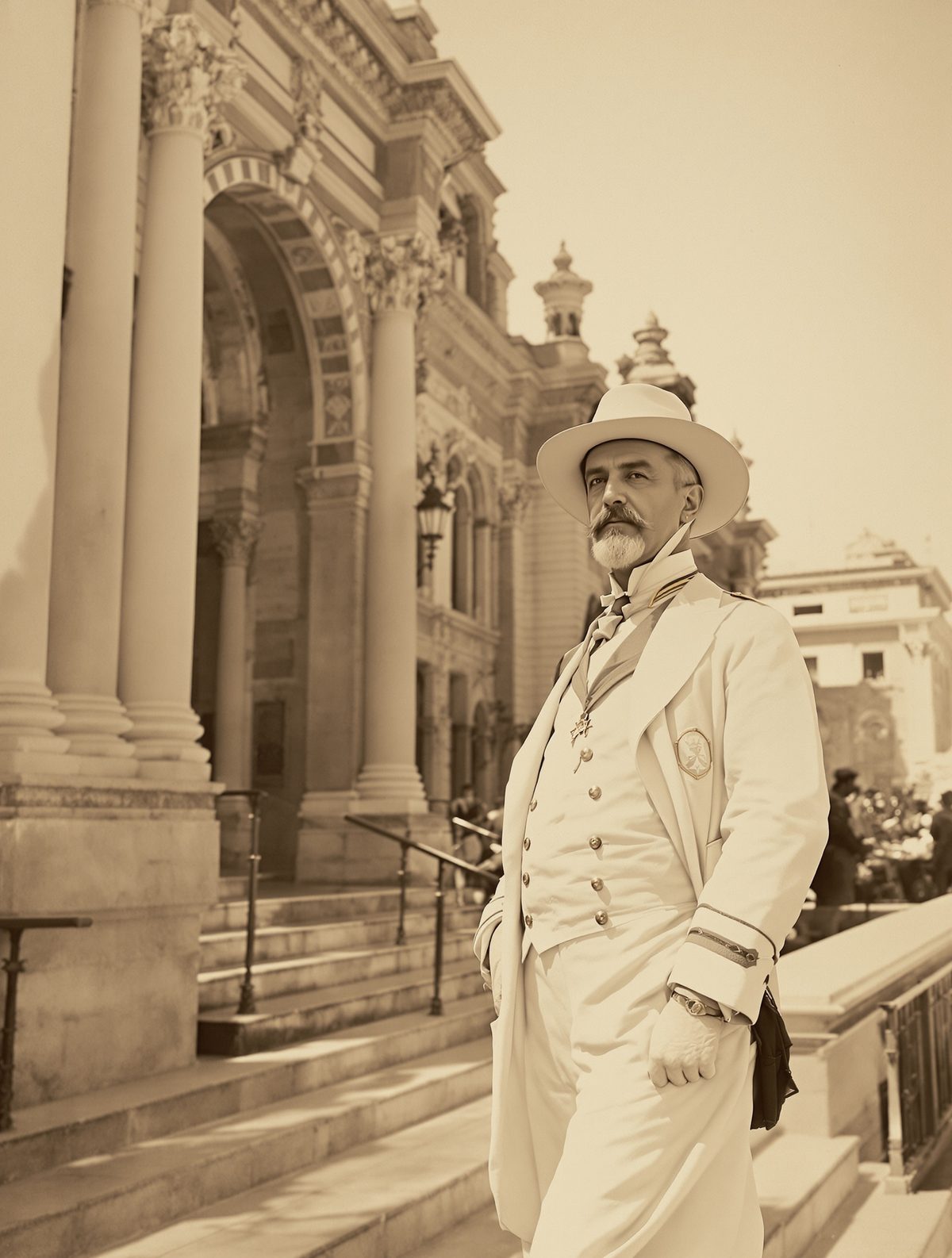
The column that departed Fort Johnston in late October 1895 was a sight to behold—a multicultural army united by a single purpose. Sikh soldiers in khaki uniforms marched alongside Yao warriors in traditional dress, while Tonga guides led the way through paths known only to local hunters. Johnston himself, a slight figure in a white sun helmet, seemed an unlikely war leader, yet his presence inspired fierce loyalty among his diverse followers.
Logistically, the expedition was a nightmare. They carried no heavy artillery to breach Mlozi's fortifications, relying instead on a few mountain guns and the tactical brilliance of Johnston's officers. Food had to be sourced from friendly villages along the route, while medical supplies were limited to what they could carry. Yet somehow, this improvised army held together across hundreds of miles of treacherous terrain.
March Through the Heart of Darkness
The journey north was an epic in itself, a grinding test of endurance through some of Africa's most challenging landscape. Johnston's route took his forces through dense miombo woodlands, across crocodile-infested rivers, and over mountain passes that existed on no European map. The October heat was brutal, reaching well over 100°F during the day, while nights brought bone-chilling cold.
Every mile revealed fresh evidence of Mlozi's atrocities. Burned villages dotted the landscape like blackened scars, their former inhabitants either dead or disappeared into slavery. The expedition passed groves where bodies hung from trees as warnings, and cleared spaces where entire communities had been slaughtered. These grim discoveries only strengthened the resolve of Johnston's growing army.
What transformed this march from mere military movement into something approaching legend was Johnston's leadership style. Unlike typical colonial officers, he walked among his men, shared their hardships, and listened to the stories of African allies who had lost everything to slave raiders. His journals from this period reveal a man genuinely moved by the suffering he witnessed, determined to end it regardless of personal cost.
The column faced constant harassment from Mlozi's scouts, who shadowed their movement and launched hit-and-run attacks. Poisoned arrows whistled from the underbrush, while false trails led advance parties into ambushes. Yet Johnston pressed forward, his force growing larger as more chiefs pledged their warriors to the campaign. By the time they neared Karonga, his "impossible" army numbered over 400 men.
The Siege of Karonga
Mlozi's stronghold at Karonga was a masterpiece of military engineering, designed by someone who understood both traditional African warfare and modern firearms. Multiple stockades ringed the central compound, each bristling with rifle ports and connected by covered trenches. The outer walls stood twelve feet high, built from massive logs and packed earth that could stop rifle bullets. Traditional European tactics would have been suicidal against such fortifications.
But Johnston had learned from previous failed assaults on Karonga. Instead of direct attack, he implemented a methodical siege, surrounding the stronghold and cutting off supply lines. His diverse force proved perfect for this strategy—Sikh soldiers provided disciplined firepower, while African allies, intimate with local terrain, prevented any escape or resupply.
The siege lasted three weeks, a deadly game of patience punctuated by fierce skirmishes. Mlozi's men, though outnumbered, fought with desperate courage, knowing that capture meant execution. They launched night raids against Johnston's camps and attempted to break the siege lines multiple times. The turning point came when Johnston's mountain guns finally breached the outer stockade, allowing assault teams to penetrate the fortress complex.
The final battle was brief but brutal. Mlozi himself, recognizing defeat, attempted to escape but was captured by Tonga warriors who had suffered under his raids for years. On December 4, 1895, after decades of terrorizing Central Africa, the slave warlord met his end. With their leader dead and his fortress in ruins, Mlozi's empire collapsed overnight.
The Price of Victory
Johnston's impossible march had succeeded beyond anyone's expectations, but victory came at a heavy cost. Nearly fifty of his men died during the campaign, victims of battle, disease, and exhaustion. The Sikh soldiers, so far from home, paid a particularly heavy price—their graves still dot the landscape around Karonga, silent testimony to their sacrifice.
The immediate impact was dramatic. Slave raiding in northern Nyasaland ceased almost overnight as Mlozi's network of allied chiefs submitted to British authority. Thousands of captives in slave stockades were liberated, though many were too traumatized or displaced ever to return home. Villages that had lived in constant terror for generations began the slow process of rebuilding.
Yet Johnston understood that military victory was only the beginning. He spent the following months establishing administrative posts throughout the region, creating a system of governance that could prevent the return of slave raiders. His approach was surprisingly progressive for the era—incorporating traditional chiefs into the colonial administration and respecting local customs where possible.
The campaign also had profound personal effects on Johnston himself. His journals from this period reveal a man deeply changed by what he witnessed, both the horrors of the slave trade and the courage of those who fought against it. He would spend the rest of his career in Africa working to develop the protectorate into something more than just another colonial exploitation.
Legacy of an Impossible March
Today, Harry Johnston's epic trek across Central Africa remains largely forgotten, overshadowed by more famous colonial campaigns and the later struggles for independence. Yet this "impossible" mission offers profound insights into one of history's most complex periods—the collision between European imperialism, African societies, and the dying slave trade.
Johnston's success wasn't just military; it was deeply human. His willingness to forge genuine alliances with African leaders, to understand local grievances, and to risk everything for people he barely knew stands in stark contrast to the typical colonial approach. The multicultural army that marched those 800 miles represented something rare in imperial history—a truly collaborative effort against a common evil.
Perhaps most remarkably, Johnston's campaign demonstrated that even in the brutal context of the "Scramble for Africa," individual choices still mattered. Faced with an impossible situation, he could have waited for reinforcements, filed reports with London, or simply ignored the crisis beyond his immediate control. Instead, he chose to act, and that choice saved thousands of lives.
In our modern world, where distant crises often seem beyond individual influence, Johnston's march reminds us that sometimes the impossible is simply the untried. Sometimes, one person's refusal to accept the unacceptable can change the course of history—one step at a time, across 800 miles of impossible terrain.