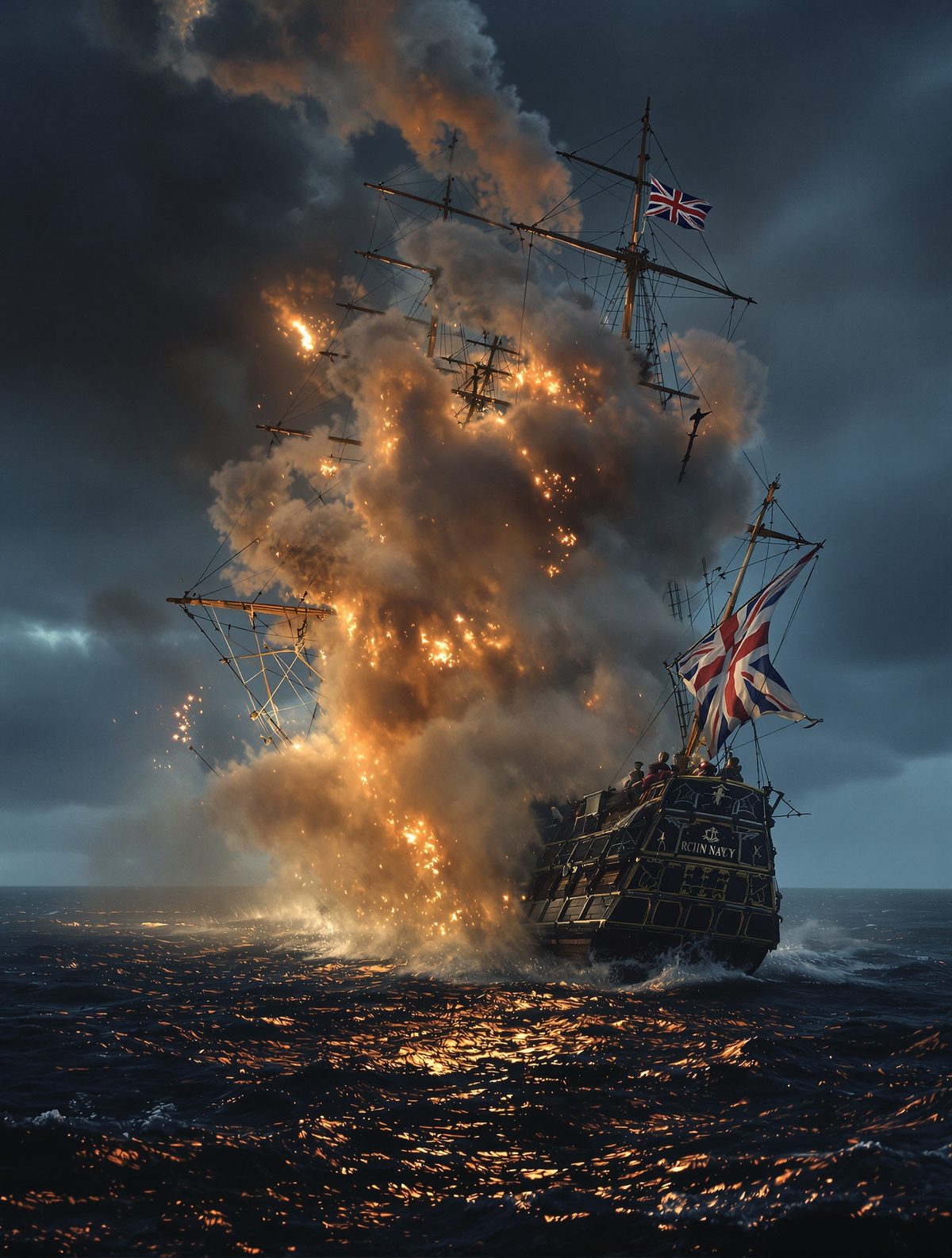
The golden galleon wallowed in the Pacific swells like a treasure-laden whale, her Spanish crew blissfully unaware that death was bearing down on them under English colors. It was November 1587, off the coast of California, and the Santa Ana—known as the "Pearl of the Pacific"—was about to make a brash young Englishman richer than most nobles. Thomas Cavendish, just 27 years old, was hours away from capturing the richest prize ever taken by an English privateer. But more than that, he was about to secure his place in history as only the second man to sail around the entire world.
What the history books rarely tell you is that this Suffolk gentleman had gambled everything—his ancestral lands, his family's fortune, his very life—on one audacious bet: that he could follow Francis Drake's legendary circumnavigation and return home wealthy enough to reshape England's destiny on the seas.
The Gentleman Gambler's Impossible Wager
In the spring of 1586, while most English gentlemen his age were content managing their estates and courting advantageous marriages, Thomas Cavendish was busy mortgaging every acre he owned. The 26-year-old had inherited substantial lands in Suffolk, but instead of settling into comfortable country life, he was seized by a fever dream that would either make him legendary or destroy him completely.
Drake's triumphant return from his circumnavigation seven years earlier had electrified England. The master privateer had departed with five ships and returned with one—but that single vessel, the Golden Hind, groaned under the weight of Spanish silver and gold worth over £400,000. It was enough treasure to fund the English navy for years and make Drake himself wealthy beyond measure.
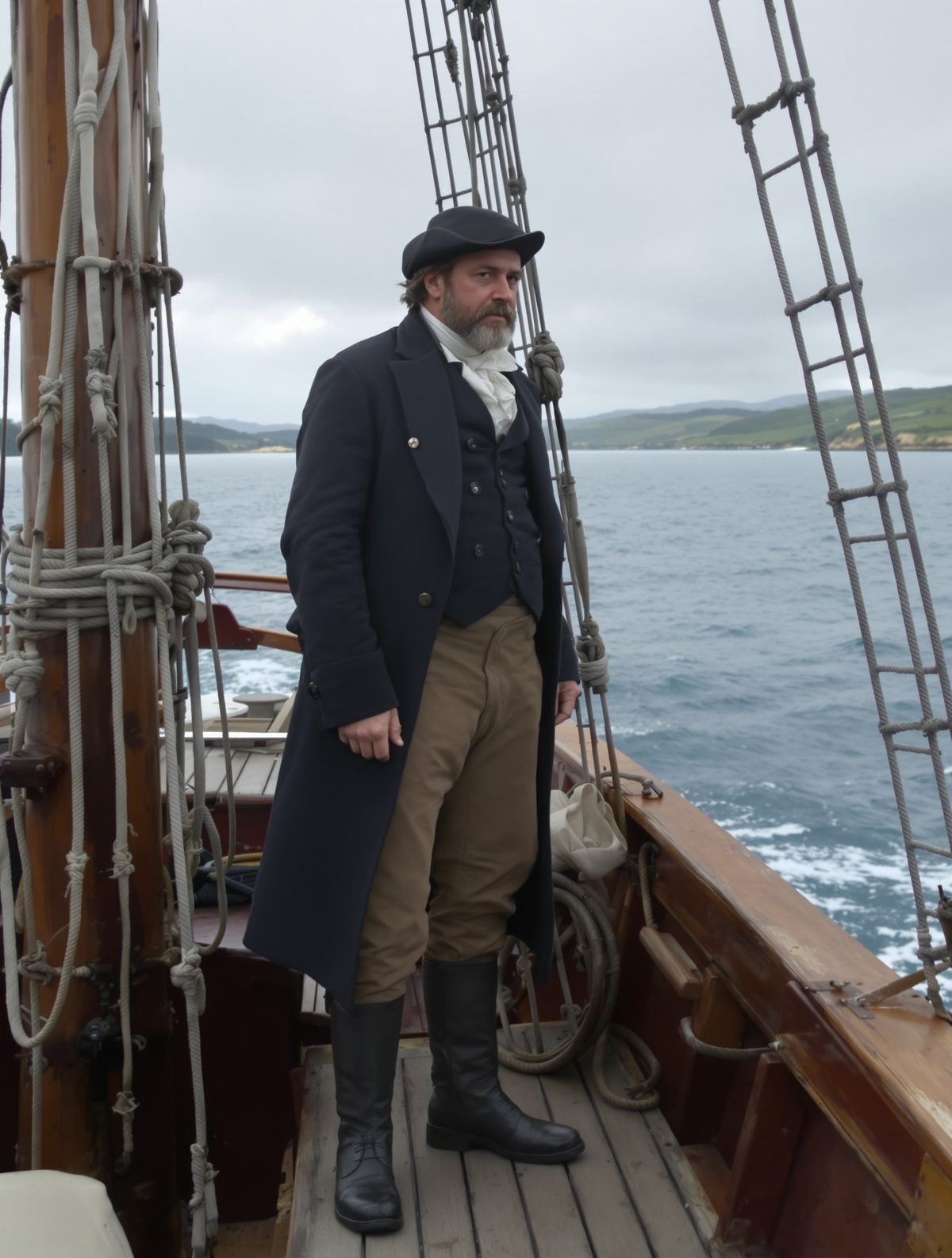
Cavendish studied every detail of Drake's voyage with obsessive intensity. But where Drake had been a seasoned mariner with decades of experience, Cavendish was essentially a wealthy amateur with more courage than sense. What he lacked in experience, however, he made up for with meticulous planning and an almost reckless determination to succeed where so many others had perished.
By July 1586, Cavendish had assembled his fleet: three ships carrying 123 men and provisions for two years. His flagship, the Desire, displaced just 140 tons—smaller than many modern yachts. The Content and Hugh Gallant were even smaller. It was an absurdly modest force with which to challenge the Spanish Empire's dominance of the Pacific Ocean.
Into the Crucible of the Southern Ocean
The passage through the Strait of Magellan nearly ended Cavendish's dreams before they truly began. This treacherous 350-mile waterway at the tip of South America had already claimed dozens of ships, and the howling winds and razor-sharp rocks showed no mercy to the English intruders. For seven weeks, Cavendish's little fleet battled through the maze of channels, islands, and deadly currents that had given the strait its fearsome reputation.
Here, in these icy waters, Cavendish lost his first ship. The Hugh Gallant, damaged beyond repair by the brutal conditions, had to be abandoned. Her crew was distributed between the two remaining vessels, cramming even more men into spaces barely adequate for their original complements.
But when the battered survivors finally burst into the Pacific in February 1587, they entered what the Spanish considered their private lake. For over half a century, Spain had grown complacent in these waters, confident that the horrors of the Strait of Magellan would keep foreign intruders at bay. Spanish ships sailed these coasts virtually undefended, their captains more concerned with storms than enemy action.
Cavendish was about to shatter that comfortable assumption with devastating efficiency.
The Pacific Reign of Terror
What followed was one of the most successful raiding campaigns in maritime history. Along the coasts of Chile and Peru, Cavendish's men fell upon unsuspecting Spanish settlements and shipping like wolves among sheep. The port of Arica yielded a small fortune in silver. At Paita, they captured vessels loaded with supplies and treasure bound for Panama.
The young English commander proved himself a master of psychological warfare. Rather than simply looting and burning, Cavendish often released captured Spanish sailors unharmed—but not before ensuring they spread word of English presence along the coast. Soon, Spanish captains were jumping at shadows, convinced that English pirates lurked behind every headland.
The most audacious raid came at the port of Pisco, where Cavendish's men brazenly sailed into the harbor in broad daylight and made off with several ships loaded with wine, silver, and silk. The Spanish authorities, caught completely off guard, could only watch helplessly as the English pirates disappeared over the horizon with their prizes.
But Cavendish had bigger prey in mind. Intelligence gathered from captured Spanish sailors told him of the Santa Ana, the great Manila galleon that made the annual run from the Philippines to Mexico loaded with Oriental treasures. This was the prize that could transform his profitable cruise into the stuff of legend.
The Prize That Changed Everything
On November 4, 1587, off the barren coast of Baja California, Cavendish's lookouts spotted the sails they had been hunting for months. The Santa Ana was a floating treasure house: 700 tons of ship crammed with Chinese silk, gold, silver, pearls, and spices worth an estimated 600,000 pesos—more than the annual revenue of many European kingdoms.
The galleon's Spanish crew, numbering nearly 200, put up fierce resistance. But the Santa Ana had been built for cargo capacity, not combat. Her few cannon were no match for the Desire's superior firepower and Cavendish's battle-hardened crew. After a running fight lasting several hours, the great galleon struck her colors in surrender.
What Cavendish found in her holds defied imagination. Chests of silver coins, bales of silk worth their weight in gold, chests of pearls, and exotic spices that commanded premium prices in European markets. The treasure was so vast that even after filling every available space aboard the Desire, Cavendish was forced to burn goods worth thousands of pounds simply because he couldn't carry them all.
In a gesture that would cement his reputation for both ruthlessness and unexpected mercy, Cavendish gave the Spanish survivors supplies and weapons before setting the emptied Santa Ana ablaze. Many Spanish accounts later praised the English captain's conduct, noting that he could easily have left them to die in the wilderness but chose honor over expedience.
The Lonely Road Home
With his ships groaning under the weight of treasure, Cavendish faced the daunting prospect of the Pacific crossing. The Content, damaged beyond repair during the capture of the Santa Ana, had to be abandoned, leaving Cavendish with just a single ship and 47 survivors from his original force of 123.
The 8,000-mile voyage across the Pacific tested every man aboard to his limits. Scurvy claimed more lives, storms battered the overladen Desire, and food ran desperately short. When they finally reached the Philippines in January 1588, Cavendish's men were skeletal shadows of the bold adventurers who had set out from England eighteen months earlier.
But the worst was yet to come. The passage around the Cape of Good Hope proved nearly fatal, with massive storms driving the Desire far off course and consuming their remaining supplies. By the time they limped into the South Atlantic, some of the crew were so weak they could barely work the sails.
On September 9, 1588—as England was still celebrating the defeat of the Spanish Armada—a single weather-beaten ship appeared in the Thames estuary. Few recognized the Desire at first; she looked more like a derelict than a returning hero. But when word spread that Thomas Cavendish had returned from circumnavigating the globe, London went mad with celebration.
The Legend That Reshaped an Empire
Cavendish's return sent shockwaves through Europe that reverberated for decades. In just over two years, this young English gentleman had proven that Spain's Pacific empire was vulnerable, that English seamanship could match any in the world, and that fortunes vast enough to fund armies could be won by those bold enough to seize them.
The financial impact was staggering. Cavendish's personal share of the treasure—conservative estimates put it at over £100,000—made him one of England's wealthiest men overnight. But more importantly, his success inspired a generation of English mariners to follow in his wake. Within a decade, English ships were regular visitors to the Pacific, and Spain's monopoly on the world's richest sea lanes was broken forever.
Yet perhaps the most remarkable aspect of Cavendish's achievement was how completely it has been overshadowed by Drake's earlier voyage. While Drake became a household name, Cavendish remains largely forgotten—a reminder that in history, as in life, being first often matters more than being better.
Today, as we live in an age of entrepreneurs who mortgage everything to chase impossible dreams, Thomas Cavendish's story resonates with surprising relevance. His willingness to risk everything on a single audacious gamble, his meticulous preparation coupled with bold execution, and his ability to succeed where more experienced rivals had failed, reads like a template for modern innovation. Sometimes the greatest victories belong not to the obvious candidates, but to those mad enough to attempt what others consider impossible.