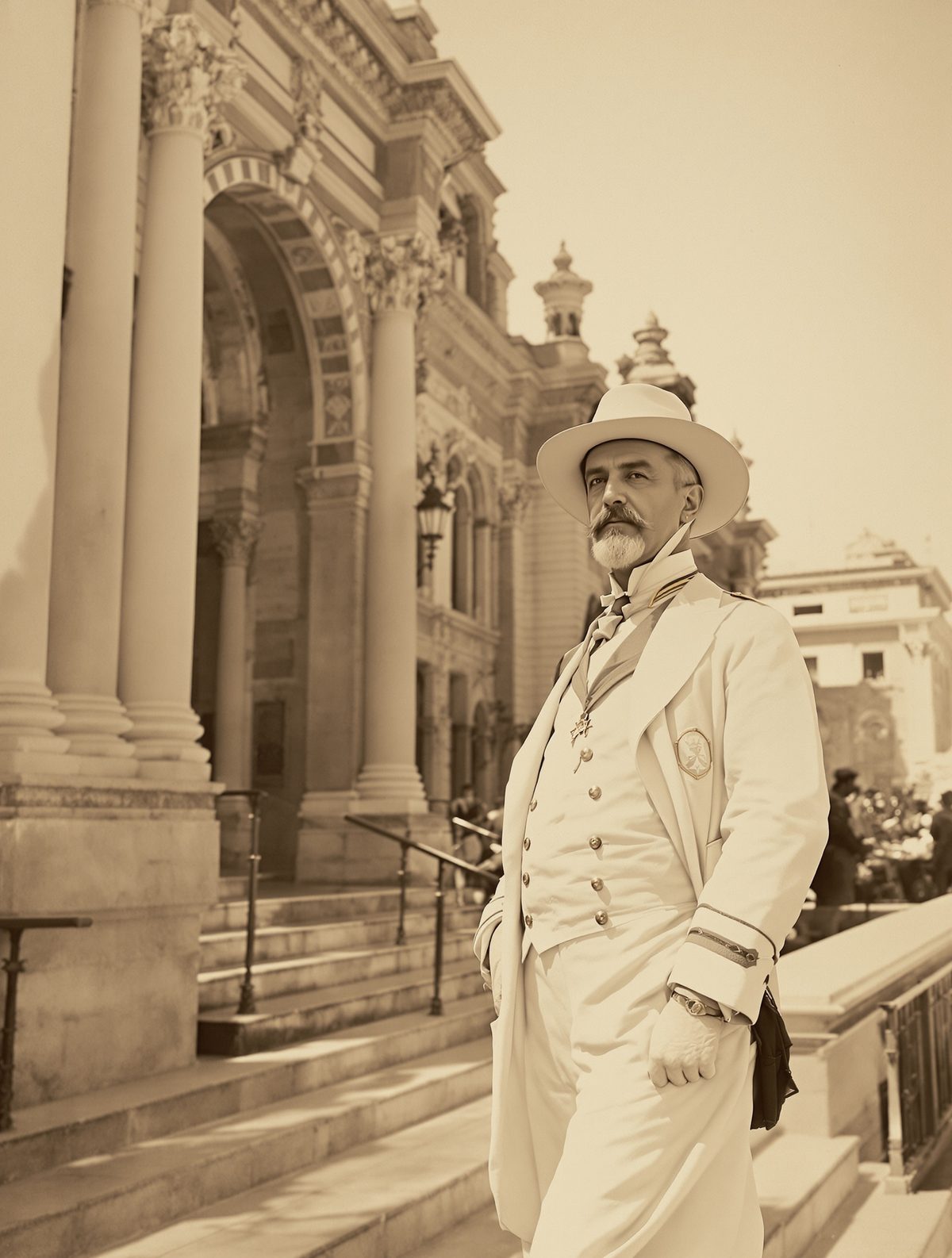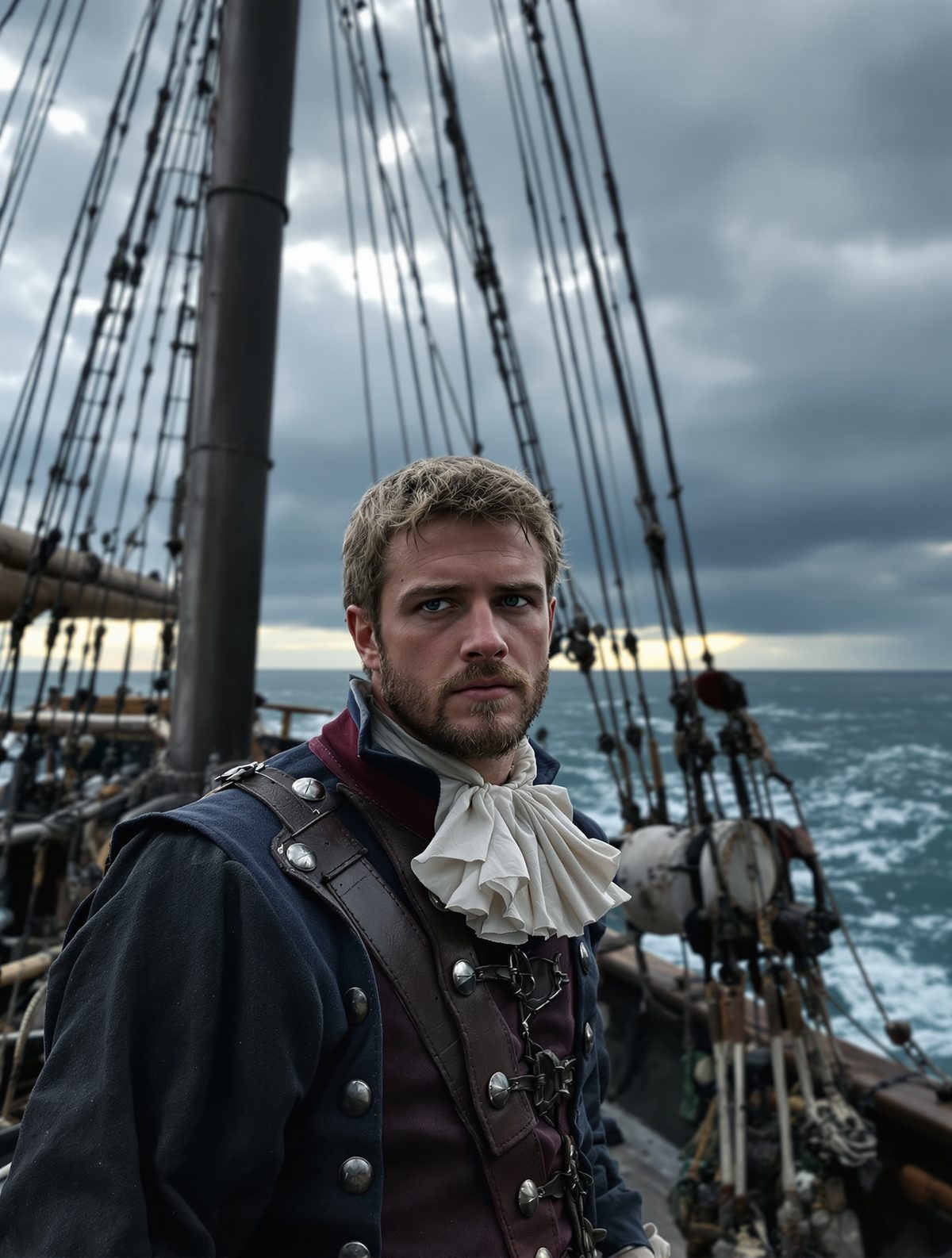
On the morning of May 15, 1915, the most feared man in the Royal Navy stormed through the corridors of Whitehall like a hurricane in admiral's stripes. Sir John "Jackie" Fisher's weathered hands clutched a letter that would either save or destroy the British Empire's naval supremacy. Behind him lay the smoking ruins of Gallipoli. Ahead waited Winston Churchill, the young First Lord of the Admiralty who had dared to cross the architect of modern naval warfare.
What happened next would send shockwaves from Downing Street to the Kaiser's palace, as Britain's greatest naval mind delivered an ultimatum that threatened to topple the government itself.
The Admiral Who Made Navies Obsolete
To understand the earthquake that shook British power that May morning, you must first grasp the phenomenon that was Jackie Fisher. Standing barely 5'6" with piercing eyes that could "see through a brick wall," Fisher had spent four decades transforming the Royal Navy from a gentlemen's club into a weapon of unparalleled destruction.
In 1904, when Fisher became First Sea Lord, naval warfare still resembled something from Nelson's era. Ships bristled with guns of every conceivable size, their crews spending more time polishing brass than preparing for battle. Fisher swept through the Admiralty like a man possessed, scrapping 154 obsolete warships in his first year alone. "Scrap the lot!" became his battle cry as he ruthlessly modernized a service choking on its own traditions.
But Fisher's masterstroke came on October 2, 1906, when HMS Dreadnought slid down the slipways at Portsmouth. Built in the unprecedented time of just one year and one day, this revolutionary battleship mounted ten massive 12-inch guns—more heavy firepower than any two ships afloat. Overnight, every navy in the world became obsolete. The Germans, French, Americans, and Japanese woke up to find their entire battle fleets turned into scrap metal by one brilliant, ruthless mind.
Fisher's innovations went far beyond big guns. He championed oil over coal, turbines over reciprocating engines, and created the battle cruiser—a new breed of warship that could outrun anything it couldn't outfight. By 1910, Britain's naval supremacy seemed unshakeable, and Jackie Fisher was hailed as the greatest naval reformer since Nelson himself.
The Uneasy Alliance
When war erupted in August 1914, Fisher had already retired once from active service, spending his time writing savage letters to politicians and designing even more terrifying warships. But as the Royal Navy struggled with unexpected challenges—German U-boats stalking British waters and the humiliating escape of the German battle cruiser Goeben—Prime Minister Asquith made a fateful decision.
On October 30, 1914, Jackie Fisher returned as First Sea Lord at age 73, his energy undimmed by retirement. Waiting for him was Winston Churchill, 39 years old and burning with ambition as First Lord of the Admiralty. On paper, it seemed the perfect partnership: the young politician's vision married to the old sailor's expertise.
The reality proved more combustible than cordite. Churchill loved grand strategic schemes and had a politician's faith in the power of will over circumstance. Fisher believed in overwhelming force applied with surgical precision—what he called "hitting first, hitting hard, and keeping on hitting." Their early collaboration produced remarkable results: the Dover Barrage that bottled up German U-boats, the Harwich Force that dominated the North Sea, and a series of technological marvels that kept Britain ahead in the naval arms race.
But beneath the surface, tensions simmered. Fisher complained that Churchill treated him like "an old fool," while the First Lord grew frustrated with his admiral's obsession with what he called "Fisher's toys"—experimental designs for massive battleships, impossible submarines, and amphibious landing craft decades ahead of their time.
The Dardanelles Disaster
The breaking point came with Churchill's pet project: forcing the Dardanelles straits and knocking Turkey out of the war with naval power alone. On paper, the plan sparkled with strategic brilliance. Capture Constantinople, open a sea route to Russia, and bring the full weight of the Ottoman Empire crashing down—all without the bloody stalemate consuming the Western Front.
Fisher's initial enthusiasm quickly curdled into horror as Churchill's "quick knock" became an endless hemorrhaging of ships, men, and Britain's naval prestige. The attack began on February 19, 1915, with the largest fleet assembled since Trafalgar pounding Ottoman forts. But mines, concealed batteries, and Turkish determination turned triumph into catastrophe.
On March 18, disaster struck. The French battleship Bouvet vanished in a thunderclap of exploding ammunition, taking 640 men to the bottom in two minutes. HMS Irresistible and Ocean followed her down, while HMS Inflexible limped away with her hull split open. In a single afternoon, the Royal Navy lost more ships than in the previous century combined.
Fisher watched his carefully hoarded naval strength bleeding away in a strategic backwater while the German High Seas Fleet grew stronger in the North Sea. "We are sending our ships to be sunk in a hole," he raged to anyone who would listen. But Churchill pressed on, convinced that one more push would break Turkish resistance and vindicate his grand strategy.
The Ramming Order
By May 1915, Fisher had reached his breaking point. The Dardanelles campaign had consumed four battleships, numerous destroyers, and thousands of lives with nothing to show but failure. Worse still, Churchill was demanding reinforcements—more ships, more guns, more of Britain's precious naval strength to be fed into what Fisher saw as a strategic black hole.
The final straw came with Churchill's latest scheme: a renewed naval assault using the newest and most powerful ships of the Grand Fleet. When the Admiralty staff began drafting orders for HMS Queen Elizabeth—Britain's most advanced super-dreadnought—to lead another attack, Fisher exploded.
In a scene witnessed by terrified junior officers, the 73-year-old admiral stormed into the map room where Churchill was planning his next move. "You want naval action?" Fisher reportedly shouted, his voice carrying through the Admiralty's marble halls. "I'll give you naval action that will end this madness once and for all!"
What Fisher proposed was breathtaking in its audacity. Rather than waste more ships battering Turkish forts, he would order the entire Mediterranean Fleet to ram the blocking boom across the Dardanelles narrows at full speed. The massive steel chains and floating mines would be swept aside by the sheer momentum of Britain's dreadnoughts, their reinforced bows designed to punch through any obstacle.
It was a plan born of desperation and genius in equal measure. Fisher had calculated that three or four ships might be damaged, possibly sunk, but the remainder would break through into the Sea of Marmara and appear off Constantinople within hours. The psychological shock alone might collapse Turkish resistance and justify the entire campaign.
The Ultimatum That Shook an Empire
Churchill rejected Fisher's ramming plan as "naval suicide," but the damage was done. The confrontation had revealed the complete breakdown of trust between Britain's two most important naval leaders. On May 15, 1915, Fisher made his move.
His letter of resignation landed on Churchill's desk like a bombshell: "I am unable to remain any longer as your colleague... I am off to Scotland at once so as to avoid all questionings." But this was no ordinary resignation. Fisher had copies sent simultaneously to the Prime Minister, the King, and key members of Parliament, each one detailing Churchill's "reckless gambling" with Britain's naval supremacy.
The political explosion was immediate and devastating. The Conservative opposition, already suspicious of Churchill's judgment, seized on Fisher's resignation as proof of Admiralty incompetence. Within hours, Asquith's Liberal government faced a confidence crisis that threatened to bring down the entire war effort.
Fisher's timing was masterful and ruthless. He knew that losing the Royal Navy's most famous admiral would trigger a political earthquake, and he was proven right. By May 17, Asquith was forced to form a coalition government to survive. Churchill, the casualty of Fisher's perfectly calculated mutiny, was demoted to a minor Cabinet post before resigning entirely to command an infantry battalion in France.
The Thunder That Still Echoes
Fisher's dramatic exit changed more than just British politics—it marked the end of an era when individual genius could reshape global power. His dreadnoughts had made Britain the undisputed mistress of the seas, but his final confrontation with Churchill revealed the tensions between military expertise and political vision that continue to define democratic warfare.
The ramming plan that Fisher proposed in his final days at the Admiralty was never executed, but it embodied his lifelong philosophy: when facing an insurmountable obstacle, don't chip away at it—smash through it with overwhelming force. That same mindset had revolutionized naval warfare, built the most powerful fleet in history, and ultimately brought down the government that had recalled him to service.
Today, as political leaders and military commanders navigate equally treacherous waters, Fisher's dramatic last stand offers a stark reminder: in the end, even the most brilliant strategic minds are only as powerful as the politicians who control them. The admiral who made the world's navies obsolete was himself made obsolete by the very system he had served with such devastating effectiveness.
The dreadnoughts Fisher built would go on to win the war, but the man himself had already fired his final, most destructive salvo—not at the enemy, but at the heart of British power itself.