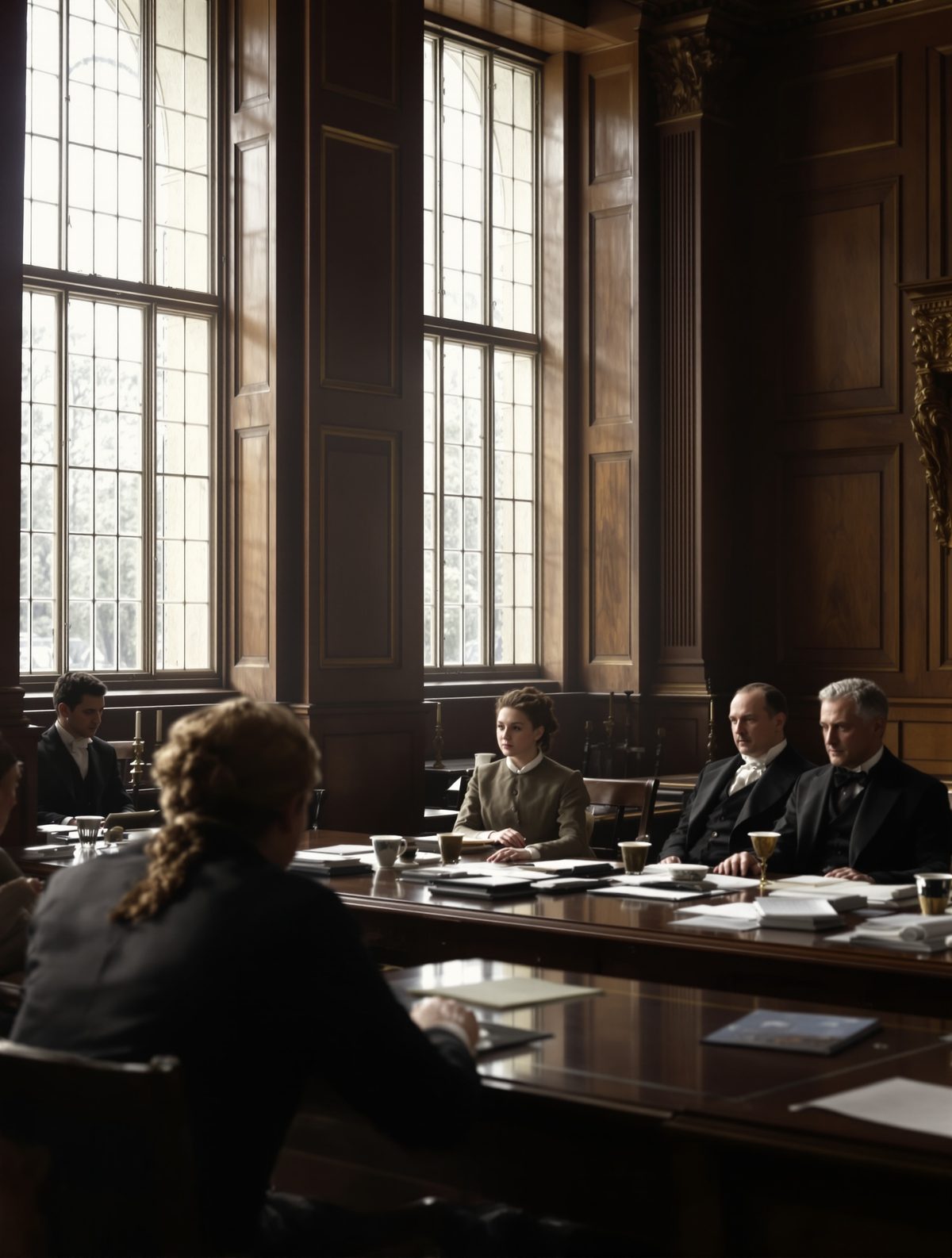
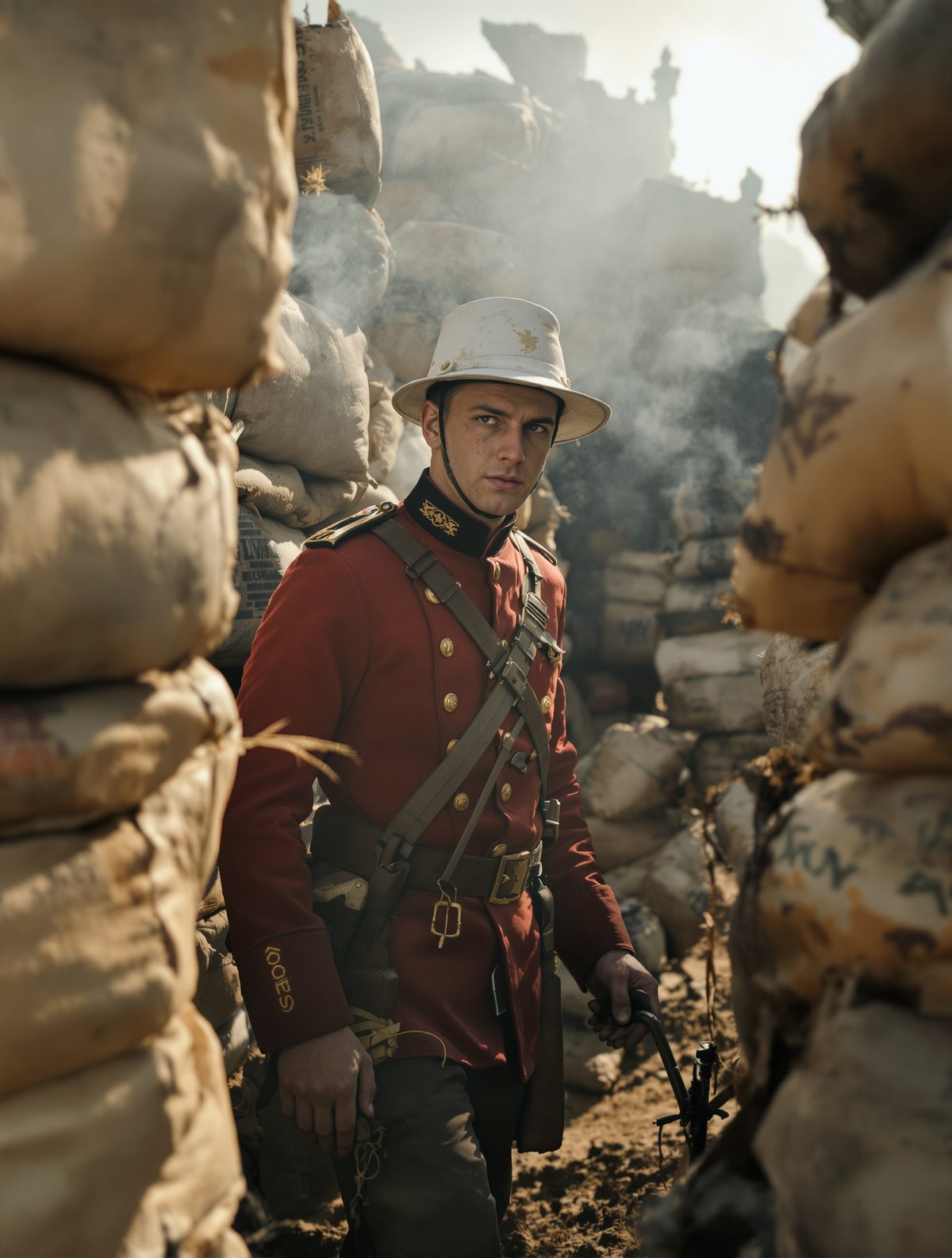
The clock on Big Ben chimed midnight as Lord Carrington sat alone in his wood-paneled Foreign Office study, the weight of empire's twilight heavy on his shoulders. Outside his window, London slept peacefully, unaware that on a cluster of windswept islands 8,000 miles away, Argentine marines were storming ashore under cover of darkness. Within forty-eight hours, this decorated war hero who had survived Normandy's beaches would make a decision that would震shock Westminster to its core—and inadvertently save Margaret Thatcher's political career.
It was April 2nd, 1982, and the last great act of ministerial honor in British politics was about to unfold.
The Gathering Storm in the South Atlantic
Peter Alexander Rupert Carington—the 6th Baron Carrington—was no stranger to crisis. At twenty-four, he'd commanded a tank squadron in the Normandy landings, earning the Military Cross for gallantry. Now, at sixty-three, he was Margaret Thatcher's Foreign Secretary, a role he'd assumed with the confidence of someone who'd navigated the treacherous waters of post-war diplomacy for decades.
But nothing had prepared him for the intelligence reports flooding into Whitehall that cold April morning. At 4:30 AM London time, the first coded telegram arrived from Port Stanley, the tiny capital of the Falkland Islands: "Argentine forces landing at Mullet Creek. Governor's residence under attack."
The Falklands—or Las Malvinas, as Argentina called them—had been a diplomatic thorn in Britain's side for years. These 778 islands, home to just 1,820 people and 600,000 sheep, seemed an unlikely cause for war. Yet here was Argentina's military junta, led by General Leopoldo Galtieri, gambling their regime's survival on reclaiming what they considered stolen territory.
What made Carrington's blood run cold wasn't just the invasion itself—it was how completely his intelligence services had failed to predict it. Despite mounting Argentine rhetoric and suspicious naval movements, the Foreign Office had dismissed the threat as mere saber-rattling. Now, as reports poured in of Argentine flags flying over Government House in Port Stanley, the magnitude of this miscalculation became devastatingly clear.
A Gentleman's War Cabinet
By 7:30 AM, an emergency meeting of the War Cabinet was convened in the windowless basement of 10 Downing Street. The scene would have been comical if the stakes weren't so high: Britain's political elite, many still in yesterday's clothes, huddled around maps of islands most had never heard of before breakfast.
Margaret Thatcher, the Iron Lady herself, was furious. Her approval ratings had plummeted to just 23%—the lowest of any post-war Prime Minister. Her economic policies had triggered riots in Liverpool and Brixton. She needed a crisis like a hole in the head. Yet here she was, facing the first invasion of British sovereign territory since World War II on her watch.
"How," she demanded, her voice cutting through the room like a blade, "were we caught so completely off guard?"
All eyes turned to Carrington. The aristocratic Foreign Secretary, impeccably dressed even in crisis, felt the weight of centuries of British diplomatic tradition on his shoulders. In the gentleman's world of Westminster politics, there were unwritten rules: ministers took responsibility for their departments' failures, even when—especially when—the failures weren't entirely their own fault.
Defense Secretary John Nott shifted uncomfortably in his seat. His ministry had proposed withdrawing HMS Endurance, the Royal Navy's only permanent presence in the South Atlantic, as a cost-cutting measure. The signal this sent to Argentina was unmistakable: Britain was abandoning its commitment to the Falklands. Yet Nott would survive the crisis. Carrington, whose crime was trusting his intelligence services, would not.
The 48-Hour Countdown
What happened next unfolded with the inexorable rhythm of a Greek tragedy. As news of the invasion broke across Britain's breakfast tables, public outrage was swift and merciless. The tabloids screamed for blood. The Sun's headline was typically subtle: "ARGIES INVADE: IT'S WAR!"
In Parliament, the mood was volcanic. MPs who couldn't locate the Falklands on a map yesterday were now demanding to know how Britain's mighty intelligence apparatus had been caught napping. Opposition leader Michael Foot, usually more comfortable discussing socialism than military strategy, delivered a withering attack on the government's incompetence.
Behind the scenes, Carrington was conducting his own brutal post-mortem. The intelligence failures were staggering: satellite photos of Argentine naval preparations had been misinterpreted; diplomatic signals had been ignored; even the governor of the Falklands' increasingly panicked dispatches had been downplayed by Foreign Office mandarins who thought they knew better.
But perhaps most damaging was a conversation that never happened. On March 31st—just two days before the invasion—Carrington had been scheduled to speak with U.S. Secretary of State Alexander Haig, who had intelligence suggesting an imminent Argentine attack. The call was postponed. Those forty-eight hours might have changed everything.
The Honor of Resignation
By the evening of April 3rd, Carrington had made his decision. In his elegant Belgravia townhouse, he drafted a letter that would end his political career and, paradoxically, save his Prime Minister's government.
The resignation letter was a masterpiece of understated British honor: "The Argentine invasion of the Falkland Islands has led to strong criticism in Parliament and the press of the Government's policy. In my view, much of the criticism is unfounded. However, I have been responsible for the conduct of that policy and I think it right that I should resign."
What made this moment extraordinary wasn't just Carrington's willingness to fall on his sword—it was the speed with which he did it. In modern politics, ministers cling to office like barnacles to a ship's hull, requiring dynamite to dislodge them. Carrington resigned within forty-eight hours of learning about the invasion, before the full scope of the intelligence failures had even been investigated.
His junior ministers, Richard Luce and Humphrey Atkins, resigned alongside him in a gesture of solidarity that seems quaint by today's standards. Three political careers ended in a single afternoon, a blood sacrifice to the ancient god of ministerial responsibility.
The Iron Lady's Inadvertent Salvation
Carrington's resignation accomplished something he never intended: it saved Margaret Thatcher's government. By taking responsibility for the Foreign Office's failures, he deflected criticism from the Prime Minister herself. The opposition's fury had a target, and that target had already resigned. The political heat that might have consumed Thatcher instead dissipated with Carrington's departure.
The irony was exquisite. Thatcher privately pleaded with Carrington to stay, knowing his experience and steady hand would be invaluable in the crisis ahead. But Carrington was unmovable. "The Foreign Secretary cannot stay when his department has so manifestly failed," he told her with characteristic bluntness.
Within hours of his resignation, Thatcher appointed Francis Pym as the new Foreign Secretary and set in motion the largest naval task force Britain had assembled since World War II. Eight thousand miles of ocean lay between Portsmouth and Port Stanley, giving the government precious weeks to transform a humiliating defeat into what would become, seventy-four days later, a triumphant victory.
The Last Gentleman of Whitehall
Today, Lord Carrington's resignation reads like a artifact from a vanished civilization—a time when politicians valued honor over survival, when taking responsibility wasn't just a slogan but a sacred duty. In an era where ministers routinely survive scandals that would have triggered immediate resignations in 1982, Carrington's swift exit seems almost incomprehensible.
Yet perhaps that's precisely why it matters. The Falklands War that followed would define Margaret Thatcher's legacy and reshape British politics for a generation. But it was Carrington's quiet act of honor in those chaotic forty-eight hours that made the victory possible. By absorbing the blame and walking away, this last gentleman of Whitehall performed his greatest service to the nation he had served since D-Day.
The islands are still British. The sheep still outnumber the people. And somewhere in Westminster's gilded corridors, the ghost of true ministerial responsibility still wanders, a reminder of what politics looked like when honor mattered more than survival.