The acrid smell of gunpowder hung thick in the stifling African air as 24-year-old Colour Sergeant Frank Bourne peered through the smoke at what remained of his makeshift fortress. Bodies of Zulu warriors lay scattered across the mission station's courtyard, but still they came—wave after relentless wave, their cow-hide shields glinting in the dying light. For twelve hours, 150 British soldiers had held off 4,000 of the most feared warriors in Africa. Now, as darkness approached on January 22nd, 1879, Bourne found himself commanding the final defensive line at a remote trading post that would become the stuff of legend: Rorke's Drift.
The Boy Who Became a Legend Before His 25th Birthday
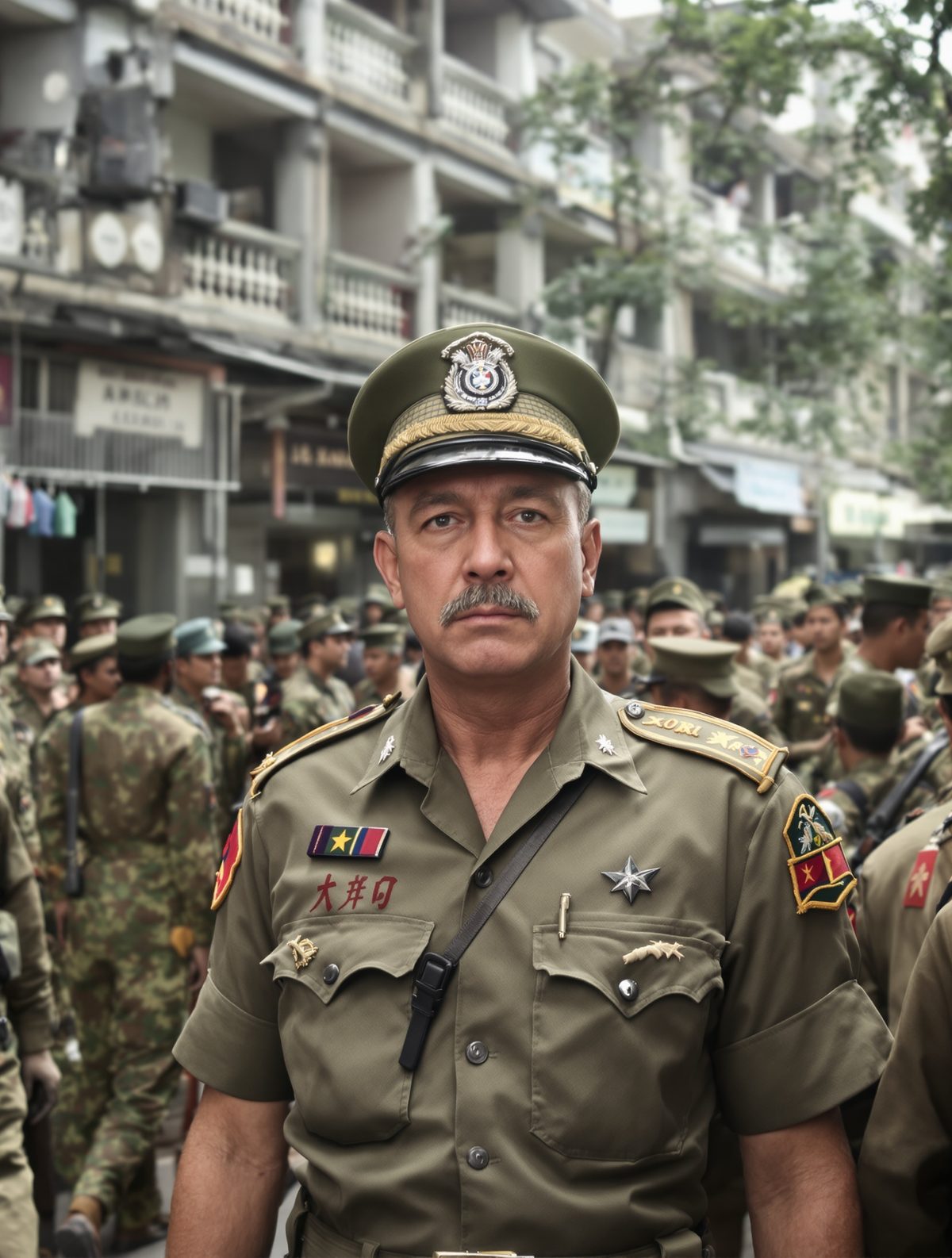
Frank Edward Bourne was an anomaly in Queen Victoria's army—a colour sergeant at just 24 years old, the youngest man ever to hold that rank in British military history. Standing barely 5'6" with piercing blue eyes and a carefully waxed moustache, he hardly looked the part of a military hero. But appearances, as the Zulu would soon discover, could be devastatingly deceiving.
Born in Balcombe, Sussex, Bourne had enlisted as a private at 18, driven more by economic necessity than patriotic fervor. The army offered regular meals and steady pay—luxuries for a working-class lad in Victorian England. His rapid promotion through the ranks of the 24th Regiment of Foot (later the South Wales Borderers) spoke to an unusual combination of intelligence, discipline, and natural leadership that his superiors couldn't ignore.
On that fateful January morning, as news arrived that the main British force had been catastrophically defeated at nearby Isandlwana, Bourne faced a choice that would define not just his life, but military history itself. With over 1,300 British soldiers dead at Isandlwana—the worst defeat in British colonial history—retreat seemed the only sensible option. Instead, Lieutenant John Chard and Lieutenant Gonville Bromhead made the audacious decision to stand and fight at the mission station. Bourne would help turn their desperate gamble into the most decorated single action in British military annals.
Fortress of Biscuit Boxes and Mealie Bags
What transformed Rorke's Drift from certain massacre into miraculous victory wasn't superior firepower or numbers—it was Bourne's genius for improvised fortification. Working frantically as Zulu scouts appeared on the surrounding hills, the young colour sergeant orchestrated the construction of defensive walls using whatever was at hand: 200-pound mealie bags (corn sacks), biscuit boxes, and even the mission's own furniture.
The "fortress" they created was laughably small—barely 50 yards square—but it was positioned with tactical brilliance. Bourne understood that in close-quarters combat, every angle mattered. The hospital building formed one corner of their perimeter, while a storehouse anchored another. Between them, walls of stacked supplies created killing fields where the defenders' Martini-Henry rifles could pour devastating fire into attacking formations.
Here's what the history books rarely mention: the makeshift fort was constructed in less than four hours, and many of the "walls" were only chest-high. What made them effective wasn't their height, but Bourne's positioning of firing steps that allowed defenders to shoot over the barriers while remaining largely protected. It was field engineering at its most creative—and deadly.
The Storm Breaks: Twelve Hours of Thunder
At 4:30 PM on January 22nd, the storm broke. Four thousand Zulu warriors of the Undi and uThulwana regiments swept down from the Oscarberg hill like a black tide, their war cries echoing across the valley. These weren't untrained tribesmen—they were elite soldiers of King Cetshwayo's army, fresh from their stunning victory at Isandlwana, carrying British rifles stripped from the dead.
What followed was twelve hours of the most intense close-quarters combat in colonial warfare. The Zulu, frustrated by their inability to break the British line with mass charges, adapted their tactics with frightening intelligence. They set fire to the hospital roof, forcing the defenders to evacuate wounded men room by room while fighting hand-to-hand combat in smoke-filled corridors.
Bourne was everywhere at once—directing fire, organizing ammunition supplies, and personally manning the most dangerous positions. When Private Henry Hook was trapped in the burning hospital with several patients, it was Bourne who organized the rescue, hacking through interior walls with axes while Zulu warriors tried to break down the doors.
The fighting was so close that defenders could see the expressions on their attackers' faces. Assegai spears thrust between gaps in the mealie bag walls, while British bayonets jabbed back. The sound was deafening—not just gunfire, but the constant thunk of spear points hitting sack-cloth, the crash of bodies against barriers, and the shouted commands that kept the defense coordinated in the chaos.
The Final Line: When Heroes Are Made
By midnight, the situation was desperate. The hospital was lost, ammunition was running dangerously low, and the defensive perimeter had been compressed to less than half its original size. This was when Bourne truly came into his own, organizing the construction of a final defensive line using biscuit boxes as the Zulu pressed their advantage.
What happened next became military legend. Rather than simply holding their ground, Bourne led a series of tactical withdrawals, each one drawing the Zulu deeper into killing zones while conserving ammunition and maintaining unit cohesion. It was textbook defensive warfare executed under impossible conditions by a 24-year-old who had learned his craft through experience rather than military college.
The turning point came around 2 AM when the Zulu attacks began to lose their coordination. Exhausted after ten hours of continuous assault, even these elite warriors couldn't maintain their earlier intensity. Bourne recognized the shift immediately and organized counter-attacks that drove the Zulu back from the inner walls, buying precious breathing space for the defenders.
The most remarkable aspect of Bourne's leadership wasn't his tactical skill—it was his ability to keep 150 terrified men fighting as a cohesive unit through the longest night of their lives. He moved constantly along the defensive line, his calm presence and steady commands providing the psychological anchor that prevented panic from destroying their defense.
Dawn and the Price of Glory
As the African sun rose on January 23rd, 1879, an eerie silence fell over Rorke's Drift. The Zulu had withdrawn during the pre-dawn hours, leaving behind over 400 dead warriors scattered around the mission station. British casualties were remarkably light—17 killed and 15 wounded—but every defender bore the psychological scars of their ordeal.
What they had accomplished was unprecedented: 150 men had successfully defended against 4,000 for twelve continuous hours, inflicting casualties at a ratio that defied military logic. When Lord Chelmsford arrived with a relief column later that morning, he found the defenders still manning their improvised walls, uncertain whether the withdrawal was tactical or final.
The aftermath brought recognition that reflected the battle's extraordinary nature. Eleven Victoria Crosses were awarded for the action at Rorke's Drift—the most ever given for a single engagement. Bourne received the Distinguished Conduct Medal, a decision that historians still debate, as many argue his leadership merited the highest decoration.
But perhaps the most telling recognition came from an unexpected source: Zulu survivors later spoke with genuine respect about the "young chief" who had commanded the defense with such skill. In a warrior culture that prized military prowess above all else, this was praise of the highest order.
The Long Shadow of a Single Day
Frank Bourne lived to be 91, dying in 1945—meaning he witnessed both world wars and saw warfare transformed beyond recognition. Yet he remained forever associated with those twelve hours in 1879 when superior tactics, unshakeable courage, and inspired leadership overcame impossible odds.
His story matters today not just as military history, but as a study in crisis leadership under extreme pressure. Bourne succeeded where others might have failed because he combined tactical intelligence with genuine care for his men's welfare—a leadership philosophy that remains relevant in any high-stakes environment.
The young colour sergeant who held the final line at Rorke's Drift reminds us that extraordinary circumstances don't create heroes—they simply reveal them. In an age when we often conflate celebrity with genuine achievement, Frank Bourne's quiet competence and moral courage offer a different model of what true leadership looks like when everything depends on getting it right.
The greatest irony? The man who orchestrated one of the most famous defensive actions in military history spent the rest of his career trying to avoid the spotlight, preferring to let his actions speak for themselves. Perhaps that, more than anything, explains why he was exactly the right person to command that final line when dawn seemed like it might never come.