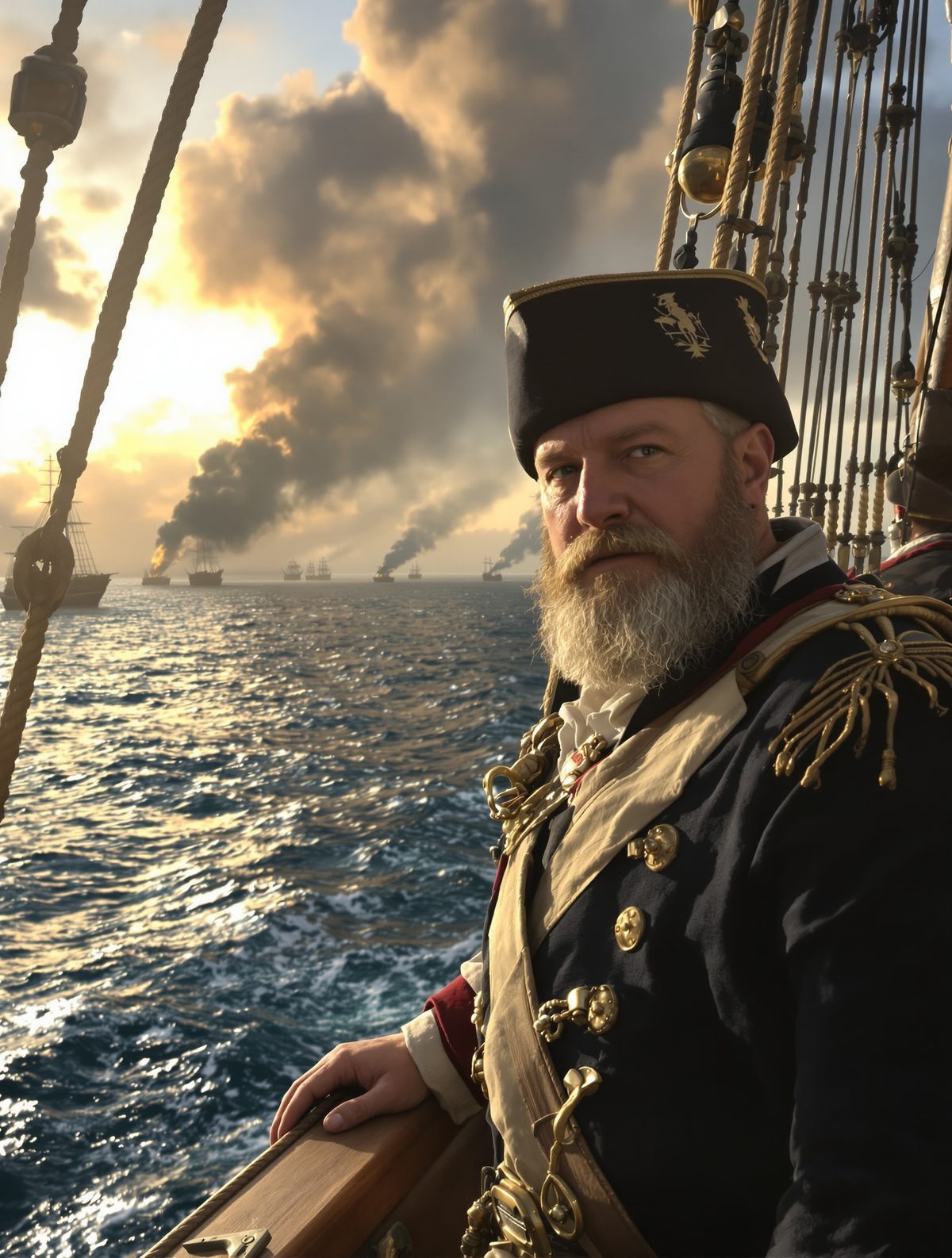
The steam whistle of HMS Pioneer echoed across the muddy waters of the Shire River as Commissioner Harry Johnston squinted through the African haze. It was March 1891, and this single gunboat—barely 120 feet long—represented the entire military might of the newly declared British Central Africa Protectorate. Ahead lay a territory the size of England, controlled by Arab slave traders who had turned entire populations into human commodities. Behind Johnston sat treaties with local chiefs who were desperately hoping this lone Englishman could deliver them from decades of terror.
What happened next would reshape the map of Africa—not through the typical colonial bloodbath, but through one of history's most audacious diplomatic gambles.
The Slave Coast's Reign of Terror
To understand Johnston's impossible mission, you need to picture Malawi in 1891. For over fifty years, Arab slave traders from the Swahili coast had established a network of terror across the region. Led by men like Mlozi bin Kazbadema, they had built fortified stockades from which they raided villages, capturing men, women, and children for the Indian Ocean slave trade.
The numbers were staggering. Conservative estimates suggest that between 1840 and 1890, over 20,000 people were enslaved annually from the Lake Malawi region alone. But the true horror lay in the wastage—for every person who survived the march to the coast, three or four died from violence, disease, or exhaustion. Entire ethnic groups faced extinction.
The local Tonga, Yao, and Ngoni peoples found themselves caught in an impossible situation. Some chiefs collaborated with the slavers for protection; others fought hopeless battles against superior firepower. Villages emptied as people fled to remote islands in Lake Malawi or hid in mountain caves. The Scottish missionary David Livingstone had described the region as "one long graveyard" filled with human bones bleaching in the African sun.
An Unlikely Champion Arrives
Harry Hamilton Johnston was not your typical Victorian empire-builder. At just 33, this former art student and amateur botanist had already explored the Congo and negotiated treaties on the Zambezi. Unlike many of his contemporaries, Johnston spoke fluent Swahili and Portuguese, had studied local customs extensively, and—most unusually for a British official—seemed genuinely concerned about African welfare.
When the Foreign Office handed him control of the new British Central Africa Protectorate in 1891, they gave him a budget of just £10,000 annually and minimal military support. His "army" consisted of 71 Indian soldiers, a handful of British officers, and that single gunboat. His orders were deceptively simple: establish British authority, end the slave trade, and somehow turn a profit through legitimate commerce.
What made Johnston extraordinary was his strategy. Instead of the typical colonial approach of imposing rule through superior firepower, he decided to position himself as a liberator. He would forge alliances with African chiefs against their common enemy—the Arab slave traders.
The Gunboat Diplomacy Masterclass
Johnston's first stop was Fort Johnston (now Mangochi), where he established his headquarters and began reaching out to local chiefs. His message was revolutionary for its time: Join with Britain, and we will protect you from the slavers. Keep your land, keep your customs, but help us drive out those who would steal your people.
The response was immediate and dramatic. Chief after chief arrived at Fort Johnston to sign treaties of protection. Within six months, Johnston had secured agreements with over 300 chiefs across the territory. These weren't the typical colonial treaties that stripped Africans of their land—they were mutual defense pacts that recognized traditional authority while establishing British oversight.
But the real test came when Johnston had to face down the slave traders themselves. In August 1891, he received word that Mlozi—the most powerful Arab trader in the north—was fortifying his stockade at Karonga and threatening to massacre any chief who had allied with the British.
Johnston's response was breathtaking in its audacity. He loaded HMS Pioneer with his entire mobile force—just 26 men—and steamed north across Lake Malawi. When he reached Karonga, he found Mlozi's fortress bristling with weapons and defended by over 1,000 fighters.
The Siege That Changed Everything
What followed was less a battle than a psychological warfare masterpiece. Johnston anchored the Pioneer within range of Mlozi's stockade and sent an ultimatum: surrender and face trial, or be destroyed. When Mlozi refused, Johnston began a methodical bombardment with the gunboat's seven-pounder cannons.
For three days, the tiny British force maintained their siege. The psychological effect was enormous—hundreds of Mlozi's followers began deserting, unwilling to face the mysterious power of British artillery. Local chiefs who had been terrified of the slave trader suddenly found courage, arriving with warriors to join Johnston's force.
The breakthrough came when several of Mlozi's own lieutenants switched sides, opening the stockade gates during the night of October 4, 1895. Mlozi himself was captured, tried for murder and slave trading, and executed—bringing an end to the most powerful slaving operation in the region.
But here's the remarkable part: Johnston's total casualties in this campaign that liberated tens of thousands of people? Just three men wounded. The Arab slaving network that had terrorized the region for half a century collapsed almost overnight, not through massive military might, but through a combination of strategic alliances, psychological pressure, and precise application of force.
The Treaty That Built a Nation
Johnston's genius wasn't just military—it was administrative. Instead of imposing direct British rule, he created what historians now recognize as one of colonial Africa's most successful indirect rule systems. Traditional chiefs retained authority over customary law, land allocation, and local governance. British authority focused on ending the slave trade, establishing legitimate commerce, and maintaining peace between different ethnic groups.
The results were extraordinary. Within five years, the population of the protectorate had stabilized and begun growing again. Markets reopened, agriculture expanded, and legitimate trade in ivory, rubber, and coffee began generating revenue. Most surprisingly, Johnston's administration became one of the few colonial territories that actually turned a profit for the British treasury.
By 1896, when Johnston's term ended, he had established a functioning government, built a network of roads and telegraph lines, and created the foundation for what would become modern Malawi—all with minimal bloodshed and remarkable cooperation from the local population.
The Legacy of an Unlikely Liberation
Johnston's conquest of Malawi offers a fascinating counterpoint to the typical narrative of African colonization. Here was a case where European intervention genuinely liberated Africans from a more immediate and devastating oppression. The Arab slave trade had killed or enslaved hundreds of thousands; Johnston's administration, whatever its flaws, ended that nightmare.
Yet the story also reveals the complex moral landscape of the Scramble for Africa. Johnston may have been a liberator, but he was still an agent of empire, imposing foreign rule and eventually paving the way for less enlightened colonial policies. The chiefs who signed his treaties in 1891 probably didn't foresee that their grandchildren would be fighting for independence from the very power they had welcomed as protectors.
Today, as we grapple with questions about humanitarian intervention and the responsibility to protect vulnerable populations, Johnston's Malawi experiment offers both inspiration and caution. It shows that outsiders can sometimes make a genuine difference in stopping atrocities—but it also reminds us that even well-intentioned interventions create new forms of dependency and control.
The gunboat Pioneer may have sailed away over a century ago, but the questions it raised about power, protection, and the price of peace remain as relevant as ever.