The acrid smell of gunpowder hung thick in the Beijing air as Major Claude MacDonald peered through the shattered window of the British Legation. It was July 20th, 1900, and what he saw beyond the compound walls would have broken lesser men: an ocean of red headbands and glinting spears stretching to the horizon. Twenty thousand Boxer rebels, their faces painted with mystical symbols they believed made them bulletproof, surrounded the diplomatic quarter. Behind them, the yellow banners of Imperial Chinese troops fluttered ominously. MacDonald had exactly 409 men—diplomats, guards, and volunteers—to defend eleven nations' legations against impossible odds. No relief column was coming. The nearest friendly forces were 80 miles away, and for all he knew, the outside world believed they were already dead.
What happened next would become one of the most extraordinary sieges in imperial history, yet it remains largely forgotten—overshadowed by grander battles and more famous generals. But for 55 days, this Scottish major's decisions would determine whether European influence in China survived or crumbled forever.
The Storm Clouds Gather
To understand how MacDonald found himself in this impossible position, we must step back to the powder keg that was China in 1900. The Qing Dynasty was crumbling under the weight of foreign interference, opium addiction, and repeated military humiliations. Into this volatile mix stepped the Yihetuan—the "Righteous and Harmonious Fists"—known to foreigners as the Boxers.
These weren't your typical rebels. The Boxers practiced martial arts rituals they believed granted supernatural powers. They claimed their mystical boxing made them invulnerable to bullets and capable of flying through the air. More importantly, they channeled decades of Chinese rage against foreign missionaries, traders, and diplomats who had carved up their country like a Thanksgiving turkey.
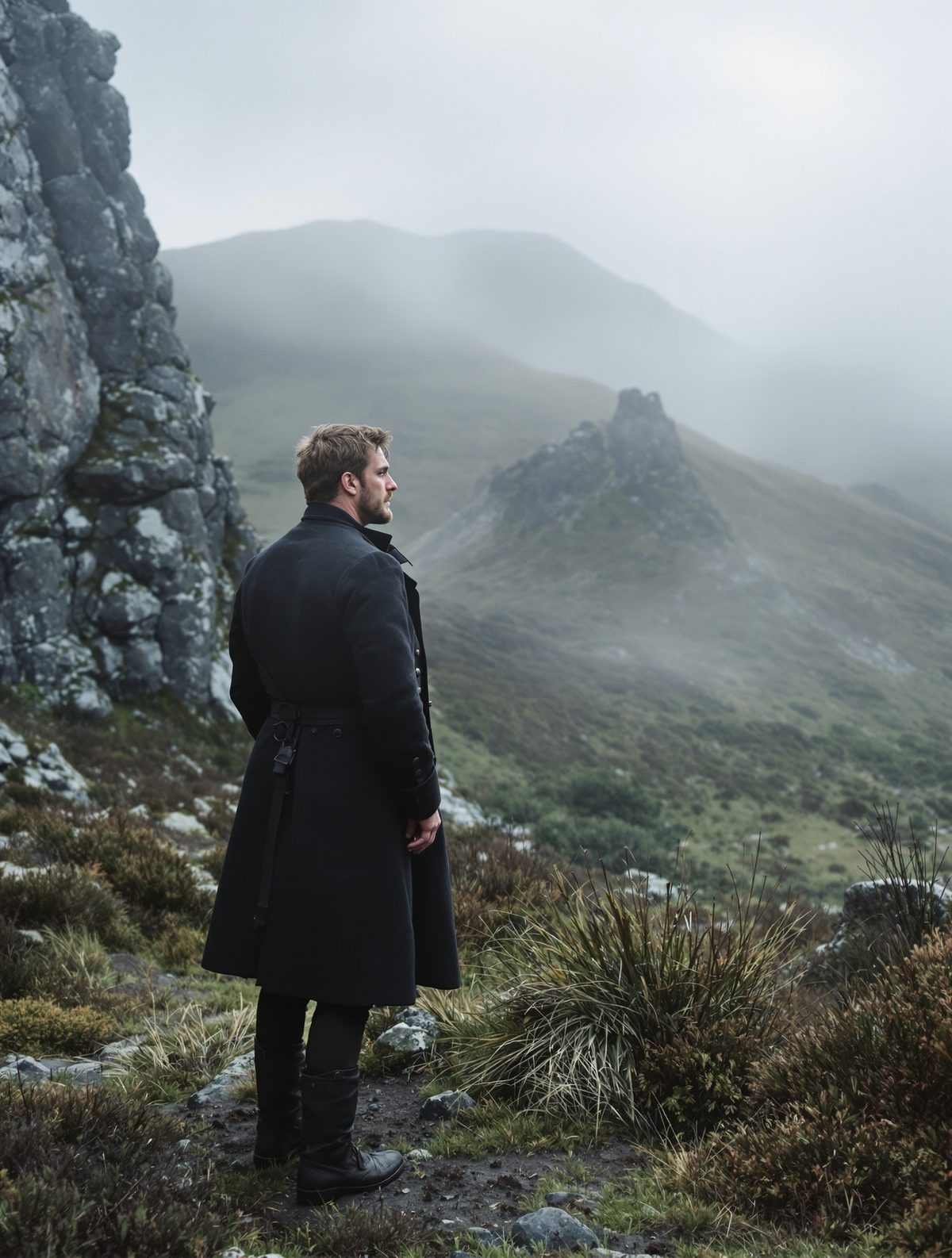
Major Claude MacDonald, a 46-year-old career soldier from the Scottish Highlands, had arrived in Beijing as Britain's Minister Plenipotentiary just three years earlier. With his handlebar mustache and ramrod posture, he embodied Victorian military bearing. But beneath that formal exterior lay a tactical mind that would soon be tested beyond imagination.
By June 1900, Boxer attacks on railways and telegraph lines had severed Beijing from the outside world. Christian converts were being slaughtered in the hundreds. Then came the moment that changed everything: on June 20th, German Minister Baron von Ketteler was shot dead in the streets by Imperial Chinese soldiers. The Empress Dowager Cixi had chosen sides—against the foreigners.
The Walls Close In
MacDonald faced a tactical nightmare that would have challenged Napoleon himself. The Legation Quarter—a mere 1,500 by 800 yards—housed the diplomatic missions of eleven nations scattered across forty-nine separate buildings. Some legations were connected by rambling courtyards, others isolated by wide streets now controlled by enemy forces. The British compound alone sprawled across several acres, including the residence, chancellery, student interpreters' quarters, and crucially, the stables that would later house refugees.
His defenders were a motley crew that reads like a Victorian adventure novel. The core consisted of professional soldiers: 79 British marines, 25 Royal Navy bluejackets, and military guards from other legations. But MacDonald's genius lay in recognizing potential in unlikely places. He transformed diplomats into sharpshooters, missionaries into ammunition runners, and even the legations' Chinese servants—those who stayed loyal—into invaluable intelligence gatherers.
The most colorful character was perhaps Captain Newt Hall of the United States Marines, whose cowboys-and-Indians tactics baffled the more conventional European officers. Then there was Herbert Squiers, the American First Secretary, who combined diplomatic protocol with deadly accuracy as a sniper. Even the women played crucial roles: Polly Condit Smith, wife of a American diplomat, organized the hospital and food distribution while dodging Boxer bullets.
But here's what the history books rarely mention: MacDonald's most critical decision came before the shooting started. Against the advice of several colleagues who wanted to evacuate, he chose to gather all foreign civilians into the British compound—the largest and most defensible position. This meant feeding and protecting nearly 500 non-combatants, including 76 children, but it also meant concentrating his defenders where they could do the most good.
When the Earth Shook
The Boxers' initial attacks were chaotic affairs—waves of red-turbaned warriors charging the barricades with swords and spears, convinced their magical rituals would turn British bullets into water. They were wrong, and MacDonald's riflemen cut them down in horrific numbers. But the major knew better than to celebrate these early victories. The real threat wasn't the mystical Boxers—it was the Imperial Chinese artillery.
On July 13th, MacDonald's worst fears materialized. Chinese engineers began digging tunnels under the French Legation, packing them with gunpowder for a massive explosion that would blow a hole in the defenders' lines. The siege had evolved from medieval assault to modern siege warfare, and MacDonald found himself playing a deadly game of three-dimensional chess.
His response revealed the tactical brilliance that made him legendary. While other officers focused on the walls, MacDonald deployed listening posts to detect tunneling operations. When his men heard the scrape of shovels beneath the French compound, they counter-tunneled, breaking into the Chinese works and fighting hand-to-hand combat in the darkness below ground.
But perhaps MacDonald's most audacious move came on July 16th. With ammunition running dangerously low and morale cracking, he ordered a pre-dawn assault on Chinese positions in the Imperial Carriage Park—a strategic high ground that overlooked the entire legation quarter. Leading the attack personally, MacDonald and thirty volunteers charged across open ground under heavy fire, seized the position, and held it against repeated counterattacks.
The psychological impact was immense. Here was a British diplomat-turned-general, leading bayonet charges at age 46, proving that the foreigners wouldn't simply cower behind their walls and wait to die.
The Longest Days
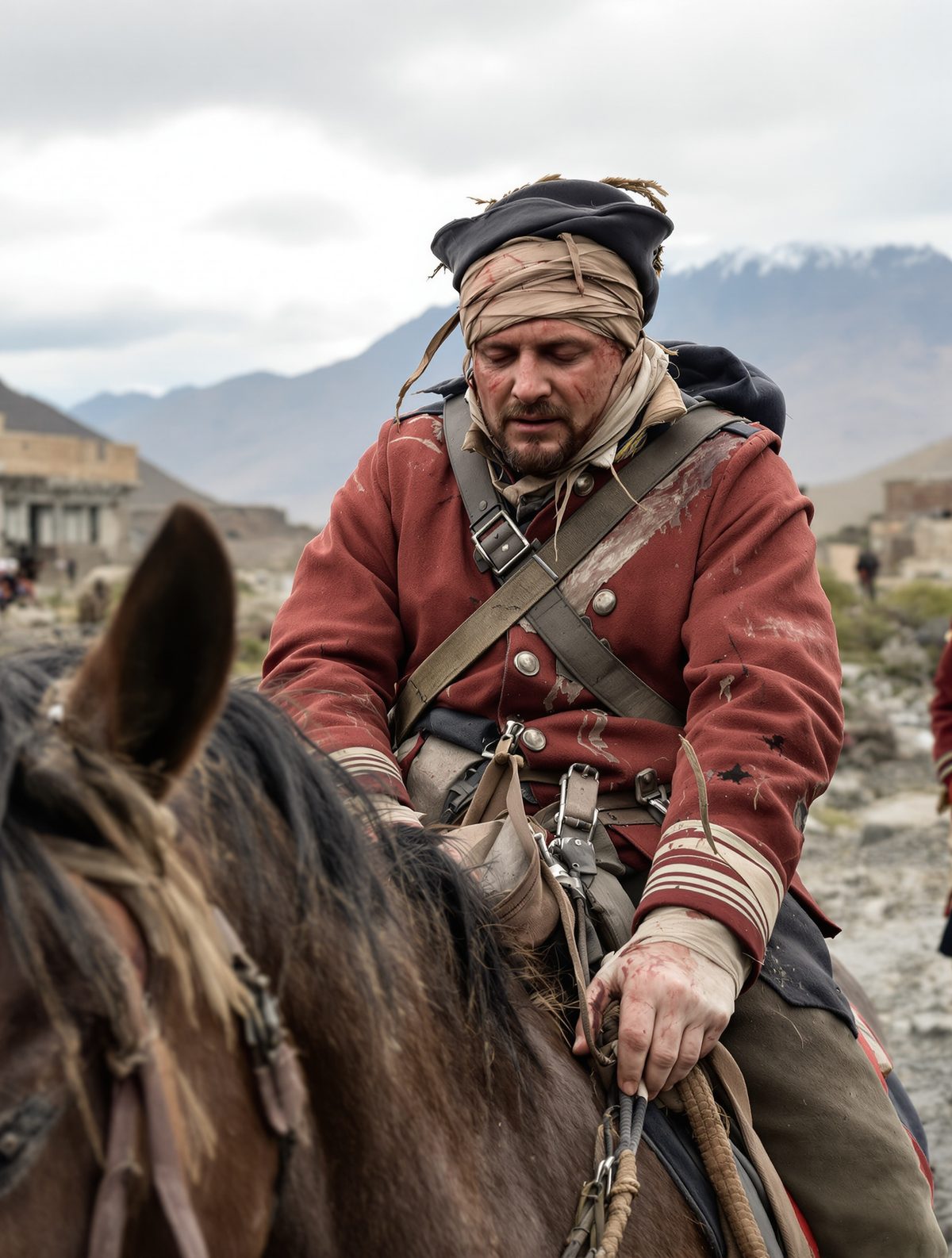
As July melted into August, the siege settled into a grinding war of attrition that tested every aspect of MacDonald's leadership. Food became scarce—the defenders were reduced to eating their horses, starting with the ponies from the legation racecourse. Water was rationed to barely a cup per person per day. The wounded filled every available room, and the constant bombardment meant no one could sleep for more than an hour at a time.
Yet MacDonald's greatest challenge wasn't military—it was diplomatic. Trapped behind the same barricades were the representatives of eleven nations, each with their own ideas about defense strategies, resource allocation, and military command. The German minister wanted to surrender. The French were furious about the tunneling under their compound. The Russians suspected everyone of hoarding ammunition.
MacDonald navigated these tensions with a combination of British tact and Highland stubbornness. He established a joint defense committee but retained ultimate military authority. When the Austrian minister complained about British dominance, MacDonald quietly pointed out that the British compound was housing most of the refugees and taking the heaviest casualties. When ammunition disputes arose, he instituted a centralized distribution system that, while unpopular, kept everyone fighting.
But here's the detail that reveals MacDonald's true character: throughout the siege, he maintained a daily intelligence briefing for all the ministers, sharing information about enemy movements, supply situations, and tactical plans. In an age when military commanders hoarded information like gold, MacDonald understood that transparency bred confidence and cooperation.
The Thunder of Salvation
By August 14th, ammunition was nearly exhausted, food reduced to a few handfuls of rice, and the Chinese had completed new tunnels that threatened to bring down the entire British compound. MacDonald's men were so exhausted they could barely lift their rifles. Then, at 2:30 in the afternoon, a sound echoed across Beijing that sent chills down every defender's spine—but for the first time in 55 days, they were chills of hope, not fear.
The distant rumble of artillery. But this time, it was coming from outside the city.
The relief force—20,000 troops from eight nations—had finally fought their way from the coast. Leading the charge into the Legation Quarter were soldiers from Britain, America, Russia, Japan, France, Germany, Italy, and Austria-Hungary. As the first British faces appeared at the compound gates, MacDonald reportedly walked calmly to meet them, adjusted his uniform, and said simply: "Good afternoon, gentlemen. We've been expecting you."
The final tally was staggering: of MacDonald's 409 defenders, 65 were killed and 135 wounded—casualty rates that would be considered catastrophic in any modern military operation. Yet they had held their ground against odds that military theorists still study today.
The Empire That Almost Wasn't
MacDonald's 55-day siege saved more than lives—it preserved British influence in China for another half-century. Had the Legation Quarter fallen, the psychological shock would have resonated across the entire British Empire. From India to Hong Kong, colonial subjects would have seen proof that European power could be broken by determined local resistance.
Yet the deeper lesson of MacDonald's stand transcends imperial politics. In an age of instant communication and global connectivity, it's almost impossible to imagine the isolation these defenders faced. Cut off from all outside contact, uncertain whether the world even knew they were alive, they held their ground through pure determination and remarkably effective leadership.
MacDonald returned to Britain as a hero, knighted by Queen Victoria and celebrated across the Empire. But perhaps his greatest achievement wasn't military—it was proving that in humanity's darkest moments, ordinary people can accomplish extraordinary things when led by someone who refuses to accept defeat.
Today, as we face our own moments of isolation and uncertainty, MacDonald's siege reminds us that courage isn't the absence of fear—it's continuing to act effectively despite being terrified. Sometimes, holding your ground when retreat seems logical makes all the difference between survival and surrender.