The three American militiamen had no idea they were about to change the course of world history. On the morning of September 23, 1780, John Paulding, David Williams, and Isaac Van Wart were playing cards beneath a bridge near Tarrytown, New York, when they heard the clip-clop of horse hooves approaching. The rider was well-dressed, confident, and carried himself with the bearing of a gentleman. He also carried, hidden in his boot, the secret that could have ended the American Revolution before Christmas.
Major John André of His Majesty's 40th Regiment of Foot was just thirty miles from safety. In his possession were detailed plans of West Point's fortifications, troop movements, and defensive weaknesses—all provided by America's most trusted general, Benedict Arnold. If André reached British lines, the rebellion would collapse within weeks. Instead, a mundane breakfast note would expose the greatest act of treason in American history and doom Britain's chances of keeping her American empire.
The Gentleman Spy's Perfect Plan
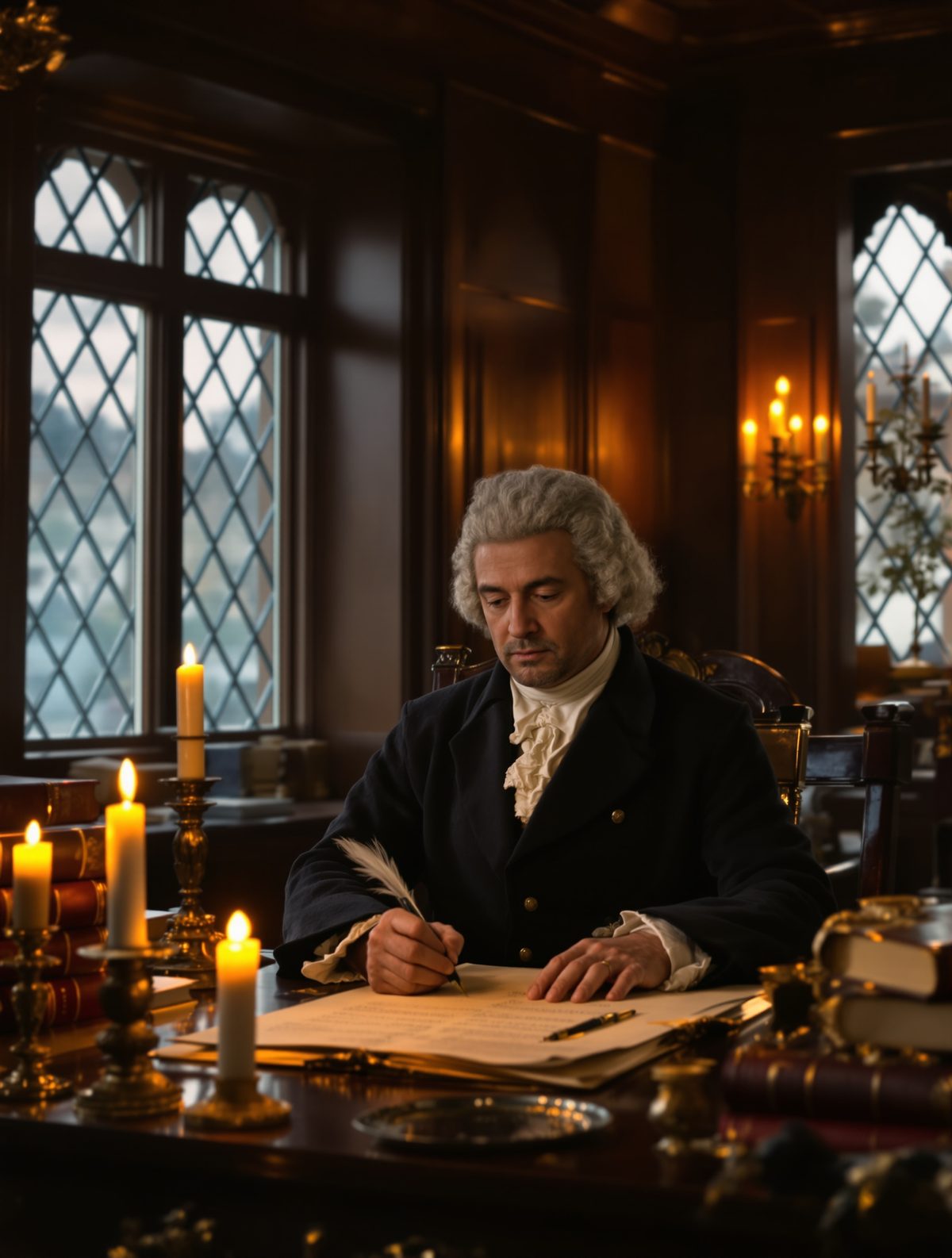
Major John André was everything the British Empire wanted in a spy: charming, intelligent, and utterly devoted to the Crown. At just twenty-nine, he served as Adjutant General to British forces in America—effectively the chief of military intelligence. André spoke three languages fluently, wrote poetry, painted portraits, and could charm his way into any drawing room from New York to Philadelphia. Colonial society ladies found him irresistible; American officers considered him a perfect gentleman, even when he was their prisoner.
But beneath the refined exterior lay one of the war's most dangerous operatives. André had been orchestrating the Crown's greatest intelligence coup: turning Benedict Arnold, the hero of Saratoga and commander of West Point, into a British asset. The plan was breathtaking in its scope. Arnold would weaken West Point's defenses, then surrender the fortress to British forces for £20,000—roughly $4 million in today's money. With West Point in British hands, the Royal Navy could control the Hudson River, splitting New England from the southern colonies and crushing the rebellion.
On the night of September 21, 1780, André had rowed across the Hudson River in a small boat to meet Arnold face-to-face. They spent hours in a farmhouse near Haverstraw, finalizing every detail. Arnold provided detailed maps of West Point's fortifications, garrison strength reports, and the exact timing of when defenses would be weakest. Everything was perfect—except André's escape plan had just fallen apart.
When Everything Goes Wrong at Dawn
André had planned to return to British lines the same way he'd come—by boat under cover of darkness. But as dawn broke on September 22, American artillery batteries began shelling his intended escape route. The boat that had brought him was long gone, and Arnold delivered devastating news: the only way back to British territory was overland, through sixty miles of contested countryside crawling with American patrols.
Arnold provided André with a disguise—civilian clothes and a pass signed with his own hand, identifying the bearer as "John Anderson, on business of the United States." It was a masterful cover story. Arnold's signature would get André through any American checkpoint, and his civilian clothes would help him blend in with local merchants and farmers. André reluctantly changed out of his British uniform, not knowing this decision would later seal his fate under the laws of war.
The documents—six pages of West Point's most sensitive military secrets—went into André's boot. Rolled up tight and tucked between his foot and the leather, they were invisible unless someone ordered him to remove his footwear. André mounted his horse and set off on what should have been a routine journey. For thirty miles, everything went exactly according to plan.
The Breakfast Note That Changed History
Here's where history pivoted on the smallest of details. André carried two passes: Arnold's official document identifying him as John Anderson, and a second pass from a British officer for travel through areas under Crown control. That second pass was André's insurance policy—if he encountered British or Loyalist forces, he could produce it and receive safe passage.
But when the three militiamen stepped into the road near Tarrytown, André made a fatal assumption. The area was known for Loyalist activity, and he thought he was dealing with British sympathizers or irregulars. Instead of producing Arnold's pass, André smiled confidently and announced, "Gentlemen, I hope you belong to our party." When they asked which party he meant, he replied, "The lower party"—British slang for the forces operating from New York.
The militiamen exchanged glances. They were members of the American forces, and André had just identified himself as a British operative. "We do," Paulding replied carefully, "but where are your papers?"
André produced the British pass—his breakfast note, as it was later called, because it was written on paper that had wrapped an officer's morning meal. The militiamen couldn't read well, but they could make out enough to realize they'd captured someone important. When André frantically tried to backtrack and show Arnold's pass, it was too late. His initial confidence had given him away.
The Search That Doomed an Empire
What happened next revealed both the thoroughness of American militia and André's terrible luck. The militiamen could have simply confiscated his papers and sent him to the nearest American post. Instead, something about André's nervous demeanor aroused their suspicion. Perhaps it was how quickly he'd tried to change his story, or maybe the quality of his boots seemed too fine for an ordinary traveler.
"We must search you," announced Paulding. They ordered André to remove his coat, then his vest, finding nothing. His saddle and saddlebags revealed only ordinary traveling supplies. Then came the moment that changed everything: "Take off your boots."
André's face went pale. He offered the militiamen his watch, his money, even his horse—anything to avoid that search. His desperation only convinced them they were onto something significant. When they finally pulled off his boots, the papers tumbled out: detailed plans of West Point's fortifications, artillery positions, garrison strength, and Arnold's own strategic assessments written in his unmistakable handwriting.
The militiamen couldn't fully understand what they were reading, but they knew treason when they saw it. They immediately delivered André and the documents to Lieutenant Colonel John Jameson at North Castle. Within hours, the papers were racing toward George Washington's headquarters, while André found himself under heavy guard, his gentleman spy career effectively over.
The Unraveling of the Greatest Plot
The capture of André triggered a cascade of events that destroyed Britain's best chance of winning the war. When news reached Benedict Arnold at West Point on September 25, he had barely enough time to escape down the Hudson River to British lines. His breakfast was still warm on the table when American officers arrived to arrest him. Arnold's wife Peggy, who had helped orchestrate the entire conspiracy, put on such a convincing performance of shocked innocence that even George Washington felt sorry for her.
Meanwhile, André's capture exposed the full scope of British intelligence operations in America. Under questioning, the gentleman spy maintained his composure and refused to implicate other agents, but the documents in his boot revealed far more than just the West Point plot. They showed how close Britain had come to achieving total victory through espionage rather than battlefield conquest.
André was tried as a spy and sentenced to death. His courage in captivity earned him respect even from his captors—American officers petitioned Washington for clemency, and André's final letters home revealed a man of genuine honor caught up in the dirty business of warfare. He was hanged on October 2, 1780, but not before becoming a symbol of how individual choices in wartime can reshape the fate of nations.
How a Breakfast Note Preserved American Independence
The failure of the Arnold-André conspiracy marked the beginning of the end for British hopes in America. With West Point secure, the Hudson River remained in American hands, preventing Britain from splitting the colonies. The exposure of such a high-level traitor actually strengthened American resolve, proving that even their most trusted general could be corrupted by British gold.
But perhaps most importantly, André's capture demonstrated that British intelligence operations, no matter how sophisticated, were vulnerable to the unpredictable nature of war. All their careful planning, all their invested time and money, came to nothing because of three militiamen and a breakfast note that led to the wrong assumption about their loyalties.
Today, in our age of digital surveillance and encrypted communications, André's story serves as a reminder that human intelligence gathering still depends on human judgment—and humans make mistakes. The same overconfidence that led André to assume he was dealing with allies continues to doom intelligence operations around the world. Sometimes the most elaborate plans fail not because of sophisticated countermeasures, but because someone makes the wrong call about which pass to show at a country crossroads.
Three militiamen playing cards under a bridge changed the course of an empire because they paid attention to details and trusted their instincts when something didn't seem right. In the end, it wasn't grand strategy or military genius that saved American independence—it was ordinary people doing their job carefully when it mattered most.