November 20, 1917. Frost cracked under relentless steel.
The Quiet Before the Storm
As dawn broke over the French countryside near Cambrai, a tense silence lingered over the trenches. For the men of the British Third Army, this was not the typical prelude to an assault. They were accustomed to the orchestral pre-attack barrage—thunderous, endless artillery blaze. Yet, on this day, the air was thick with an unnatural stillness, broken only by the distant rustle of machinery. What was about to unfold would be a turning point; a colossal leap into the future of warfare.
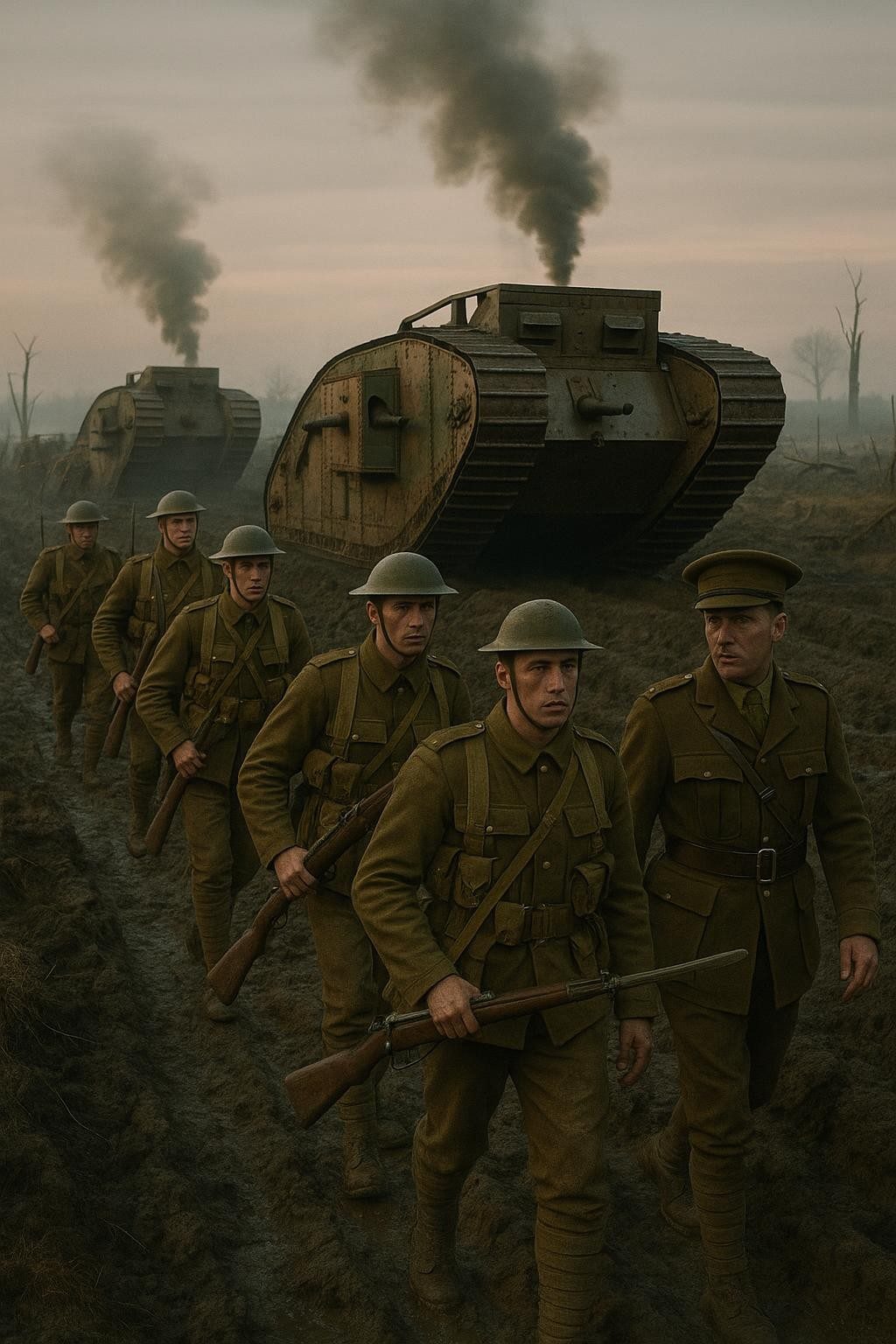
This unprecedented tactic—dispensing with the usual artillery bombardment that warned of an imminent attack—not only aimed to take the Germans by surprise but would also test the mettle of the British Expeditionary Force's newest mechanical beasts: the tank. Nearly 400 tanks lurked gothically in the mist, metallic leviathans preparing to carve their way through barbed wire and trenches, across fields marred by years of combat. These were scenes not found in any military doctrine of the time.
Iron Giants on the Move
When Mark Haggard's tanks—the stalwart Mark IVs—finally rolled into action, it was an astounding sight. Each juggernaut moved forward with a rumble more profound than any artillery could muster, its tracks chewing into the frozen earth of No Man's Land. Almost 400 of these modern Goliaths pushed forward at once, stretching as far as the eye could see, an ironclad assemblage unlike any other.
Observing this from the British lines was like watching a scene from fiction; machines that could crush through defenses thought impregnable, paving the way for infantry to follow unhindered. It was a harrowing omen for the men in the German trenches—soldiers unprepared for this silent advance and the chaos it would bring. At that moment, the tank ceased to be a novelties weapon and cemented its role as a game-changer in modern warfare.
Through the Fog of War
As the tanks breached the German defenses, they performed with mixed success. In the vanguard, they flattened barbed wire and breached formidable obstacles, allowing infantrymen to advance with unprecedented speed. The surprise was complete, the morale among the British soared, and within hours, they had created a six-mile breach into enemy territory.
This advance was not merely a physical achievement but a moral and psychological victory for the British Army and its allies. Back home, the news was met with euphoria. In London, anticipation yielded to celebration; church bells rang for the first time since the war had begun, echoing through the streets as a hopeful sign that, at last, the tide might be turning in favor of the Allies.
The Tides of Fortune Turn
But triumph was fleeting. In war, as it often goes, every action begets an equal and opposite reaction. The German forces, stunned at first by this audacious maneuver, regrouped with significant ferocity. As the initial shock wore off, their response came swift, and they launched a counteroffensive that reclaimed almost all the ground the British had gained.
In the confusion that followed, the tanks, lacking the robust logistics network needed to support such an ambitious assault, began to suffer from mechanical failures. Their heavy machines, bogged down by the mud and left without adequate infantry support in key areas, became sitting ducks for the German artillery and countering infantry attacks.
The initial success of Mark Haggard’s tanks had demonstrated their potential but also highlighted their vulnerabilities. The tale of Cambrai became one of ephemeral glory—and hard-learned lessons.
A New Era of Warfare
The Battle of Cambrai—despite the eventual stalemate—left an indelible mark on military strategy. It underscored the importance of combining new technologies with adapted tactics and taught valuable lessons about the necessity of coordination and planning in mechanized warfare.
More than just a clash of arms, the events at Cambrai challenged the orthodoxy of entrenched warfare and revolutionized how wars would be fought in the ensuing decades. The implications went far beyond the trenches of the Western Front, echoing into the future fields of conflict and shaping the evolution of military thought worldwide.
As history turns its pages, this feat—life momentarily crafted from the harsh symphony of clatter and clank under the pale light of day—serves as a testament to human ingenuity amid calamity. At Cambrai, the future of warfare began to unfold.