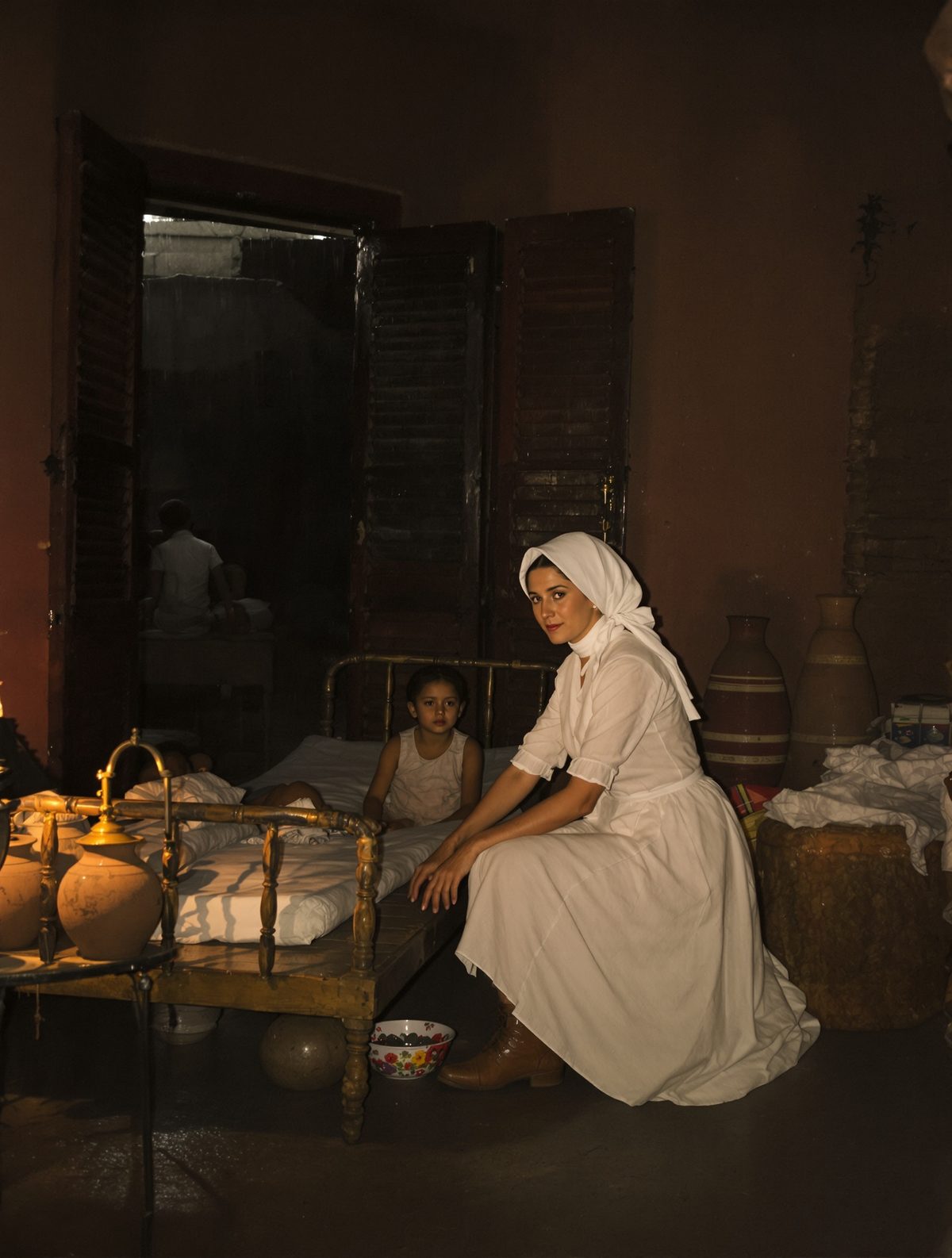
Picture this: a thirty-three-year-old English spinster, dressed in full Victorian regalia—long black skirt, high-necked blouse, and proper boots—calmly sipping palm wine with a circle of Fang warriors whose teeth had been filed to sharp points. The year was 1895, the place was the dense rainforests of Gabon, and Mary Henrietta Kingsley was about to rewrite everything Europeans thought they knew about Africa's so-called "cannibal tribes."
While her male contemporaries cowered in coastal settlements, protected by armed escorts and layers of colonial bureaucracy, this remarkable woman walked alone into territories marked on British maps simply as "unexplored" or ominously labeled "dangerous natives." What she discovered there would challenge Victorian prejudices, open new trade routes worth millions, and prove that sometimes the most revolutionary act is simply treating people as human beings.
The Unlikely Explorer Who Defied an Empire
Mary Kingsley wasn't supposed to be an explorer. Born in 1862 to a family that treated her as little more than an unpaid housekeeper, she spent her youth caring for invalid relatives while her father and brother pursued careers as respected naturalists and writers. When both her parents died in 1892, Mary found herself alone at thirty—and for the first time in her life, completely free.
Most Victorian ladies in her position would have retreated to genteel poverty and charitable works. Instead, Mary took her modest inheritance and bought a one-way ticket to West Africa. Her stated mission was to complete her father's unfinished research on African religion and culture, but her real motivation ran deeper. "I went down to West Africa to die," she later confessed, "but Africa gave me life instead."
What makes Mary's story even more extraordinary is her complete lack of preparation. She spoke no African languages, had no survival training, and her only protection was her father's outdated hunting rifle—which she freely admitted she barely knew how to use. Yet somehow, this grieving English woman would succeed where seasoned explorers, hardened traders, and battle-tested soldiers had failed.
Into the Heart of Darkness—Victorian Style
In August 1895, Mary departed from the coastal trading post of Glass (modern-day Libreville) with a small party of Fang guides. Her destination was the interior villages along the Ogowe River system, territory that European maps marked with skull-and-crossbones symbols and dire warnings about "anthropophagous tribes"—Victorian code for cannibals.
The journey itself was harrowing enough. Mary's party navigated crocodile-infested rivers in dugout canoes, hacked through jungle so dense that noon looked like twilight, and crossed swamps where one wrong step meant sinking into quicksand-like mud. She slept in canvas shelters that offered little protection from leopards, forest elephants, and clouds of disease-carrying insects.
But the real dangers, according to colonial wisdom, were the Fang people themselves. European traders whispered stories of ritual cannibalism, human sacrifice, and unthinkable savagery. The French colonial administration had essentially written off the interior as ungovernable, while British merchants declared it too dangerous for commercial exploitation.
Mary's first encounter with a Fang village should have confirmed these fears. As her canoe rounded a bend in the Ogowe River, she found herself facing a settlement of traditional longhouses, surrounded by warriors carrying spears, shields, and what appeared to be human skulls mounted on poles. Any reasonable person would have ordered an immediate retreat. Instead, Mary Kingsley stepped ashore, walked directly up to the village chief, and politely asked if she could spend the night.
The Cannibal Chiefs Who Became Gracious Hosts
What happened next defied every Victorian assumption about "primitive" peoples. The Fang chief, a man Mary described as having "the bearing of a natural aristocrat," not only welcomed her but insisted she stay in his own longhouse as an honored guest. Within hours, Mary found herself seated at the place of honor during the village's evening meal, listening to elaborate oral histories that stretched back generations.
Yes, the Fang practiced ritual cannibalism—but Mary quickly realized it bore no resemblance to European fantasies of blood-crazed savages. The consumption of deceased enemies was a deeply spiritual practice, designed to absorb their courage and honor their fighting spirit. Moreover, it was highly ritualized, infrequent, and governed by complex cultural rules that Mary took care to understand and respect.
"I found them to be a people of remarkable intelligence and subtle philosophy," she wrote in her journal. "Their understanding of natural law, human psychology, and social organization would put most Cambridge professors to shame."
More surprisingly, the Fang chiefs proved to be shrewd businessmen eager to establish direct trade relationships with Europe. They controlled vast territories rich in rubber, ivory, and rare hardwoods, but colonial intermediaries had kept them isolated from global markets. Mary's arrival represented their first opportunity to negotiate directly with someone connected to British commercial networks.
Sleeping Safely Among "Savage" Warriors
Over six weeks in late 1895, Mary lived in a dozen different Fang villages, often as the only European for hundreds of miles. She slept in traditional longhouses, participated in religious ceremonies, and even joined hunting expeditions that took her deep into unexplored rainforest. Not once was she threatened, robbed, or harmed.
Her secret was radical simplicity: she treated the Fang as equals. While other Europeans arrived with armed guards, demands for submission, and barely concealed contempt, Mary came alone, asked permission, and showed genuine curiosity about Fang culture. She learned basic phrases in their language, observed their customs without judgment, and freely admitted her own ignorance about survival in the African wilderness.
The Fang responded with extraordinary hospitality. Village chiefs competed to host her, warriors served as her guides and protectors, and elderly women taught her which plants were edible and which were deadly. When Mary fell seriously ill with fever—probably malaria—Fang healers nursed her back to health using traditional medicines that proved more effective than anything in her European medical kit.
Perhaps most remarkably, several chiefs offered to adopt Mary into their clans permanently. They carved elaborate ivory gifts for her, taught her secret hunting techniques passed down through generations, and even offered to arrange marriages with prominent warriors. For a woman who had spent her youth as an unpaid domestic servant, this acceptance must have felt like a revelation.
Opening Trade Routes Worth Millions
Mary's courage had profound economic consequences. When she returned to the coast in October 1895, she carried detailed maps of previously unknown territories, samples of valuable trade goods, and—most importantly—formal agreements from Fang chiefs to begin direct commerce with British merchants.
Within two years, the trade routes Mary had pioneered were generating millions of pounds in revenue. Rubber from the interior supplied Britain's growing automotive industry, while rare hardwoods furnished the homes of London's elite. The Fang, meanwhile, gained access to European manufactured goods, medical supplies, and educational materials—all through voluntary trade rather than colonial conquest.
British commercial interests were so impressed that they funded Mary's second expedition to West Africa in 1899. This time, she traveled to regions of Sierra Leone and Liberia that had resisted European contact for decades, again returning with valuable trade agreements and detailed ethnographic studies.
Tragically, Mary's remarkable career was cut short when she volunteered as a nurse during the Second Boer War. She died of typhoid fever in South Africa in 1900, just five years after her first African expedition. She was only thirty-seven years old.
Why Mary Kingsley's Story Still Matters
Mary Kingsley's adventures seem like something from an adventure novel, but her legacy raises profound questions that remain relevant today. In an era when Europeans routinely dismissed African peoples as primitive savages, one woman proved that respect, curiosity, and basic human decency could achieve more than military force and cultural arrogance.
Her success challenges comfortable narratives about the "Scramble for Africa." While historians focus on the military campaigns, diplomatic treaties, and economic exploitation that characterized European colonialism, Mary's story suggests that alternative relationships were possible—partnerships based on mutual benefit rather than domination.
Perhaps most importantly, Mary Kingsley proved that the greatest adventures often begin when we abandon our prejudices and approach others with genuine openness. Her willingness to sleep among "cannibal chiefs" revealed them to be neither cannibals nor savages, but complex human beings with their own wisdom, dignity, and stories to tell.
In our own era of cultural division and mutual suspicion, Mary's example offers a different path forward. Sometimes the most revolutionary act isn't conquering your enemies—it's discovering they were never your enemies at all.